Chef Makoa
ʻAʻama (Hawaiian Black Rock Crab with Paʻakai)
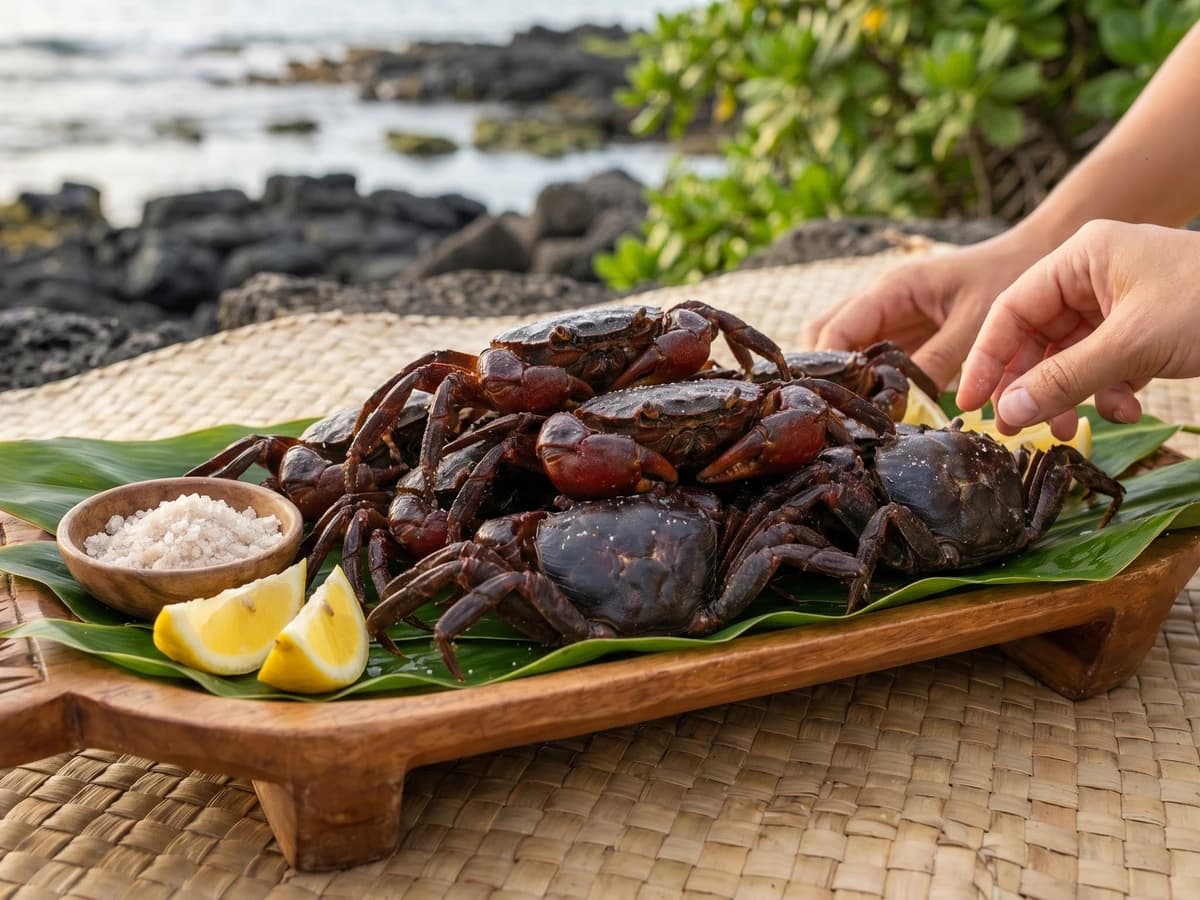
Hawaiʻi's reef-gathered ʻaʻama, the small black rock crab from the shoreline stones, boiled quick in salty water and picked whole at the lūʻau table beside ʻopihi.
A cooking platform built around craft, culture, and the stories behind what we eat.
Created by
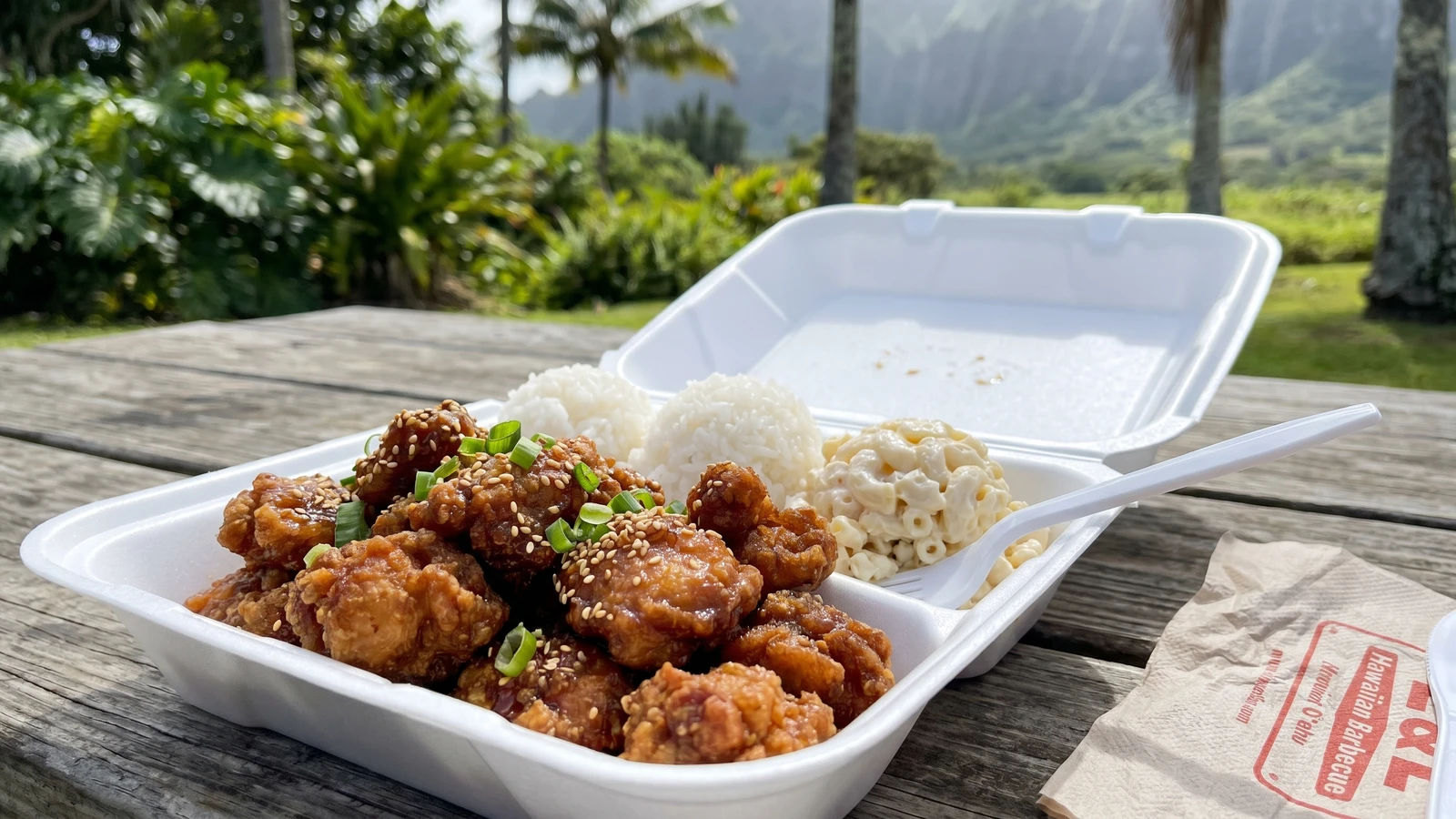
Hawaiʻi's Local potluck fried chicken, sweet-savory from mochiko rice flour and shoyu, fried in bite-size pieces and right at home beside two scoops rice and mac salad.
The plate lunch taught plenty of us kinship from a foam box. Two scoops rice, one scoop mac salad, chicken piled high, everybody eating in the shade with the rice cooker still warm inside the house. This is Hawaiʻi's Local food, born from sugar-camp stoves and lunch counters, where Hawaiian, Japanese, Chinese, Portuguese, Korean, Filipino, Puerto Rican, and plenty other hands fed one another with what the plantation world put in front of them.
Mochiko chicken belongs to Hawaiʻi, and I name it that way. Not Sāmoan, not Tongan, not Tahitian, not Cook Islands, not Māori. The mochiko, sweet rice flour, comes through Japanese hands; the shoyu, garlic, ginger, sugar, and frying oil became part of the everyday language of home kitchens, potlucks, game days, graduation parties, and drive-in plates. No blame the plate for being humble. Humble food fed hard-working people.
This isn't deep food like poi, where we sit down with Hāloa, the elder brother, or like Sāmoan palusami and Tongan lū where taro leaf and coconut cream carry old knowledge. This is the other half of the table, the Local half, the part that says the islands are still living and still making supper. Across the Triangle, every cousin has foods like that now: Sāmoan sapasui, Tongan lū pulu with tinned corned beef, Māori boil-up, Hawaiian Spam musubi and plate lunch. Same ocean, different pantry, people still feeding people.
So marinate the thighs long enough for the shoyu and ginger to get inside, then fry steady, not angry-hot. You want the edges crisp, the glaze dark-gold, the meat juicy all the way through. Eat it with rice. Eat it with mac salad. Eat what you have, and make enough for one more.
Mochiko chicken grew from Hawaiʻi's twentieth-century Local food culture, especially the plantation and lunch-counter world where Japanese ingredients like mochiko, shoyu, and ginger met the plate-lunch format of rice, macaroni salad, and a protein. It is Hawaiian in the Local sense, food of Hawaiʻi's multiethnic kitchens, not an ancestral Kanaka Maoli dish like poi, laulau, or kālua puaʻa. That distinction matters because the deep foods and the plantation-creole foods are both real parts of the table, each with its own history and its own hand.
Quantity
2 pounds
cut into 1 1/2-inch pieces
Quantity
1/2 cup
Quantity
1/4 cup
Quantity
1/4 cup
Quantity
1/2 cup
Quantity
2
beaten
Quantity
4
finely grated
Quantity
1 tablespoon
finely grated
Quantity
3
thinly sliced, plus more for garnish
Quantity
1 tablespoon
plus more for garnish
Quantity
1/2 teaspoon
Quantity
1/4 teaspoon
Quantity
as needed
for frying
Quantity
for serving
Quantity
for serving
| Ingredient | Quantity |
|---|---|
| boneless skinless chicken thighscut into 1 1/2-inch pieces | 2 pounds |
| mochiko sweet rice flour | 1/2 cup |
| cornstarch | 1/4 cup |
| granulated sugar | 1/4 cup |
| shoyu, or Japanese soy sauce | 1/2 cup |
| large eggsbeaten | 2 |
| garlic clovesfinely grated | 4 |
| fresh gingerfinely grated | 1 tablespoon |
| green onionsthinly sliced, plus more for garnish | 3 |
| toasted sesame seedsplus more for garnish | 1 tablespoon |
| kosher salt | 1/2 teaspoon |
| black pepper | 1/4 teaspoon |
| neutral oilfor frying | as needed |
| cooked white rice | for serving |
| macaroni salad | for serving |
Trim the thighs and cut them into bite-size pieces, about an inch and a half. Thigh meat is the right one here, forgiving and juicy, the kind that stays tender after the fry and still tastes good when somebody comes back for seconds after the game.
In a large bowl, whisk the mochiko, cornstarch, sugar, shoyu, eggs, garlic, ginger, green onions, sesame seeds, salt, and pepper until it looks like a thick tan batter. It should coat a spoon and fall slow, not run like water.
Fold the chicken into the batter until every piece is coated, then cover and refrigerate at least 4 hours, overnight if you can. The shoyu, garlic, and ginger need time to move inside the meat. No leave it on the counter. Food has to feed people, not make them sick.
Pour 2 inches of neutral oil into a heavy pot and heat to 330F to 350F. Line a tray with a rack or paper towels. Stir the chicken once so the coating comes back together, then let the excess drip off each piece before it goes in.
Fry the chicken in small batches, 4 to 6 minutes, turning once or twice, until the outside is deep golden-brown with a glossy shoyu edge and the center reaches 165F. Don't crowd the pot or the coating gets heavy. Let the oil come back up between batches.
Lift the chicken to the rack and let it settle for a minute. The crust should hold its little ridges and the meat should feel springy, not tight. Scatter with more green onion and sesame if you like, but don't bury it. The chicken already said what it came to say.
Serve hot or warm with two scoops white rice and one scoop macaroni salad, plate-lunch style. A little cabbage under the chicken is fine. A plastic fork is fine too. This is potluck food, lunch-wagon food, home-kitchen food, and it knows exactly where it belongs.
1 serving (about 440g)
Culinary guides, cultural storytelling, and the editorial depth that makes cooking meaningful.
Discover Culinary ExplorerChef Makoa
Hawaiʻi's reef-gathered ʻaʻama, the small black rock crab from the shoreline stones, boiled quick in salty water and picked whole at the lūʻau table beside ʻopihi.

Chef Makoa
Hawaiʻi Local chicken hekka, the plantation-camp cousin of Japanese sukiyaki, with tender chicken, long rice, shiitake, bamboo shoots, and sweet shoyu gravy for rice.
Chef Makoa
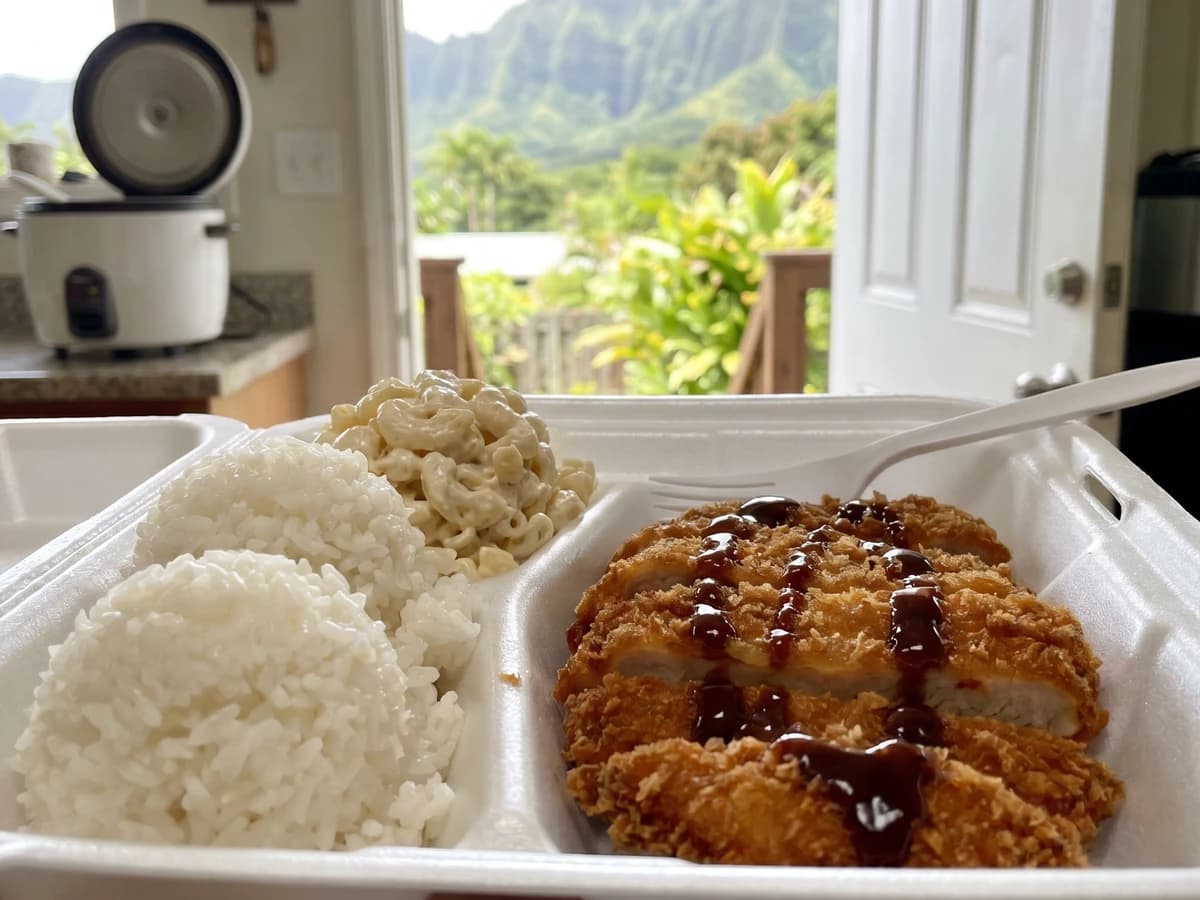
Hawaiʻi's Local plate-lunch comfort: juicy chicken thigh in panko, fried crisp, sliced over white rice with mac salad and katsu sauce, the sugar-camp stove brought home.
Chef Makoa
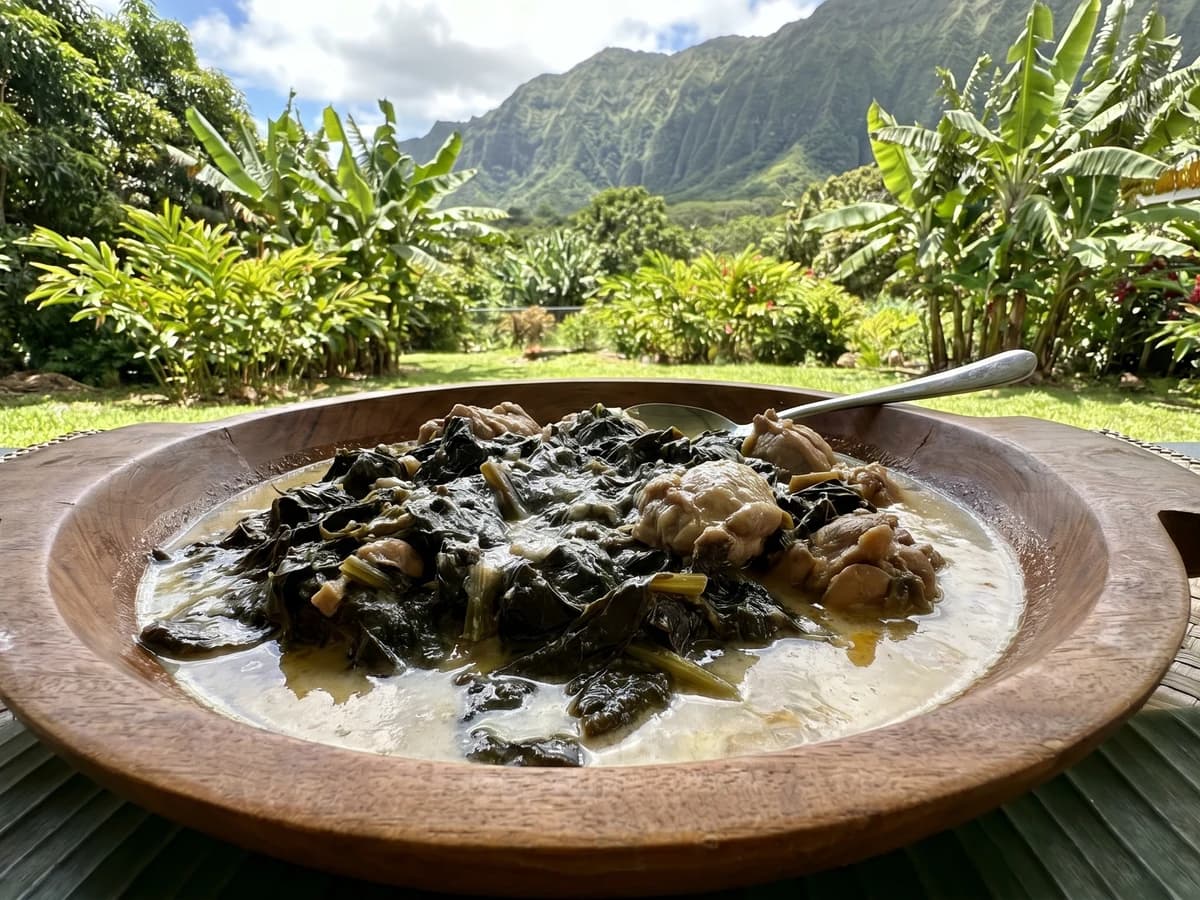
Hawaiian chicken lūʻau is kalo leaf cooked past its bite with tender chicken and coconut milk, a windward Oʻahu comfort pot with cousins in Sāmoa's palusami, Tonga's lū, and Cook Islands rukau.