
Chef Jeong-sun
Aehobak-bokkeum (Korean Stir-Fried Zucchini)
Tender Korean zucchini half-moons cooked quickly over real heat, seasoned with salted shrimp so the squash tastes deeper than oil and still clean enough for a weeknight table.
A cooking platform built around craft, culture, and the stories behind what we eat.
Created by
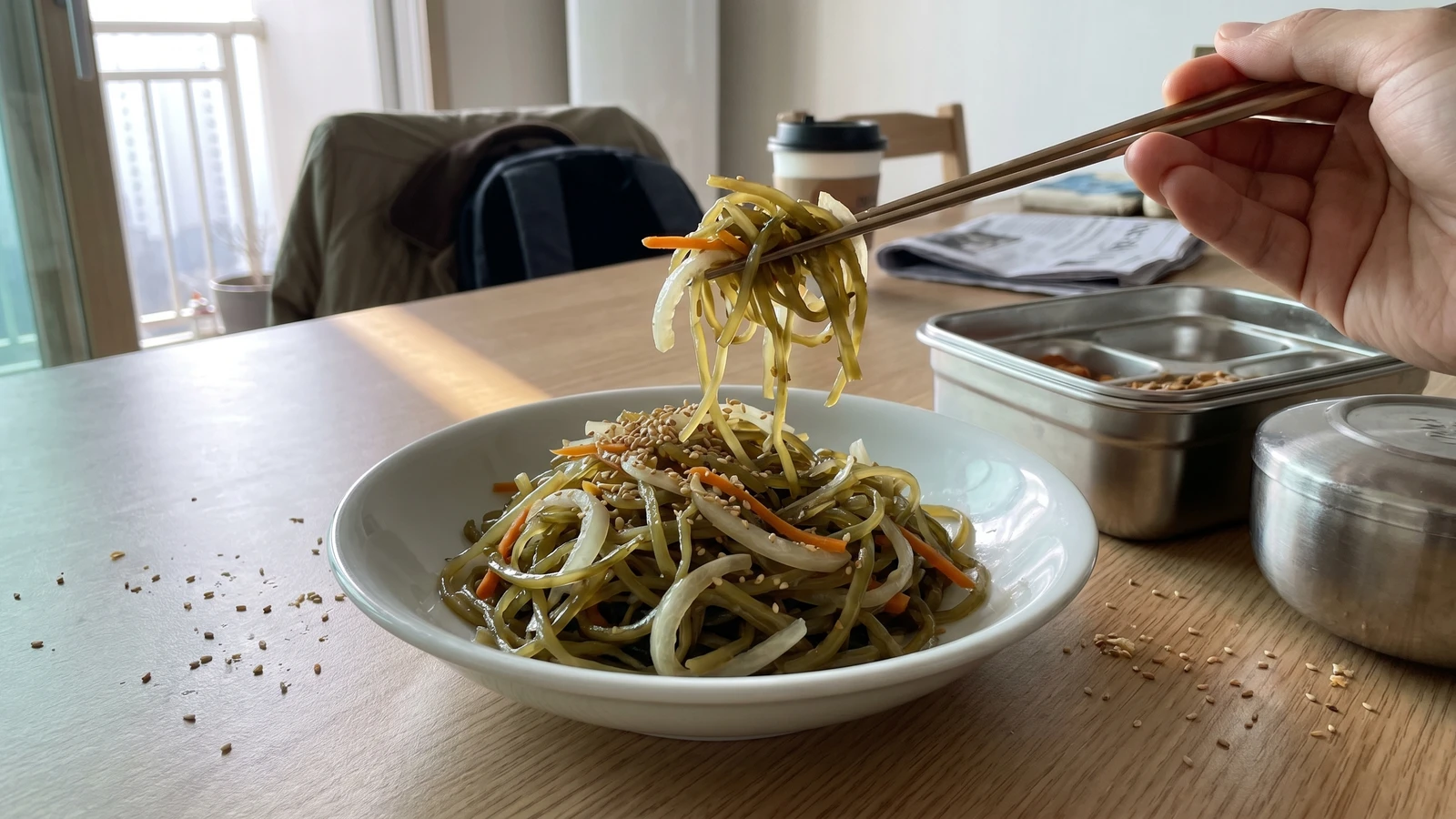
Salted seaweed stems drawn back from the brine, cut short, and stir-fried until glossy and tender-chewy, the kind of quiet banchan that earns its place beside rice all week.
Miyeokjulgi-bokkeum lives or dies before the pan gets hot. The stems arrive packed in salt, stiff and louder than the dish should ever be. Soak them, rinse them, then taste one strand. If it still bites hard, wait another ten minutes. The pan can soften a tough strand, but it cannot take salt back.
This is banchan for a working week, not a feast dish pretending to be grand. My mother bought a bundle from the market because it was cheap, kept well, and made rice feel cared for when there was no time for much else. The good version is pale green-brown and glossy, tender-chewy under the teeth, with garlic and sesame oil present but not loud. Let it taste like itself.
Notebook 19 says 300g salted stems, 30 minutes in cold water with one change, then only 1 teaspoon soup soy sauce after tasting. That number matters because every packet is salted differently. 손맛 (hand-taste) is real; I measure it anyway, so the next cook doesn't have to stand at the sink guessing.
Miyeokjulgi means the stem of miyeok (sea mustard, Undaria pinnatifida), the same seaweed whose fronds are dried for miyeok-guk, the birthday and postpartum soup known across Korea. Miyeok has been eaten for centuries, but this stir-fried stem banchan belongs to practical market and home cooking: commercial seaweed farming expanded along the southern coast in the twentieth century, especially around Wando, and salting the stems made a cheap coastal harvest easy to move inland. It is everyday preservation food, not a palace dish, and its method still begins with undoing the salt that kept it.
Quantity
300g
loose salt rinsed off
Quantity
6 cups, plus more for rinsing
Quantity
1/2 small (about 80g)
thinly sliced
Quantity
1/3 small (about 40g)
cut into thin matchsticks
Quantity
3 cloves
minced
Quantity
1 tablespoon
Quantity
1 teaspoon
Quantity
1 teaspoon
Quantity
1 teaspoon
Quantity
1 teaspoon
Quantity
1 pinch
| Ingredient | Quantity |
|---|---|
| salted miyeokjulgi (seaweed stems)loose salt rinsed off | 300g |
| cold water | 6 cups, plus more for rinsing |
| onionthinly sliced | 1/2 small (about 80g) |
| carrot (optional)cut into thin matchsticks | 1/3 small (about 40g) |
| garlicminced | 3 cloves |
| neutral oil or perilla oil | 1 tablespoon |
| matsul or mirin (rice cooking wine) (optional) | 1 teaspoon |
| soup soy sauce (guk-ganjang) or light soy sauce (optional) | 1 teaspoon |
| toasted sesame oil | 1 teaspoon |
| toasted sesame seeds | 1 teaspoon |
| ground black pepper (optional) | 1 pinch |
Put the salted stems in a large bowl and rub them under running water until the loose salt is gone. Cover with 6 cups cold water and soak 30 minutes, changing the water once after 15 minutes. Taste one strand from the thick end. It should taste gently seasoned, not sharp with salt, because the pan will concentrate whatever remains. If it still bites hard, soak 10 minutes more and taste again.
Bring a small pot of water to a boil. Drop in the soaked stems for 20 seconds, then drain and rinse under cold water. This brief blanch cleans the old brine smell and sets the tender-chewy texture; longer boiling makes the stems limp. Squeeze out water with both hands.
Lay the stems on a cutting board, trim away any hard knotted ends, and cut them into 2-inch (5 cm) lengths. Long stems look generous in the bowl but fight the chopsticks. Slice the onion and carrot thin so they soften at the same speed as the seaweed.
Heat the neutral oil or perilla oil in a wide skillet over medium heat. Add the garlic, onion, and carrot and stir 1 to 2 minutes, just until the onion bends and the garlic smells sweet but has not browned. Browned garlic turns bitter fast here, so keep the heat moderate.
Add the cut seaweed stems and raise the heat to medium-high. Stir-fry 3 to 4 minutes, lifting and folding so every strand takes on a little oil. Splash in the cooking wine if using. Taste before you season. Add soup soy sauce 1/2 teaspoon at a time, up to 1 teaspoon, only if the stems taste flat. If they already taste properly seasoned, add none.
Turn off the heat and toss in the toasted sesame oil, sesame seeds, and black pepper if using. Spread the seaweed stems on a plate to cool before storing, because trapping warmth in a container makes condensation and dulls the texture. Serve at room temperature or chilled, beside rice and the rest of the banchan.
1 serving (about 100g)
Culinary guides, cultural storytelling, and the editorial depth that makes cooking meaningful.
Discover Culinary ExplorerChef Jeong-sun
Tender Korean zucchini half-moons cooked quickly over real heat, seasoned with salted shrimp so the squash tastes deeper than oil and still clean enough for a weeknight table.

Chef Jeong-sun
Tender Korean summer zucchini softened gently in the pan with saeujeot for salt and depth, finished with sesame so the vegetable stays sweet, green, and plainly itself.

Chef Jeong-sun
A bittersweet spring green from the southern shore, blanched just until pliant, then seasoned lightly so its clean coastal bitterness stays alive on the rice table.

Chef Jeong-sun
Torn king oyster or shiitake mushrooms, browned until their own water disappears, then finished with soy, garlic, sesame oil, and onion for a quiet banchan that earns its place.