
Chef Lupita
Adobo de Puerco Poblano
Puebla's weekday adobo of pork shoulder braised in a thick guajillo and ancho sauce sharpened with vinegar, cumin, and clove. The deep red of a market spice stall, the dish a poblana cooks without thinking.
A cooking platform built around craft, culture, and the stories behind what we eat.
Created by
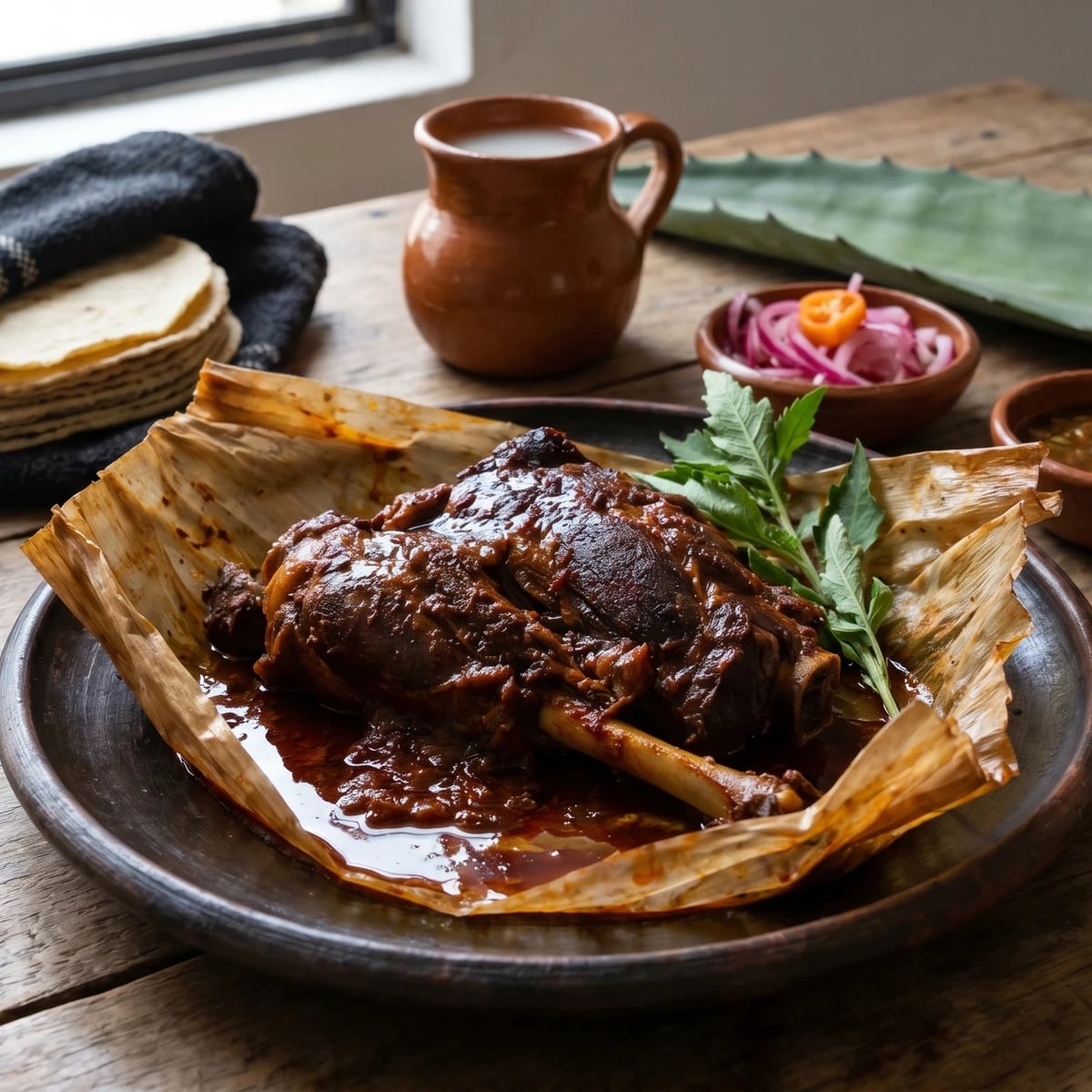
Hidalgo's slow-steamed lamb parcels, marinated in a guajillo-ancho-pasilla adobo with toasted avocado leaf, sealed in maguey membrane, and opened at the table.
Mixiotes belong to Hidalgo. To the high plains of the Valle del Mezquital, where the maguey grows in disciplined rows across the horizon and where the cooking is built around that one plant: pulque from the heart, gusanos from the root, barbacoa wrapped in the leaves, and mixiotes sealed in the cuticle that peels off the surface of the penca like a sheet of vegetal parchment.
The word mixiote refers to the membrane itself, not the dish. The membrane gave the dish its name because the membrane is the technique. You cannot make a real mixiote without it. The thin, almost transparent cuticle holds the lamb and its adobo in a sealed pocket through 3 hours of steaming, concentrating the juices, trapping the toasted-chile aroma, and giving the meat a faint vegetal note that no other wrapper produces. Banana leaf works. Parchment works. Neither one is mixiote. Both are honest substitutes that you should not pretend are the real thing.
The lamb is borrego, the small, lean sheep of the central altiplano. The chiles are guajillo for color, ancho for depth, pasilla for the smoky bitterness that anchors the adobo. The avocado leaf is non-negotiable. Toasted, it smells faintly of anise and eucalyptus, and it gives mixiote its signature aroma. Skip it and you have spiced lamb in a wrapper. With it, you have a Hidalgo dish.
I collected this recipe from a senora in Actopan, where Sunday barbacoa pits sit alongside the mixiote steamers, and where the cooks have been arguing about the right balance of pasilla to ancho for at least three generations. She told me her grandmother used to harvest the mixiote herself before the maguey was protected. Now she buys banana leaf from the market and does not apologize for it. Saber cocinar es saber vivir. The dish survives because the cooks adapt without compromising what makes it the dish.
Mixiote cooking is pre-Columbian in origin, developed by the Otomi and Nahua peoples of the central altiplano as a method of pit-cooking and steaming meats using the maguey plant they cultivated for pulque, fiber, and food. The dish is documented in 16th-century Spanish chronicles describing the use of agave membrane as a cooking wrapper for game and small mammals. In 2008, the harvesting of mixiote membrane was banned or heavily restricted in much of Mexico because the practice damages the maguey plant and threatens populations of wild and cultivated agave; today, true mixiote is rare and most commercial versions are made with parchment or banana leaf, a substitution that experienced cooks acknowledge openly. Hidalgo, Tlaxcala, and the State of Mexico share claim to the dish, but Hidalgo's Valle del Mezquital, where the maguey is the foundation of the regional economy, is considered the canonical home.
Quantity
3 pounds
cut into 2-inch pieces
Quantity
1 pound
cut into 2-rib portions
Quantity
10
stemmed and seeded
Quantity
6
stemmed and seeded
Quantity
3
stemmed and seeded
Quantity
2
for heat
Quantity
6
unpeeled
Quantity
1/2 medium
Quantity
1 teaspoon
Quantity
6
Quantity
4
Quantity
1 stick, about 2 inches
Quantity
8
fresh or dried, toasted
Quantity
2 sprigs
Quantity
3
Quantity
2 tablespoons
Quantity
2 tablespoons
melted
Quantity
1 tablespoon, plus more to taste
Quantity
16 squares, about 10 by 10 inches each
or banana leaf as a documented substitute
Quantity
for tying
Quantity
for serving
warmed
Quantity
for serving
Quantity
for serving
Quantity
for serving
Quantity
for serving
| Ingredient | Quantity |
|---|---|
| bone-in lamb shoulder or legcut into 2-inch pieces | 3 pounds |
| lamb ribscut into 2-rib portions | 1 pound |
| dried chile guajillostemmed and seeded | 10 |
| dried chile anchostemmed and seeded | 6 |
| dried chile pasillastemmed and seeded | 3 |
| dried chile de arbol (optional)for heat | 2 |
| garlic clovesunpeeled | 6 |
| white onion | 1/2 medium |
| whole cumin seeds | 1 teaspoon |
| whole black peppercorns | 6 |
| whole cloves | 4 |
| Mexican cinnamon (canela) | 1 stick, about 2 inches |
| avocado leaves (hoja de aguacate)fresh or dried, toasted | 8 |
| fresh epazote | 2 sprigs |
| dried bay leaves | 3 |
| apple cider vinegar | 2 tablespoons |
| lard (manteca de cerdo)melted | 2 tablespoons |
| kosher salt | 1 tablespoon, plus more to taste |
| mixiote membrane squaresor banana leaf as a documented substitute | 16 squares, about 10 by 10 inches each |
| kitchen twine | for tying |
| hand-pressed corn tortillas (optional)warmed | for serving |
| pickled red onion with habanero (optional) | for serving |
| salsa borracha (optional) | for serving |
| lime wedges (optional) | for serving |
| grilled nopales (optional) | for serving |
If you have true mixiote membrane, the cuticle peeled from the maguey penca, soak the squares in warm water for 30 minutes to rehydrate. They will turn from brittle parchment to flexible film. If you are working with banana leaf because real mixiote is illegal to harvest in much of Mexico and nearly impossible to find abroad, pass the leaves over an open flame until they soften and turn glossy, then cut into 10-inch squares. Banana leaf is a compromise, not an upgrade. Real mixiote breathes differently and gives the meat the faint vegetal note that is the signature of the dish.
Heat a dry comal or heavy skillet over medium. Toast the guajillo, ancho, pasilla, and arbol chiles separately, about 30 seconds per side, until they puff and turn fragrant. Never let them blacken. On the same comal, toast the avocado leaves until they release their anise-eucalyptus aroma, about 10 seconds per side. Char the unpeeled garlic and the onion until blackened in spots, about 5 minutes. Toast the cumin, peppercorns, cloves, and the canela stick for one minute in a small skillet until fragrant. Each ingredient toasted separately. No me vengas con atajos.
Place the toasted chiles in a heatproof bowl and cover with hot tap water. Hot water, not boiling. Boiling water cooks the skins and makes the adobo bitter. Soak for 20 minutes until pliable. Drain, reserving 1 cup of the soaking liquid. Peel the charred garlic. Transfer the chiles, garlic, onion, toasted spices, 4 of the toasted avocado leaves, bay leaves, vinegar, melted lard, salt, and the reserved soaking liquid to a blender. Blend on high until completely smooth, at least 3 minutes. Strain through a fine-mesh sieve. The adobo should be thick enough to coat the meat heavily and the color of dried blood and earth.
Combine the lamb shoulder pieces and the rib portions in a large bowl. Pour the adobo over the meat. Massage it into every surface with your hands. Cover and refrigerate for at least 4 hours, preferably overnight. The lamb needs time to take the chile in. A short marinade gives you flavored meat. An overnight marinade gives you mixiote.
Lay two mixiote squares on a flat surface, overlapped in a cross pattern for strength. Place a generous portion of marinated lamb in the center, about 6 to 8 ounces depending on the size of your wrappers. Add a piece of rib if you have it, a small piece of toasted avocado leaf, and a few epazote leaves. Spoon a tablespoon of extra adobo over the top. Gather the corners of the wrapper up over the meat and twist firmly. Tie tightly with kitchen twine just below the twist, forming a small bundle that hangs from the knot like a money pouch. Repeat with the remaining ingredients. You should have 8 parcels.
Set up a large tamalera or steamer pot with at least 3 inches of water in the bottom. Place a steamer rack or a layer of crumpled foil to hold the parcels above the water. Arrange the mixiotes standing up if possible so the juices stay sealed inside. Cover with a lid wrapped in a clean kitchen towel to catch condensation. Steam over medium heat for 3 to 3 and a half hours, checking the water level every hour and adding hot water as needed. The meat is ready when it pulls away from the bone with no resistance and the adobo has reduced to a thick paste that clings to every fiber.
Carry the parcels to the table on a platter, still tied. Each guest cuts their own open at the table with kitchen scissors. The first opening releases a wave of toasted chile and avocado leaf that is the entire point of mixiote, that contained aroma the cook has been protecting for 3 hours. Eat the lamb directly from the parcel with warm corn tortillas, pickled red onion with habanero, salsa borracha, and lime. Recetas probadas y garantizadas.
1 serving (about 200g)
Culinary guides, cultural storytelling, and the editorial depth that makes cooking meaningful.
Discover Culinary Explorer
Chef Lupita
Puebla's weekday adobo of pork shoulder braised in a thick guajillo and ancho sauce sharpened with vinegar, cumin, and clove. The deep red of a market spice stall, the dish a poblana cooks without thinking.

Chef Lupita
The red rice of central Mexican tables, long-grain rice fried in oil until pale gold, then simmered in blended tomato, onion, and garlic with carrot and peas. The side dish that anchors a comida.

Chef Lupita
Puebla's green rice, long grains toasted in lard then cooked in a vivid puree of charred chile poblano, cilantro, and parsley. A side that eats like a main with a fried egg on top.

Chef Lupita
The Christmas Eve salt cod of central Mexico, slow-stewed with tomato, manzanilla olives, capers, almonds and pickled chiles güeros. The pot that anchors the Nochebuena table from Ciudad de México to Puebla.