
Chef Lupita
Agua de Alfalfa
Ciudad de México's highland market agua fresca, fresh alfalfa blended with pineapple and lime until bright green, strained clean, and poured cold from the vitrolero.
A cooking platform built around craft, culture, and the stories behind what we eat.
Created by
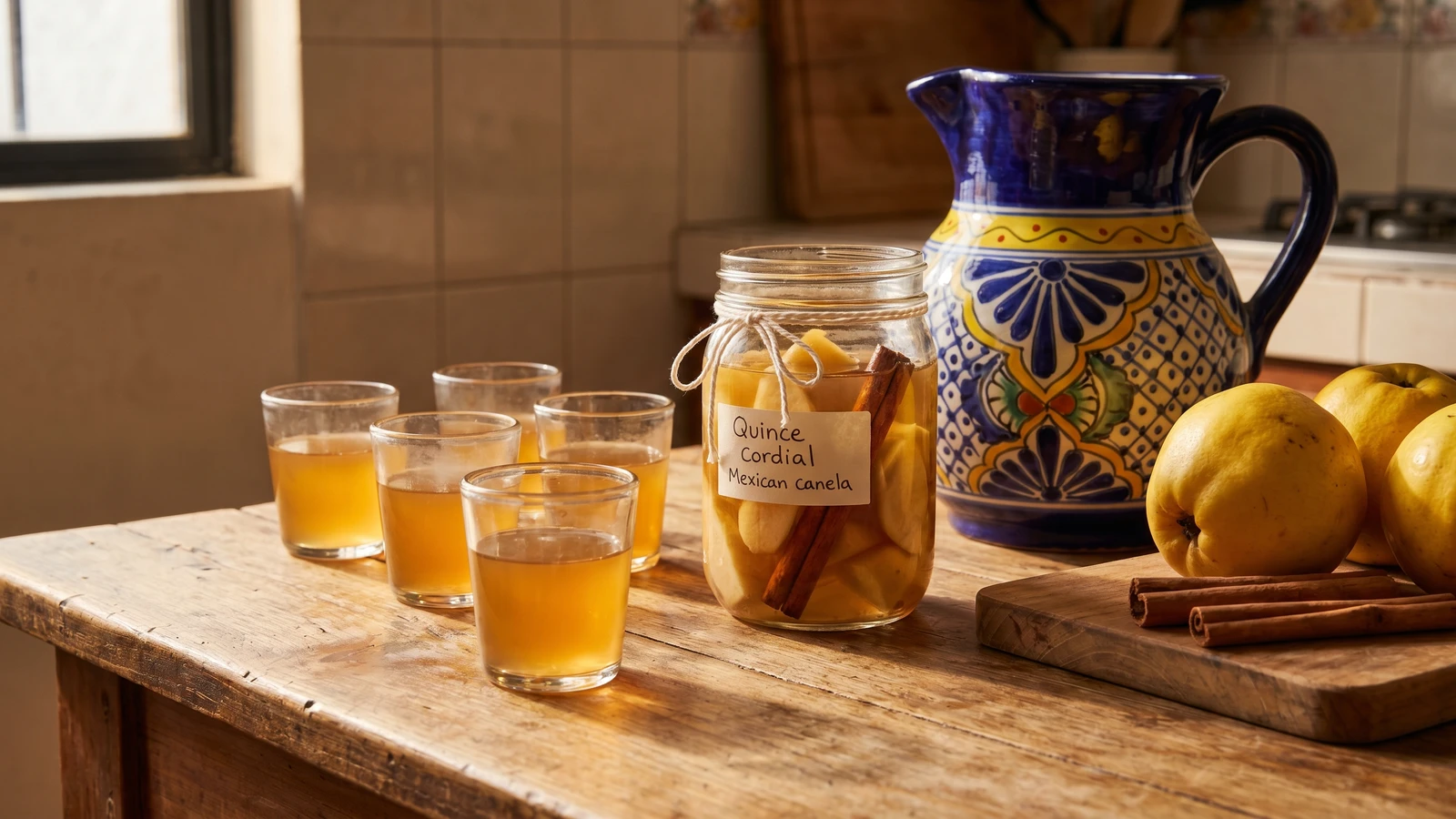
Puebla de los Angeles' convent cordial, built from membrillo, aguardiente de cana, canela, clavo, and patience, sealed weeks before Christmas Eve.
Puebla de los Angeles, in the old convent city, is where this mistela belongs. Not in a bar with a shaker. In the despensa, sealed in glass weeks before Christmas, beside jars of preserves, rompope, and fruit in almibar. The hand that perfected this kind of drink was not showing off. She was preserving the season.
Mistelas entered New Spain through Iberian convent and household preserving traditions, where fruit, sugar, spices, and strong spirits were used to make medicinal and festive cordials. In Puebla de los Angeles, convent kitchens run by orders such as the Clarisas and Dominicans became famous from the 17th century onward for sweets, liqueurs, and fruit preserves made with local orchard fruit and colonial cane spirits. Membrillo, introduced from the Mediterranean, adapted well to highland central Mexico and stayed in the convent pantry because its perfume holds firmly in sugar and alcohol.
Quantity
1 1/2 pounds
washed, cored, and cut into wedges
Quantity
3 cups
Quantity
1 1/2 cups
grated or chopped
Quantity
1 cup
Quantity
1
Quantity
3
Quantity
1 strip
white pith removed
Quantity
1/4 teaspoon
| Ingredient | Quantity |
|---|---|
| ripe membrillo (quince)washed, cored, and cut into wedges | 1 1/2 pounds |
| aguardiente de cana | 3 cups |
| piloncillo or unrefined cane sugargrated or chopped | 1 1/2 cups |
| water | 1 cup |
| Mexican canela stick | 1 |
| whole cloves | 3 |
| orange peelwhite pith removed | 1 strip |
| sea salt | 1/4 teaspoon |
Wash the membrillos well. Rub off any fuzz, then quarter them, remove the hard cores, and cut the fruit into thick wedges. Do not peel them. The skin carries perfume and a little tannin, and that is what gives the mistela its backbone.
Combine the piloncillo, water, canela, cloves, orange peel, and salt in a small saucepan. Bring to a gentle simmer and cook for 8 to 10 minutes, until the piloncillo dissolves and the syrup smells of canela and fruit peel. Let it cool completely. Hot syrup and aguardiente do not belong together. You will drive off what you paid for.
Place the membrillo wedges in a clean 1 1/2-quart glass jar. Pour in the cooled syrup with the canela, cloves, and orange peel. Add the aguardiente de cana. The fruit should be fully covered. If one piece floats, press it down with a clean glass weight or a small saucer that fits inside the jar.
Seal the jar and label it with the date. Keep it in a cool, dark cabinet for 3 weeks, shaking it gently every two or three days. The aguardiente will turn pale gold first, then deeper amber, and the membrillo will give up its floral smell slowly. No me vengas con atajos. The waiting is the technique.
After 3 weeks, strain the liquid through a fine-mesh sieve lined with clean cheesecloth. Do not press the fruit hard or the cordial will cloud more than it should. A little haze is honest. Muddy liquor means you forced it.
Pour the strained mistela into sterilized glass bottles. Rest it at least 1 more week before serving. The aguardiente softens, the canela settles, and the membrillo becomes rounder. Serve in small copitas, cold or at cool room temperature, after the Christmas Eve meal.
1 serving (about 65g)
Culinary guides, cultural storytelling, and the editorial depth that makes cooking meaningful.
Discover Culinary ExplorerChef Lupita
Ciudad de México's highland market agua fresca, fresh alfalfa blended with pineapple and lime until bright green, strained clean, and poured cold from the vitrolero.

Chef Lupita
Aguascalientes' Lenten agua fresca, jewel-red from cooked beet and full of apple, banana, orange, lettuce, and ground peanuts, served cold when Holy Week meets the Feria de San Marcos.

Chef Lupita
Sonora and Sinaloa's creamy malted barley water, built on toasted cebada perla, Mexican canela, vanilla from Papantla, and evaporated milk. Pink-beige, rich, and served cold over heavy ice in a heavy glass tumbler. Liquid cookie comfort the northwest way.

Chef Lupita
Yucatán's everyday tonic of boiled chaya leaves blended with lima agria, sugar, and ice. The bright green jarra that sits on every Peninsula table from Mérida to Valladolid.