
Chef Takumi
Aji Fry (アジフライ, panko-fried horse mackerel)
Aji fry is weeknight fish with no mystery: fresh horse mackerel opened cleanly, breaded lightly, and fried until the panko crackles while the flesh stays sweet.
A cooking platform built around craft, culture, and the stories behind what we eat.
Created by
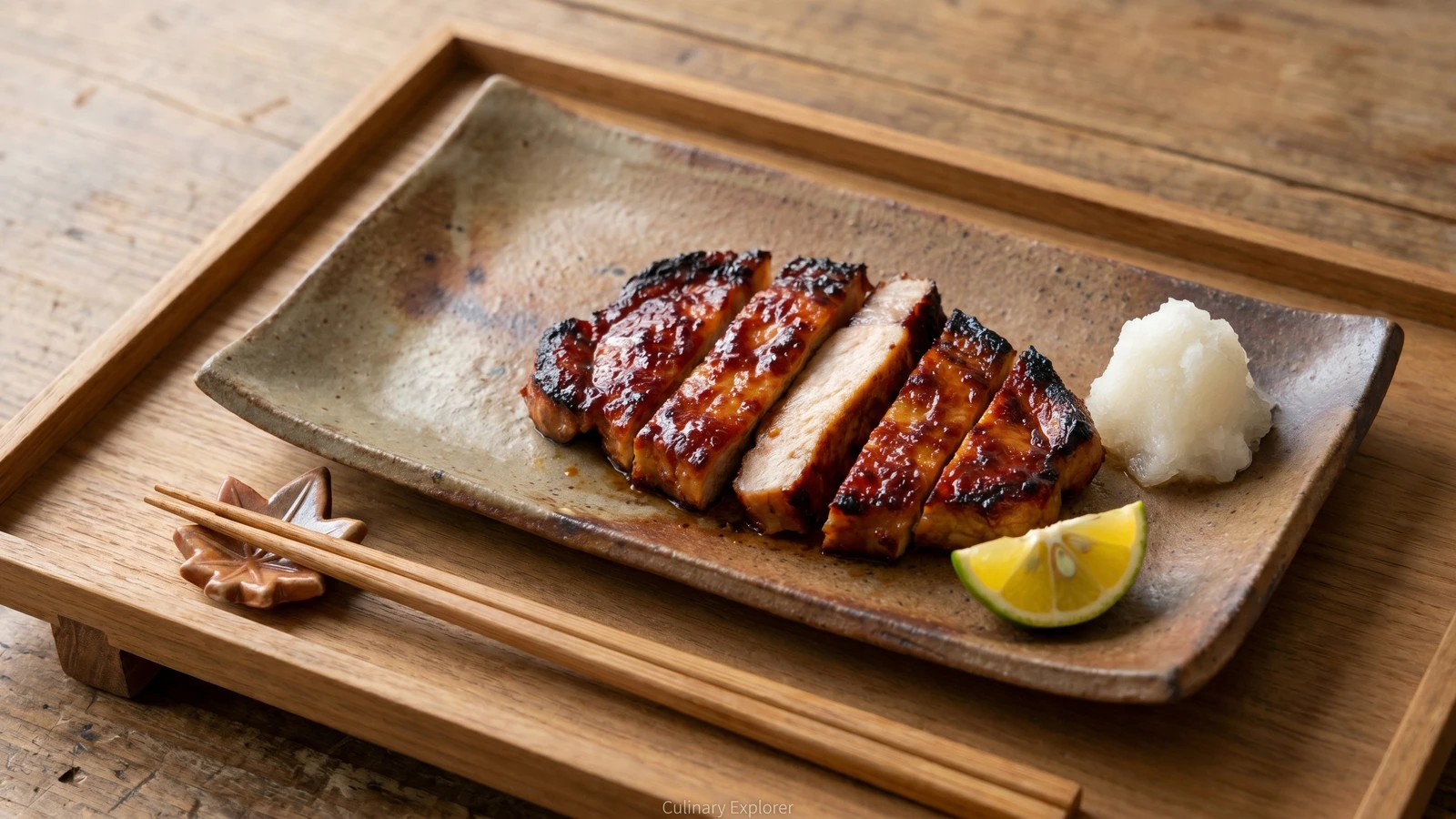
A modest pork loin chop becomes dinner-party food after a night in red miso. Wipe it clean before grilling, and the surface turns glossy instead of scorched.
Pork loin is not a glamorous cut. Good. It has enough firmness to stand up to miso, and enough plainness to let the seasoning show its work. In this dish, the marinade doesn't hide the pork. It teaches it manners.
Buta no misozuke-yaki is simpler than people make it sound: bury pork in a sweet miso bed, leave it overnight, wipe it clean, then grill it gently. The miso seasons, firms, and deepens the meat while the mirin and sake soften the salt. The danger is not the marinating. The danger is impatience at the grill.
Miso burns before pork finishes cooking, so we wipe the surface nearly clean. That isn't fussiness. It's the difference between a lacquered brown chop and a bitter black one, and no sauce should be asked to apologize for that. Cook it over medium heat, let the color come slowly, and you'll see why misozuke has long been a sensible make-ahead method: yesterday's work becomes tonight's calm.
Serve it with rice, a sharp mound of grated daikon, and one green vegetable. In the rhythm of a Japanese meal it sits as the main dish, rich but not heavy, with the plate left open around it. Leave it room. The pork has been waiting all night, and it doesn't need a crowd.
Misozuke, preserving foods in miso, grew from the same household logic as other Japanese pickling methods: salt, fermentation, and time made perishable ingredients last longer while improving their flavor. In the Edo period, miso pickles of vegetables, fish, and meat appeared in regional cookery, with Kyoto especially known for white-miso pickling and eastern Japan for darker, saltier miso preparations. Pork became more common on the Japanese table in the Meiji period, when official attitudes toward meat eating changed and pork cookery spread beyond earlier limited uses.
Quantity
4 pieces (about 120g each)
about 1/2 inch thick
Quantity
1/2 teaspoon
Quantity
3/4 cup
Quantity
3 tablespoons
Quantity
2 tablespoons
Quantity
1 tablespoon
Quantity
1 teaspoon
Quantity
1 teaspoon
finely grated
Quantity
as needed
for the grill or pan
Quantity
1 small
grated and lightly squeezed
Quantity
1
cut into wedges
| Ingredient | Quantity |
|---|---|
| boneless pork loin chopsabout 1/2 inch thick | 4 pieces (about 120g each) |
| sea salt | 1/2 teaspoon |
| aka miso (red miso) | 3/4 cup |
| mirin | 3 tablespoons |
| sake | 2 tablespoons |
| sugar | 1 tablespoon |
| soy sauce | 1 teaspoon |
| gingerfinely grated | 1 teaspoon |
| neutral oilfor the grill or pan | as needed |
| daikon (optional)grated and lightly squeezed | 1 small |
| lemon or sudachi (optional)cut into wedges | 1 |
Pat the pork dry and sprinkle both sides lightly with the salt. Leave it on a rack for 15 minutes, then blot away any moisture that rises. This small salting firms the surface and pulls off excess water, so the miso clings instead of sliding around in a puddle.
Stir together the red miso, mirin, sake, sugar, soy sauce, and grated ginger until smooth. The mixture should be thick enough to spread, not pour. Mirin and sake loosen the miso and round its salt, while sugar helps the finished pork take on a quiet gloss.
Spread a third of the miso mixture in a shallow container, lay the pork on it in one layer, and cover the tops completely with the remaining miso. Press plastic wrap or parchment directly against the surface, cover, and refrigerate at least 8 hours and up to 24 hours. This is misozuke, miso pickling, and it seasons slowly from the outside in. Longer than a day makes thin pork too salty and tight.
Lift the pork out of the marinade and wipe off the miso with your fingers, then with a damp cloth or paper towel. Don't rinse it. Water washes away the seasoning you waited for, but miso left on the surface burns before the pork cooks through. This is the one detail that decides the dish.
Heat a grill, grill pan, or heavy skillet over medium heat and oil it lightly. Cook the pork 4 to 5 minutes on the first side and 3 to 4 minutes on the second, lowering the heat if the surface darkens too fast. You want a soy-brown, glossy crust with a little char at the edge, not a black coat of burned miso. The pork is ready at 63°C or 145°F in the center, followed by a short rest.
Rest the pork for 5 minutes, then slice each chop across the grain into neat pieces. Resting keeps the juices in the meat instead of on the board, and slicing makes the glaze, the grain, and the tenderness visible. Serve with grated daikon and a citrus wedge if you like, beside rice and something green.
1 serving (about 125g)
Culinary guides, cultural storytelling, and the editorial depth that makes cooking meaningful.
Discover Culinary ExplorerChef Takumi
Aji fry is weeknight fish with no mystery: fresh horse mackerel opened cleanly, breaded lightly, and fried until the panko crackles while the flesh stays sweet.
Chef Takumi
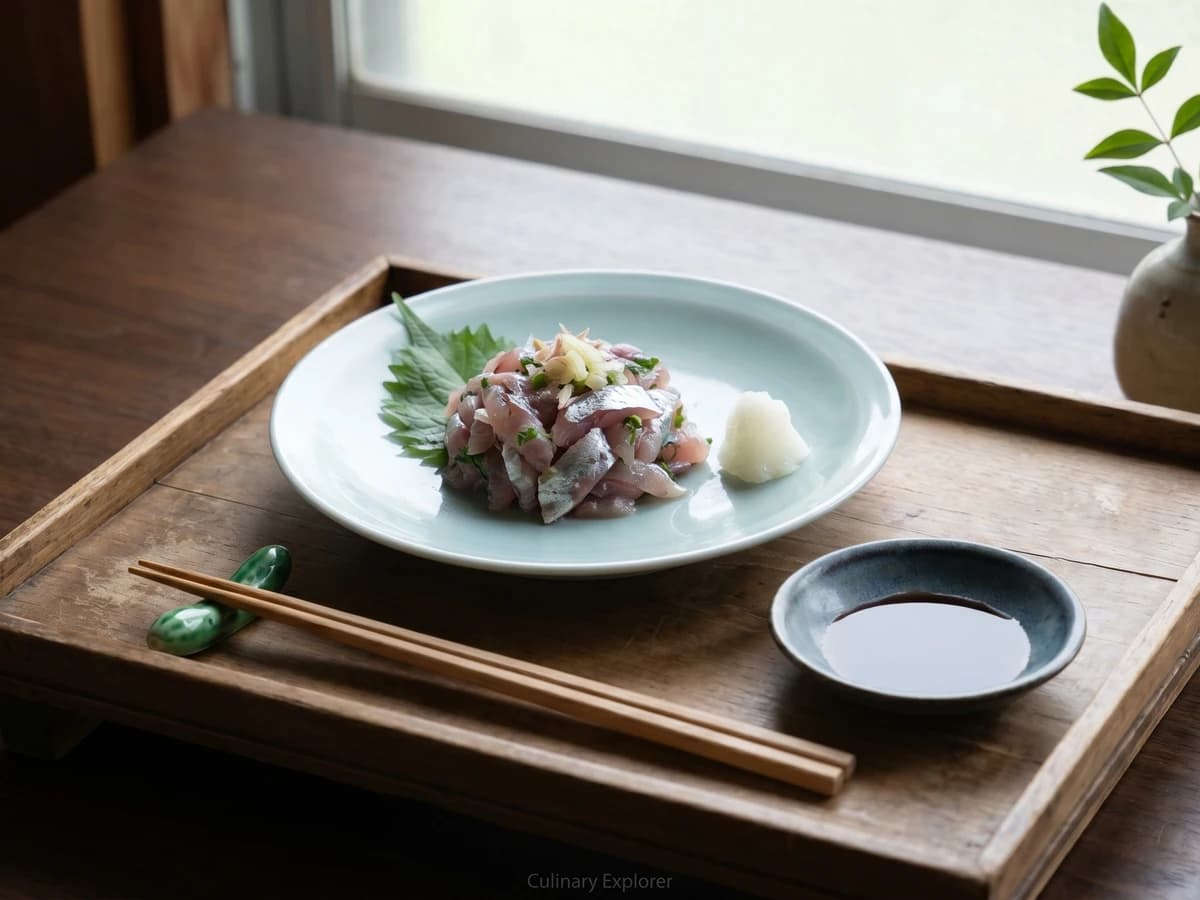
Summer horse mackerel, chopped just enough to catch ginger and scallion, becomes a cool, clean main dish with rice. The secret is fresh fish and a knife that does not bruise it.
Chef Takumi
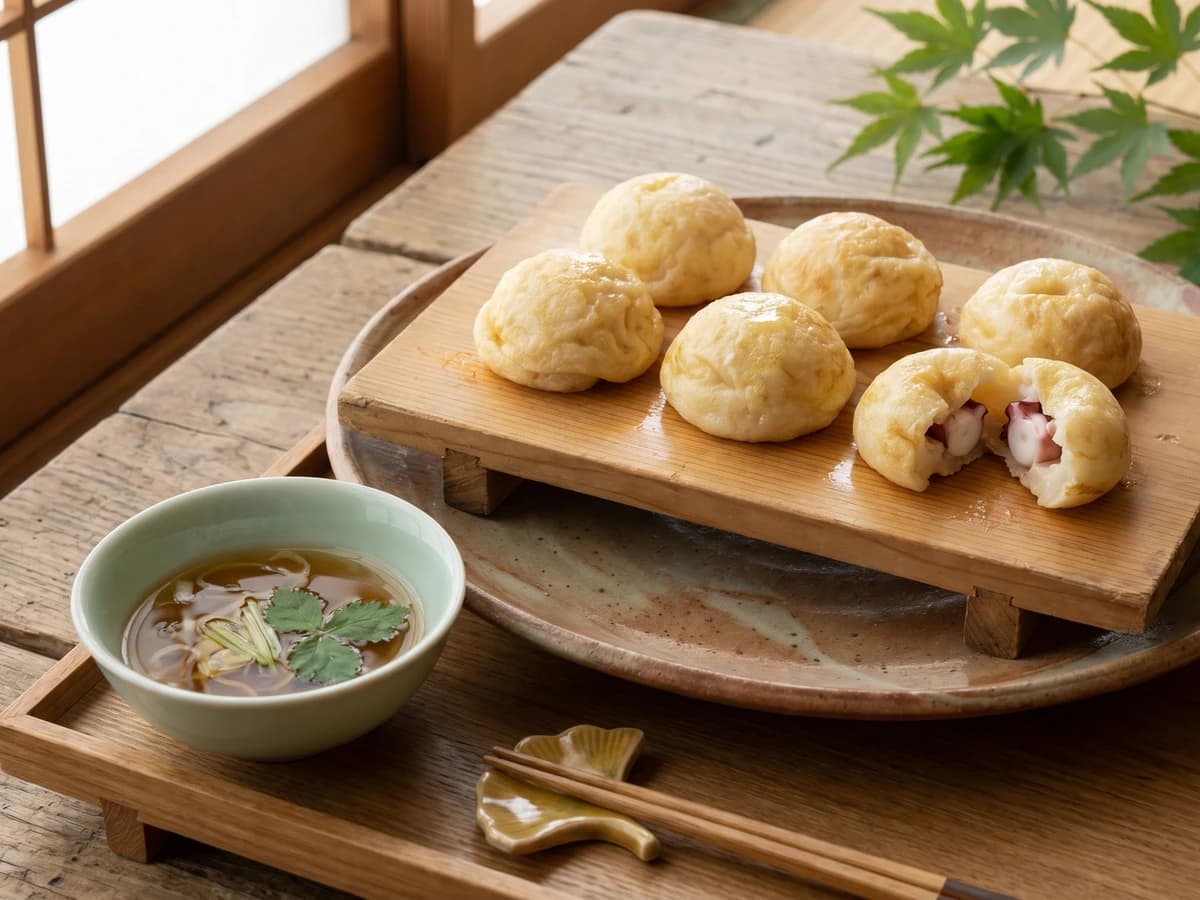
Akashi-yaki is not sauced takoyaki. It is egg-rich batter, tender octopus, and clear dashi, cooked pale and soft so each ball can be dipped like a small custard dumpling.

Chef Takumi
A whole anago looks like a test of nerve. It is mostly good sourcing, a dry skin, cold batter, and oil hot enough to leave the eel sweet under its lace.