
Chef Lesia
Buryakovyi Salat (буряковий салат, raw beet salad)
The beet stays raw, so the salad bites back: crimson, garlicky, nutty, slick with green sunflower oil, and ready before the bread is on the table.
A cooking platform built around craft, culture, and the stories behind what we eat.

Created by
The Easter basket comes home holy and leaves the table chopped: kovbasa, egg, beet, and horseradish folded into one sharp crimson bowl after the church bells are finished.
The Easter basket comes home holy and leaves the table chopped. That is the arresting thing about mishanyna: in Halychyna, after the long church service, the foods that were blessed one by one, egg, kovbasa, beet, horseradish, are cut small and mixed until the bowl turns crimson at the edges and sharp enough to wake a tired mouth.
The dish is not tidy. It is the western Easter plate refusing separate compartments, smoky meat against sweet beet, yolk against the sting of khrin, horseradish, a little vinegar or beet zakwas to make the color shine. You mix it after church, not the night before, because the egg should still look like egg and the horseradish should still have its bite. That is the one why that decides it.
My Kherson grandmother would have put ferments on the table in their own bowls, everything leaking nicely onto plates. A Galician friend taught me this basket logic instead: chop what has been blessed, dress it with beet and khrin, and feed everyone before the children steal all the krashanky, the dyed eggs. It is a resurrection salad, yes, but also a practical one. People come home hungry.
Mishanyna, from mishaty, to mix, belongs to Halychyna, the western Ukrainian region around Lviv, Ternopil, and Ivano-Frankivsk where Easter breakfast begins with sviache, the foods blessed in the church basket. Its closest companion is tsvikli, beetroot mixed with fresh horseradish, a Galician table staple shaped by the region's Polish and Austro-Hungarian borderland habits while staying firmly inside Ukrainian Easter practice. In Soviet decades, public church blessing was discouraged, but the basket and the first mixed bowl survived at home, carried through kitchens more stubbornly than any decree.
Quantity
4 medium (about 600g)
scrubbed, tails left on
Quantity
6
Quantity
300g
skin removed if tough, cut into small dice
Quantity
150g
cut into small dice
Quantity
30g
finely grated, or 4 tablespoons prepared horseradish, drained
Quantity
2 tablespoons
Quantity
1 tablespoon
Quantity
1/2 teaspoon
Quantity
3/4 teaspoon, plus more to taste
Quantity
to taste
Quantity
small handful
finely chopped
| Ingredient | Quantity |
|---|---|
| beetsscrubbed, tails left on | 4 medium (about 600g) |
| large eggs | 6 |
| cooked smoked Ukrainian kovbasaskin removed if tough, cut into small dice | 300g |
| baked pork or ham (optional)cut into small dice | 150g |
| fresh horseradish rootfinely grated, or 4 tablespoons prepared horseradish, drained | 30g |
| apple cider vinegar or beet zakwas | 2 tablespoons |
| unrefined sunflower oil | 1 tablespoon |
| sugar or honey (optional) | 1/2 teaspoon |
| sea salt | 3/4 teaspoon, plus more to taste |
| black pepper | to taste |
| fresh dill (optional)finely chopped | small handful |
Put the beets in a saucepan, cover with cold water, and simmer gently until a knife slides through without a fight. Keep the tails on. They hold the color inside, so the beet stays deep ruby instead of bleeding itself pale into the pot. Cool until you can handle them, then slip off the skins.
Cook the eggs until the yolks are set but still golden, then drop them into cold water and peel. Chalky yolks make a dry salad, and this dish already has enough sharpness from the khrin, horseradish, to carry it.
Grate the cooked beets coarsely into a large bowl. Grate the fresh horseradish finely, standing back because it bites the nose, then stir it into the beets with the vinegar or beet zakwas, sunflower oil, salt, pepper, and the sugar if the beets need rounding. This beet and horseradish mixture is close to tsvikli, the Galician relish that wakes up Easter meat.
Cut the kovbasa, and the baked pork or ham if using, into small even pieces. Chop the eggs a little larger so they don't disappear. The bowl should taste like the Easter basket, not like one ingredient shouting over the others.
Fold the kovbasa and pork through the beet and horseradish first, then add the eggs last with a loose hand. You want crimson streaks, yellow yolk, white egg, and smoky meat still visible, not a mashed pink paste. Let it sit just long enough for the beet juice to stain the edges and for the horseradish to climb into everything.
Taste once more for salt, sourness, and heat. Add more horseradish if the bowl has gone sleepy, more vinegar or zakwas if it tastes too sweet, and dill if you want that green spring snap. Serve with paska and the rest of the Easter table. Enough for eight guests or one hungry Ukrainian.
1 serving (about 175g)
Culinary guides, cultural storytelling, and the editorial depth that makes cooking meaningful.
Discover Culinary ExplorerChef Lesia
The beet stays raw, so the salad bites back: crimson, garlicky, nutty, slick with green sunflower oil, and ready before the bread is on the table.

Chef Lesia
The pickle keeps this so-called men's salad honest: beef and beans bring the appetite, fried onion brings sweetness, and cucumber brine cuts through the mayonnaise until the bowl wakes up.
Chef Lesia
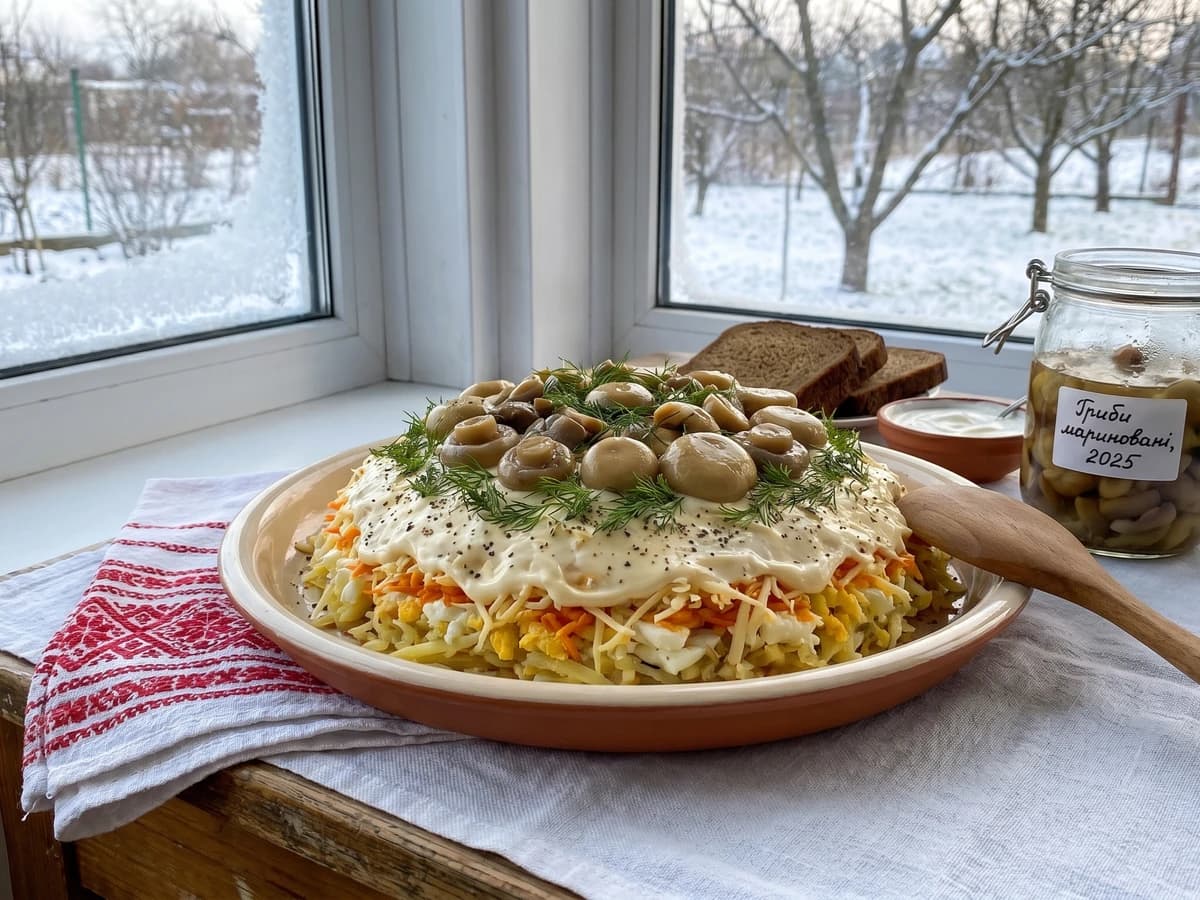
Open the jar and the holiday table smells briefly of the woods: marinated mushrooms, potato, egg, cheese, dill, and just enough mayonnaise to make it hold together.

Chef Lesia
The cabbage changes under your hands: stiff, squeaky ribbons soften into a glossy summer salad with carrot sweetness, dill sharpness, and green sunflower oil catching the light.