Chef Lupita
Acúmara Tatemada al Comal
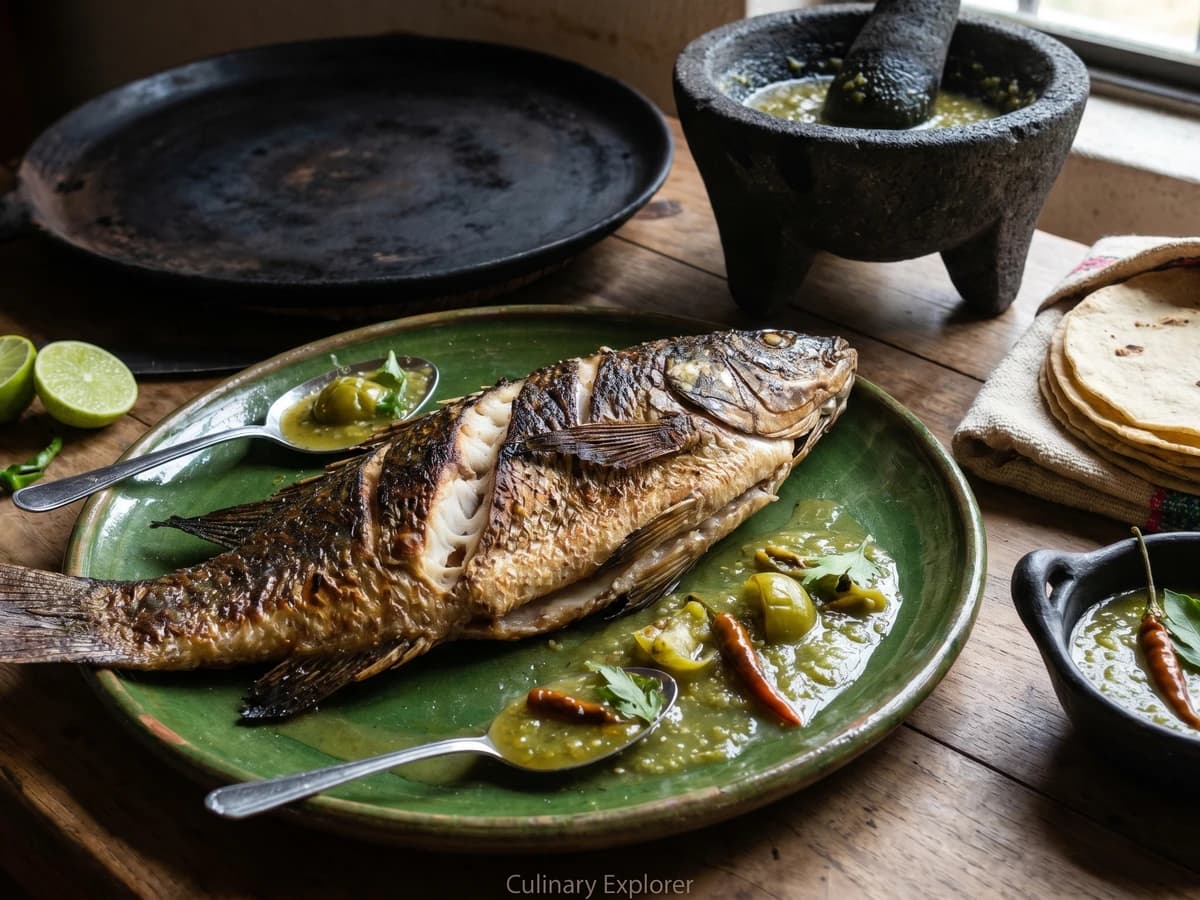
Michoacán's Lake Pátzcuaro acúmara, a whole kurucha from the lago tatemada on a comal de leña and served with chile perón atápakua, corn tortillas, and P'urhépecha discipline.
A cooking platform built around craft, culture, and the stories behind what we eat.
Created by
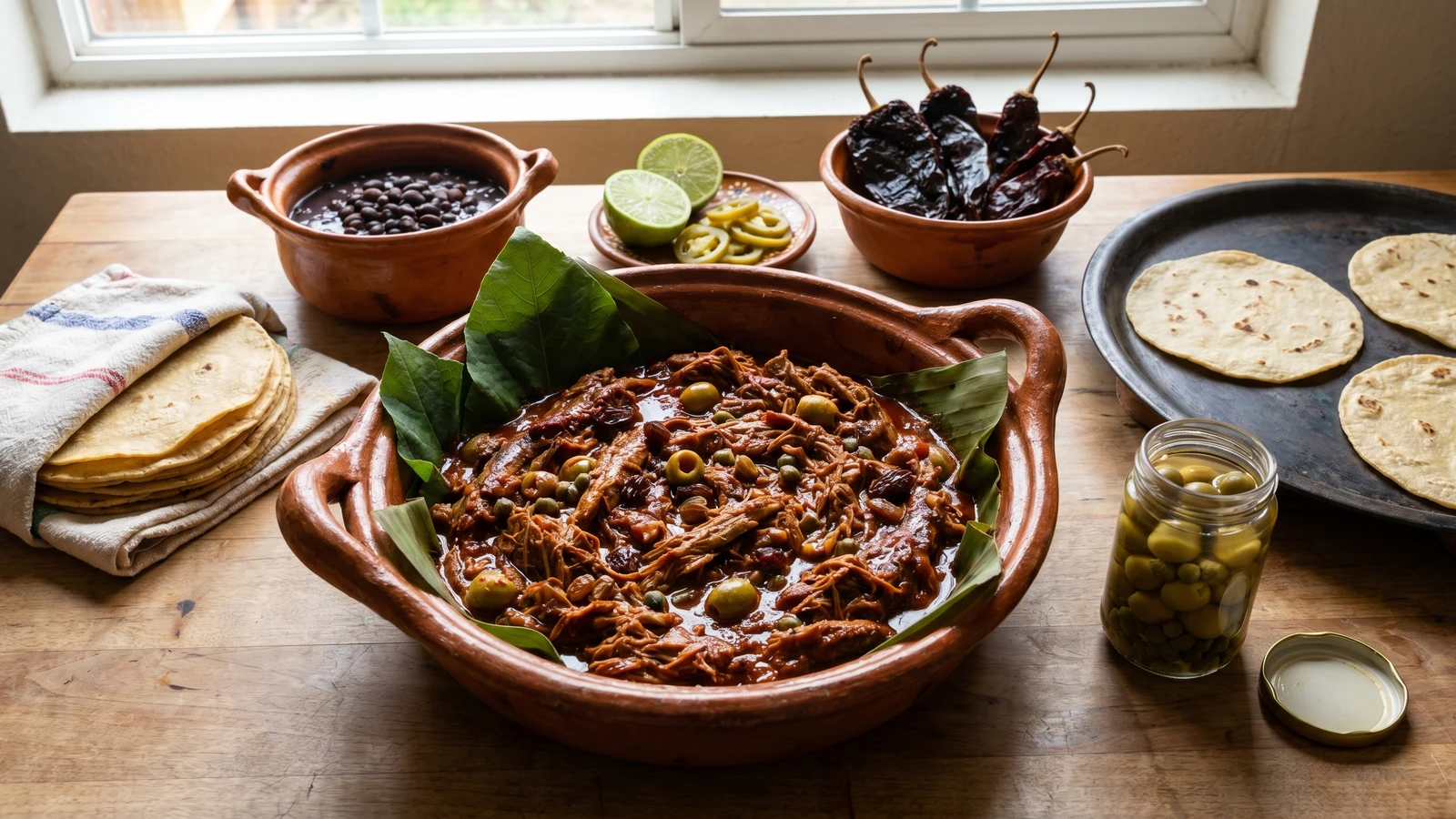
Veracruz's Los Tuxtlas minilla turns Lake Catemaco eel into a sweet-salty shredded guiso with jitomate, olives, capers, raisins, chile ancho, and chipotle.
Veracruz, Los Tuxtlas, Lake Catemaco. That is where this minilla lives. Not on the Gulf coast, not in a restaurant calling everything Veracruz-style because it found a jar of olives. Catemaco is freshwater, green hills, rain, acuyo leaves, black beans in the pot, and fish cooks who know how to make a second-day guiso taste better than the first-day meal.
Minilla is the Veracruz habit of taking cooked fish, shredding it fine, and stewing it with jitomate, onion, garlic, olives, capers, and raisins until it becomes something you can tuck into a tortilla, fill an empanada with, or spoon beside black beans. With anguila from Lake Catemaco, the flesh is richer than robalo or sierra. You need the acid of the tomato, the salt of the olive, the small sweetness of the raisin, and the dark base of chile ancho with a little chile chipotle seco. Not much. This dish is not about punishing anybody with heat.
I learned a version of this from a woman near the Catemaco market who cleaned the eel with the patience of someone who had done it since childhood. She used aceite de oliva, not manteca, because Veracruz has always cooked with one eye toward the port and one eye toward the milpa. She lined the serving cazuela with hoja santa. That leaf perfumes the eel without shouting over it. Cada estado, su propia cocina.
The work is in the shredding and the slow reduction. Do it carelessly and you get wet fish salad. Do it properly and the minilla turns glossy, dark red, sweet-salty, and firm enough to hold in a tortilla. La cocina no es decoracion, es trabajo.
Minilla is a Veracruz preparation tied to the port's long exchange with Spain and the Caribbean, where olives, capers, raisins, and olive oil entered local kitchens after the 16th century and settled into seafood guisos. In Catemaco, the freshwater version reflects Los Tuxtlas geography: lake fish and eel, acuyo or hoja santa from the humid lowlands, and black beans rather than the pinto beans common farther north. The dish is related to fish minilla used for empanadas along the Veracruz coast, but anguila de Catemaco gives it a richer texture and a local identity that coastal versions do not have.
Quantity
2 pounds
cut into 3-inch pieces
Quantity
1 large, plus more for lining the serving dish
Quantity
2 sprigs
Quantity
1/2 medium
left in one piece
Quantity
3
2 whole and 1 finely chopped
Quantity
1
Quantity
1 1/2 teaspoons, plus more to taste
Quantity
2
stemmed and seeded
Quantity
1
stemmed
Quantity
4 tablespoons
Quantity
1 medium
finely chopped
Quantity
1 1/2 pounds
finely chopped or grated
Quantity
2 tablespoons
Quantity
1/2 teaspoon
crushed between your fingers
Quantity
1/3 cup
sliced
Quantity
2 tablespoons
rinsed
Quantity
1/3 cup
Quantity
2 tablespoons
finely chopped
Quantity
1 tablespoon
Quantity
1 tablespoon
Quantity
to taste
Quantity
for serving
warmed
Quantity
for serving
Quantity
for serving
| Ingredient | Quantity |
|---|---|
| cleaned freshwater eel, preferably anguila de Catemacocut into 3-inch pieces | 2 pounds |
| hoja santa leaf | 1 large, plus more for lining the serving dish |
| fresh epazote | 2 sprigs |
| white onion for poachingleft in one piece | 1/2 medium |
| garlic cloves2 whole and 1 finely chopped | 3 |
| bay leaf | 1 |
| kosher salt | 1 1/2 teaspoons, plus more to taste |
| dried chile anchostemmed and seeded | 2 |
| dried chile chipotle secostemmed | 1 |
| aceite de oliva | 4 tablespoons |
| white onionfinely chopped | 1 medium |
| ripe jitomate de bolafinely chopped or grated | 1 1/2 pounds |
| tomato paste | 2 tablespoons |
| dried Mexican oreganocrushed between your fingers | 1/2 teaspoon |
| pimiento-stuffed green olivessliced | 1/3 cup |
| capersrinsed | 2 tablespoons |
| raisins | 1/3 cup |
| pickled jalapeno en escabechefinely chopped | 2 tablespoons |
| jalapeno escabeche brine | 1 tablespoon |
| fresh lime juice | 1 tablespoon |
| freshly ground black pepper | to taste |
| hand-pressed corn tortillas (optional)warmed | for serving |
| cooked black beans (optional) | for serving |
| lime halves (optional) | for serving |
Place the eel pieces in a wide pot with the hoja santa, epazote, half onion, 2 whole garlic cloves, bay leaf, salt, and enough water to cover by one inch. Bring to a gentle simmer and cook 18 to 22 minutes, until the flesh pulls from the bone but has not fallen apart. Do not boil it hard. Eel has fat and gelatin, and rough boiling makes the flesh ragged before you can shred it cleanly.
Lift the eel onto a tray and let it cool until you can handle it. Strain and reserve 1 cup of the poaching liquid. Pull the meat from the bones and skin, then shred it with your fingers into fine strands. Feel for pin bones as you work. This is the step the senoras do slowly, because nobody wants a bone hidden in a tortilla.
Heat a dry comal over medium. Toast the chile ancho about 20 to 30 seconds per side, just until the skin softens and smells sweet. Toast the chile chipotle seco briefly, 10 to 15 seconds per side, because it is already smoked and turns bitter fast. Cover the chiles with hot water and soak 15 minutes.
Drain the soaked chiles and blend them with 1/2 cup of the reserved eel poaching liquid until smooth. Strain through a fine-mesh sieve. Press hard on the solids and discard the skins. You want a dark red paste, not flakes of chile skin stuck to the eel.
Heat the aceite de oliva in a 12-inch clay cazuela or heavy skillet over medium heat. Add the chopped onion and cook 8 to 10 minutes, stirring often, until it turns translucent and sweet at the edges. Add the chopped garlic and cook 1 minute. Add the jitomate, tomato paste, and oregano. Cook 12 to 15 minutes, until the tomato loses its raw smell and the oil begins to show around the edges.
Stir in the strained chile paste and cook 5 minutes, scraping the bottom of the cazuela. Add the shredded eel, olives, capers, raisins, chopped jalapeno, escabeche brine, black pepper, and 1/2 cup of the reserved poaching liquid. Reduce the heat to medium-low and cook 20 to 25 minutes, stirring gently, until the mixture is moist but no longer watery. The raisins should plump, the olives should stay bright, and the eel should hold together in glossy strands.
Taste for salt, then stir in the lime juice. Let the minilla rest off the heat for 10 minutes. That rest matters. The sweet raisin, salty caper, tomato, chile, and eel need a few minutes to settle into one guiso instead of tasting like separate ingredients.
Line a warm clay cazuela with fresh hoja santa leaves and spoon the minilla over them. Serve family-style with warm corn tortillas and black beans. Flour tortillas do not belong here. That is a northern tradition. Catemaco gives you corn, lake fish, acuyo, and beans. Así se hace y punto.
1 serving (about 410g)
Culinary guides, cultural storytelling, and the editorial depth that makes cooking meaningful.
Discover Culinary ExplorerChef Lupita
Michoacán's Lake Pátzcuaro acúmara, a whole kurucha from the lago tatemada on a comal de leña and served with chile perón atápakua, corn tortillas, and P'urhépecha discipline.

Chef Lupita
Puebla's weekday adobo of pork shoulder braised in a thick guajillo and ancho sauce sharpened with vinegar, cumin, and clove. The deep red of a market spice stall, the dish a poblana cooks without thinking.

Chef Lupita
Loreto's pit-roasted clams, planted hinge-up in beach sand and tatemadas under a fast fire of dried romerillo brush, the resinous Baja desert shrub that gives this dish its smoke.

Chef Lupita
Oaxaca's eighth mole, the silky, almond-and-cinnamon almendrado, served over poached chicken. Mild, sweet, restrained, and a quiet rebuttal to anyone who thinks Mexican food has to be hot to be Mexican.