
Chef Juliana
Açaí com Farinha de Tapioca
You don't need a blender trick or a sweet shop bowl. Thick unsweetened açaí, crunchy farinha de tapioca, and the discipline to read the label solve this Belém spoon plate.
A cooking platform built around craft, culture, and the stories behind what we eat.
Created by
You don't need a street counter in Belém to make this. You need tapioca granulada, coconut milk, patience for hydration, and the sense not to boil it into glue.
You may be looking at the bag and thinking, isso não é pra mim. Tapioca granulada, goma, sagu, polvilho, farinha, a whole shelf of mandioca words staring back at you like a test you didn't study for. Anota aí: cooking isn't a gift, it's reading the bag and following a method.
This mingau is breakfast, yes, but it belongs to the same Brazilian intelligence as the pê-efe. Rice and beans at lunch, something green, fish or egg or meat, and in the morning a warm bowl built from mandioca and coconut. Different meal, same idea: comida de verdade made from plain things, the kind that keeps a house fed without asking anyone to be a genius.
The method is simple, and the why matters. Hydrate the tapioca first so the granules soften evenly. Warm the milks gently so the coconut doesn't split and the bottom doesn't catch. Stir until the granules turn tender and the spoon leaves a brief trail, because that's the ponto. Skip the hydration and you'll get hard little centers. Boil it hard and you'll get paste. Nobody needs paste for breakfast.
Use real coconut milk, not a powdered packet pretending to be coconut. If Tuesday is being rude, canned coconut milk is fine. It won't have the perfume of fresh coconut, but it's honest and it works.
Mingau de tapioca is part of the everyday cassava-and-coconut repertoire of Pará, especially visible in Belém, where warm porridges are sold at counters and eaten early in the day. Tapioca granulada comes from cassava starch processed into small dry granules, different from goma de mandioca used for skillet tapioca and different again from sagu pearls. In the north, cassava is not a side note but a foundation, and the exact names matter because each bag behaves differently in the pan.
Quantity
1 cup
Quantity
2 cups
Quantity
1 cup
Quantity
1/2 cup
Quantity
1/3 cup, plus more to taste
Quantity
1/4 teaspoon
Quantity
1/2 cup
Quantity
1
Quantity
to finish
| Ingredient | Quantity |
|---|---|
| tapioca granulada | 1 cup |
| whole milk | 2 cups |
| coconut milk | 1 cup |
| water | 1/2 cup |
| sugar | 1/3 cup, plus more to taste |
| salt | 1/4 teaspoon |
| freshly grated or unsweetened shredded coconut | 1/2 cup |
| cinnamon stick (optional) | 1 |
| ground cinnamon (optional) | to finish |
Check that you have tapioca granulada, dry little cassava granules, not goma de mandioca, not polvilho doce, not polvilho azedo, and not shiny sagu pearls. The right tapioca swells into a creamy mingau; the wrong bag gives you a different dish and then you blame yourself, which I won't allow.
Put the tapioca granulada in a bowl with 1 cup of the milk and the 1/2 cup water. Stir, then let it sit for 10 to 15 minutes, until the granules look swollen and a little milky. This head start matters: hydrated granules cook evenly, while dry ones thrown into hot liquid clump outside and stay stubborn inside.
In a medium heavy pot, combine the remaining 1 cup milk, coconut milk, sugar, salt, grated coconut, and cinnamon stick if using. Warm over medium-low heat until the edges look glossy and small bubbles gather near the side of the pot. Don't let it roar. Coconut milk likes gentleness, and high heat makes the bottom catch before the tapioca has time to soften.
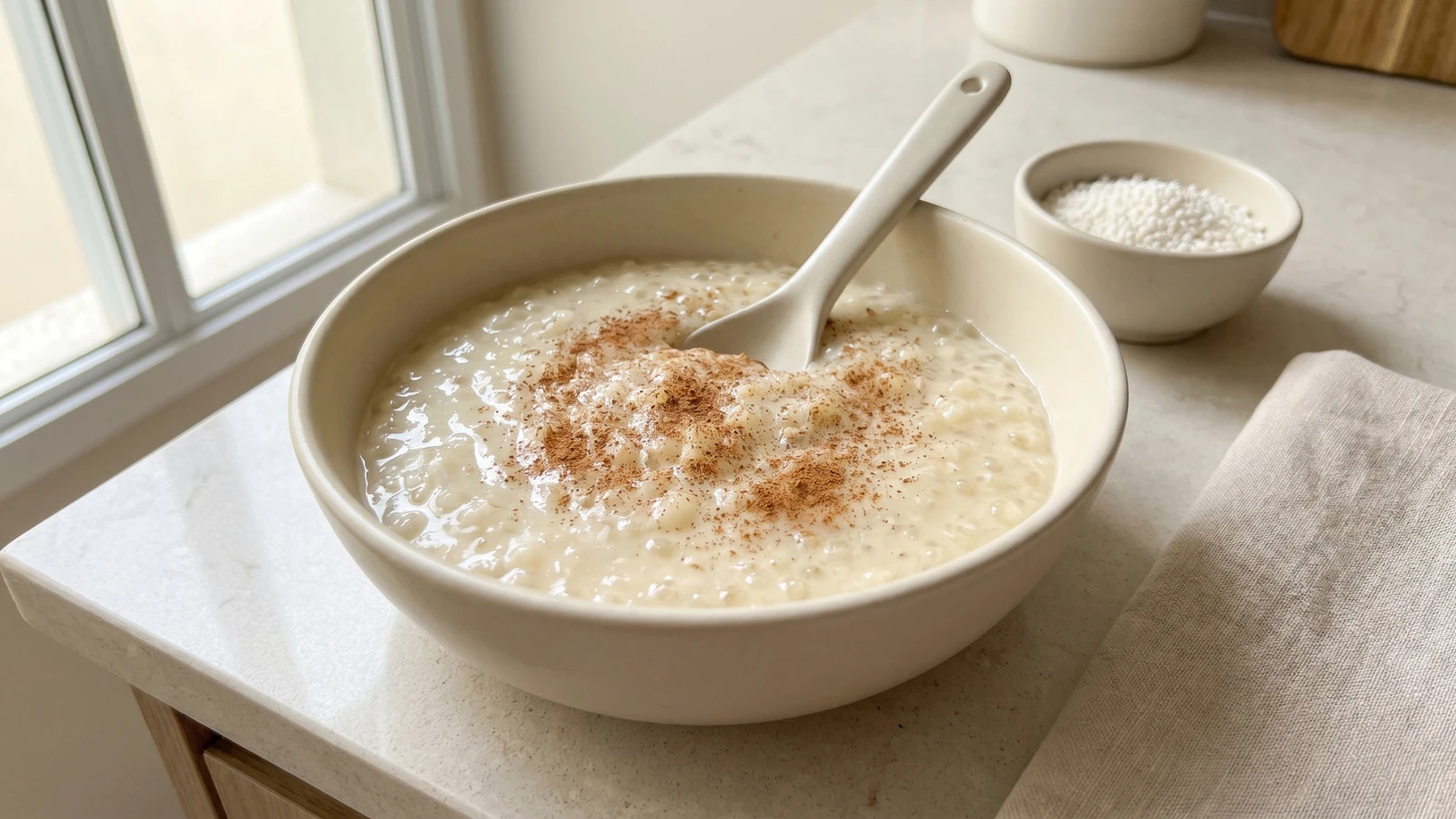
Add the hydrated tapioca and all its soaking liquid to the pot. Stir slowly and often for 8 to 10 minutes, scraping the bottom and corners, until the granules turn tender and the mingau thickens enough that the spoon leaves a short trail before the surface closes. That's the ponto: spoonable, creamy, still loose. If it stands stiff in the pan, it went too far.
Taste one granule. It should be soft all the way through, with no chalky center. If the mingau is thick before the tapioca is tender, add milk 2 tablespoons at a time and keep stirring. This isn't rescue work, it's normal cooking: starch keeps drinking liquid, and a good cook watches the pan, not just the clock.
Pull out the cinnamon stick, spoon the mingau into bowls, and finish with a little ground cinnamon if you like. Serve it warm while it is glossy and soft. As it sits, it thickens, because tapioca keeps absorbing liquid even off the heat.
1 serving (about 260g)
Culinary guides, cultural storytelling, and the editorial depth that makes cooking meaningful.
Discover Culinary ExplorerChef Juliana
You don't need a blender trick or a sweet shop bowl. Thick unsweetened açaí, crunchy farinha de tapioca, and the discipline to read the label solve this Belém spoon plate.

Chef Juliana
You don't need a shop to make a thick açaí bowl. You need real frozen pulp, a ripe banana, and the discipline to stop blending before it becomes juice.

Chef Juliana
You don't need boxed cereal to get breakfast on the table. Fine cassava farinha, milk, salt, and steady stirring turn into a warm Amazonian bowl that actually carries you.

Chef Juliana
If you think two ingredients can't feed you, anota aí. Good farinha d'água, cold water, and salt make a bowl that's plain, Brazilian, and smarter than the packet.