
Chef Takumi
Agar Jelly with Anko and Fruit (あんみつ, Anmitsu)
Anmitsu looks like a tray of small tasks, but the work is calm: dissolve the kanten fully, chill the pieces clean, then let fruit, anko, and kuromitsu do the speaking.
A cooking platform built around craft, culture, and the stories behind what we eat.
Created by
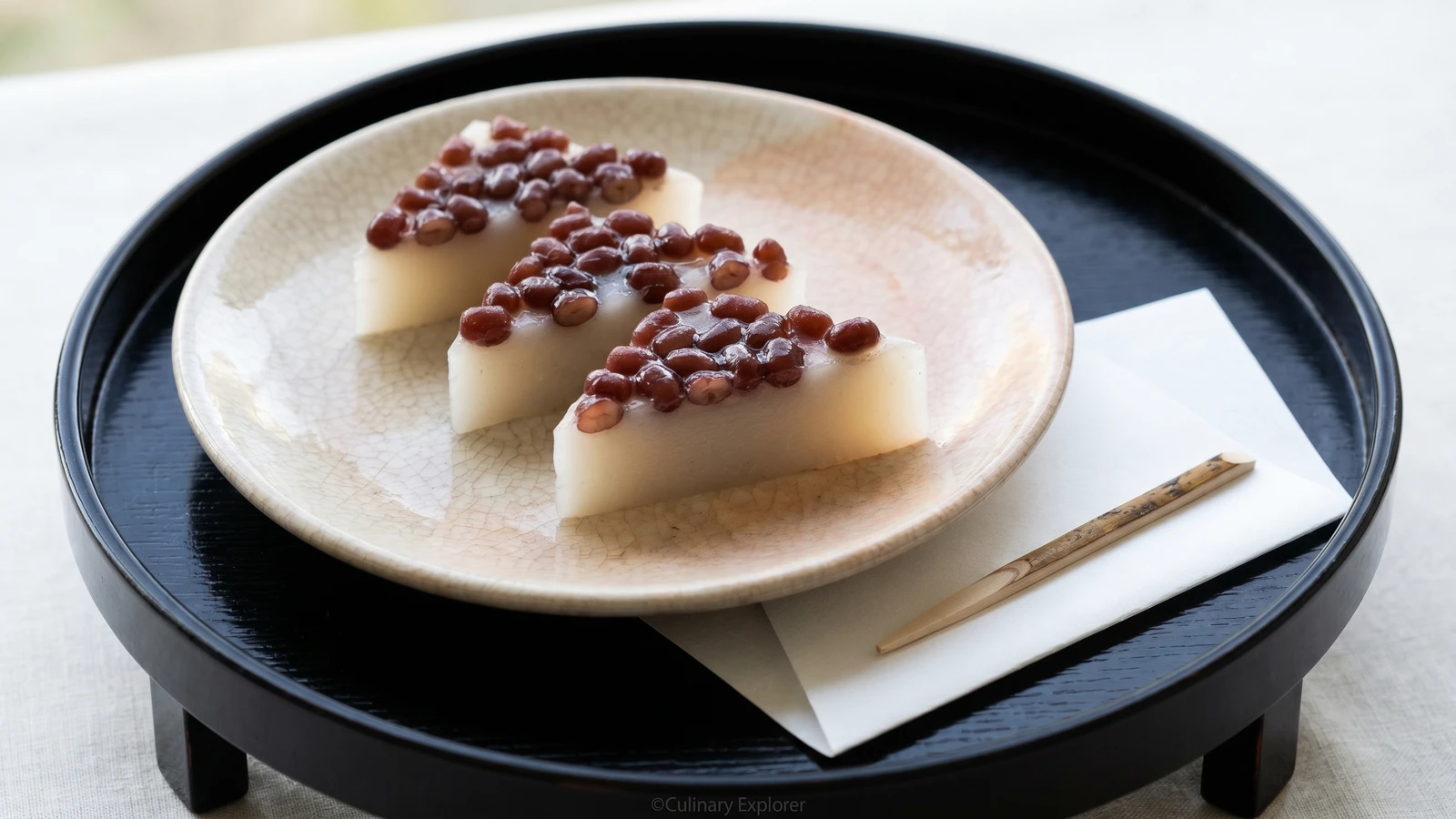
Kyoto's June sweet is less pastry than calendar. A tender uirō slab, a scatter of sweet azuki, and one clean triangular cut mark the body for summer.
June has a way of making even sweets sensible. Minazuki is a Kyoto wagashi for the last day of the month: a pale triangle of uirō, tender and lightly chewy, with sweet azuki beans set across the top. It looks ceremonial. It is, but the making is plain: stir, strain, steam, cool, cut.
Here the one detail that decides the dish is not the triangle, though the triangle matters. Save a little batter and add the beans only after the base has begun to set. If you scatter the beans over raw batter, they sink and the surface turns muddy. If you set them on a cooked slab, they sit loose. The second pour ties them down neatly, a small piece of patience doing the work people like to call difficult.
On June 30, we eat Minazuki after Nagoshi no Harae, the half-year purification, when the body is asked to cross into true summer without carrying too much of what came before. The white uirō suggests a shard of ice, the azuki brings its old red-bean protection, and the sweetness stays clean. This is 本物 (honmono, the real thing) in its modest form: a calendar sweet with no flourish to hide behind. Leave each triangle some space on the plate and let the date speak.
Minazuki is tied to Nagoshi no Harae, the June 30 purification rite observed at Kyoto shrines at the midpoint of the year. The triangular white base is understood as a shard of ice, recalling the Heian-period court practice of keeping winter ice in himuro icehouses for summer use, while the azuki beans draw on the older belief that red repels impurity and misfortune. By the modern Kyoto wagashi calendar, it is the sweet most closely associated with June's last day.
Quantity
80g
sifted
Quantity
30g
Quantity
15g
Quantity
90g
Quantity
1 small pinch
Quantity
260ml
Quantity
120g
drained and blotted dry
| Ingredient | Quantity |
|---|---|
| hakurikiko (low-protein cake flour)sifted | 80g |
| jōshinko (Japanese non-glutinous rice flour) | 30g |
| kuzu starch (Japanese arrowroot), or katakuriko (potato starch) | 15g |
| fine white sugar | 90g |
| sea salt | 1 small pinch |
| water | 260ml |
| nure amanattō or kanoko-mame sweetened azuki beansdrained and blotted dry | 120g |
Line a small nagashi-kan mold, or a 6-inch square heatproof pan, with parchment, leaving two tabs so you can lift the sweet out cleanly. Bring about 2 inches of water to a steady simmer in a mushiki or a pot fitted with a rack. If using a metal lid, wrap it in a kitchen cloth and tie the ends on top, away from the burner. The cloth catches condensation before it falls onto the batter, because those drops leave pale craters in a sweet that has nowhere to hide.
Whisk the hakurikiko, jōshinko, kuzu starch, sugar, and salt in a bowl. Add the water little by little, whisking until smooth, then strain the batter through a fine sieve into a pitcher or bowl. Let it rest for 10 minutes. The rest gives the rice flour time to drink, and the straining removes the little dry knots that would show up as chalky spots in the finished uirō.
Stir the batter once, then measure out 90ml, about 6 tablespoons, and keep it aside for the top. Pour the rest into the lined mold. Set the mold level in the steamer, cover, and steam over medium heat for 18 to 20 minutes, until the surface has turned opaque and set enough to hold a bean without swallowing it. This first set is the support. Rush the beans in too early and they disappear into the dough.
Scatter the blotted azuki beans evenly over the hot base in a single layer. Stir the reserved batter, because the flour settles while it waits, then pour it thinly over and between the beans. Return the mold to the steamer and cook for 10 to 12 minutes more, until the top layer is set and a toothpick pushed into the pale part comes out without milky batter. The second pour is the quiet trick: it fastens the beans to the slab so the cut stays clean.
Lift the mold from the steamer and let the Minazuki cool completely in the pan. If the kitchen is hot, chill it for 30 minutes after it reaches room temperature. Loosen the edges, lift it out by the parchment tabs, and cut with a wet knife, wiping the blade between cuts. First make squares, then cut each square diagonally into triangles. Warm uirō tears and drags the beans with it, so the cooling is not waiting around. It is part of the knife work.
Serve the triangles the day they are made, at room temperature or lightly chilled. The texture should be tender and lightly chewy, never rubbery, with the azuki sitting proud on the surface. Set out only a few pieces at once, with room around them. A crowded plate makes this small June sweet look nervous, and it has no reason to be.
1 serving (about 70g)
Culinary guides, cultural storytelling, and the editorial depth that makes cooking meaningful.
Discover Culinary ExplorerChef Takumi
Anmitsu looks like a tray of small tasks, but the work is calm: dissolve the kanten fully, chill the pieces clean, then let fruit, anko, and kuromitsu do the speaking.

Chef Takumi
A cool square of almond-scented milk, set softly and served with mikan in thin syrup, is dinner-party food without theater. The only stern demand is restraint with the fragrance.

Chef Takumi
Azuki bar asks for patience twice: once while the beans soften, and once while the frozen bar yields. That hardness is not a flaw. It is the character of the thing.
Chef Takumi
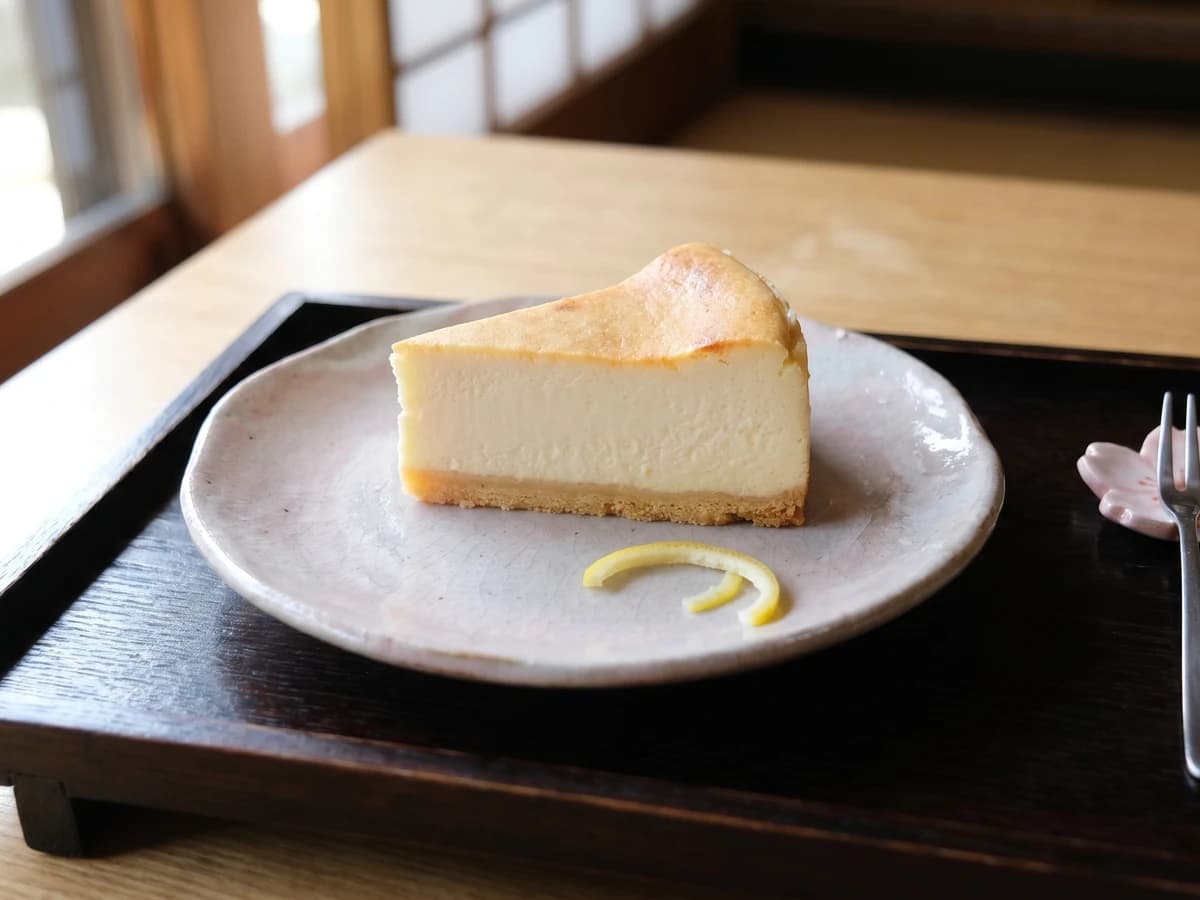
A Japanese baked cheesecake is not trying to float away. It is dense, smooth, and quietly tart, with a clean slice doing the work of decoration.