
Chef Jeong-sun
Aehobak-bokkeum (Korean Stir-Fried Zucchini)
Tender Korean zucchini half-moons cooked quickly over real heat, seasoned with salted shrimp so the squash tastes deeper than oil and still clean enough for a weeknight table.
A cooking platform built around craft, culture, and the stories behind what we eat.
Created by
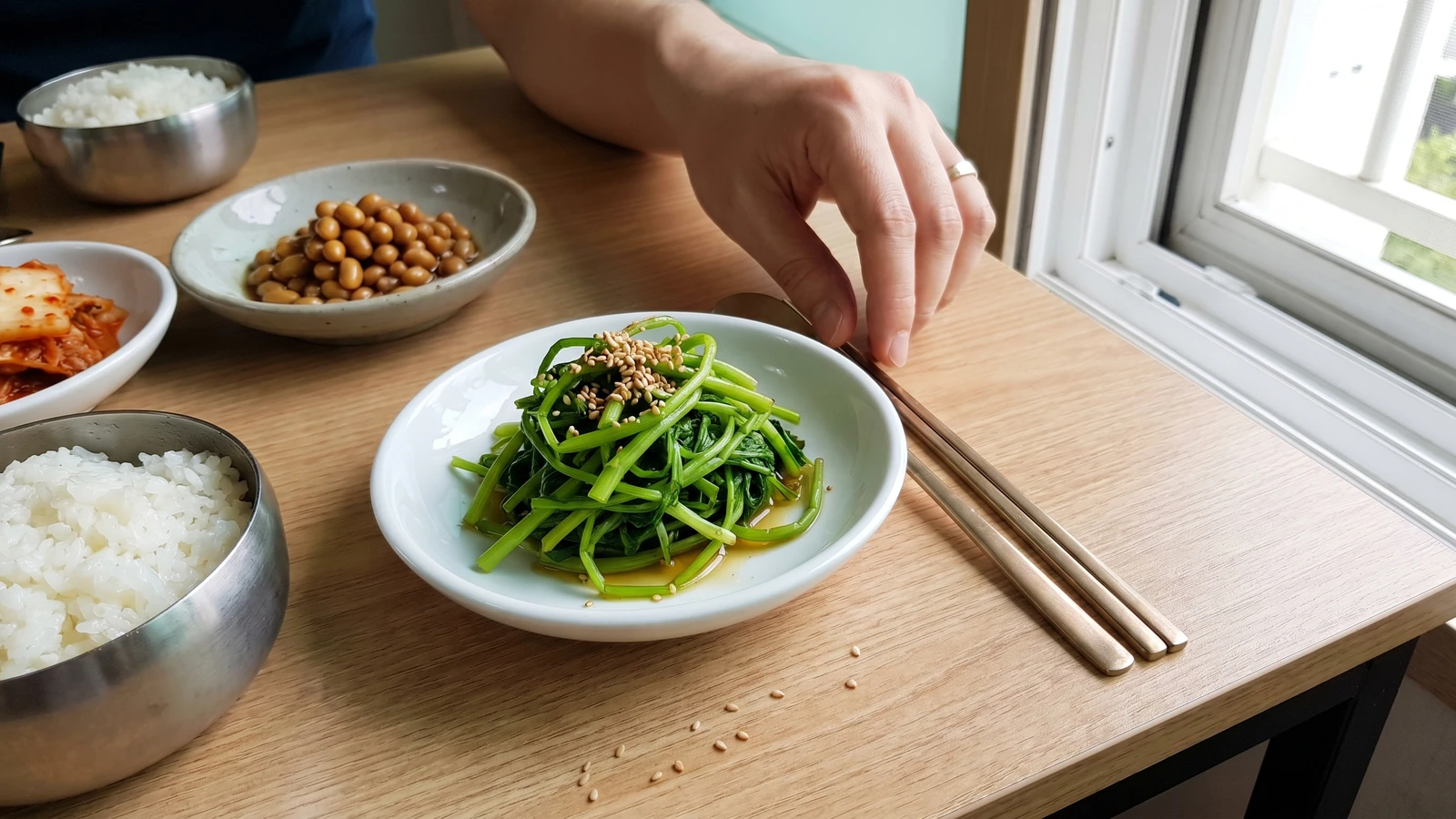
A spring namul of blanched minari, seasoned lightly with soup soy sauce and sesame so the herb stays green, crisp, and plainly itself beside rice.
Minari belongs to spring markets, piled in damp bundles with the roots still smelling of clean mud. Cook the month you're standing in. If the stems are thin and lively, make this namul tonight. If they are thick, hollow, and tired, buy spinach or soybean sprouts instead and wait for better minari.
This is the plain cooked namul, not the tart vinegared chomuchim. That matters. Chomuchim wakes the table with vinegar and gochugaru; minari-namul should keep the green herbal smell whole, with soy and sesame sitting underneath. The dish lives or dies in the blanching. Too short and the stems taste raw. Too long and the leaves collapse into string.
Season it in its own bowl and taste it before it ever meets rice. Every namul deserves that much attention. Notebook 18 says 300 grams trimmed minari takes 1 tablespoon soup soy sauce, 2 teaspoons sesame oil, and one small clove of garlic. 손맛 is real. I still measure it, so it can be handed on.
Minari, often called Korean water dropwort or water celery in English, has long been gathered and cultivated in wet fields and stream edges across Korea, especially as a spring green. It appears on the everyday table as namul, in maeuntang (spicy fish stew), and in fresh seasoned salads, and its clean, sharp flavor made it useful for balancing richer fish, meat, and fermented foods. The vinegared minari-muchim is better known in some restaurants today, but the blanched soy-and-sesame namul belongs to the quieter home table.
Quantity
300g
tough root ends trimmed
Quantity
8 cups
for blanching
Quantity
1 tablespoon
for blanching water
Quantity
1 tablespoon
Quantity
2 teaspoons
Quantity
1 small clove, about 1/2 teaspoon
minced very fine
Quantity
1 teaspoon
lightly crushed
Quantity
1 tablespoon
finely sliced
Quantity
pinch
| Ingredient | Quantity |
|---|---|
| fresh minari (water dropwort)tough root ends trimmed | 300g |
| waterfor blanching | 8 cups |
| coarse saltfor blanching water | 1 tablespoon |
| guk-ganjang (Korean soup soy sauce) | 1 tablespoon |
| toasted sesame oil | 2 teaspoons |
| garlicminced very fine | 1 small clove, about 1/2 teaspoon |
| toasted sesame seedslightly crushed | 1 teaspoon |
| scallion (optional)finely sliced | 1 tablespoon |
| fine sea salt (optional) | pinch |
Trim away tough root ends and any yellow leaves. Swish the minari in a large bowl of cold water, lift it out, and repeat until no grit settles at the bottom, usually 3 rinses. Minari grows in wet ground, so washing is not a polite suggestion. It is the first seasoning, because grit ruins the whole bowl.
Cut the cleaned minari into 2-inch lengths, keeping stems and leafy tops in loose separate piles if the stems are thick. Even lengths season evenly and sit neatly in the banchan dish. This is a small dish, but careless cutting still shows.
Bring 8 cups water to a hard boil and add 1 tablespoon coarse salt. Drop in the stems first for 20 seconds, then add the leafy tops for another 15 to 20 seconds. The color should brighten and the stems should bend while keeping a little snap. Do not walk away. Minari forgives many things, but not boiling into string.
Lift the minari into cold water and swish once to stop the cooking. Drain, then gather it in both hands and squeeze gently, just until it no longer drips hard. Do not wring it dry. A little moisture helps the soy and sesame move through the greens; too much water thins the seasoning.
Put the drained minari in its own mixing bowl. Add the soup soy sauce, sesame oil, minced garlic, crushed sesame seeds, and scallion if using. Toss and rub lightly with your fingers so the seasoning reaches the stems without bruising the leaves. Taste one stem. It should be green first, then savory, then nutty. Add only a pinch of salt if it tastes flat.
Let the namul sit 5 minutes, then taste once more before serving. Sesame oil blooms after it sits, and the garlic sharpens. Serve in a small banchan dish beside rice, soup, and one stronger side dish. This is not the loud bowl on the table. It is the one that makes the table feel balanced.
1 serving (about 70g)
Culinary guides, cultural storytelling, and the editorial depth that makes cooking meaningful.
Discover Culinary ExplorerChef Jeong-sun
Tender Korean zucchini half-moons cooked quickly over real heat, seasoned with salted shrimp so the squash tastes deeper than oil and still clean enough for a weeknight table.

Chef Jeong-sun
Tender Korean summer zucchini softened gently in the pan with saeujeot for salt and depth, finished with sesame so the vegetable stays sweet, green, and plainly itself.

Chef Jeong-sun
A bittersweet spring green from the southern shore, blanched just until pliant, then seasoned lightly so its clean coastal bitterness stays alive on the rice table.

Chef Jeong-sun
Torn king oyster or shiitake mushrooms, browned until their own water disappears, then finished with soy, garlic, sesame oil, and onion for a quiet banchan that earns its place.