
Chef Dean
Almond Butter Cookies
Buttery, sandy-textured cookies crowned with whole blanched almonds, delivering old-fashioned elegance through honest technique and quality butter. The kind of cookie that earns its place on holiday platters.
A cooking platform built around craft, culture, and the stories behind what we eat.
Created by
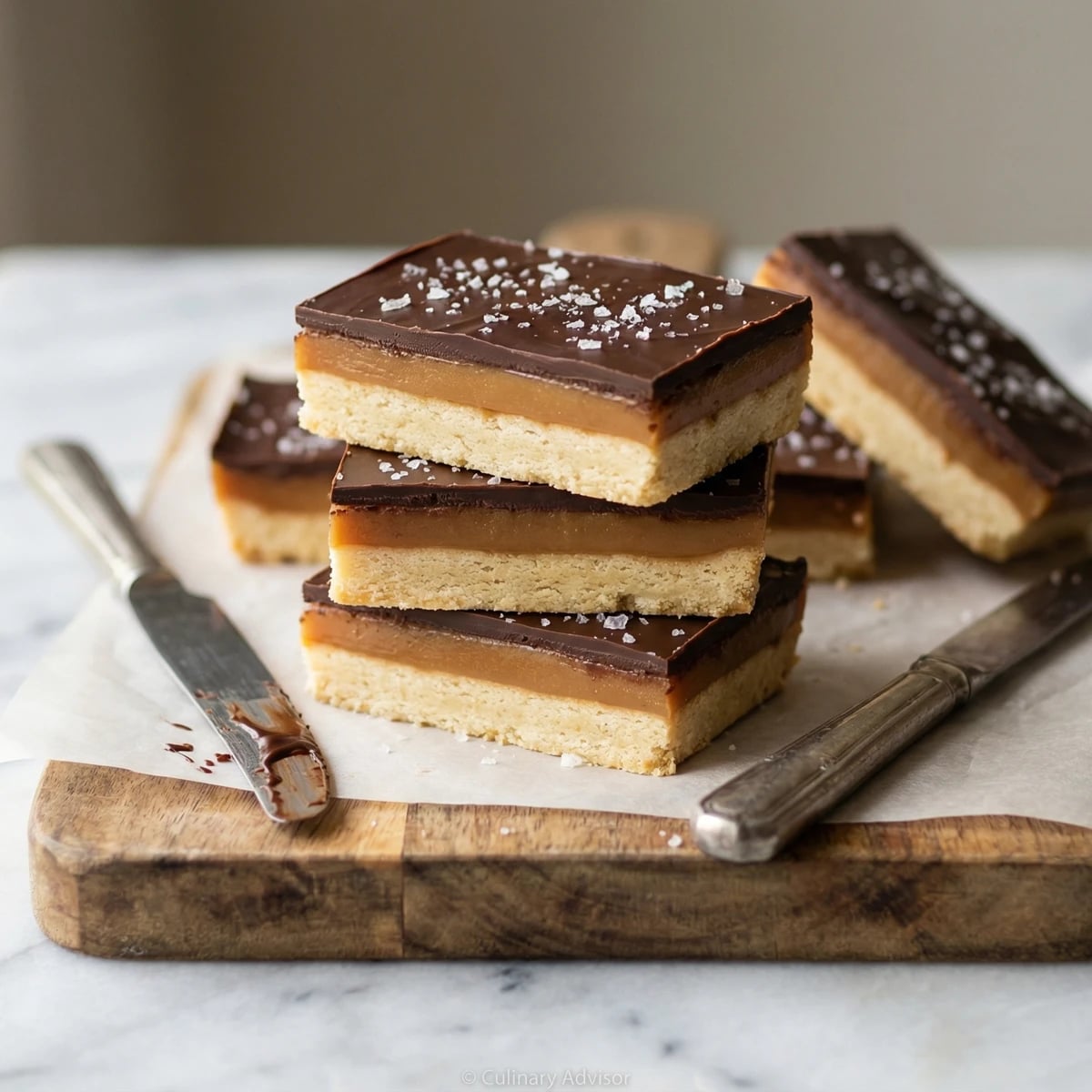
Three layers of pure indulgence: crumbly butter shortbread, golden chewy caramel, and a glossy dark chocolate cap finished with flaky salt. The name promises wealth, and these bars deliver.
The Scots invented this confection. They called it caramel shortbread, and they made it with the same no-nonsense approach they brought to everything worth eating. Somewhere along the way, an American marketing genius renamed it Millionaire's Shortbread, and the thing took off in coffee shops from Seattle to Miami. I don't begrudge the rebrand. The name fits.
Three distinct layers, each one demanding respect. The shortbread base must be tender but sturdy enough to support what's coming. The caramel requires your full attention at the stove, a willingness to stir and watch and trust your instincts when it reaches that deep amber stage. The chocolate is the easiest part, but rush it and you'll end up with bloom and heartache.
I've watched students overcomplicate this recipe with exotic salts and fancy chocolate percentages. Save your money. Good butter matters more than any single ingredient. The condensed milk does the heavy lifting in the caramel. Dark chocolate with honest cacao content provides the bitter counterpoint these sweet layers need. Master the technique first. Experiment later.
These bars improve after a day in the refrigerator. The layers marry. The flavors deepen. Make them for a dinner party and you'll watch grown adults fight over the last piece.
Quantity
1 cup (2 sticks)
for shortbread
Quantity
1/2 cup
Quantity
2 cups
Quantity
1/4 teaspoon
Quantity
1 cup (2 sticks)
for caramel
Quantity
1 cup
packed
Quantity
1 can (14 oz)
Quantity
2 tablespoons
Quantity
1/4 teaspoon
for caramel
Quantity
8 oz
chopped
Quantity
1 tablespoon
for chocolate
Quantity
for finishing
| Ingredient | Quantity |
|---|---|
| unsalted butter, softenedfor shortbread | 1 cup (2 sticks) |
| granulated sugar | 1/2 cup |
| all-purpose flour | 2 cups |
| fine sea salt | 1/4 teaspoon |
| unsalted butterfor caramel | 1 cup (2 sticks) |
| light brown sugarpacked | 1 cup |
| sweetened condensed milk | 1 can (14 oz) |
| golden syrup or light corn syrup | 2 tablespoons |
| fine sea saltfor caramel | 1/4 teaspoon |
| dark chocolate (60-70% cacao)chopped | 8 oz |
| unsalted butterfor chocolate | 1 tablespoon |
| flaky sea salt | for finishing |
Line a 9x13 inch baking pan with parchment paper, leaving a 2-inch overhang on the long sides. These handles will save you later when you need to lift the whole slab out for cutting. Preheat your oven to 325°F.
In a large bowl, beat the softened butter and granulated sugar until pale and fluffy, about 3 minutes with a hand mixer or stand mixer. The mixture should look almost white, not yellow. Add the flour and salt. Mix on low until the dough just comes together in shaggy clumps. Don't overwork it. Shortbread turns tough when you handle it too much.
Turn the dough into your prepared pan. Press it into an even layer using the bottom of a measuring cup or your knuckles. The surface should be flat and reach into every corner. Prick the entire surface with a fork in a regular pattern. These holes let steam escape and prevent buckling. Bake for 25 to 30 minutes until the edges turn golden and the center looks matte, not shiny. The shortbread will firm as it cools.
Let the shortbread cool completely in the pan on a wire rack. This takes about 45 minutes. Patience here prevents disaster later. Hot shortbread will melt your caramel instead of supporting it.
Combine the butter, brown sugar, condensed milk, corn syrup, and salt in a heavy-bottomed saucepan. Set it over medium heat and stir constantly with a wooden spoon or heat-resistant spatula. The butter will melt first, then everything will come together into a bubbling, golden mass. Keep stirring. The moment you walk away, the caramel will scorch on the bottom.
Continue cooking and stirring for 8 to 12 minutes. The caramel will thicken, darken to a deep amber, and start pulling away from the sides of the pan. If you have a candy thermometer, you're looking for 235°F to 240°F. Without one, test by dropping a small amount into cold water. It should form a soft ball that flattens when pressed. The caramel should coat the back of your spoon thickly.
Pour the hot caramel immediately over the cooled shortbread. Work quickly because it sets fast. Use an offset spatula or the back of a spoon to spread it into an even layer, reaching all the way to the edges. A few air bubbles are fine. Let the caramel set at room temperature for at least 1 hour until firm to the touch.
Place the chopped chocolate and remaining tablespoon of butter in a microwave-safe bowl. Heat in 30-second bursts, stirring between each, until smooth and glossy. This takes about 90 seconds total. Alternatively, melt over a double boiler, stirring constantly. The butter adds sheen and makes cutting cleaner.
Pour the melted chocolate over the set caramel. Tilt the pan to spread it evenly, then use an offset spatula to smooth the surface. Work with confidence. The chocolate starts setting within minutes, and fussing creates an uneven finish.
Sprinkle flaky sea salt over the chocolate while it's still wet. The salt should stick but not sink in. Refrigerate the pan for at least 1 hour until the chocolate is completely firm. You can speed this up in the freezer for 30 minutes if you're impatient, but the texture is better with slower setting.
Use the parchment handles to lift the entire slab onto a cutting board. Let it sit at room temperature for 10 minutes before cutting. This prevents the chocolate from cracking. Use a large sharp knife, wiping the blade clean between cuts. Press straight down rather than sawing. Cut into 24 bars or whatever size suits your conscience.
1 bar (about 45g)
Culinary guides, cultural storytelling, and the editorial depth that makes cooking meaningful.
Discover Culinary Explorer
Chef Dean
Buttery, sandy-textured cookies crowned with whole blanched almonds, delivering old-fashioned elegance through honest technique and quality butter. The kind of cookie that earns its place on holiday platters.

Chef Dean
Chewy oat and coconut cookies inspired by the iconic Australian biscuit, adapted for American pantries with that unmistakable golden syrup backbone and perfectly crisp edges giving way to soft, butterscotch centers.

Chef Dean
Chewy, golden oatmeal cookies studded with tender dried apples and perfumed with cinnamon, capturing the essence of autumn apple pie in a form you can hold in your hand.

Chef Dean
Soft, buttery cookies studded with rainbow sprinkles and perfumed with vanilla and almond extract. These taste exactly like a slice of birthday cake, no candles required.