
Chef Graziella
Babà al Rum Napoletano
The yeast-risen sponge that Naples claimed from Poland and perfected. Baked to a burnished gold, then drowned in rum syrup until it weeps with every bite.
A cooking platform built around craft, culture, and the stories behind what we eat.
Created by
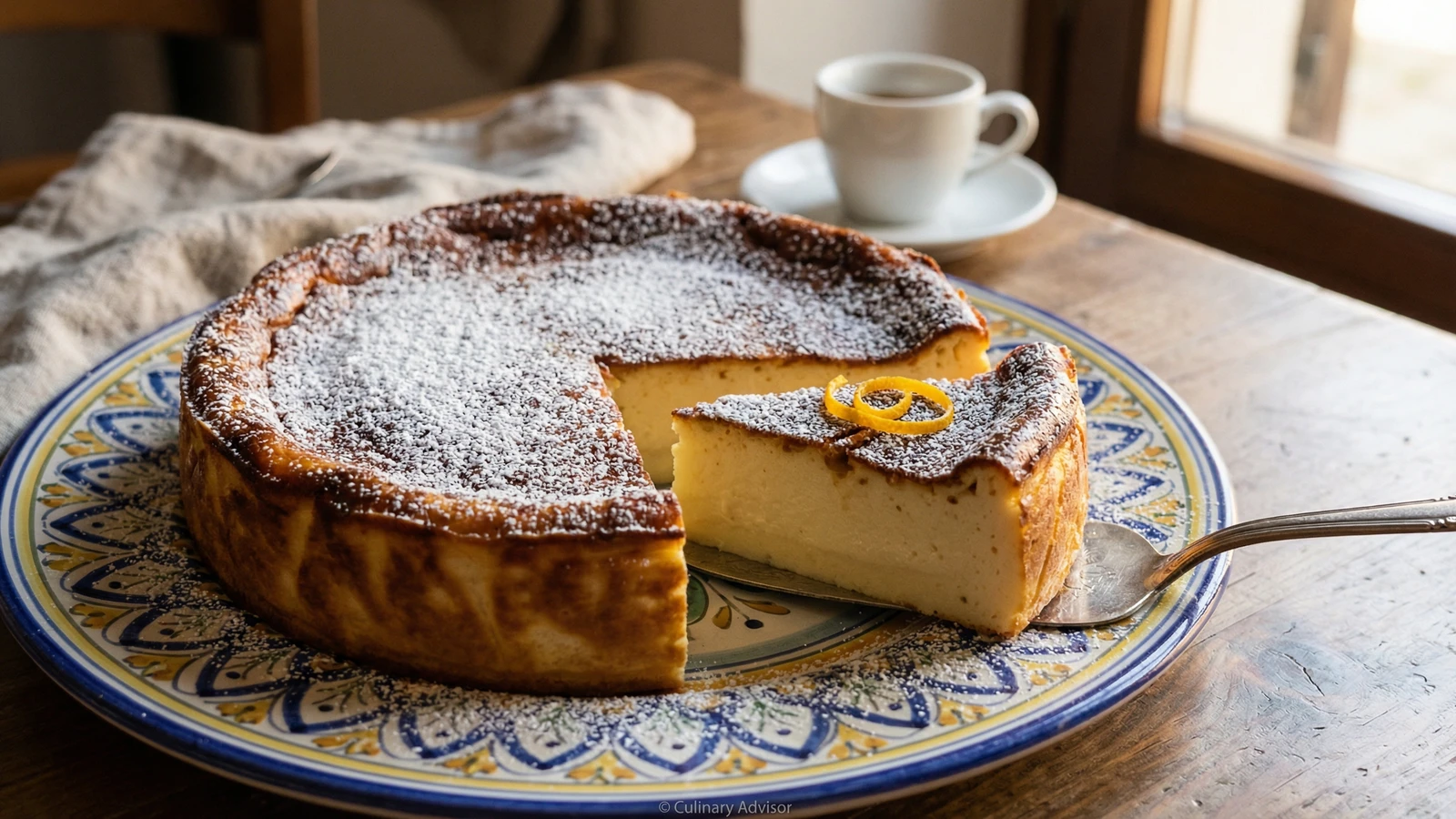
The Carnival cake of Naples, where semolina and ricotta meet orange blossom water in a dense, perfumed confection made for the last days before Lenten austerity descends.
In Naples, the week before Lent is not a time for restraint. Carnevale demands indulgence, and migliaccio is the sweet that marks the season. Every pasticceria window fills with these golden cakes, but the ones that matter are made at home, by hand, from recipes passed through generations of Neapolitan mothers and grandmothers.
The name comes from miglio, millet, which ancient versions of this cake once contained. Modern migliaccio uses semolina instead, cooked in milk until it becomes thick as paste, then enriched with ricotta, eggs, and the perfume of orange blossom water. The texture is unlike any American dessert: dense and custardy, not quite cake and not quite pudding. Neapolitans understand this. Visitors sometimes do not, expecting something light and fluffy. This is not that. This is substantial. This is meant to fortify you for the lean weeks ahead.
The orange blossom water is not optional, though some families add vanilla as well. The citrus zests provide brightness against the richness of the eggs and cheese. What you keep out is as significant as what you put in: there is no cinnamon here, no chocolate, none of the additions that modern recipes sometimes suggest. The original is perfect as it stands.
Migliaccio's roots trace to ancient Roman offerings made with millet and blood, humble ingredients transformed for sacrificial rituals. By the Renaissance, Neapolitan cooks had refined the dish into a sweetened semolina cake for Carnevale, the feast before the fasting of Lent. The connection to this specific week remains so strong that Neapolitan bakeries produce migliaccio only in the days before Ash Wednesday, then not again for another year.
Quantity
4 cups
Quantity
1 cup
Quantity
1/2 cup
cut into pieces, plus more for pan
Quantity
1 cup
Quantity
1 pound
drained
Quantity
5
Quantity
2 tablespoons
Quantity
1 large
finely grated zest
Quantity
1
finely grated zest
Quantity
1/4 teaspoon
Quantity
for dusting
| Ingredient | Quantity |
|---|---|
| whole milk | 4 cups |
| fine semolina | 1 cup |
| unsalted buttercut into pieces, plus more for pan | 1/2 cup |
| granulated sugar | 1 cup |
| fresh whole-milk ricottadrained | 1 pound |
| large eggs | 5 |
| orange blossom water | 2 tablespoons |
| orangefinely grated zest | 1 large |
| lemonfinely grated zest | 1 |
| fine sea salt | 1/4 teaspoon |
| confectioners' sugar | for dusting |
Set the ricotta in a fine-mesh strainer over a bowl. Let it drain for at least one hour, or overnight in the refrigerator. Wet ricotta creates a soggy, weeping cake. You want ricotta that holds its shape when pressed. If you buy ricotta from an Italian market and it is already firm and dry, you may skip this step. Supermarket ricotta always needs draining.
Pour the milk into a heavy 4-quart saucepan. Set it over medium heat and bring just to a simmer. You will see small bubbles forming at the edges. Reduce heat to medium-low. Add the semolina in a slow, steady stream, whisking constantly. You must whisk without stopping for the first two minutes to prevent lumps. Continue cooking, stirring frequently with a wooden spoon, until the mixture becomes very thick and pulls away from the sides of the pan, about 10 minutes. It will look like thick polenta.
Remove the pan from heat. Add the butter pieces and stir until completely melted and incorporated. The mixture should be glossy and smooth. Transfer to a large bowl and let cool for 15 minutes. Stir occasionally to release heat. The semolina must cool enough that it will not scramble the eggs, but it should still be warm to the touch.
While the semolina cools, position a rack in the center of your oven. Heat to 350°F. Butter a 10-inch springform pan generously, then dust with fine semolina, tapping out the excess. This creates the characteristic golden crust that Neapolitans prize.
Add the sugar to the cooled semolina and stir until dissolved. Add the drained ricotta and mix thoroughly until no white streaks remain. The mixture should be smooth and homogeneous. Add the eggs one at a time, beating well after each addition. The batter will become lighter and more pourable. Stir in the orange blossom water, both citrus zests, and the salt.
Pour the batter into the prepared pan. Smooth the top with a spatula. Bake until the top is deeply golden and the center is set but still trembles slightly when the pan is gently shaken, 55 to 65 minutes. A thin knife inserted near the center should come out clean, though it may have moist crumbs attached. This is correct. The cake continues cooking as it cools.
Let the migliaccio cool completely in the pan on a wire rack. This takes at least two hours. The cake is too fragile to unmold while warm. When fully cooled, run a thin knife around the edges and release the springform sides. Transfer to a serving plate. The cake will have settled slightly in the center. This is traditional.
Dust the top generously with confectioners' sugar just before serving. Cut into wedges with a sharp knife dipped in hot water between cuts. Migliaccio is served at room temperature, never warm and never cold from the refrigerator. Let chilled leftovers return to room temperature for one hour before serving.
1 serving (about 165g)
Culinary guides, cultural storytelling, and the editorial depth that makes cooking meaningful.
Discover Culinary ExplorerChef Graziella
The yeast-risen sponge that Naples claimed from Poland and perfected. Baked to a burnished gold, then drowned in rum syrup until it weeps with every bite.

Chef Graziella
The ancient Christmas sweets of Naples, tiny fried dough balls glazed in warm honey and piled into a glistening mound. Every Neapolitan grandmother has made these, and now you will too.

Chef Graziella
The legendary flourless chocolate cake of Capri, born from a baker's mistake and perfected by generations of Neapolitan home cooks. Dense, fudgy, and honest about what it is.

Chef Juliette
Five almond preparations, one discipline: remove the skins cleanly, dry every kernel through, then cut, toast, or cloak it in pale caramel without letting its fragrant oils escape.