
Chef Margarida
Arroz de Cabidela
The dish that separates those who understand Portuguese cooking from those who only think they do. Dark, tangy, honest. This is what happens when you use everything and waste nothing.
A cooking platform built around craft, culture, and the stories behind what we eat.
Created by
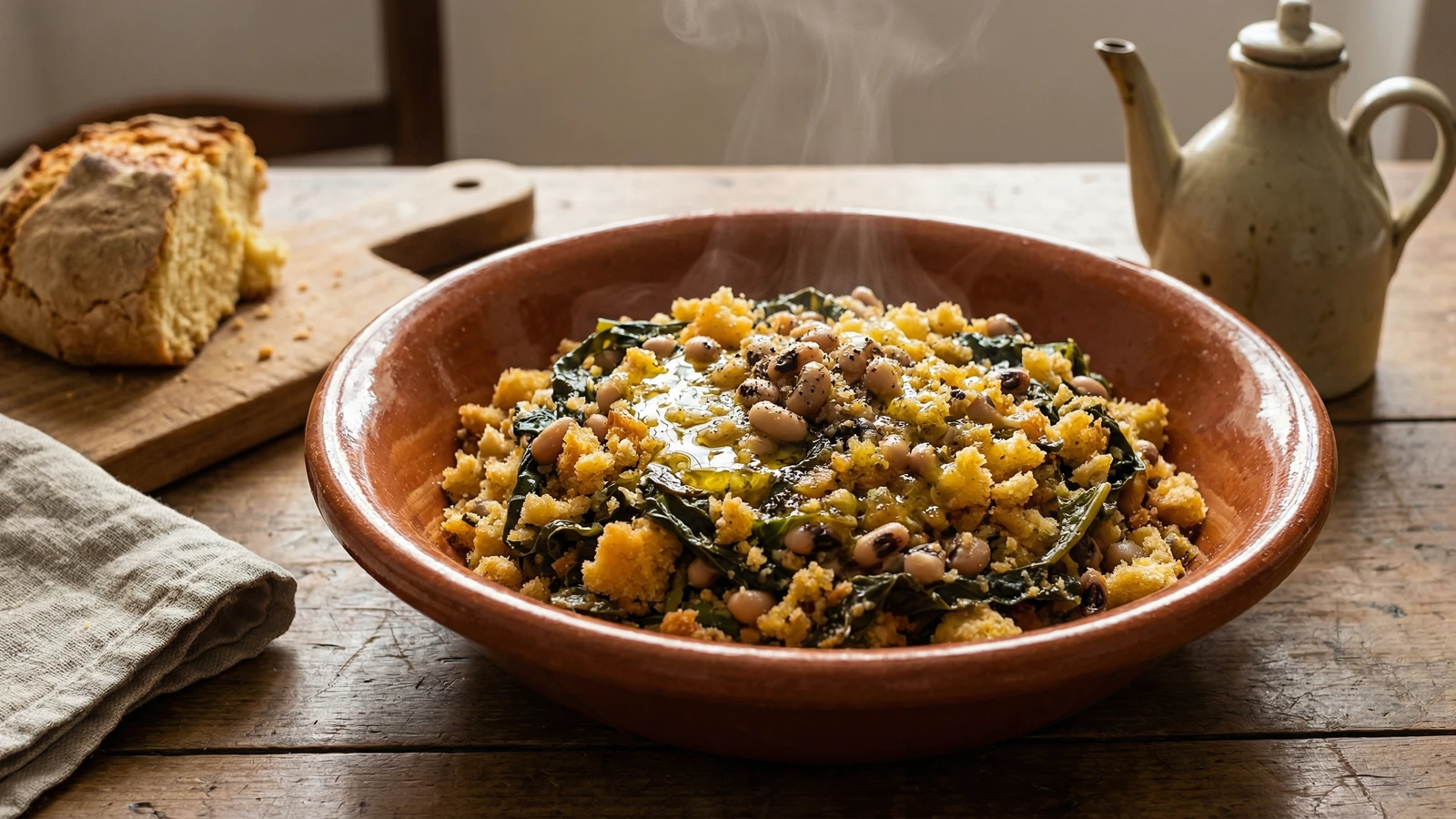
Northern Portugal's answer to the question: what do you do with stale cornbread, dark greens, and a handful of beans? You make something that feeds a family and costs almost nothing.
When I started documenting recipes from grandmothers across Portugal, I expected the meat dishes. The porco preto, the chouriço, the endless variations of bacalhau. What surprised me was how often these women fed their families without any meat at all. Not because they were vegetarian. Because they were poor. And poor cooks are genius cooks.
This dish comes from Minho, in the far north, where the broa is dense and golden and the couve grows thick in the cool wet air. The grandmothers there laughed when I called it vegetarian. To them, it was just Tuesday. It was what you made when the pig had been eaten and the next one wasn't ready yet.
Migas are not açorda. I need to say this because people confuse them constantly. Açorda is a soup, bread swimming in broth. Migas are fried. The bread crumbles into the pan, drinks the oil, develops crispy edges. The texture should be rough, uneven, some bits soft and some bits crunchy. If your migas are uniform, you've made something else.
Avó Leonor was from Alentejo, where they make migas with wheat bread and pork fat. But when I brought her this version from the north, with cornbread and greens and beans, she nodded slowly. "Isto também é migas," she said. This is also migas. Different region, same wisdom. Bread stretches. Oil enriches. Nothing gets wasted. A cozinha é memória.
Migas originated as a way to use stale bread, appearing across the Iberian Peninsula in countless regional variations. In Minho, where corn arrived from the Americas in the 16th century and became the staple grain, broa replaced wheat bread in this preparation. The combination with couve and feijão frade represents the traditional meatless cooking of northern Portuguese farmers, particularly during times of scarcity or religious fasting.
Quantity
300g
day-old, crumbled
Quantity
250g
ribs removed, sliced thin
Quantity
400g cooked
drained if canned
Quantity
1/2 cup, plus more for drizzling
Quantity
1 large
halved and sliced thin
Quantity
4 cloves
sliced
Quantity
1
Quantity
1 teaspoon
Quantity
1/2 cup
Quantity
to taste
Quantity
to taste
freshly ground
| Ingredient | Quantity |
|---|---|
| broa (Portuguese cornbread)day-old, crumbled | 300g |
| couve galega (Portuguese kale)ribs removed, sliced thin | 250g |
| black-eyed peas (feijão frade)drained if canned | 400g cooked |
| extra virgin olive oil (azeite) | 1/2 cup, plus more for drizzling |
| onionhalved and sliced thin | 1 large |
| garlicsliced | 4 cloves |
| bay leaf | 1 |
| sweet paprika (pimentão doce) | 1 teaspoon |
| vegetable broth or bean cooking liquid | 1/2 cup |
| sea salt | to taste |
| black pepperfreshly ground | to taste |
In a large heavy skillet or wide pot, warm half the olive oil over medium-low heat. Add the sliced onion and cook slowly, stirring occasionally, until soft and golden, about 15 minutes. Add the garlic and bay leaf in the last two minutes. The kitchen should smell sweet and warm. This is the foundation. Não tenhas pressa.
Add the sliced couve to the pot, tossing to coat in the oil and onions. Season with salt and the paprika. Cook, stirring occasionally, until the greens are wilted and tender but still have some texture, about 8 minutes. The couve will reduce dramatically. This is normal.
Fold in the black-eyed peas and the broth. Let everything simmer together for 5 minutes so the flavors marry. The beans should warm through and absorb some of the cooking liquid. Taste and adjust the salt. Remove the bay leaf.
Crumble the day-old broa into irregular pieces. Add the remaining olive oil to the pan and increase heat to medium. Add the crumbled bread and toss everything together, pressing the bread into the pan and then turning it. Cook for 8 to 10 minutes, turning occasionally, until the bread absorbs the oil and forms golden, slightly crispy bits. Some pieces should be soft, some should be crunchy. This contrast is the point.
Transfer to a warm serving dish or serve directly from the pan. Drizzle generously with your best azeite. Finish with a crack of black pepper. Serve immediately while the migas still have texture. This is not a dish that waits.
1 serving (about 280g)
Culinary guides, cultural storytelling, and the editorial depth that makes cooking meaningful.
Discover Culinary ExplorerChef Margarida
The dish that separates those who understand Portuguese cooking from those who only think they do. Dark, tangy, honest. This is what happens when you use everything and waste nothing.

Chef Margarida
The winter rice of Minho, where turnip greens meet creamy grain and good azeite. Peasant cooking that proves the north knows something about comfort the rest of Portugal is still learning.

Chef Margarida
The celebration rice of northern Portugal, where duck braised until falling-apart tender meets rice that drinks every drop of that precious broth, then bakes until the top shatters like a promise kept

Chef Margarida
The blood porridge of Minho, born from the winter matança when families used every part of the pig. Dark, rich, perfumed with cumin, this is peasant cooking at its most honest and uncompromising.