Chef Jeong-sun
Amjuk (Dried-Grain Weaning Porridge)
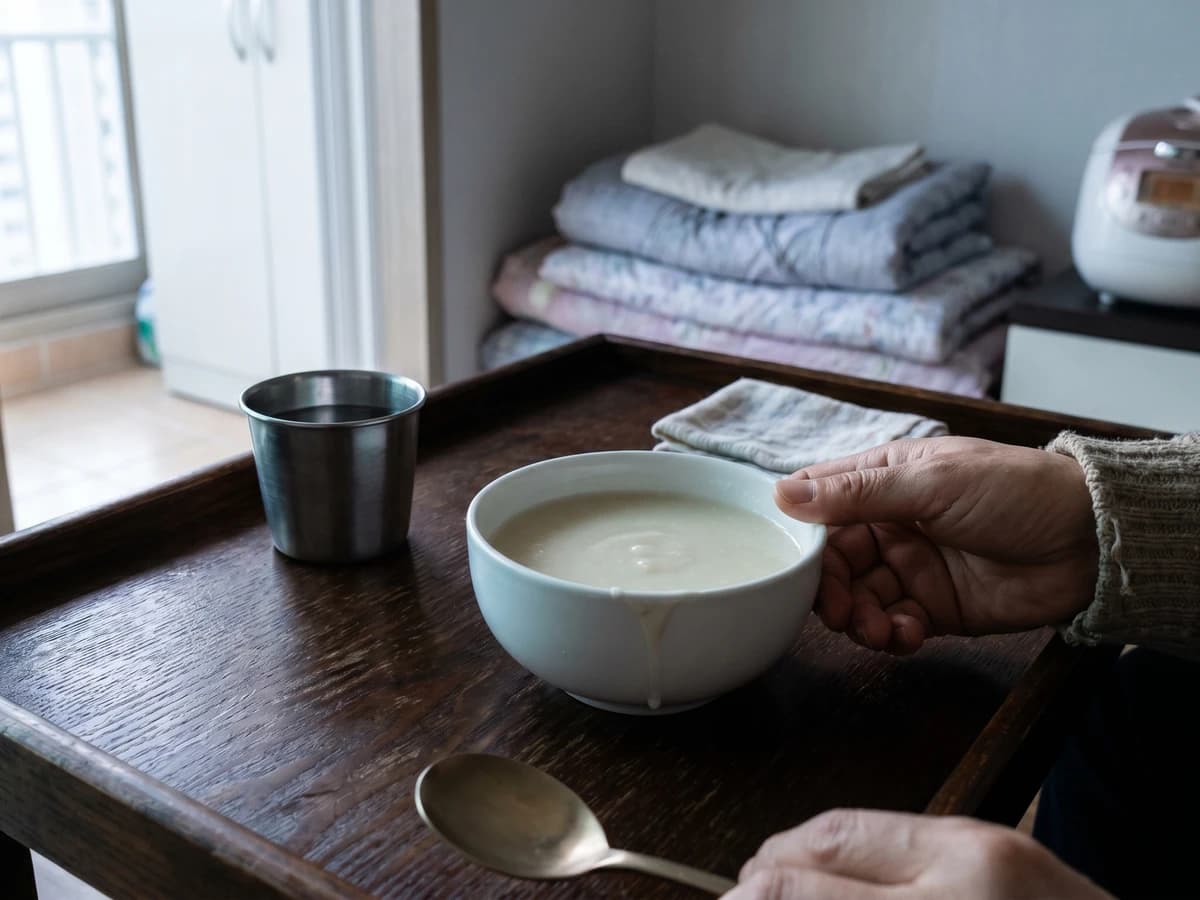
Powdered rice or dried baekseolgi cooked thin in cloudy rice water, an old Korean first-spoon porridge that asks for patience at the sieve and gentleness at the stove.
A cooking platform built around craft, culture, and the stories behind what we eat.

Created by
The thinnest member of the Korean juk family: rice simmered until it gives itself to the water, then strained into a plain, gentle bowl for illness, infancy, and recovery.
Mieum lives or dies by patience. It is not rice soup, and it is not juk (porridge) with too much water. The rice must soften until the water turns milky and the grain gives up its body, then you strain it so only the smoothest part remains.
My teacher Master Seong-nyeo made this for people who could not manage a proper bowl of rice: a feverish child, an elder after a hard illness, a new stomach learning food again. She measured even this. One part rice to twelve parts water for a spoonable mieum, one to fourteen for something close to drinkable. Too thick and it asks too much of the body. Too thin and it carries no strength.
Do not season the pot. Salt belongs in the bowl, and only if the person eating can take it. For a baby, leave it plain. For an adult, start with 1/16 teaspoon fine sea salt per half cup, then stop. Let it taste like itself. Write it down. Memory is a borrowed bowl.
Mieum is part of Korea's long juk (grain porridge) tradition, but it names a thinner, strained preparation rather than a separate grain. Joseon-era medical and household writing treated rice gruels as recovery foods because they were warm, plain, and easy to digest, and Korean baby-feeding custom still begins with very thin rice mieum before thicker juk. Its importance is domestic, not ceremonial: the dish belongs to sickrooms, nurseries, and quiet kitchens.
Quantity
1/2 cup
Quantity
6 cups, plus more for soaking
Quantity
1/8 teaspoon
| Ingredient | Quantity |
|---|---|
| short-grain white rice | 1/2 cup |
| water | 6 cups, plus more for soaking |
| fine sea salt (optional) | 1/8 teaspoon |
Rinse the rice in several changes of cold water until the water is mostly clear. Do not grind the grains with your hands. Rub lightly, because broken surface starch makes the pot catch before the rice has softened properly.
Cover the rinsed rice with fresh water and soak 30 minutes. This short soak lets the center of each grain soften before cooking, which is why the mieum turns smooth instead of thin outside and hard inside.
Drain the rice and put it in a heavy pot with 6 cups water. Bring it to a gentle boil over medium heat, stirring once across the bottom so no grains settle and scorch. When it boils, lower the heat at once.
Simmer uncovered 45 to 55 minutes, stirring every 8 to 10 minutes, until the rice grains are swollen, split, and barely holding their shape. Keep the surface moving softly, not rolling hard. A hard boil throws starch onto the sides of the pot and leaves the liquid rough.
Set a fine sieve over a clean bowl. Ladle in the gruel and press gently with the back of a spoon until the liquid passes through and only coarse rice solids remain. Do not force every scrap through. Mieum should be smooth enough to sip from a spoon.
Measure the strained mieum. You should have about 3 to 3 1/2 cups. If it is thicker than heavy cream, whisk in hot water 2 tablespoons at a time. If it is too thin, return it to the pot and simmer 3 to 5 minutes, stirring, until it lightly coats the spoon.
Serve warm and plain. For babies, add no salt. For an adult who needs it, season each 1/2-cup serving with no more than 1/16 teaspoon fine sea salt, then taste. The point is comfort, not flavor chasing.
1 serving (about 220g)
Culinary guides, cultural storytelling, and the editorial depth that makes cooking meaningful.
Discover Culinary ExplorerChef Jeong-sun
Powdered rice or dried baekseolgi cooked thin in cloudy rice water, an old Korean first-spoon porridge that asks for patience at the sieve and gentleness at the stove.

Chef Jeong-sun
A soft summer rice porridge of kneaded mallow greens, dried shrimp, and careful doenjang broth, plain enough for breakfast and exact enough to keep the grit and bitterness out.
Chef Jeong-sun
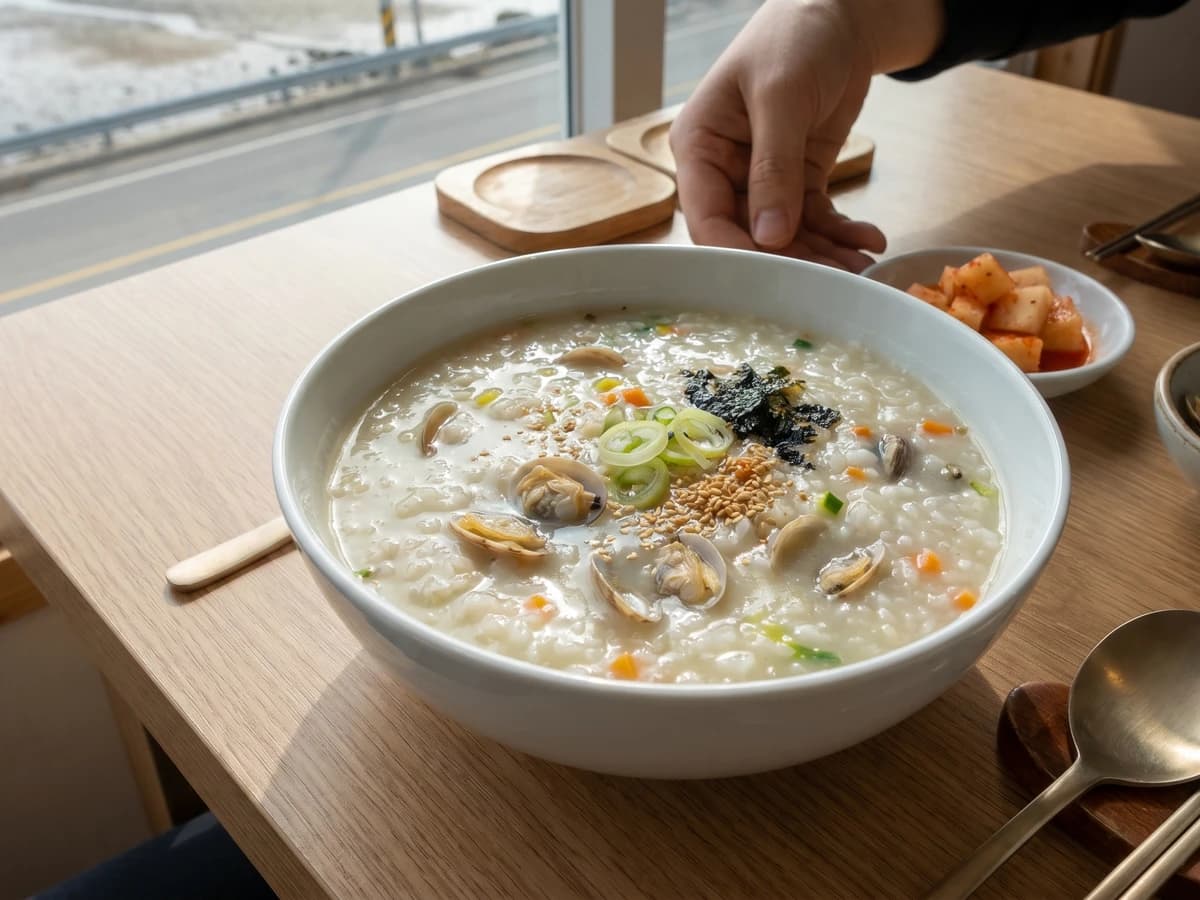
A west-coast clam porridge from Buan's tidal flats: live bajirak opened for their liquor, sesame-slicked rice toasted in the pot, and vegetables cut small enough to comfort without hiding the clams.

Chef Jeong-sun
An autumn juk of boiled chestnuts and soaked short-grain rice, simmered low until smooth and softly sweet, the kind of bowl you set before an elder, a child, or yourself.