
Chef Lupita
Acitrón de Cidra Conventual
Puebla's convent-style acitrón, made from cidra peel instead of endangered biznaga, built through repeated syrup soakings until the cubes turn firm, translucent, and ready for rosca or chiles en nogada.
A cooking platform built around craft, culture, and the stories behind what we eat.
Created by
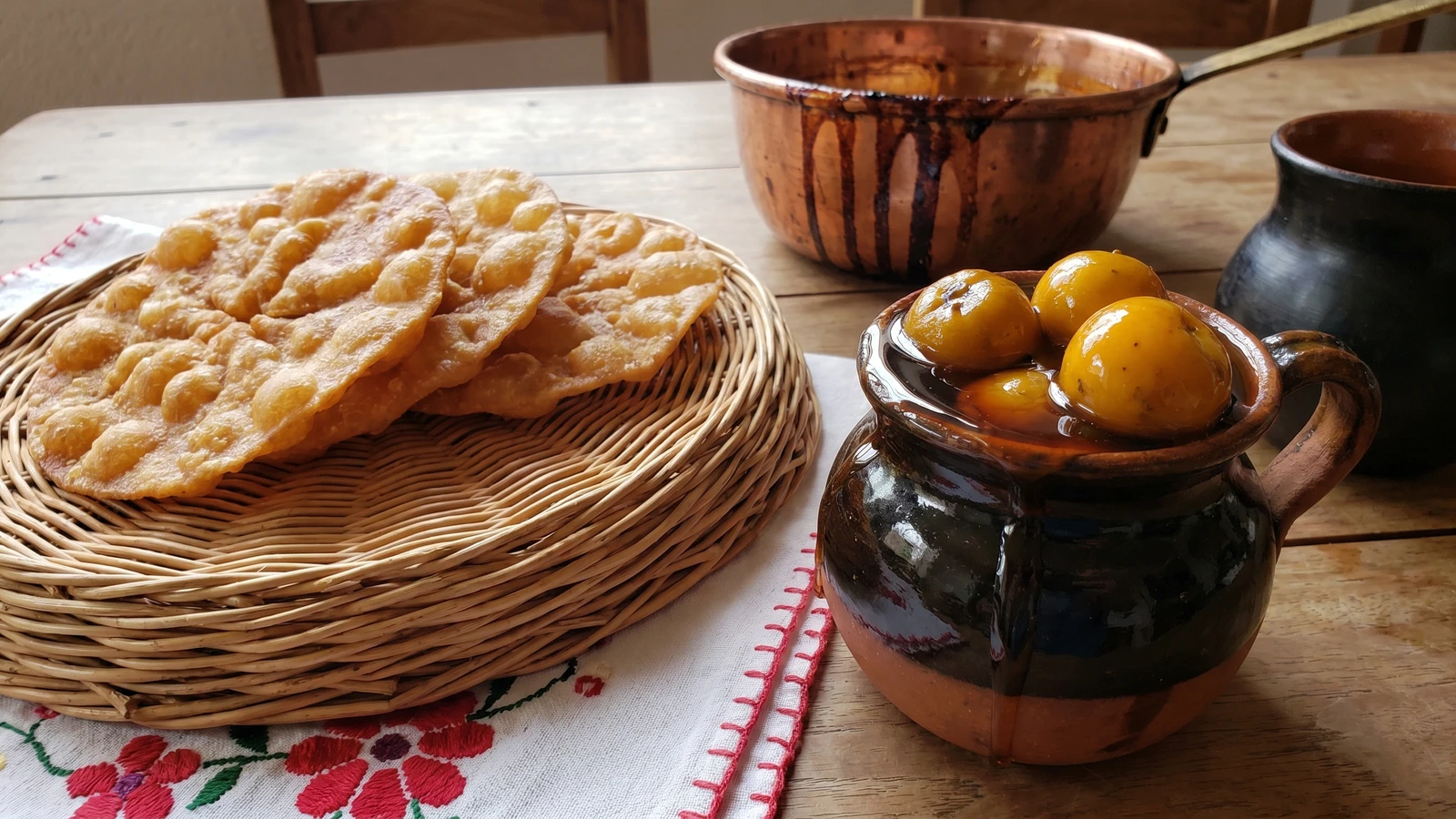
Uruapan's Christmas miel, built from orchard tejocotes, ripe guayabas, canela, and piloncillo, cooked until the syrup turns amber and clings properly to a stack of buñuelos.
This comes from Uruapan, Michoacán, the orchard country where tejocote and guayaba belong to the Christmas table as surely as buñuelos do. In that part of the state, the syrup is not decoration. It is the reason the buñuelo makes sense: thin fried dough, crisp under the teeth, then piloncillo miel running into every blistered fold.
The fruit defines the dish. Tejocote gives body and a faint apple-floral bitterness. Guayaba gives perfume. Canela keeps the syrup warm and clean. Piloncillo does the work refined sugar cannot do, because this register of Michoacán sweets is leche, piloncillo, and fruit from the huerto, cooked with patience. No me vengas con atajos.
I first wrote this version down in Uruapan after watching a señora keep one copper cazo for syrup and another for buñuelos. She did not measure with cups. She measured by color, by the way the syrup fell from the spoon, by whether the fruit stayed whole. That is the lesson. You are not making candy for a shop window. You are making the miel that sits on the table while everyone reaches for another buñuelo.
Tejocote, a Mexican hawthorn native to the highlands, has been used in central and western Mexican winter cooking since before the colonial period, first as a cooked fruit and later in syrups sweetened with cane products. Piloncillo became common after sugarcane expanded in New Spain during the 16th century, joining older fruit-preserving techniques with colonial sweetening methods. In Michoacán, SECTUR has documented Uruapan's miel de tejocote with guayaba, canela, and piloncillo as part of the Christmas buñuelo tradition, distinct from the denser fruit conserves of Zitácuaro tied to Lent.
Quantity
1 pound
rinsed
Quantity
8
rinsed and halved
Quantity
2 cones, about 14 ounces total
chopped
Quantity
6 cups
Quantity
2
Quantity
3
Quantity
1 strip
pith removed
Quantity
1 pinch
Quantity
for serving
| Ingredient | Quantity |
|---|---|
| fresh tejocotesrinsed | 1 pound |
| ripe guayabasrinsed and halved | 8 |
| piloncillo coneschopped | 2 cones, about 14 ounces total |
| water | 6 cups |
| Mexican cinnamon sticks (canela) | 2 |
| whole cloves | 3 |
| orange peelpith removed | 1 strip |
| fine sea salt | 1 pinch |
| buñuelos uruapenses (optional) | for serving |
Bring a medium pot of water to a boil. Add the tejocotes and cook for 5 minutes, just until the skins loosen. Drain them, rinse under cool water, and slip off the skins with your fingers or a small knife. Do not overcook them here. They still need to hold their shape in the syrup.
Put 6 cups water, piloncillo, canela, cloves, orange peel, and salt in a wide copper cazo or heavy enameled pot. Bring to a steady simmer over medium heat, stirring until the piloncillo dissolves. Use piloncillo, not refined sugar. Refined sugar gives sweetness. Piloncillo gives earth, molasses, and the dark edge this syrup needs.
Add the peeled tejocotes and halved guayabas. Lower the heat so the syrup bubbles gently. The guayabas will perfume the pot first, then the tejocotes will soften and drink in the piloncillo. This is not a rush job. Fruit cooked hard breaks apart and clouds the miel.
Cook uncovered for 45 to 55 minutes, stirring now and then, until the syrup turns deep amber and lightly coats the back of a spoon. The fruit should be tender but not collapsed. If you drag the spoon across the bottom of the cazo, the syrup should close slowly behind it. That is the point. Así se hace y punto.
Remove the canela, cloves, and orange peel. Let the miel rest at least 30 minutes so the fruit settles into the syrup. Serve warm or at room temperature in a clay jarrito or small cazuela, spooned generously over crisp buñuelos uruapenses. The syrup should soak the thin fried dough without drowning it.
1 serving (about 180g)
Culinary guides, cultural storytelling, and the editorial depth that makes cooking meaningful.
Discover Culinary ExplorerChef Lupita
Puebla's convent-style acitrón, made from cidra peel instead of endangered biznaga, built through repeated syrup soakings until the cubes turn firm, translucent, and ready for rosca or chiles en nogada.

Chef Lupita
Ciudad de México's Tulyehualco alegría is popped huautli folded into piloncillo honey, pressed with peanuts, pepitas, and raisins, then cut into the rectangular bars that built a pueblo's identity.

Chef Lupita
Oaxaca's pre-Columbian amaranth bar, popped on a hot comal and bound with piloncillo, honey, and the sacred Zapotec grain that the Spanish tried, and failed, to outlaw.

Chef Lupita
Querétaro's mercado candy of popped amaranto pressed with dark piloncillo syrup, pepitas, pecans, and cacahuate, a Bajío sweet that respects the seed before it decorates the table.