
Chef Lupita
Camarones a la Diabla Nayaritas
Nayarit's Pacific shrimp, seared quickly and coated in a red sauce of chile de arbol, chipotle, tomato, and garlic, the kind of heat that belongs beside white rice and warm corn tortillas.
A cooking platform built around craft, culture, and the stories behind what we eat.
Created by
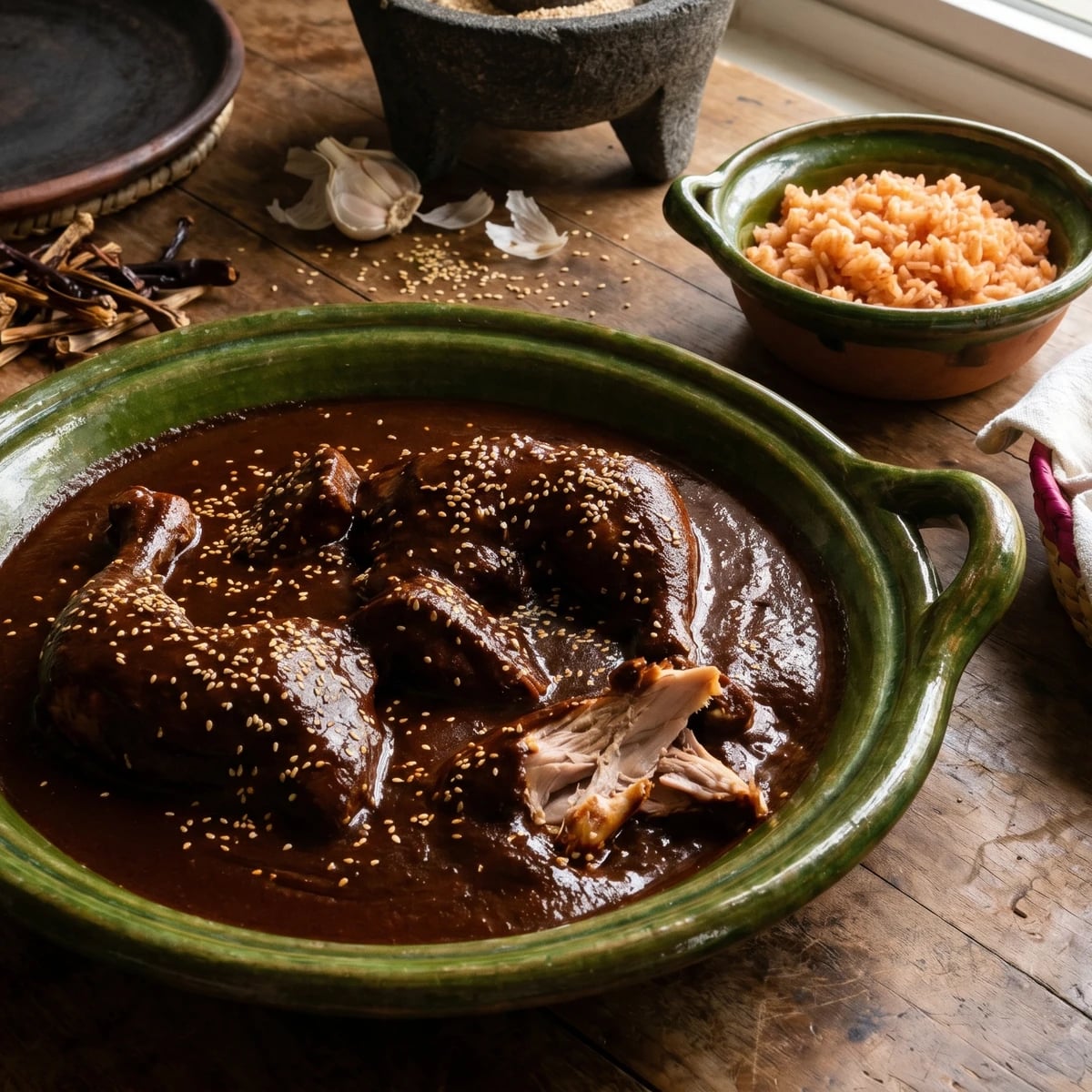
Michoacán's celebration mole, built from turkey broth, guajillo, ancho, pasilla, sesame, almonds, and chocolate, then fried in manteca until the sauce turns glossy and deep.
This comes from Michoacán, from the Purépecha highlands and the towns around Morelia where a wedding, baptism, patron saint day, or Christmas table can still mean guajolote in mole served from a clay cazuela. Not chicken nuggets under brown sauce. Turkey. Chile. Manteca. Work.
The color belongs to chile guajillo, chile ancho, and chile pasilla, toasted on a comal until their oils wake up. The body comes from almonds, peanuts, sesame, tortilla, and bread, the way the women of Michoacán learned to make a sauce feed a crowd without making it thin. The chocolate is there, yes, but mole is not chocolate sauce. Say that twice if you need to. The chile is the spine.
I learned a version like this from a señora near Pátzcuaro who cooked it for a wedding in a green-glazed cazuela so wide two women had to move it. She fried the mole paste in manteca until the lard shone red at the edges, then looked at me and said, "Now it has character." She was right. You can own a blender, use it, but the frying cannot be skipped. Así se hace y punto.
If you cannot find turkey pieces, use bone-in chicken for a smaller table, but know what you are changing. Guajolote carries more depth in the broth and more weight on the plate. A substitution is a compromise, not an upgrade. Saber cocinar es saber vivir.
Turkey, or guajolote, was domesticated in Mesoamerica long before the Spanish arrived and remained one of central and western Mexico's most important celebration meats after the conquest. Michoacán's mole de guajolote developed from Indigenous turkey stews and chile sauces shaped by colonial additions such as almonds, sesame, cinnamon, cloves, bread, and chocolate. In Purépecha communities and mestizo towns around Lake Pátzcuaro and Morelia, turkey mole became tied to weddings and patron saint celebrations because one large bird and one deep cazuela of sauce could feed a family table with dignity.
Quantity
1, 10 to 12 pounds
cut into serving pieces, or use 6 pounds bone-in turkey thighs and drumsticks
Quantity
12 cups, plus more as needed
Quantity
1
halved
Quantity
1
halved crosswise
Quantity
3
Quantity
1 tablespoon, plus more to taste
Quantity
10
stemmed and seeded
Quantity
5
stemmed and seeded
Quantity
4
stemmed and seeded
Quantity
2
Quantity
2
husked and rinsed
Quantity
1
quartered
Quantity
5
unpeeled
Quantity
1/2 cup
Quantity
1/4 cup
Quantity
1/4 cup, plus 2 tablespoons for serving
Quantity
1
torn into pieces
Quantity
1 bolillo or 2 slices
torn into pieces
Quantity
1/4 cup
Quantity
1 small piece, about 3 ounces
Quantity
1 inch
Quantity
3
Quantity
4
Quantity
1/2 teaspoon
Quantity
1/4 teaspoon
Quantity
1/2 cup
Quantity
3 to 4 cups
as needed
Quantity
for serving
Quantity
for serving
| Ingredient | Quantity |
|---|---|
| whole turkeycut into serving pieces, or use 6 pounds bone-in turkey thighs and drumsticks | 1, 10 to 12 pounds |
| cold water | 12 cups, plus more as needed |
| large white onionhalved | 1 |
| head of garlichalved crosswise | 1 |
| bay leaves | 3 |
| kosher salt | 1 tablespoon, plus more to taste |
| dried chile guajillostemmed and seeded | 10 |
| dried chile anchostemmed and seeded | 5 |
| dried chile pasillastemmed and seeded | 4 |
| Roma tomatoes | 2 |
| tomatilloshusked and rinsed | 2 |
| small white onionquartered | 1 |
| garlic clovesunpeeled | 5 |
| raw almonds | 1/2 cup |
| raw peanuts | 1/4 cup |
| sesame seeds | 1/4 cup, plus 2 tablespoons for serving |
| corn tortillatorn into pieces | 1 |
| bolillo or day-old white breadtorn into pieces | 1 bolillo or 2 slices |
| raisins | 1/4 cup |
| Mexican chocolate | 1 small piece, about 3 ounces |
| Mexican cinnamon stick | 1 inch |
| whole cloves | 3 |
| black peppercorns | 4 |
| dried Mexican oregano | 1/2 teaspoon |
| ground cumin | 1/4 teaspoon |
| pork lard (manteca de cerdo) | 1/2 cup |
| reserved turkey brothas needed | 3 to 4 cups |
| warm hand-pressed corn tortillas (optional) | for serving |
| arroz rojo (optional) | for serving |
Put the turkey pieces in a large stockpot with the cold water, halved onion, halved head of garlic, bay leaves, and salt. Bring to a gentle simmer over medium heat, then lower the heat and skim the foam during the first 20 minutes. Cook until the turkey is tender but not falling apart, about 1 1/2 to 2 hours for pieces. The broth is part of the mole, so keep it clean and quiet. A violent boil gives you cloudy broth and dry meat.
Lift the turkey pieces onto a tray and cover them loosely. Strain the broth and reserve at least 5 cups. Discard the spent onion, garlic, and bay leaves. Taste the broth. It should be lightly seasoned, not salty, because it will reduce later in the mole.
Heat a dry comal over medium. Toast the guajillo, ancho, and pasilla chiles separately, 15 to 30 seconds per side, pressing them flat with a spatula until the skins puff and the smell turns deep and fruity. The pasilla burns fastest. Watch it like a market vendor is watching your hands. Burned chile makes bitter mole, and there is no fixing that later.
Place the toasted chiles in a bowl and cover them with hot water, not boiling water. Let them soften for 20 minutes. Drain them, saving 1 cup of the soaking liquid only if it tastes clean. If it tastes harsh or bitter, throw it out. Use turkey broth instead. Pregúntale a las señoras del mercado, they will tell you the same.
On the same comal, roast the tomatoes, tomatillos, quartered onion, and unpeeled garlic cloves until the skins blacken in spots and the flesh softens. Peel the garlic. The tomato gives body, the tomatillo gives a small edge of acidity, and the char gives the mole its backbone. Do not make this taste like raw salsa.
Melt 2 tablespoons of the lard in a skillet over medium heat. Fry the almonds, peanuts, sesame seeds, tortilla pieces, bread, and raisins in separate small batches, removing each as it turns golden. The sesame will jump and darken fast. Keep it moving. These ingredients thicken the mole and give it the rounded flavor people mistake for sweetness.
Toast the cinnamon, cloves, peppercorns, Mexican oregano, and cumin in the dry skillet for less than a minute, just until fragrant. Spices are not decoration. Too much clove will bully the pot, and then the mole tastes like medicine. Use restraint.
Blend the softened chiles with the roasted tomatoes, tomatillos, onion, peeled garlic, fried nuts, sesame, tortilla, bread, raisins, toasted spices, and 2 cups of turkey broth. Work in batches and blend each batch until completely smooth. Add only enough broth to keep the blades moving. A lazy blender makes gritty mole. Strain the puree through a fine-mesh sieve into a bowl, pressing hard with a spoon.
In a wide clay cazuela or heavy Dutch oven, melt the remaining lard over medium heat. Add the strained mole paste carefully. It will sputter, so stand back and stir with a wooden spoon. Fry 12 to 15 minutes, scraping the bottom, until the paste darkens from brick red to deep mahogany and the lard begins to shine at the edges. La manteca es el sabor. This is where the mole becomes mole.
Add 3 cups of reserved turkey broth, one cup at a time, stirring until the sauce loosens into a thick, glossy mole. Add the Mexican chocolate and stir until it melts. Simmer gently for 35 to 45 minutes, stirring often so it does not catch on the bottom. The mole should coat the spoon heavily, then fall back into the pot in slow folds. If it gets too thick, add more broth.
Nestle the turkey pieces into the mole and spoon sauce over every piece. Simmer 20 minutes more so the meat takes the flavor of the sauce. Taste for salt now. The mole should be balanced: chile first, nuts and sesame behind it, chocolate only as a quiet finish. No me vengas con atajos. If it tastes raw, it needs more time.
Toast the extra sesame seeds until pale gold. Bring the turkey to the table in the cazuela, with the glossy mole pooling around the pieces, and scatter the sesame over the top. Serve with arroz rojo and warm corn tortillas. This is food for a celebration, not individual little plates. Cada estado, su propia cocina.
1 serving (about 520g)
Culinary guides, cultural storytelling, and the editorial depth that makes cooking meaningful.
Discover Culinary Explorer
Chef Lupita
Nayarit's Pacific shrimp, seared quickly and coated in a red sauce of chile de arbol, chipotle, tomato, and garlic, the kind of heat that belongs beside white rice and warm corn tortillas.

Chef Lupita
Guerrero's Tierra Caliente cecina is thin beef salted, dried until the surface tightens, then grilled over coals and served the way the region knows it: with crema, enchiladas, avocado, and rice.

Chef Lupita
Colima's chilayo is pork backbone and ribs simmered in guajillo broth, sharpened with cumin and vinegar, then thickened with ground rice and served over white morisqueta.

Chef Lupita
Colima's coastal pescado en vara, small whole fish skewered upright beside a wood fire, brushed with chile guajillo, chile de arbol, garlic, lime, and eaten on the sand.