
Chef Lupita
Acitrón de Cidra Conventual
Puebla's convent-style acitrón, made from cidra peel instead of endangered biznaga, built through repeated syrup soakings until the cubes turn firm, translucent, and ready for rosca or chiles en nogada.
A cooking platform built around craft, culture, and the stories behind what we eat.
Created by
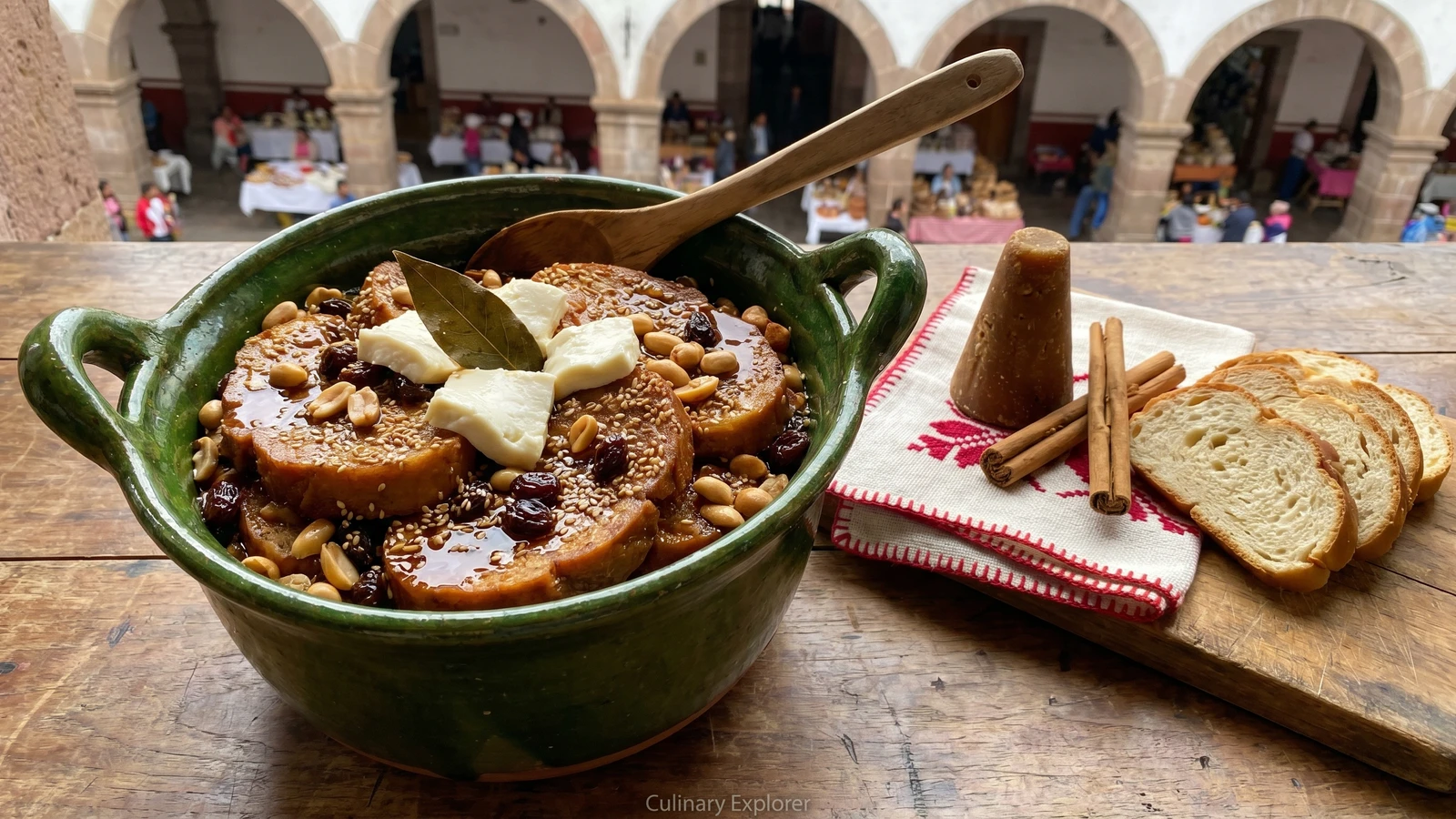
Michoacán's Cuaresma bread pudding, layered with dense pan de Tancítaro, piloncillo miel, raisins, peanuts, queso de rancho, and one bay leaf that keeps it from tasting flat.
Michoacán, from the western highlands around Tancítaro and Tingüindín to the Lent kitchens of Uruapan and Pátzcuaro, owns this capirotada by its bread. Pan de Tancítaro or pan de Tingüindín has a tighter crumb than the bolillo people throw into generic recipes. It drinks piloncillo without collapsing. That is not a small detail. That is the structure of the dish.
The miel is piloncillo, canela, a few clavos, pasas, and one hoja de laurel. One. The laurel should sit in the back like a serious woman at the table, present but not shouting. This is not the Tapatía version with birote salado, and it is not a dessert pretending to be cake. It is Cuaresma food, bread rescued, sweetened, salted by queso de rancho, and baked in barro until the edges catch.
I learned this one from a señora near Pátzcuaro who corrected my hand when I poured the syrup too fast. She said the bread has to drink, not drown. You build the layers slowly, raisins and cacahuates where the spoon will find them, queso tucked between slices so the salt cuts the piloncillo. Saber cocinar es saber vivir.
Capirotada appears in early Spanish cookbooks before the conquest, including Ruperto de Nola's 1520 Llibre del Coch, where layered bread was savory and tied to meat broths rather than dessert. In New Spain, Lent turned the dish toward piloncillo, canela, raisins, nuts, and cheese, ingredients that gave richness on abstinence days without meat. The common Catholic symbolism, bread as body, miel as blood, canela as the cross, and clove as nails, is a later devotional reading; Michoacán's regional signature is the dense pan de Tancítaro or Tingüindín and the quiet hoja de laurel that separates it from the Tapatía version.
Quantity
1 pound
day-old, cut into 3/4-inch slices
Quantity
6 tablespoons, plus more for the cazuela
melted
Quantity
2
for lining the cazuela
Quantity
14 ounces
chopped
Quantity
4 cups
Quantity
2
Quantity
3
Quantity
1 small
Quantity
1 strip, 2 inches long
with little white pith
Quantity
1/4 teaspoon
Quantity
1 cup
Quantity
3/4 cup
Quantity
10 ounces
crumbled
Quantity
2 tablespoons
toasted
| Ingredient | Quantity |
|---|---|
| pan de Tancítaro or pan de Tingüindínday-old, cut into 3/4-inch slices | 1 pound |
| unsalted buttermelted | 6 tablespoons, plus more for the cazuela |
| stale corn tortillasfor lining the cazuela | 2 |
| piloncillochopped | 14 ounces |
| water | 4 cups |
| Mexican cinnamon sticks (canela) | 2 |
| whole cloves | 3 |
| bay leaf (hoja de laurel) | 1 small |
| orange peelwith little white pith | 1 strip, 2 inches long |
| fine sea salt | 1/4 teaspoon |
| raisins | 1 cup |
| roasted unsalted peanuts | 3/4 cup |
| queso de rancho michoacano or queso frescocrumbled | 10 ounces |
| sesame seedstoasted | 2 tablespoons |
Heat the oven to 300F. Brush the bread slices lightly on both sides with melted butter and arrange them in a single layer on a sheet pan. Toast for 10 to 12 minutes per side, until the edges are golden and the centers feel dry but not hard. Pan de Tancítaro and pan de Tingüindín have a tight crumb. That is why they can take the piloncillo miel without falling apart.
Combine the piloncillo, water, canela, cloves, bay leaf, orange peel, and salt in a saucepan. Bring to a simmer over medium heat, then lower the heat and cook for 18 to 22 minutes, until the piloncillo dissolves and the syrup falls from a spoon in a thin amber sheet. This is miel de piloncillo, not sugar water. Refined sugar gives sweetness and nothing else.
Butter a deep 2 1/2 to 3 quart lead-free glazed barro cazuela. Lay the stale corn tortillas across the bottom. They protect the bread from the strongest heat and catch the first syrup. This is an old kitchen trick, the kind you learn by watching the women who make the dish every Cuaresma.
Strain the hot miel and discard the canela, cloves, bay leaf, and orange peel. Spoon a little miel into the bottom of the cazuela. Add a layer of toasted bread, then scatter raisins, peanuts, queso de rancho, and a little sesame seed. Repeat the layers until everything is used, saving a small handful of queso, peanuts, raisins, and sesame for the top. Pour the remaining miel slowly over the layers, pausing so the bread absorbs it instead of floating.
Press the layers gently with the back of a spoon. Let the cazuela sit for 15 minutes before baking. The bread should look soaked and heavy, not submerged like soup. The señora near Pátzcuaro who taught me this said the bread has to drink, not drown. She was right.
Raise the oven to 350F. Cover the cazuela with foil or a fitted lid and bake for 25 minutes. Uncover and bake 15 to 20 minutes more, until the top is glossy, the edges are dark amber, the raisins are plump, and the queso has softened into the bread. The top should hold its layers when you press it lightly with a spoon.
Rest the capirotada for at least 20 minutes before serving. Serve it warm or at room temperature straight from the cazuela. It should spoon out in soft layers with caramelized edges, salty cheese, raisins, peanuts, and piloncillo in every bite. This is Cuaresma food from Michoacán. Cada estado, su propia cocina.
1 serving (about 195g)
Culinary guides, cultural storytelling, and the editorial depth that makes cooking meaningful.
Discover Culinary ExplorerChef Lupita
Puebla's convent-style acitrón, made from cidra peel instead of endangered biznaga, built through repeated syrup soakings until the cubes turn firm, translucent, and ready for rosca or chiles en nogada.

Chef Lupita
Ciudad de México's Tulyehualco alegría is popped huautli folded into piloncillo honey, pressed with peanuts, pepitas, and raisins, then cut into the rectangular bars that built a pueblo's identity.

Chef Lupita
Oaxaca's pre-Columbian amaranth bar, popped on a hot comal and bound with piloncillo, honey, and the sacred Zapotec grain that the Spanish tried, and failed, to outlaw.

Chef Lupita
Querétaro's mercado candy of popped amaranto pressed with dark piloncillo syrup, pepitas, pecans, and cacahuate, a Bajío sweet that respects the seed before it decorates the table.