
Chef Lupita
Acitrón de Cidra Conventual
Puebla's convent-style acitrón, made from cidra peel instead of endangered biznaga, built through repeated syrup soakings until the cubes turn firm, translucent, and ready for rosca or chiles en nogada.
A cooking platform built around craft, culture, and the stories behind what we eat.
Created by
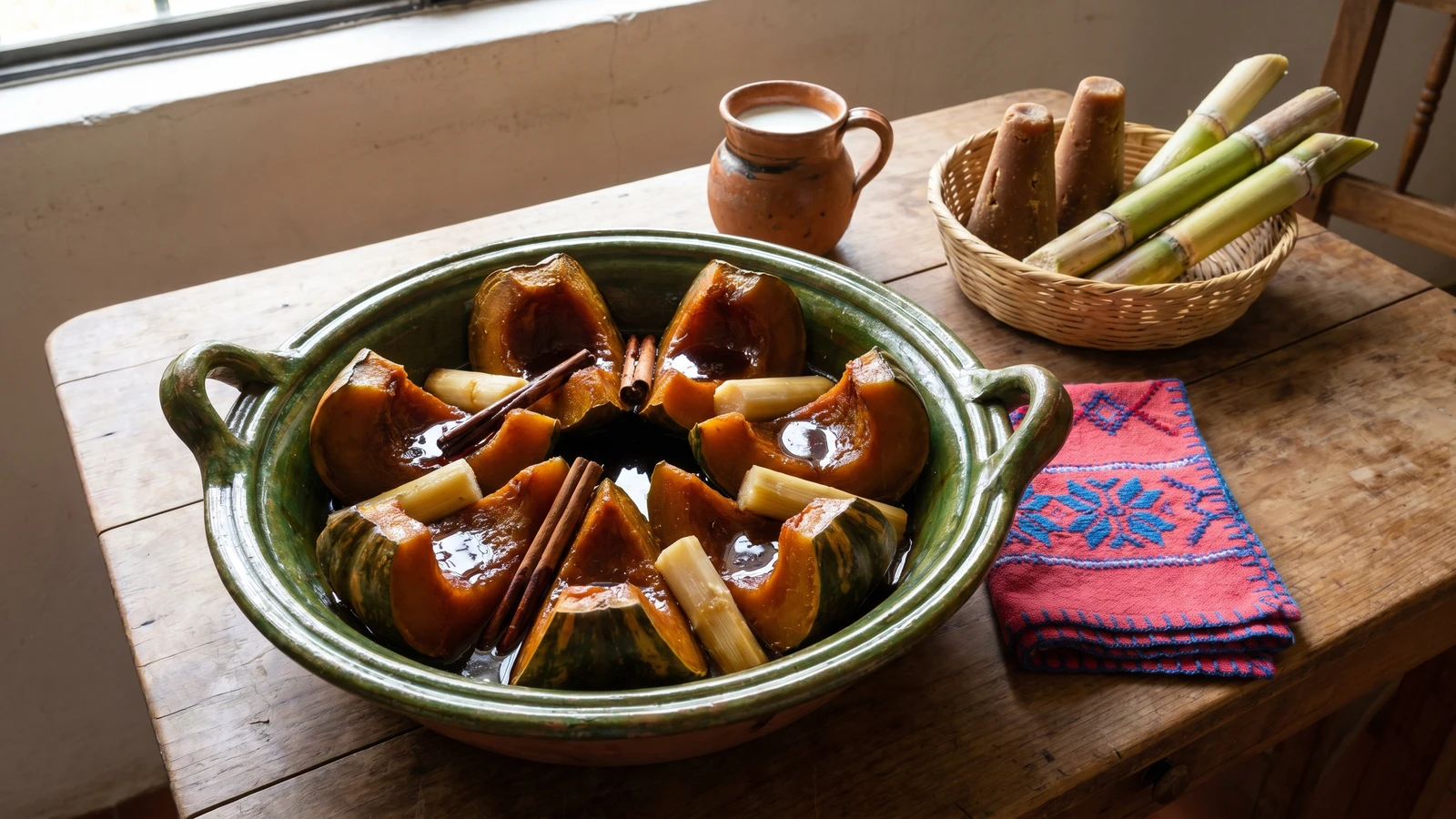
Michoacan's Dia de Muertos pumpkin, slow-simmered with piloncillo, Mexican canela, clove, and sugar cane until the wedges turn dark, glossy, and ready for cold milk.
Michoacan, especially the Purepecha region around Patzcuaro and the villages near Lake Patzcuaro, knows calabaza en tacha as food for Dia de Muertos. You see it in home kitchens before you see it on the altar: wedges of calabaza de Castilla sitting skin-side down in a cazuela, turning dark in piloncillo syrup while the house smells of cane and canela.
This is not a pumpkin spice dessert. Do not confuse things. The flavor comes from calabaza de Castilla, piloncillo, Mexican canela, clove, and pieces of fresh sugar cane. The technique is patience: simmer, baste, reduce, rest. The women who perfected this did not need pastry school. They needed a good pumpkin from the mercado, a heavy clay pot, and the discipline to keep the syrup from burning.
I learned the Michoacan version from a woman in Patzcuaro who served it in green-glazed barro with cold milk on the side. She watched me taste it before she said anything. Then she told me, 'If the pumpkin falls apart, you were in a hurry.' She was right. La cocina no es decoracion, es trabajo.
Cada estado, su propia cocina. In Michoacan, this dish belongs to the season of marigolds, candles, pan de muerto, and family names spoken out loud. The pumpkin sits on the table like something humble, but it carries the old rule: cook what the harvest gives you, and do it properly.
Calabaza is one of Mexico's oldest cultivated foods, domesticated in Mesoamerica thousands of years before the Spanish arrived, but piloncillo and cinnamon entered the dish after the 16th-century introduction of sugar cane and Asian spices through colonial trade. The word 'tacha' refers to the copper vats used in sugar mills to boil cane juice, and candied fruits cooked in that syrup took the name from the vessel and the process. In Michoacan, calabaza en tacha became closely tied to Dia de Muertos offerings around Lake Patzcuaro, where autumn squash, cane syrup, and family altar traditions meet in one cazuela.
Quantity
4 pounds
scrubbed, seeded, and cut into 3-inch wedges with skin on
Quantity
1 1/2 pounds
chopped or broken into chunks
Quantity
3 cups
Quantity
2 sticks
Quantity
3
Quantity
1 strip
with as little white pith as possible
Quantity
1 cup
peeled and cut into 3-inch sticks
Quantity
1/4 teaspoon
Quantity
for serving
| Ingredient | Quantity |
|---|---|
| calabaza de Castilla or firm Mexican pumpkinscrubbed, seeded, and cut into 3-inch wedges with skin on | 4 pounds |
| piloncillochopped or broken into chunks | 1 1/2 pounds |
| water | 3 cups |
| Mexican canela | 2 sticks |
| whole cloves | 3 |
| orange peelwith as little white pith as possible | 1 strip |
| fresh sugar canepeeled and cut into 3-inch sticks | 1 cup |
| fine sea salt | 1/4 teaspoon |
| cold whole milk (optional) | for serving |
Scrub the calabaza well because the skin stays on. Cut it into heavy wedges, about 3 inches wide, and scrape out the seeds and stringy center. Do not peel it. The skin helps the pumpkin hold its shape during the long simmer. Peeled pumpkin collapses into puree, and that is not calabaza en tacha.
Put the piloncillo, water, canela, cloves, orange peel, sugar cane, and salt in a wide clay cazuela or heavy pot. Bring it to a simmer over medium heat, stirring until the piloncillo begins to dissolve. The syrup should smell dark, like cane, cinnamon, and wet clay after rain. White sugar will sweeten this dish, yes. It will not give you that deep mineral taste of piloncillo. A substitution is a compromise, not an upgrade.
Lower the pumpkin wedges into the syrup skin side down in one tight layer if possible. Spoon syrup over the flesh. The liquid will not cover the pumpkin completely, and that is correct. The calabaza releases water as it cooks, and the syrup thickens around it. No me vengas con atajos. If you drown it in water, you make sweet soup.
Reduce the heat to low. Cover the pot slightly ajar and simmer for 45 minutes, spooning syrup over the pumpkin every 15 minutes. Move the pieces carefully with a spoon, not tongs, because the flesh softens before it glazes. You want the pumpkin tender enough for a spoon to pass through, but still shaped like a wedge.
Uncover the pot and continue simmering for 35 to 50 minutes more, basting often. The syrup will turn dark brown and glossy, and the exposed edges of the pumpkin will take on an amber shine. Watch the bottom now. Piloncillo can go from syrup to burned bitterness quickly. If the syrup tightens too much before the pumpkin is fully tender, add hot water 2 tablespoons at a time.
Turn off the heat and let the calabaza rest in the syrup for at least 30 minutes. Overnight is better. The flesh drinks in the piloncillo as it cools, and the color deepens. This is why calabaza en tacha is a make-ahead dish on the Dia de Muertos table.
Serve one wedge per person in shallow bowls, spooning the dark syrup and a piece of cane over the top. Pour cold whole milk around the pumpkin at the table, not before, so the milk stays clean and cold against the warm, dark syrup. That contrast is the point. Asi se hace y punto.
1 serving (about 330g)
Culinary guides, cultural storytelling, and the editorial depth that makes cooking meaningful.
Discover Culinary ExplorerChef Lupita
Puebla's convent-style acitrón, made from cidra peel instead of endangered biznaga, built through repeated syrup soakings until the cubes turn firm, translucent, and ready for rosca or chiles en nogada.

Chef Lupita
Ciudad de México's Tulyehualco alegría is popped huautli folded into piloncillo honey, pressed with peanuts, pepitas, and raisins, then cut into the rectangular bars that built a pueblo's identity.

Chef Lupita
Oaxaca's pre-Columbian amaranth bar, popped on a hot comal and bound with piloncillo, honey, and the sacred Zapotec grain that the Spanish tried, and failed, to outlaw.

Chef Lupita
Querétaro's mercado candy of popped amaranto pressed with dark piloncillo syrup, pepitas, pecans, and cacahuate, a Bajío sweet that respects the seed before it decorates the table.