Chef Lupita
Acúmara Tatemada al Comal
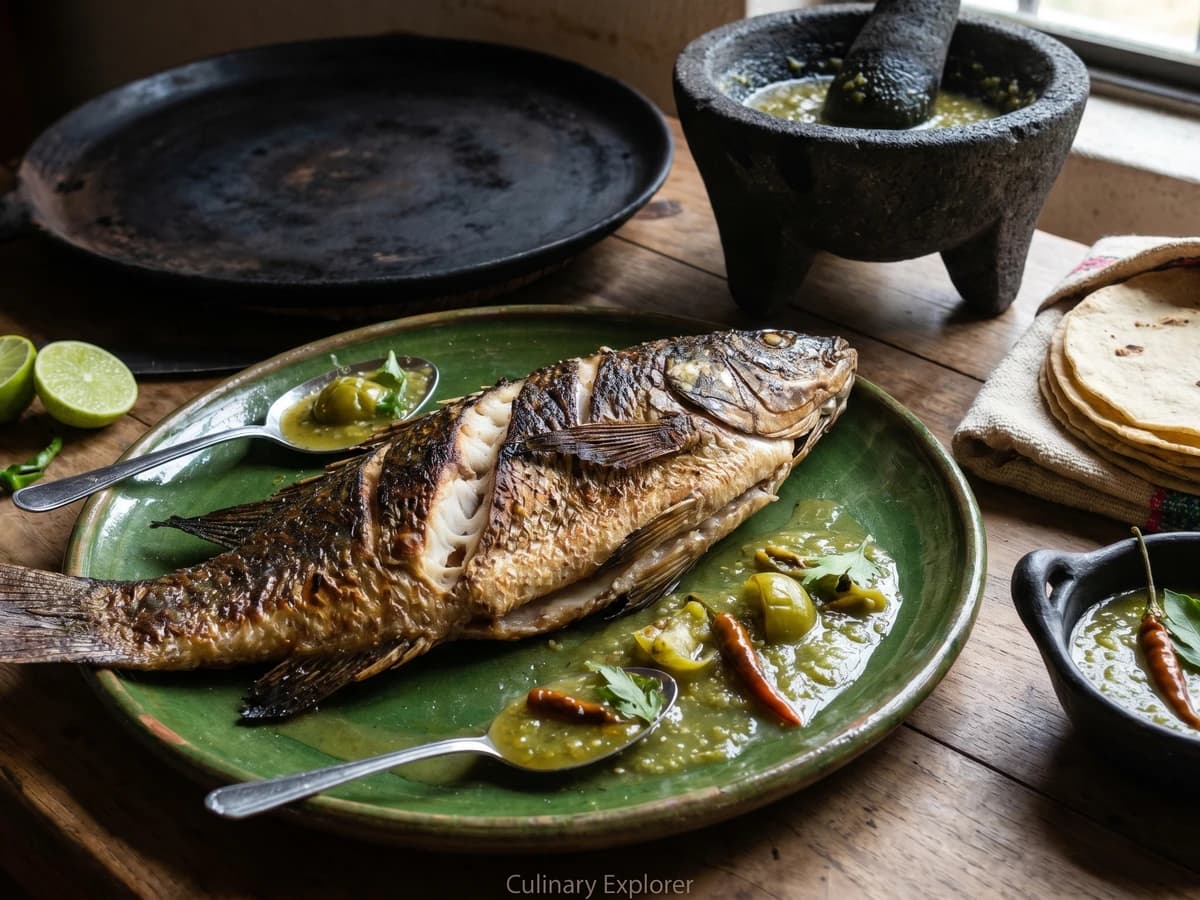
Michoacán's Lake Pátzcuaro acúmara, a whole kurucha from the lago tatemada on a comal de leña and served with chile perón atápakua, corn tortillas, and P'urhépecha discipline.
A cooking platform built around craft, culture, and the stories behind what we eat.

Created by
Apatzingán's beef tatemado is slow-cooked in a sealed clay pot, with ancho and pasilla chiles charred on the comal, vinegar in the adobo, and lard doing its quiet work.
This comes from Apatzingán, in Michoacán's Tierra Caliente, where the heat is not a slogan and the food knows how to stand up to it. Beef tatemado lives in that western stretch of the state, between ranching country, chile vendors, and home kitchens where a clay pot still means something.
The defining word is tatemado. Not roasted politely. Touched by fire. The chile ancho and chile pasilla meet the comal until their oils wake up, the tomatoes blister, the onion blackens at the edges, and the garlic softens inside its skin. Then everything becomes an adobo with vinegar, spices, and enough patience to reach the bone. This is not a thin red sauce poured over meat. The meat rests in it overnight, then cooks sealed in clay with masa around the lid.
I learned this style from a woman outside Apatzingán who pressed the masa seal with two fingers and told me, 'If the smell escapes, the flavor escapes.' She was right. The pot does the work because the women before us understood heat, clay, fat, and time. Cada estado, su propia cocina. Michoacán is not only carnitas, though it makes the best ones. It also has dishes like this, dark with chile, sharp with vinegar, and serious enough for a family table.
Tatemar comes from the Nahuatl root related to burning or scorching, and the technique predates Spanish livestock: chiles, tomatoes, tomatillos, and aromatics were charred on comales long before beef entered Mexican kitchens. Cattle arrived in western Mexico in the 16th century, and Michoacán's ranching zones adapted older chile-vinegar adobos to larger cuts of beef and goat cooked slowly in clay. In Tierra Caliente communities around Apatzingán, sealing pots with masa preserved moisture before modern ovens and pressure cookers, turning a practical household method into a regional signature.
Quantity
4 pounds
cut into large pieces
Quantity
2 teaspoons, plus more to taste
Quantity
6
stemmed and seeded
Quantity
4
stemmed and seeded
Quantity
3
Quantity
1 medium
quartered
Quantity
8
unpeeled
Quantity
1/2 cup
Quantity
1/2 cup
Quantity
1 teaspoon
Quantity
1/2 teaspoon
Quantity
4
Quantity
6
Quantity
1 small piece
about 1 inch
Quantity
2
Quantity
3 tablespoons
Quantity
1 hoja santa leaf or 2 sprigs epazote
Quantity
1 cup
Quantity
1/2 cup, plus more as needed
Quantity
for serving
warmed
Quantity
for serving
Quantity
for serving
| Ingredient | Quantity |
|---|---|
| bone-in beef short ribs or chuck roastcut into large pieces | 4 pounds |
| kosher salt | 2 teaspoons, plus more to taste |
| dried chile anchostemmed and seeded | 6 |
| dried chile pasillastemmed and seeded | 4 |
| ripe Roma tomatoes | 3 |
| white onionquartered | 1 medium |
| garlic clovesunpeeled | 8 |
| apple cider vinegar or pineapple vinegar | 1/2 cup |
| beef broth or water | 1/2 cup |
| dried Mexican oregano | 1 teaspoon |
| cumin seeds | 1/2 teaspoon |
| whole cloves | 4 |
| black peppercorns | 6 |
| Mexican cinnamonabout 1 inch | 1 small piece |
| bay leaves | 2 |
| manteca de cerdo | 3 tablespoons |
| hoja santa leaf or fresh epazote (optional) | 1 hoja santa leaf or 2 sprigs epazote |
| masa harina | 1 cup |
| warm water | 1/2 cup, plus more as needed |
| hand-pressed corn tortillas (optional)warmed | for serving |
| sliced white onion (optional) | for serving |
| lime wedges (optional) | for serving |
Season the beef all over with the salt. Let it sit while you prepare the adobo, or refrigerate it up to one day ahead. Bone-in beef gives the sauce body. Boneless meat will cook, yes, but the pot will not have the same depth.
Heat a dry comal over medium. Toast the chile ancho and chile pasilla one at a time, pressing them flat for a few seconds per side until they darken, puff, and smell deep, not burned. This is tatemado: touched by fire. If the chile turns black and sharp-smelling, throw it out. Burned chile makes bitter adobo and no señora in Apatzingán will forgive that.
Put the toasted chiles in a bowl and cover with hot water. Hot, not boiling. Let them soften for 20 minutes, then drain. Boiling water toughens the skins and can pull bitterness into the adobo. You want the flesh soft enough to blend clean.
On the same comal, roast the tomatoes, onion, and unpeeled garlic until they are blistered in spots and softened. Peel the garlic. The tomatoes should slump and leak a little juice. The onion should have dark edges. That char is not decoration. It is the flavor that gives the dish its name.
Blend the softened chiles, roasted tomatoes, onion, peeled garlic, vinegar, broth, Mexican oregano, cumin seeds, cloves, peppercorns, cinnamon, and one bay leaf until completely smooth. Blend longer than you think. A rough adobo leaves chile skin on the tongue. Strain through a fine-mesh sieve if your blender is weak.
Coat the beef with the adobo in a nonreactive bowl or clay cazuela. Cover and refrigerate at least 12 hours. Two hours is not enough. The vinegar and chile need time to enter the meat, and this is a special-occasion dish, not weekday impatience. No me vengas con atajos.
Heat the manteca de cerdo in a wide cazuela or heavy Dutch oven over medium-high. Lift the beef from the marinade, letting excess adobo drip back into the bowl, and brown the pieces on all sides. Work in batches so the meat browns instead of sweats. La manteca es el sabor. Oil will not give you the same finish.
Return all the browned beef to a lead-free oven-safe clay pot or Dutch oven. Pour the reserved adobo over the meat. Add the second bay leaf and the hoja santa or epazote if using. The sauce should come about halfway up the meat. Add a splash of water only if the pot looks dry.
Mix the masa harina with warm water until you have a soft dough, like tortilla masa but a little wetter. Press it into a rope and seal the lid to the pot all the way around. This masa seal traps the chile, vinegar, beef fat, and clay together. That closed pot is the technique. Así se hace y punto.
Bake at 300F for 3 1/2 to 4 hours, until the beef pulls apart with a fork and the adobo has turned dark brick red with glossy fat at the edges. Do not keep opening the pot. You sealed it for a reason. Let it rest 20 minutes before breaking the masa seal.
Spoon the beef and thick adobo into a green-glazed Michoacán barro serving dish, or bring the cazuela to the table if it is clean enough to honor the meal. Serve with warm corn tortillas, sliced white onion, and lime. Flour tortillas belong to the north. This is Michoacán.
1 serving (about 330g)
Culinary guides, cultural storytelling, and the editorial depth that makes cooking meaningful.
Discover Culinary ExplorerChef Lupita
Michoacán's Lake Pátzcuaro acúmara, a whole kurucha from the lago tatemada on a comal de leña and served with chile perón atápakua, corn tortillas, and P'urhépecha discipline.

Chef Lupita
Puebla's weekday adobo of pork shoulder braised in a thick guajillo and ancho sauce sharpened with vinegar, cumin, and clove. The deep red of a market spice stall, the dish a poblana cooks without thinking.

Chef Lupita
Loreto's pit-roasted clams, planted hinge-up in beach sand and tatemadas under a fast fire of dried romerillo brush, the resinous Baja desert shrub that gives this dish its smoke.

Chef Lupita
Oaxaca's eighth mole, the silky, almond-and-cinnamon almendrado, served over poached chicken. Mild, sweet, restrained, and a quiet rebuttal to anyone who thinks Mexican food has to be hot to be Mexican.