
Chef Lupita
Acitrón de Cidra Conventual
Puebla's convent-style acitrón, made from cidra peel instead of endangered biznaga, built through repeated syrup soakings until the cubes turn firm, translucent, and ready for rosca or chiles en nogada.
A cooking platform built around craft, culture, and the stories behind what we eat.
Created by
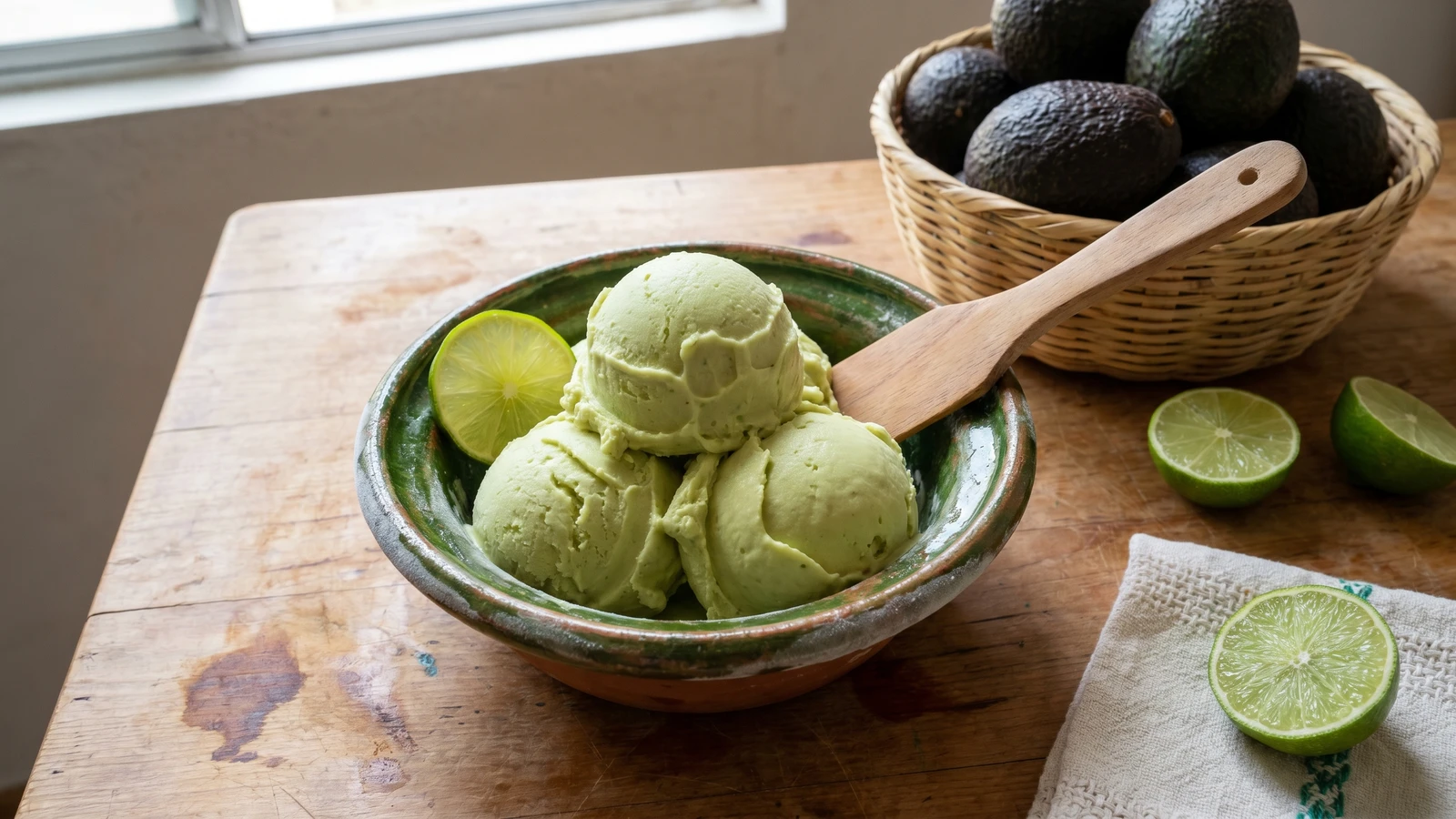
Michoacán's pale green nieve de aguacate, made with ripe Uruapan-style avocado, cold milk, sugar, lime, and salt, then churned until soft, dense, and unmistakably from avocado country.
This comes from Michoacán, from the avocado belt around Uruapan, Tancítaro, and Peribán, where the trees climb the volcanic hills and the fruit is not a garnish. It is part of the economy, the kitchen, the market basket. In that part of Mexico, avocado can go into salsa, soup, tacos, and yes, nieve. Don't make a face. Taste first.
Nieve de aguacate belongs to the same Michoacán ice cream tradition that made Tocumbo famous. The old method is a garrafa, a metal canister set inside a wooden bucket packed with ice and salt, turned by hand until the mixture thickens against the cold walls. Women perfected this work at home and in market stalls because they understood texture before anyone used fancy words for it: enough fat from the avocado to make it creamy, enough milk to keep it light, enough lime to keep the green clean.
The defining ingredient is the avocado. Use ripe Hass or a good Mexican criollo if your market has it. It should yield to pressure but not smell fermented. If the avocado is hard, wait. If it is stringy or gray inside, throw it out. You can have perfect technique and bad fruit and you'll get bad nieve. Si no conoces el mercado, no conoces la cocina.
This is not a chile dessert. Not everything Mexican needs heat. The surprise here is quiet: pale green, cold, smooth, a little grassy, a little buttery, with just enough sugar to make the avocado show its softer side. Cada estado, su propia cocina.
Michoacán's frozen dessert trade is tied strongly to Tocumbo, where families began building paleta and nieve businesses in the mid-20th century before spreading the La Michoacana name across Mexico. Avocado cultivation expanded heavily in Michoacán during the 20th century, especially around Uruapan and Tancítaro, turning the state into Mexico's best-known avocado region. Nieve de aguacate grew naturally from that geography: a local fruit folded into a local frozen-dessert technique.
Quantity
3 large
preferably from Michoacán, flesh scooped
Quantity
2 cups
well chilled
Quantity
1 cup
well chilled
Quantity
3/4 cup
Quantity
2 tablespoons
Quantity
1 teaspoon
Quantity
1/4 teaspoon
Quantity
1/2 cup
well chilled
| Ingredient | Quantity |
|---|---|
| ripe Hass avocadospreferably from Michoacán, flesh scooped | 3 large |
| whole milkwell chilled | 2 cups |
| evaporated milkwell chilled | 1 cup |
| granulated sugar | 3/4 cup |
| fresh lime juice | 2 tablespoons |
| pure vanilla extract | 1 teaspoon |
| fine sea salt | 1/4 teaspoon |
| Mexican crema or heavy creamwell chilled | 1/2 cup |
Cut open the avocados only when they are fully ripe. The flesh should be green, soft, and clean-smelling, with no gray streaks and no fermented odor. Scoop the flesh into a bowl and discard any bruised dark spots. This is a fruit dessert, so the fruit has nowhere to hide.
In a blender, combine the whole milk, evaporated milk, sugar, lime juice, vanilla, and salt. Blend for 30 seconds, until the sugar is dissolved. Rub a drop between your fingers. If it feels gritty, blend longer. Sugar crystals make icy nieve, and icy nieve is careless work.
Add the avocado flesh and the Mexican crema. Blend until completely smooth, scraping the sides if needed. The mixture should look pale green and thick enough to coat a spoon. The lime is not there to make it sour. It keeps the avocado flavor clean and slows the browning. Así se hace y punto.
Pour the blended base into a covered container and refrigerate for at least 2 hours, until very cold. Cold base churns smoother. In Tocumbo-style garrafa work, the mixture starts cold because the hand-churning depends on steady contact with the icy metal wall. Your machine needs the same respect.
Churn in an ice cream machine according to the manufacturer's instructions, usually 20 to 25 minutes. Stop when the nieve looks like soft serve and holds gentle folds. If using a hand garrafa, pack the bucket with ice and rock salt, turn steadily, and scrape the sides often until the mixture thickens. The texture should be dense, smooth, and cold, not fluffy.
Transfer the nieve to a shallow container, press parchment directly on the surface, cover, and freeze for 1 to 2 hours for a scoopable texture. For the best flavor, serve it the same day. Avocado has a living green flavor, and it dulls when you leave it forgotten in the freezer. La cocina no es decoración, es trabajo.
Scoop into small bowls or a green-glazed Michoacán barro dish. Serve without chocolate syrup, sprinkles, or cinnamon. A thin slice of lime on the side is enough if you want the table to recognize the fruit. Recetas probadas y garantizadas.
1 serving (about 160g)
Culinary guides, cultural storytelling, and the editorial depth that makes cooking meaningful.
Discover Culinary ExplorerChef Lupita
Puebla's convent-style acitrón, made from cidra peel instead of endangered biznaga, built through repeated syrup soakings until the cubes turn firm, translucent, and ready for rosca or chiles en nogada.

Chef Lupita
Ciudad de México's Tulyehualco alegría is popped huautli folded into piloncillo honey, pressed with peanuts, pepitas, and raisins, then cut into the rectangular bars that built a pueblo's identity.

Chef Lupita
Oaxaca's pre-Columbian amaranth bar, popped on a hot comal and bound with piloncillo, honey, and the sacred Zapotec grain that the Spanish tried, and failed, to outlaw.

Chef Lupita
Querétaro's mercado candy of popped amaranto pressed with dark piloncillo syrup, pepitas, pecans, and cacahuate, a Bajío sweet that respects the seed before it decorates the table.