
Chef Lupita
Agua de Alfalfa
Ciudad de México's highland market agua fresca, fresh alfalfa blended with pineapple and lime until bright green, strained clean, and poured cold from the vitrolero.
A cooking platform built around craft, culture, and the stories behind what we eat.
Created by
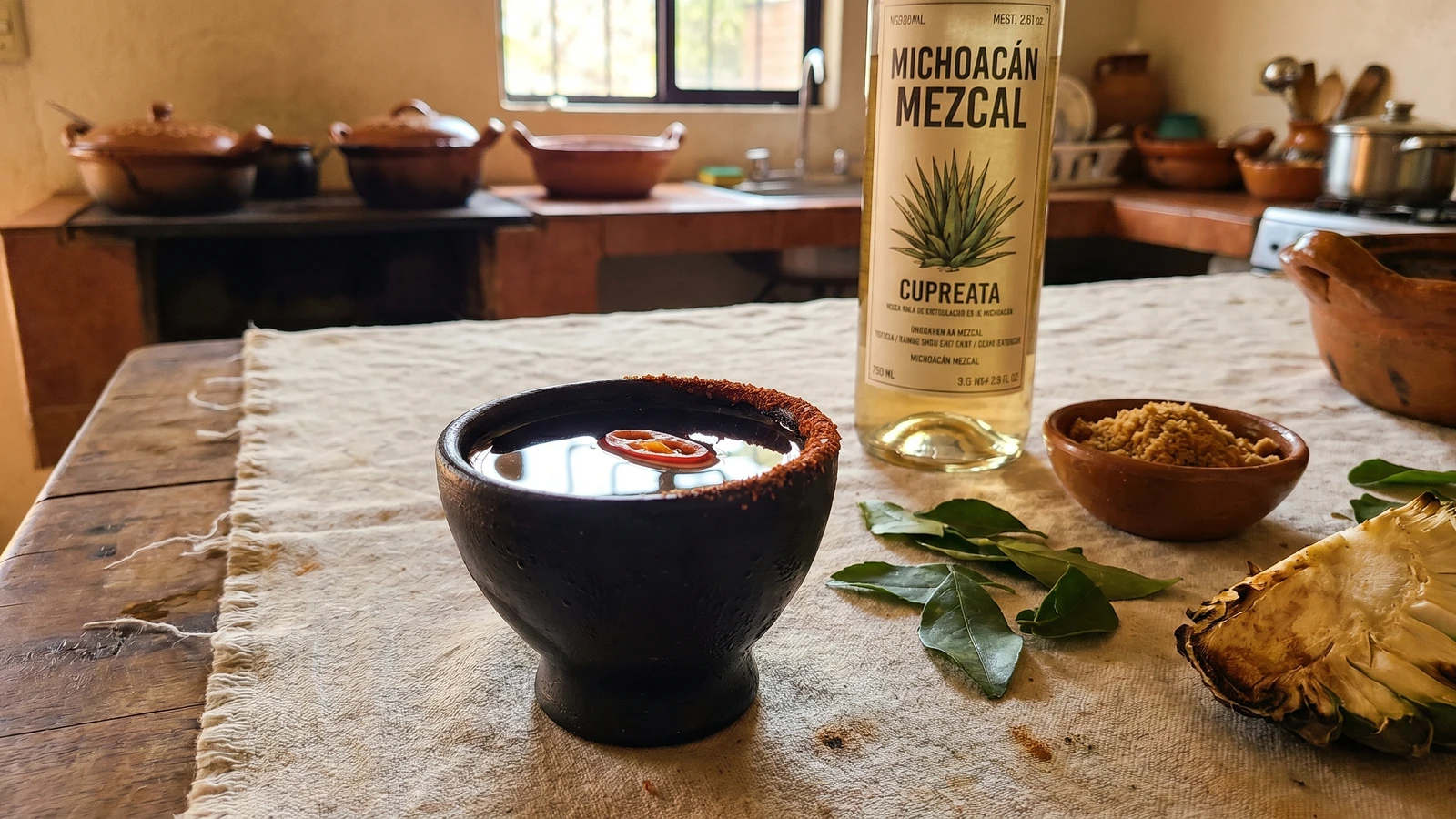
Michoacán's Agave cupreata mezcal, the maguey papalote of the sierra, sharpened with lime, softened with nurite and piloncillo, and finished with chile perón salt.
Michoacán, from the highland sierra around Etúcuaro, Tzitzio, and the P'urhépecha lands near the Meseta, gives this drink its backbone: mezcal from Agave cupreata, called maguey papalote. This is not a neutral spirit hiding under fruit juice. Cupreata tastes of cooked agave, wet earth, green herbs, and smoke from the pit where the piñas were roasted. Respect that or make something else.
The syrup here uses piloncillo and nurite, a P'urhépecha herb with a minty, anise-like edge that grows in Michoacán's highlands. You do not drown the mezcal. You season it. Lime brings the line of acid, piloncillo rounds the heat, and chile perón salt on the rim gives the state its own voice. Cada estado, su propia cocina, even in the copita.
I learned to drink cupreata in small clay cups, not in tall glasses full of soda. The women serving food at the table would set out corundas, salsa, and a bottle from a local maestro mezcalero, and nobody made a performance of it. This cocktail keeps that discipline. No martini glass. No bar theater. Clay, agave, lime, chile, and enough restraint to let Michoacán speak.
Michoacán received Denominación de Origen recognition for mezcal in 2012, later than Oaxaca, even though distillation traditions in the state are centuries old and tied to rural communities in the central and southern highlands. Agave cupreata, known locally as maguey papalote, grows wild and semi-cultivated in parts of Michoacán and Guerrero, and its broad leaves give the plant the butterfly name. Traditional Michoacán mezcal is often cooked in earthen pits and may be distilled in wood and copper or clay systems depending on the community, a regional practice that separates it from the commercial image of mezcal as only Oaxacan.
Quantity
4 ounces
Quantity
1 ounce
Quantity
1 ounce
Quantity
1 small strip
for expressing over the drinks
Quantity
1 teaspoon
for the rim
Quantity
1
for moistening the rim
Quantity
as needed
for shaking
Quantity
2 thin slices
| Ingredient | Quantity |
|---|---|
| Michoacán mezcal cupreata | 4 ounces |
| fresh lime juice | 1 ounce |
| nurite piloncillo syrup | 1 ounce |
| orange peelfor expressing over the drinks | 1 small strip |
| chile perón saltfor the rim | 1 teaspoon |
| lime wedgefor moistening the rim | 1 |
| icefor shaking | as needed |
| fresh chile perón slices (optional) | 2 thin slices |
Combine 1/2 cup water, 1/2 cup grated piloncillo, and 6 fresh nurite leaves in a small saucepan. Warm over low heat until the piloncillo dissolves, about 6 to 8 minutes. Do not boil it hard. Nurite turns harsh when bullied. Remove from the heat, cover, and steep 10 minutes. Strain and cool completely.
Mix 1 teaspoon fine sea salt with 1/2 teaspoon ground dried chile perón. If your chile perón is fresh, char one on a comal, dry it in a low oven, then grind it. That is work, yes. La cocina no es decoración, es trabajo. Spread the salt on a small plate.
Run the lime wedge along only half the rim of two clay copitas or small jícaras. Dip the moistened side into the chile perón salt. Half the rim is enough. The drinker should decide when the chile enters the sip.
Add the mezcal cupreata, lime juice, and cooled nurite piloncillo syrup to a shaker with ice. Shake hard for 8 to 10 seconds, just until the metal feels cold. You are chilling and tightening the drink, not beating the agave into silence.
Strain into the prepared copitas. Express the orange peel over the surface and discard it. Add a thin slice of fresh chile perón only if it is in season and good. If the market does not have good chile perón today, leave it out. Pregúntale a las señoras del mercado.
1 serving (about 95g)
Culinary guides, cultural storytelling, and the editorial depth that makes cooking meaningful.
Discover Culinary ExplorerChef Lupita
Ciudad de México's highland market agua fresca, fresh alfalfa blended with pineapple and lime until bright green, strained clean, and poured cold from the vitrolero.

Chef Lupita
Aguascalientes' Lenten agua fresca, jewel-red from cooked beet and full of apple, banana, orange, lettuce, and ground peanuts, served cold when Holy Week meets the Feria de San Marcos.

Chef Lupita
Sonora and Sinaloa's creamy malted barley water, built on toasted cebada perla, Mexican canela, vanilla from Papantla, and evaporated milk. Pink-beige, rich, and served cold over heavy ice in a heavy glass tumbler. Liquid cookie comfort the northwest way.

Chef Lupita
Yucatán's everyday tonic of boiled chaya leaves blended with lima agria, sugar, and ice. The bright green jarra that sits on every Peninsula table from Mérida to Valladolid.