Chef Lupita
Acúmara Tatemada al Comal
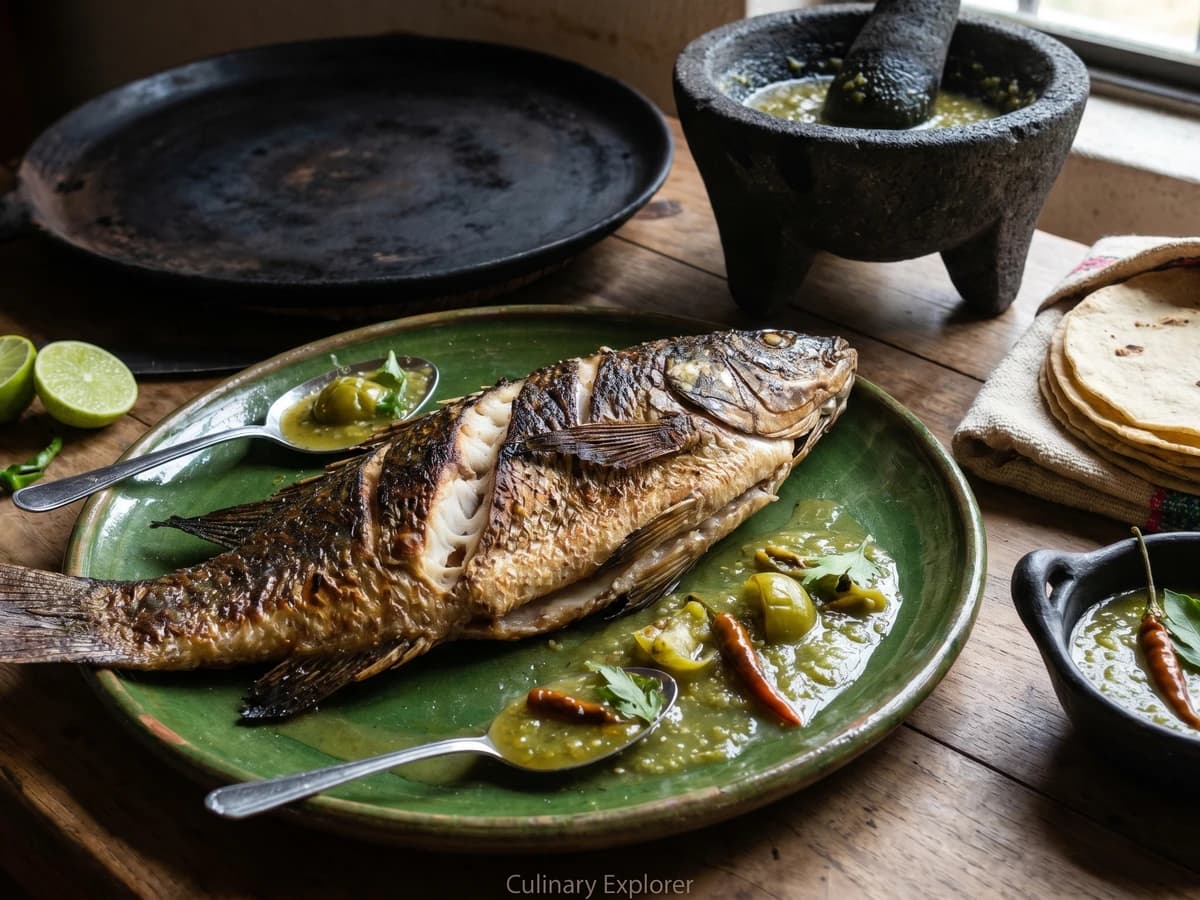
Michoacán's Lake Pátzcuaro acúmara, a whole kurucha from the lago tatemada on a comal de leña and served with chile perón atápakua, corn tortillas, and P'urhépecha discipline.
A cooking platform built around craft, culture, and the stories behind what we eat.
Created by
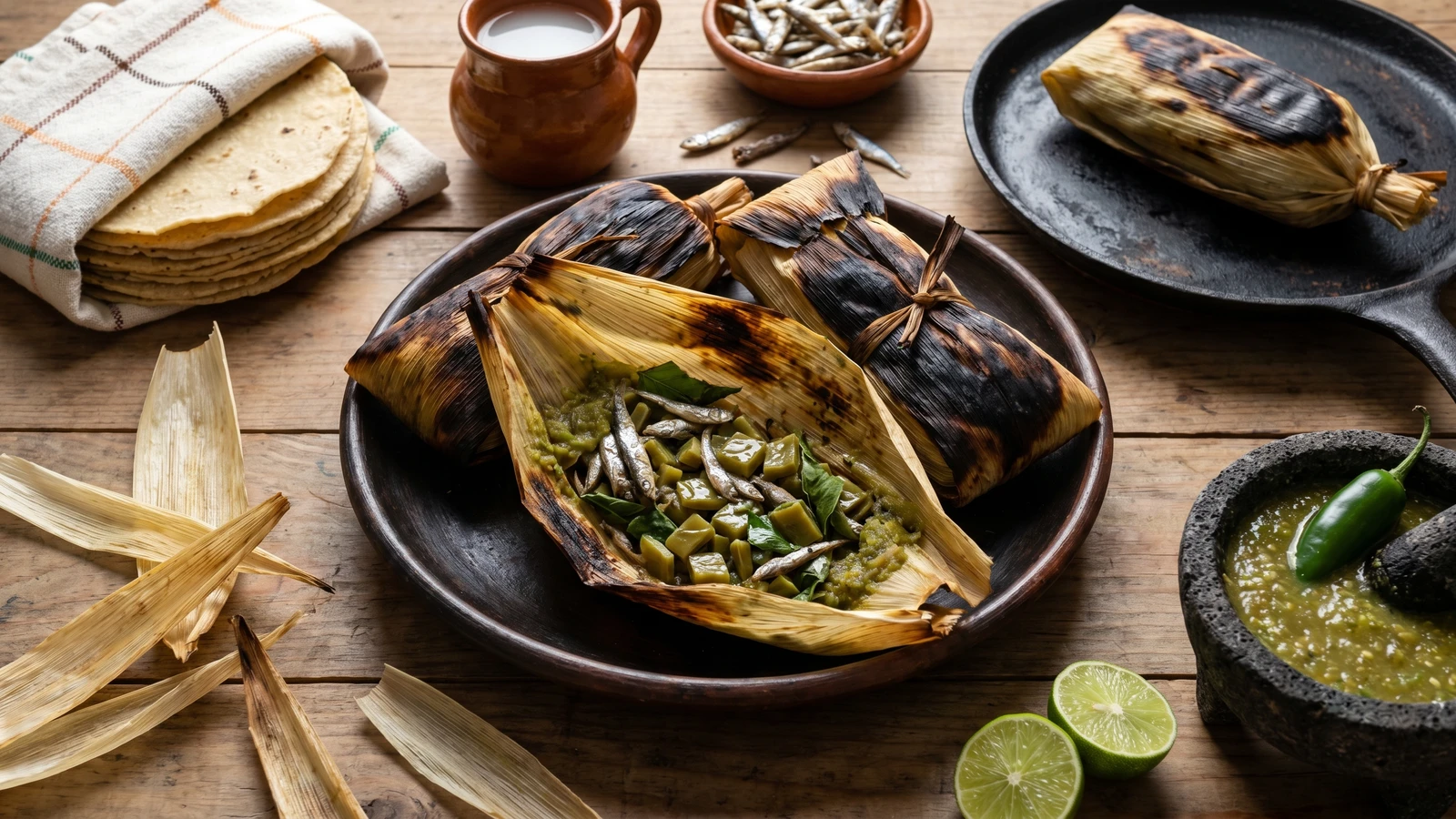
A pre-Hispanic dish from the lakes of the Valle de México. Tiny charales, freshly purged nopales, epazote and raw salsa verde, wrapped in corn husks and charred on the comal until the packet smells of toasted corn and lake water.
This dish comes from the Valle de México, from the lake country that once stretched from Texcoco to Xochimilco to Chalco, before the Spanish drained the basin and turned a city of canals into a city of concrete. Mextlapique is a Nahuatl word. The technique is older than the conquest. The Mexica wrapped small lake fish, herbs, and chile in corn husks and laid the packets directly on hot stones or on the comal. No pot. No water. Just the husk, the fire, and what came out of the lake that morning.
Charales are tiny silver fish, no longer than your finger, that still come out of Lake Pátzcuaro in Michoacán and the few remaining lakes of the central highlands. They are sold dried in mounds at the mercados of Toluca, Cuernavaca, and the Merced. Toast them on a comal before you do anything else. Untoasted charales taste like the bag they came in. Toasted, they taste of mineral and smoke and a body of water that has been feeding people for a thousand years.
The nopales must be purged. Salt them, let them weep, rinse them clean. Wet nopales turn the filling slimy and ruin the char. The epazote is not garnish, it is structure. Without epazote, this is not mextlapique, it is a sad packet of fish. The salsa verde is raw. Tomatillo, serrano, garlic, onion, all crushed cold so the brightness stays.
My mother did not make mextlapiques. She was from Jalisco and lake fish were not her tradition. I learned this dish from a woman named Doña Estela in a tianguis outside Texcoco who sold them wrapped and ready, three for ten pesos, charred on a clay comal over a wood fire. She told me the recipe in five sentences and made me repeat it back. I am giving it to you the same way. Cada estado, su propia cocina, and the cocina of the Valle de México lakes is older than almost anything else on this continent.
Mextlapique derives from the Nahuatl 'mextlapictli,' meaning something wrapped in a leaf, and the dish appears in 16th-century chronicles including Bernardino de Sahagún's Florentine Codex as a common preparation of the Mexica, who cooked small lake fish, frogs, axolotl, and insect larvae using this husk-and-fire method on the comal. The technique predates the steamed tamal as a use for corn husks and represents one of the oldest documented cooking methods of the central Mexican highlands. The dramatic decline of charales in the 20th century, tied to the draining of the Valle de México lakes and the pollution of Lake Pátzcuaro, has made this dish a marker of environmental memory: cooking mextlapiques today is partly an act of preserving a food system that the modern city has nearly erased.
Quantity
12
plus a few extra for tearing into ties
Quantity
8 ounces
rinsed and picked over
Quantity
3 medium
spines removed, diced small
Quantity
1 teaspoon
Quantity
1 pound
husked and rinsed
Quantity
3
stemmed
Quantity
2
stemmed
Quantity
2
peeled
Quantity
1/4 medium, plus 2 tablespoons finely chopped for the filling
Quantity
1 large bunch (about 1/2 cup loosely packed)
Quantity
1 tablespoon
Quantity
to taste
Quantity
for serving
warmed
Quantity
for serving
| Ingredient | Quantity |
|---|---|
| large dried corn husks (hojas de totomoxtle)plus a few extra for tearing into ties | 12 |
| dried charales (small lake fish)rinsed and picked over | 8 ounces |
| nopales (cactus paddles)spines removed, diced small | 3 medium |
| kosher salt (for purging the nopales) | 1 teaspoon |
| fresh tomatilloshusked and rinsed | 1 pound |
| fresh chile serranostemmed | 3 |
| fresh chile verde (cuaresmeño or jalapeño)stemmed | 2 |
| garlic clovespeeled | 2 |
| white onion | 1/4 medium, plus 2 tablespoons finely chopped for the filling |
| fresh epazote leaves | 1 large bunch (about 1/2 cup loosely packed) |
| manteca de cerdo (pork lard) | 1 tablespoon |
| kosher salt | to taste |
| hand-pressed corn tortillas (optional)warmed | for serving |
| lime halves (optional) | for serving |
Submerge the dried corn husks in a bowl of hot tap water. Weight them down with a plate so they stay under. Soak for 30 minutes, until they are pliable and you can fold them without cracking. While they soak, tear two or three extra husks lengthwise into thin strips. Those are your ties. This is the same wrapper the Mexica used a thousand years ago. It has not been improved on.
Toss the diced nopales with the teaspoon of salt in a colander set over a bowl. Let them sit for 20 minutes. They will weep a sticky green liquid. This is the baba and you do not want it in your mextlapique. Rinse the nopales under cold water until the water runs clean and the slime is gone. Drain well and pat dry with a clean cloth.
Spread the charales on a tray and pick through them. Pull out any large bits of fin or stray pebbles. Heat a dry comal over medium and toast the charales for two or three minutes, shaking the pan, until they smell nutty and the kitchen fills with the scent of the lake. Tip them into a bowl. Pregúntale a las señoras del mercado: a charal that has not been toasted tastes like dust. Toasted, it tastes like Pátzcuaro at dawn.
Place the raw tomatillos, serranos, chile verde, garlic, and the quarter onion in a molcajete or blender. For molcajete, work in batches: garlic and salt first, then chiles, then tomatillos last. You want a textured salsa, not a smooth liquid. If you are using a blender, pulse. Do not puree. Stir in half of the epazote leaves, torn by hand. Taste for salt. This is a raw salsa and it should taste sharp and alive.
In a wide bowl, combine the toasted charales, the drained nopales, the chopped white onion, and the remaining epazote leaves, torn by hand. Add the tablespoon of manteca and rub it through with your fingers so every piece is coated. La manteca es el sabor and it keeps the filling from drying out on the comal. Pour in about two-thirds of the salsa verde and fold everything together. The mixture should be wet but not soupy. Reserve the rest of the salsa for the table.
Drain the corn husks and shake off the excess water. Lay one husk flat on the counter, smooth side up, with the wide end facing you. Spoon about a quarter cup of filling down the center, leaving two fingers of husk clear at each end. Fold the long sides over the filling so they overlap. Fold the narrow tip up and over, then fold the wide end down to form a sealed packet. Tie around the middle with a strip of husk to hold it closed. Repeat with the rest. The wrap is the same gesture as a tamal but the packet is flatter, shaped to lie on the comal.
Heat a dry comal or heavy cast iron skillet over medium heat. No oil. Lay the packets flat on the comal in a single layer. Cook for about 10 minutes per side, pressing them gently with a spatula now and then. The husks should char in dark patches and the kitchen should smell of toasted corn and smoke. When you lift one and the bottom is mahogany-black in places and the packet feels firm, flip it. Total cooking time is about 20 to 25 minutes. The filling inside is cooking in its own juices and the lard. That is the pre-Hispanic method. No water, no steamer. Just husk and fire.
Pile the charred packets on a clay platter and bring them to the table whole. Each guest opens their own. The husk releases the smell of epazote and chile the moment it is unfolded. Serve with warm corn tortillas, the reserved salsa verde, and lime halves. Eat the filling spooned onto a tortilla, taco-style, straight from the husk. Así se hace y punto.
1 serving (about 210g)
Culinary guides, cultural storytelling, and the editorial depth that makes cooking meaningful.
Discover Culinary ExplorerChef Lupita
Michoacán's Lake Pátzcuaro acúmara, a whole kurucha from the lago tatemada on a comal de leña and served with chile perón atápakua, corn tortillas, and P'urhépecha discipline.

Chef Lupita
Puebla's weekday adobo of pork shoulder braised in a thick guajillo and ancho sauce sharpened with vinegar, cumin, and clove. The deep red of a market spice stall, the dish a poblana cooks without thinking.

Chef Lupita
Loreto's pit-roasted clams, planted hinge-up in beach sand and tatemadas under a fast fire of dried romerillo brush, the resinous Baja desert shrub that gives this dish its smoke.

Chef Lupita
Oaxaca's eighth mole, the silky, almond-and-cinnamon almendrado, served over poached chicken. Mild, sweet, restrained, and a quiet rebuttal to anyone who thinks Mexican food has to be hot to be Mexican.