
Chef Jeong-sun
Aehobak-bokkeum (Korean Stir-Fried Zucchini)
Tender Korean zucchini half-moons cooked quickly over real heat, seasoned with salted shrimp so the squash tastes deeper than oil and still clean enough for a weeknight table.
A cooking platform built around craft, culture, and the stories behind what we eat.
Created by
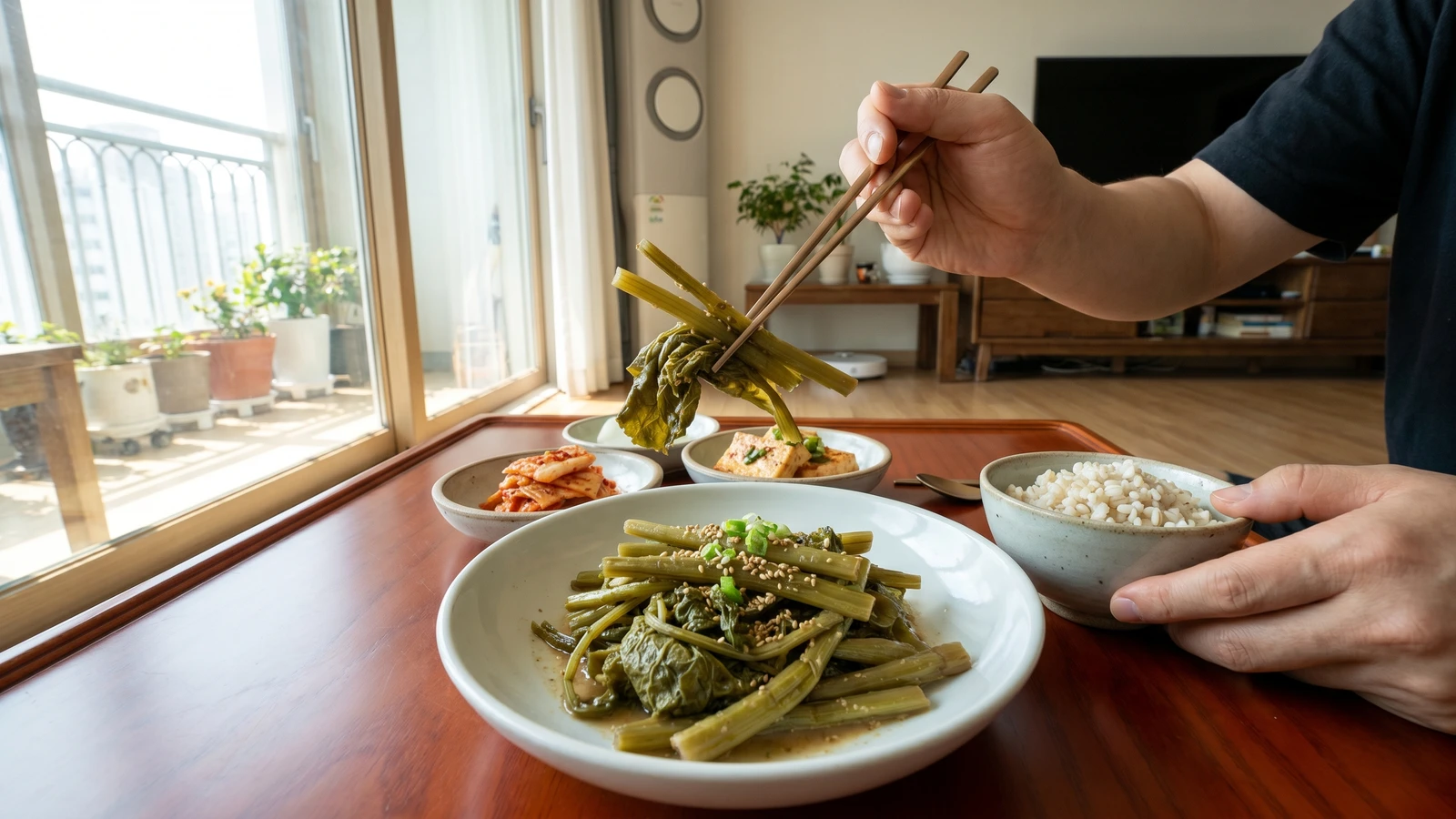
Spring butterbur stems blanched until the bitterness bows but does not disappear, then sauteed with doenjang, garlic, perilla oil, and perilla powder into the banchan Koreans wait for.
Butterbur tells you spring has become serious. In the market it sits in green bundles, a little rough-looking, not like the polite spinach that asks almost nothing from you. Meowi-namul asks for work: blanching, peeling, soaking, squeezing, then seasoning with restraint. I won't tell you this is easy. I will tell you why grown Koreans look for it as soon as the stems appear.
The bitterness is not a mistake. It is the point. My teacher Master Seong-nyeo used to say that if you soak every wild green until it behaves like lettuce, you have paid money to erase the season. Blanch it to make it safe and supple, peel the strings so the stems don't fight your teeth, and soak only until the bitterness bows. Let it taste like itself.
Doenjang and perilla powder suit butterbur because both have weight. The paste gives salt and depth, the perilla gives nutty softness, and together they make the green welcome beside rice without hiding what it is. Write down the soaking time that tastes right to you. Memory is a borrowed bowl, and spring comes around faster than you think.
Meowi, Korean butterbur (Petasites japonicus), is one of the spring san-namul, the mountain and field greens gathered and sold in markets before summer toughens their stems. In Korean home cooking, the young leaves may be used for ssam (wraps), while the stems are commonly blanched, peeled, and seasoned or sauteed as namul. The doenjang-and-deulkkae version belongs to the countryside habit of pairing bitter spring greens with fermented soybean paste and ground perilla seed, a practical way to soften strong greens without making them taste sweet.
Quantity
450g
washed well; use 350g if stems only
Quantity
8 cups
for blanching
Quantity
1 tablespoon
for blanching water
Quantity
1 tablespoon
Quantity
1 teaspoon
Quantity
1 teaspoon
minced
Quantity
1
finely chopped
Quantity
1 tablespoon
divided
Quantity
2 tablespoons
Quantity
2 to 3 tablespoons
Quantity
1/2 teaspoon
Quantity
a pinch
| Ingredient | Quantity |
|---|---|
| fresh young butterbur (meowi) stems with tender leaveswashed well; use 350g if stems only | 450g |
| waterfor blanching | 8 cups |
| coarse sea saltfor blanching water | 1 tablespoon |
| doenjang (Korean fermented soybean paste) | 1 tablespoon |
| guk-ganjang (Korean soup soy sauce) | 1 teaspoon |
| garlicminced | 1 teaspoon |
| scallionfinely chopped | 1 |
| perilla oil (deulgireum)divided | 1 tablespoon |
| finely ground perilla seed powder (deulkkae-garu) | 2 tablespoons |
| anchovy-kelp broth or water | 2 to 3 tablespoons |
| toasted sesame seeds (optional) | 1/2 teaspoon |
| salt (optional) | a pinch |
Use young spring butterbur sold for cooking, with stems that bend instead of snapping dry. If you gathered it yourself, have it identified by someone who knows Korean spring greens, and do not use roadside plants. Wash the stems and leaves in two changes of cold water, rubbing near the base where grit hides. Trim dry ends and separate large leaves from thick stems so they can cook at their own pace.
Bring 8 cups water and 1 tablespoon coarse sea salt to a hard boil. Add thick stems first and boil 3 minutes, then add tender leaves and thinner tops for 45 seconds more. Thick stems may need 1 extra minute, but do not cook them until limp. The blanching makes the stems flexible, loosens the outer strings, and takes the sharpest edge off the bitterness without erasing it.
Lift the butterbur into cold water and cool it fully. Starting from the cut end, pull away the stringy outer skin from the thick stems, the way you would strip celery strings. Soak the peeled stems and leaves in fresh cold water for 20 minutes, or up to 1 hour if they taste very bitter. Taste one small piece after 20 minutes. You want the bitterness tamed, not gone; if it tastes like nothing, you soaked out the reason we waited for spring.
Drain and squeeze the butterbur firmly in your hands until it is damp but not dripping. Cut it into 2-inch lengths. If the leaves are large, slice them once or twice across so they mix evenly with the stems. Too much water will thin the doenjang and make the perilla powder pasty, so squeeze with conviction.
Put the cut butterbur in its own bowl. Add the doenjang, guk-ganjang, garlic, scallion, and 2 teaspoons of the perilla oil. Mix by hand until every stem is lightly coated. Season each namul alone in its own bowl and taste it before it meets the rice. Butterbur has a bitter spine, so it needs doenjang for depth, but not so much that the green disappears. 손맛 is real; I measure it anyway.
Warm a 10-inch skillet over medium heat and add the remaining 1 teaspoon perilla oil. Add the seasoned butterbur and stir 2 minutes, just until the doenjang smells rounded and the stems look glossy. Add 2 tablespoons anchovy-kelp broth or water, cover, and cook 2 minutes more. This softens the fibers without turning the namul heavy.
Lower the heat. Sprinkle in the perilla seed powder and toss for 30 seconds, adding the last tablespoon of broth or water only if the pan looks dry. The powder should cling in a light beige coating, not form a paste. Taste now. Add only a pinch of salt if it needs sharpening, then finish with sesame seeds if using. Serve warm or at room temperature with rice.
1 serving (about 100g)
Culinary guides, cultural storytelling, and the editorial depth that makes cooking meaningful.
Discover Culinary ExplorerChef Jeong-sun
Tender Korean zucchini half-moons cooked quickly over real heat, seasoned with salted shrimp so the squash tastes deeper than oil and still clean enough for a weeknight table.

Chef Jeong-sun
Tender Korean summer zucchini softened gently in the pan with saeujeot for salt and depth, finished with sesame so the vegetable stays sweet, green, and plainly itself.

Chef Jeong-sun
A bittersweet spring green from the southern shore, blanched just until pliant, then seasoned lightly so its clean coastal bitterness stays alive on the rice table.

Chef Jeong-sun
Torn king oyster or shiitake mushrooms, browned until their own water disappears, then finished with soy, garlic, sesame oil, and onion for a quiet banchan that earns its place.