
Chef Lupita
Acitrón de Cidra Conventual
Puebla's convent-style acitrón, made from cidra peel instead of endangered biznaga, built through repeated syrup soakings until the cubes turn firm, translucent, and ready for rosca or chiles en nogada.
A cooking platform built around craft, culture, and the stories behind what we eat.
Created by
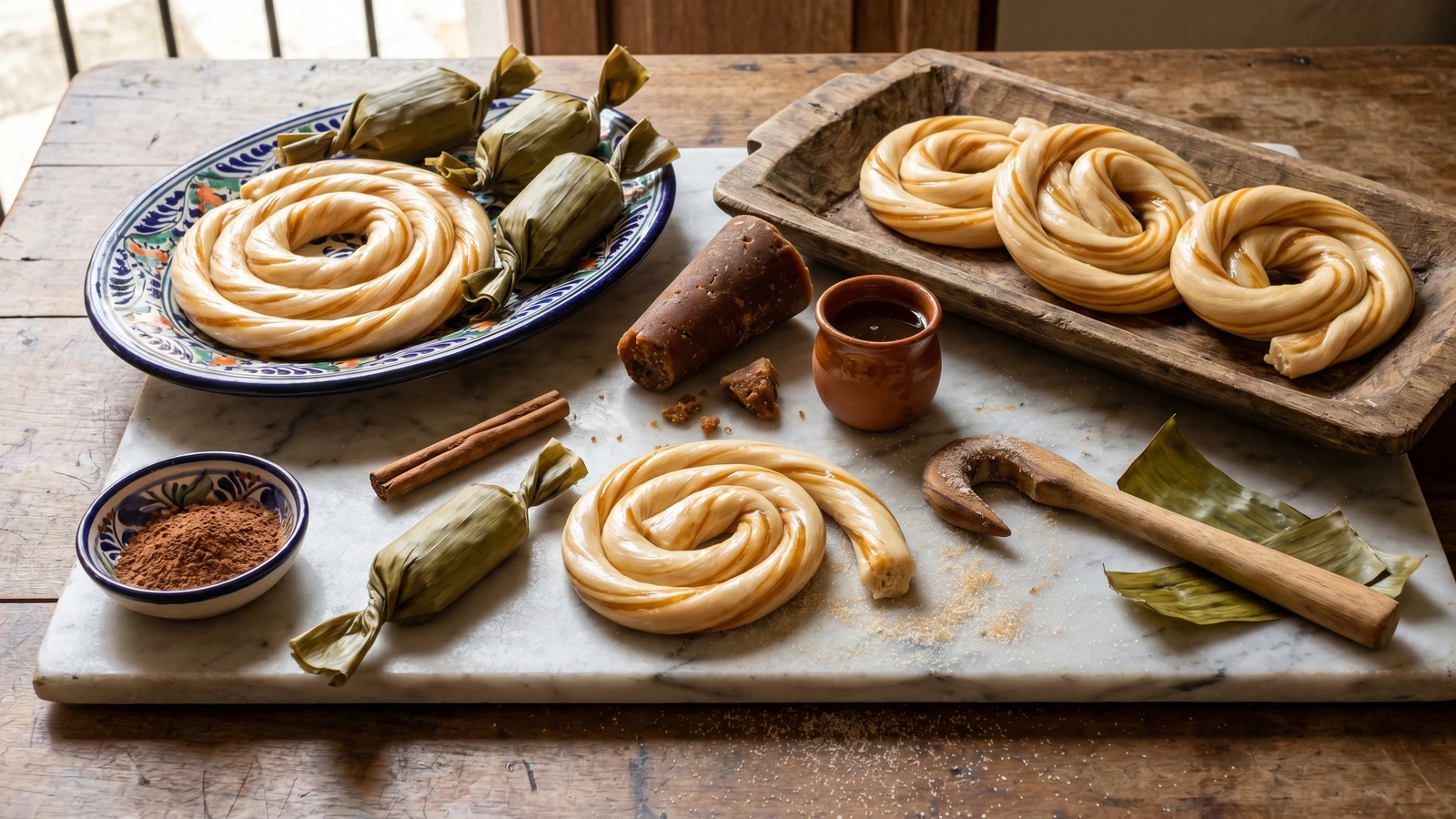
Yucatán's hand-pulled piloncillo taffy, stretched on a hook until the dark cane syrup turns honey-gold. The candy work of the Mérida dulceras, rooted in pre-Hispanic cane and the miel melipona of the Maya.
This is from Yucatán. Specifically from the peninsula that ate sugar before it was Mexican, when the Maya already kept stingless bees in hollow logs and pressed cane juice in the months after the Spanish brought the plant. Melcocha is what happens when piloncillo meets a pair of hands willing to work.
You will see melcocha in the dulcerías around the Lucas de Gálvez market in Mérida, hanging in twisted ropes from hooks, wrapped in banana leaf, sold by the piece to children on their way home from school. The Riviera Maya version, the one folded with miel melipona or a whisper of Tabasco cacao, is older than the colonial dulces that came later. The Maya were sweetening food with honey from the abeja melipona long before sugarcane arrived, and when the two met on this peninsula, melcocha was one of the things that came out of it.
The technique is not difficult, but it is unforgiving. Sugar cooks to a precise temperature, you pour it, you let it cool to where you can handle it, and then you pull. The pulling is the recipe. Air enters the sugar, the color shifts from dark molasses to pale honey-gold, and the texture turns from brittle to chewy. Skip the pulling and you have hardened syrup, not melcocha. Pull too little and it stays dark and sticky. Pull just right and you understand why generations of Yucatecan candy makers have stood at a hook with their shoulders aching, working a single batch until it tells them it is done.
My mother did not make melcocha. She was from Jalisco and her sweets were charamuscas and cocadas. But I learned this from doña Rosalba in a small dulcería off Calle 65 in Mérida, who pulled it on a wooden hook her grandfather had carved, and who told me the rhythm: stretch, fold, stretch, fold, until your arms know. Saber cocinar es saber vivir.
Sugarcane arrived in the Yucatán Peninsula with the Spanish in the 16th century, but the Maya had already developed a sophisticated tradition of sweetening with miel melipona, the honey of the native stingless bee Melipona beecheii, which has been kept in hollowed-log hives called jobones for at least 3,000 years. The fusion of imported cane sugar, processed into piloncillo at small regional trapiches, with indigenous pulled-candy techniques produced melcocha as a distinctly criollo confection by the 17th century. The pre-Hispanic Maya already practiced sugar-pulling with honey and tree resins for ceremonial sweets, and the technique transferred almost intact to the new ingredient. Today miel melipona is critically endangered due to deforestation and competition from European honeybees, and Yucatecan cooperatives in towns like Maní and Hocabá work to preserve both the bee and the dulces that depend on it.
Quantity
1 pound (about 2 large cones)
chopped into rough chunks
Quantity
1/2 cup
Quantity
2 tablespoons
Quantity
1 stick, about 3 inches
Quantity
1/4 teaspoon
Quantity
2 tablespoons
Quantity
1 tablespoon
Quantity
for greasing hands and surface
Quantity
for wrapping
| Ingredient | Quantity |
|---|---|
| piloncillochopped into rough chunks | 1 pound (about 2 large cones) |
| water | 1/2 cup |
| fresh lime juice from limones criollos | 2 tablespoons |
| canela de Ceilán (Mexican cinnamon) | 1 stick, about 3 inches |
| fine sea salt | 1/4 teaspoon |
| miel melipona (Yucatecan stingless bee honey) (optional) | 2 tablespoons |
| cacao en polvo (pure Tabasco cacao) (optional) | 1 tablespoon |
| neutral oil or manteca de cerdo | for greasing hands and surface |
| banana leaf squares or parchment | for wrapping |
This is candy work. You do not start the syrup until everything else is ready. Grease a marble slab or a large sheet pan generously with neutral oil or manteca. Set a metal hook on the wall, or a heavy wooden spoon clamped to the counter edge if you do not have one. Have a bowl of ice water nearby. Fill a small bowl with oil to keep your hands slick. Cut your banana leaves into 4-inch squares and pass them quickly over an open flame to soften. Melcocha waits for nobody. Once the syrup is at temperature, you have minutes, not hours.
Place the chopped piloncillo, water, lime juice, canela stick, and salt in a heavy 3-quart saucepan. The lime is not optional and it is not for flavor. The acid keeps the sugar from crystallizing as it cooks. Without it, your melcocha turns to sand in your hands. Set the pot over medium-low heat and stir gently with a wooden spoon until every chunk of piloncillo has dissolved completely. Do not raise the heat to rush this. Undissolved sugar later means grainy melcocha later.
Once dissolved, stop stirring. Raise the heat to medium and clip a candy thermometer to the side of the pot. The syrup will foam up dark and aromatic, smelling of molasses and the cane fields outside Valladolid. Cook without stirring until the thermometer reads 255 to 260 degrees Fahrenheit, hard-ball stage. This takes about 25 to 30 minutes. If you do not have a thermometer, drop a small spoonful into the ice water. It should form a firm but pliable ball you can roll between your fingers. Soft and it will not pull. Hard and it shatters. The window matters.
Remove the canela stick. If you are using miel melipona, stir it in now, off the heat, just until incorporated. If you are using cacao, sift it over the surface and fold once. Pour the molten syrup onto the oiled slab in a slow, single pour. Let it rest for 4 to 6 minutes. The edges will cool first. Using an oiled metal spatula or bench scraper, fold the cooler edges into the warmer center, again and again, until the mass is uniformly warm to the touch but no longer dangerous. You should be able to handle it with greased hands. Not before.
Grease your hands generously. Lift the warm mass off the slab. It will be dark brown, the color of wet earth. Loop it over your hook, or hold one end and stretch the other out two feet, fold it back on itself, and stretch again. Pull, fold, pull, fold. This is the work. As you pull, air enters the sugar and the color lightens from the deep brown of piloncillo to a pale honey-gold, almost the color of miel melipona itself. This takes 8 to 12 minutes of steady pulling. The dulceras of the Lucas de Gálvez market do this with their forearms and their shoulders. So will you. La cocina no es decoración, es trabajo.
When the melcocha is honey-gold and starts to resist the pull, working it feels like working a stiff dough, stretch it into a long rope about 3/4-inch thick on the oiled surface. Cut into 2-inch pieces with oiled kitchen shears. Wrap each piece in a square of softened banana leaf, twisting the ends like a candy wrapper, or in parchment if you cannot get banana leaf. The melcocha sets fully as it cools and the leaf keeps it from sticking. Store in a tin in a dry place. Humidity is the enemy. In Mérida, the dulceras keep them in glass jars with a few grains of rice to absorb moisture. Así se hace y punto.
1 serving (about 19g)
Culinary guides, cultural storytelling, and the editorial depth that makes cooking meaningful.
Discover Culinary ExplorerChef Lupita
Puebla's convent-style acitrón, made from cidra peel instead of endangered biznaga, built through repeated syrup soakings until the cubes turn firm, translucent, and ready for rosca or chiles en nogada.

Chef Lupita
Ciudad de México's Tulyehualco alegría is popped huautli folded into piloncillo honey, pressed with peanuts, pepitas, and raisins, then cut into the rectangular bars that built a pueblo's identity.

Chef Lupita
Oaxaca's pre-Columbian amaranth bar, popped on a hot comal and bound with piloncillo, honey, and the sacred Zapotec grain that the Spanish tried, and failed, to outlaw.

Chef Lupita
Querétaro's mercado candy of popped amaranto pressed with dark piloncillo syrup, pepitas, pecans, and cacahuate, a Bajío sweet that respects the seed before it decorates the table.