
Chef Graziella
Cannellini con Salvia
Tuscan white beans warmed gently with fried sage leaves and a whisper of garlic. This is the contorno that proves restraint is a virtue, not a limitation.
A cooking platform built around craft, culture, and the stories behind what we eat.
Created by
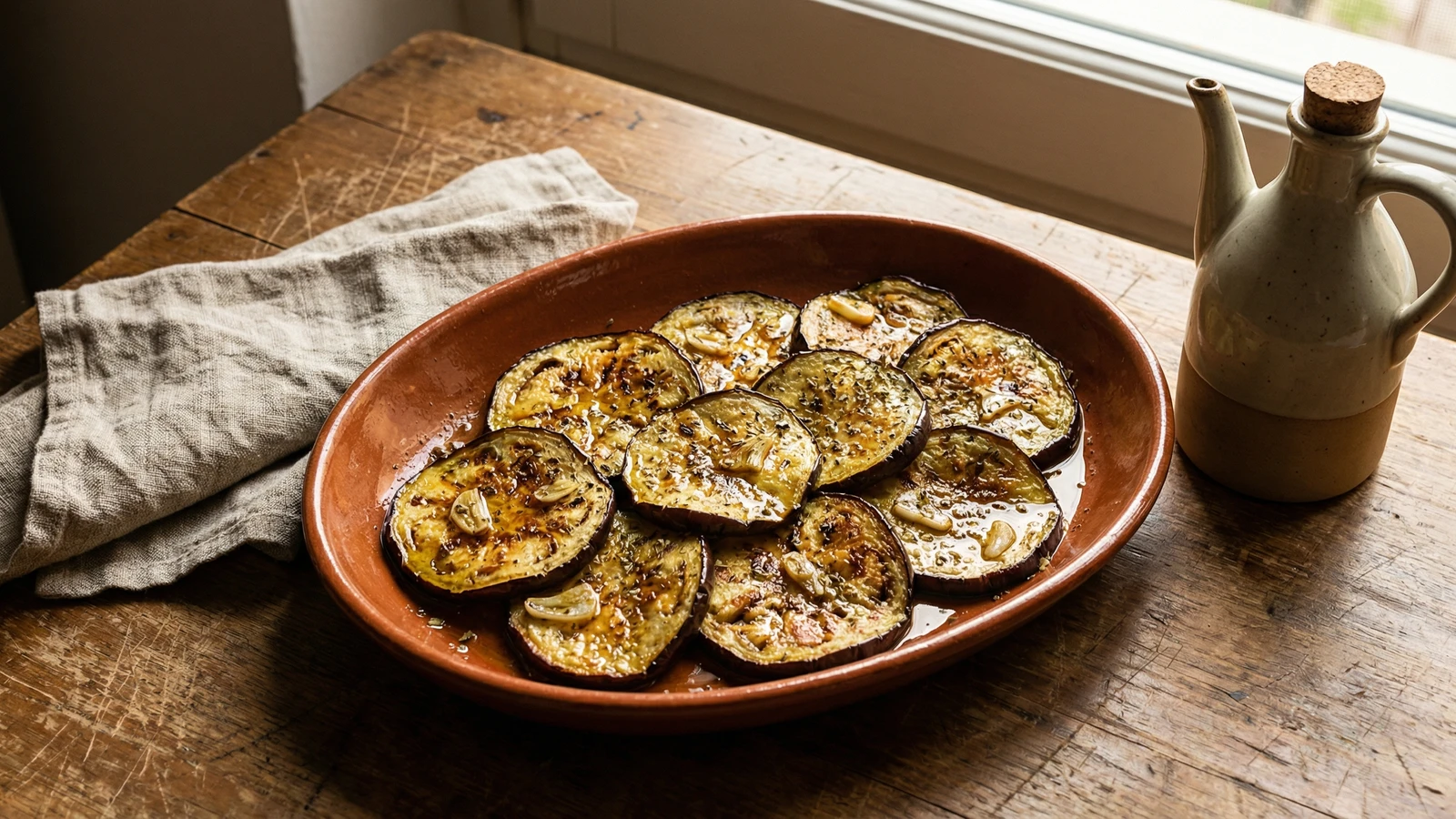
Eggplant roasted until it surrenders completely, dressed with nothing but oregano and good olive oil. The South has always understood that restraint produces better results than excess.
The South of Italy knows eggplant as the North knows butter. From Sicily to Calabria to Campania, melanzane appears at nearly every table, cooked a dozen different ways. This is the simplest of them: slices roasted in a hot oven until golden and collapsed, seasoned with nothing but oregano and oil.
Americans want to bread it, fry it, cover it with cheese. They do not trust the vegetable to be enough. But when you roast eggplant properly, the flesh becomes silken, almost creamy, with a depth of flavor that needs no embellishment. The high heat caramelizes the natural sugars. The oregano provides its distinctive Southern perfume. The olive oil binds everything together.
Dried oregano, not fresh. This surprises people, but dried oregano has a concentrated intensity that fresh cannot match. The Southern Italian kitchen understood this long before anyone theorized about it. What you keep out is as significant as what you put in.
Eggplant arrived in Sicily with the Arabs in the 9th century. For generations, Italians viewed it with suspicion, believing it caused melancholy and madness. The Southern poor, with fewer ingredients and less superstition, proved these fears absurd by making the melanzana the foundation of their cuisine.
Quantity
2 pounds (about 2 medium)
Quantity
1/3 cup, plus more for finishing
Quantity
1 tablespoon
Quantity
2
sliced paper-thin
Quantity
to taste
Quantity
to taste
freshly ground
| Ingredient | Quantity |
|---|---|
| Italian eggplant | 2 pounds (about 2 medium) |
| extra virgin olive oil | 1/3 cup, plus more for finishing |
| dried oregano | 1 tablespoon |
| garlic clovessliced paper-thin | 2 |
| fine sea salt | to taste |
| black pepperfreshly ground | to taste |
Slice the eggplant into rounds approximately half an inch thick. Uniform thickness matters here. Thin slices will char before the interior softens; thick slices will remain raw in the center while the surface burns. Lay the slices in a single layer on a clean kitchen towel, salt them lightly on both sides, and let them rest for 20 minutes. The salt draws out moisture and bitterness.
Preheat the oven to 425°F. Blot the eggplant slices thoroughly with paper towels or a clean cloth. The moisture you remove now is the moisture that would otherwise steam the eggplant instead of roasting it. In a small bowl, stir together the olive oil, oregano, and paper-thin garlic slices.
Line two baking sheets with parchment paper. Arrange the eggplant slices in a single layer with space between each slice. They must not touch or overlap. Brush both sides of each slice generously with the oregano oil, making sure to distribute the garlic and oregano evenly. Season with pepper.
Place the baking sheets on separate racks in the oven. Roast for 20 minutes. The undersides should be golden. Flip each slice with a spatula and rotate the pans top to bottom. Continue roasting until both sides are deeply golden and the flesh is completely tender when pierced with a knife, 12 to 15 minutes more. The eggplant should collapse slightly under gentle pressure.
Transfer the roasted eggplant to a serving platter. While still warm, drizzle with additional olive oil. The hot eggplant will absorb it immediately. This is correct. Taste and adjust salt. Serve warm or at room temperature. Unlike many vegetables, eggplant improves as it sits for 15 or 20 minutes, allowing the flavors to settle.
1 serving (about 175g)
Culinary guides, cultural storytelling, and the editorial depth that makes cooking meaningful.
Discover Culinary ExplorerChef Graziella
Tuscan white beans warmed gently with fried sage leaves and a whisper of garlic. This is the contorno that proves restraint is a virtue, not a limitation.

Chef Graziella
Chickpeas cooked with restraint: garlic infused and removed, rosemary perfuming the oil, nothing more. A contorno that proves legumes need only respect, not complication.

Chef Graziella
The vegetable stew of Southern Italy, where summer's abundance cooks slowly until eggplant, peppers, zucchini, and tomatoes become one soft, melded thing. This is the honest food of Campania and Calabria.

Chef Graziella
Green beans cooked the Italian way, tender and flavorful, with garlic that whispers and tomato that barely speaks. A contorno that proves the side dish can be the quiet star of the meal.