
Chef Takumi
Aji Fry (アジフライ, panko-fried horse mackerel)
Aji fry is weeknight fish with no mystery: fresh horse mackerel opened cleanly, breaded lightly, and fried until the panko crackles while the flesh stays sweet.
A cooking platform built around craft, culture, and the stories behind what we eat.
Created by
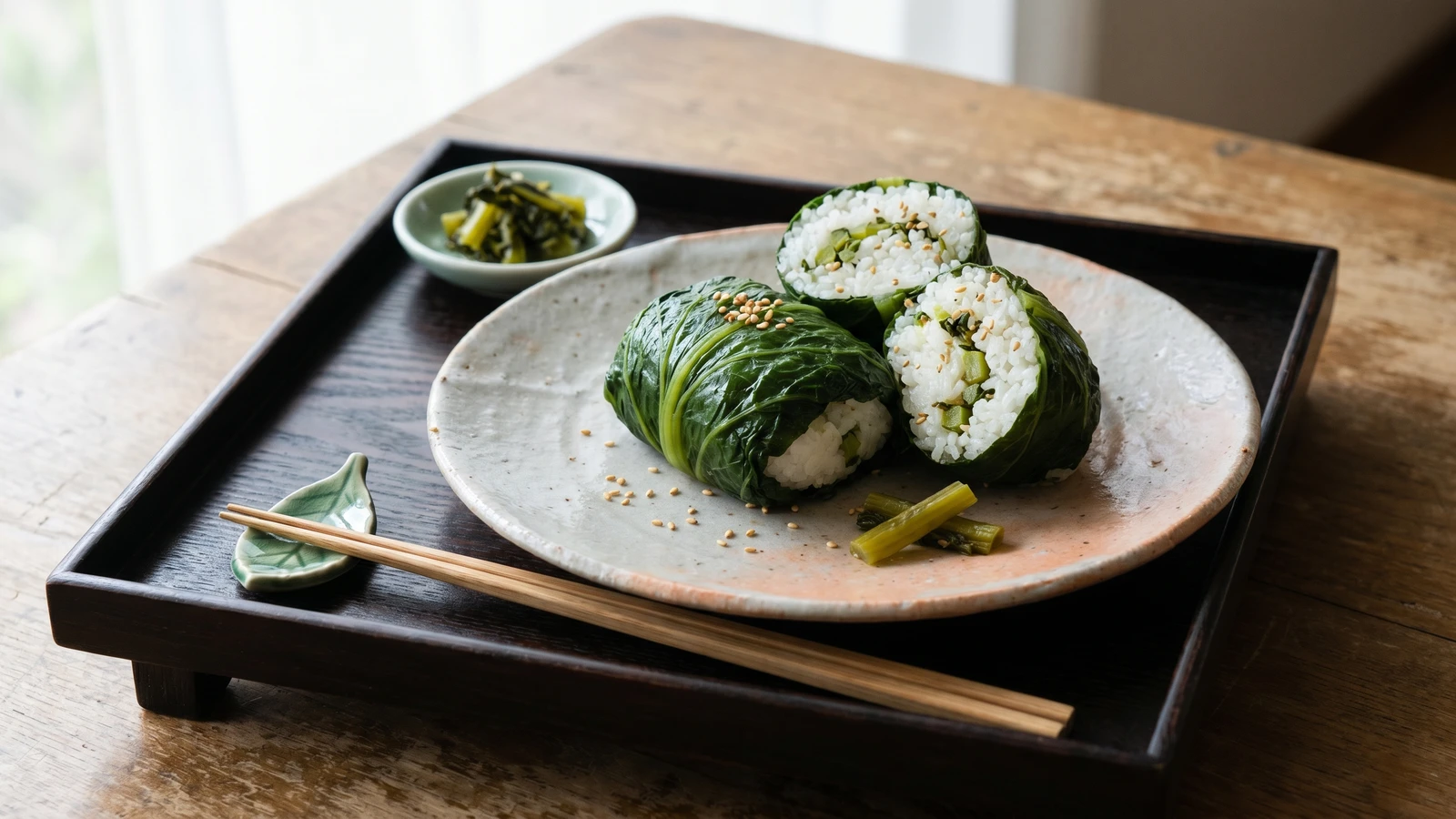
A rice ball, a pickled mustard leaf, and good timing. Mehari-zushi is picnic food from Kishu, generous in the hand and simple once you season the leaf properly.
Mehari-zushi begins with the leaf, not the rice. Takana, a broad mustard green, is salted until its sharpness settles and its green flavor deepens. Wrap warm rice in that leaf and you have a mountain lunch: sturdy, clean, and more handsome than it has any right to be.
The dish looks like it should require a sushi master's nerve. It doesn't. There is no vinegared sushi rice here, no glossy counter theater. The name says sushi, but the spirit is closer to an onigiri wrapped in pickled greens. The one detail that decides it is the salt in the takana. Too salty and it bullies the rice. Too bland and the whole thing goes quiet. Taste the leaves first, then rinse or season from there.
We fold the chopped stems back into the warm rice because nothing should be wasted, and because the stem gives little snaps of flavor inside the soft grain. A touch of soy and mirin rounds the leaf, not to hide it, only to let it sit well with the rice. This is honmono in a workday shape: nothing hidden, no fuss pretending to be depth.
Serve it as a picnic lunch, a weeknight meal, or a comfort food when rice is what you want and a bowl feels too polite. Make the balls a little large if you like the old joke: mehari means opening your eyes wide. The farmers were not wrong. A properly made one does ask the mouth to pay attention.
Mehari-zushi is associated with the Kii Peninsula, especially the old Kishu region around Wakayama and the Kumano area that reaches toward Nara and Mie. It began as portable food for farmers, foresters, and river workers, who wrapped large rice balls in salted takana leaves so the rice could be carried and eaten by hand. The name is commonly explained as coming from the wide-eyed look of someone opening their mouth for one of the large original rice balls.
Quantity
3 cups
warm
Quantity
6 large leaves (about 180g)
stems attached if possible
Quantity
1 tablespoon
Quantity
1 tablespoon
Quantity
1 teaspoon
Quantity
2 teaspoons
Quantity
1 teaspoon
| Ingredient | Quantity |
|---|---|
| freshly cooked Japanese short-grain ricewarm | 3 cups |
| pickled takana leavesstems attached if possible | 6 large leaves (about 180g) |
| soy sauce | 1 tablespoon |
| mirin | 1 tablespoon |
| sugar (optional) | 1 teaspoon |
| toasted white sesame seeds | 2 teaspoons |
| grated ginger (optional) | 1 teaspoon |
Unfold the takana leaves and taste a small piece from the edge. If it is sharply salty, rinse the leaves briefly under cool water, then squeeze them gently and pat dry. If it tastes pleasantly pickled, leave it alone. This first taste decides the dish, because the leaf is the seasoning for the rice.
Mix the soy sauce, mirin, and sugar if using until the sugar dissolves. Brush or rub this lightly over both sides of the leaves, then let them sit for five minutes. The soy deepens the pickle, the mirin softens its edge, and the short rest lets the leaf season evenly without becoming wet and slippery.
Cut the thick stems away from the leaves and chop the stems finely. Keep the leaves whole for wrapping. The stems are stronger and crunchier than the leaf, so they belong inside the rice in small pieces, where they season every bite instead of fighting the wrapper.
Put the warm rice in a bowl and fold in the chopped takana stems, sesame seeds, and ginger if using. Use a rice paddle with cutting motions rather than mashing. Warm rice takes the seasoning in and stays glossy; crushed rice turns heavy and pasty.
Wet your hands lightly and shape the rice into six firm oval balls, each about the size of a small orange. Press just enough that each one holds together. Too loose and the wrapper has to do all the work; too tight and the rice loses the softness that makes this plain dish good.
Lay one takana leaf flat, smoother side down, with the tip pointing away from you. Set a rice ball near the stem end, fold the sides over, then roll it up snugly so the leaf covers the rice. Trim any ragged excess and tuck the seam underneath. The wrap should be close, not strangled, because the rice will settle as it rests.
Let the wrapped rice balls rest seam-side down for ten minutes before serving. That short rest lets the leaf cling to the rice and lets the salt move inward. Serve at room temperature, never cold from the refrigerator, because chilled rice hardens and loses its gentle sweetness.
1 serving (about 115g)
Culinary guides, cultural storytelling, and the editorial depth that makes cooking meaningful.
Discover Culinary ExplorerChef Takumi
Aji fry is weeknight fish with no mystery: fresh horse mackerel opened cleanly, breaded lightly, and fried until the panko crackles while the flesh stays sweet.
Chef Takumi
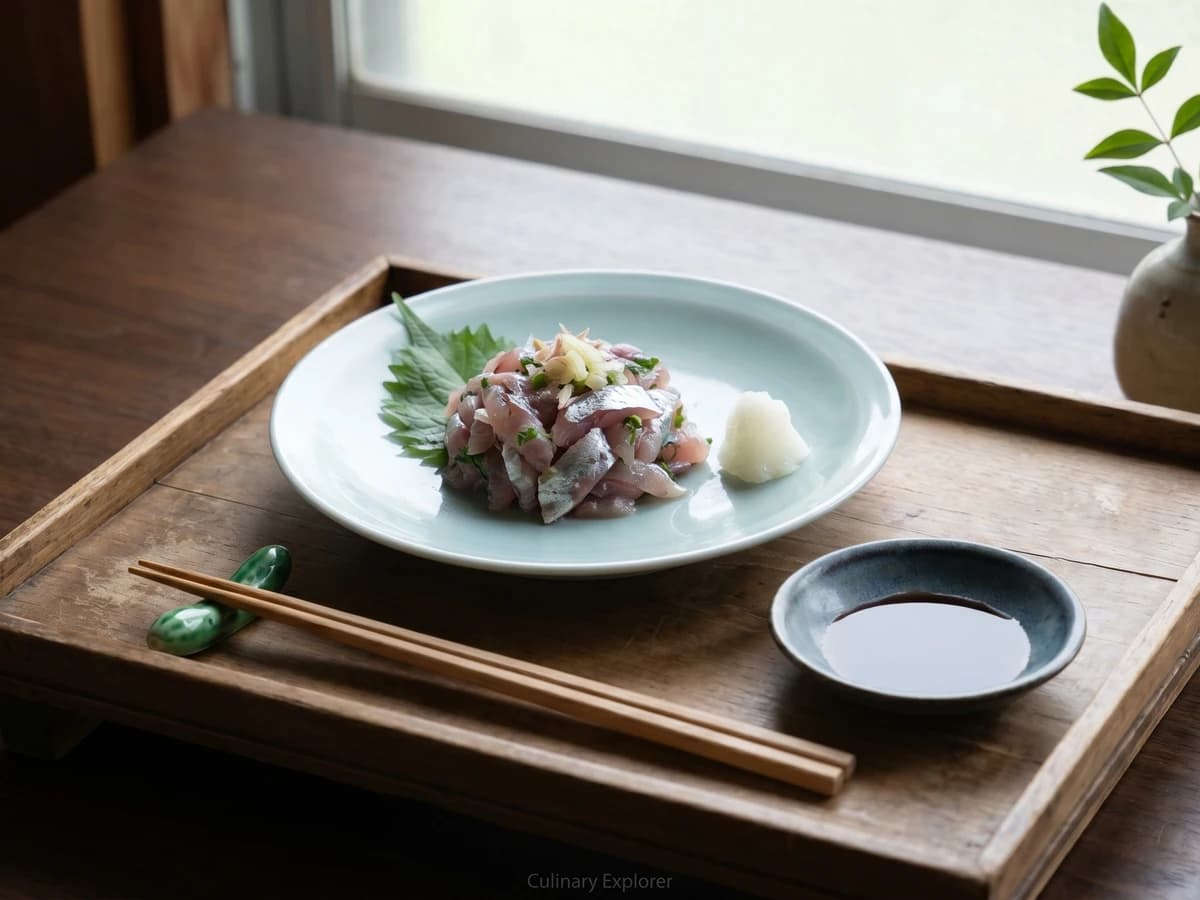
Summer horse mackerel, chopped just enough to catch ginger and scallion, becomes a cool, clean main dish with rice. The secret is fresh fish and a knife that does not bruise it.
Chef Takumi
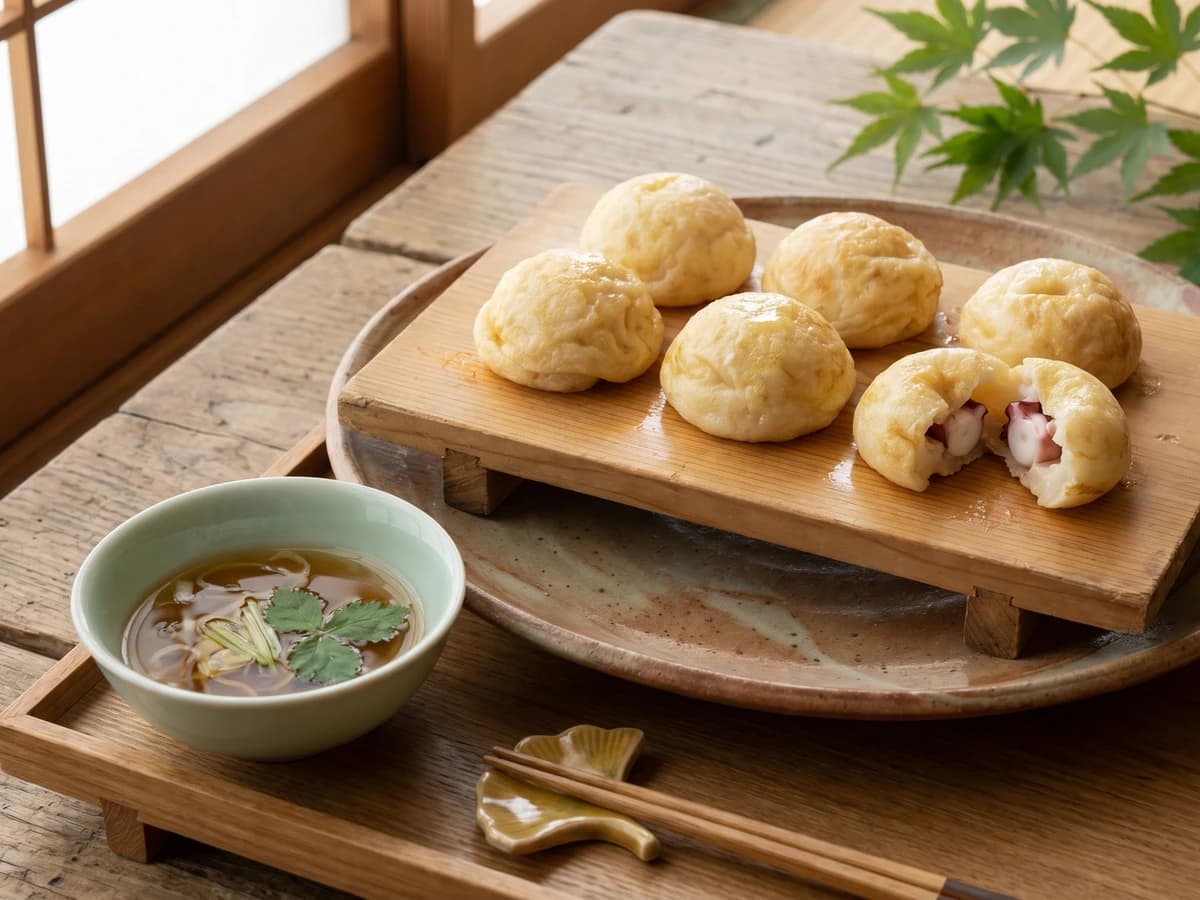
Akashi-yaki is not sauced takoyaki. It is egg-rich batter, tender octopus, and clear dashi, cooked pale and soft so each ball can be dipped like a small custard dumpling.

Chef Takumi
A whole anago looks like a test of nerve. It is mostly good sourcing, a dry skin, cold batter, and oil hot enough to leave the eel sweet under its lace.