
Chef Lesia
Berezovyi Sik (березовий сік, birch sap drink)
Birch sap looks like water until you taste it: cold, faintly sweet, mineral, and gone almost as soon as spring admits it has arrived.
A cooking platform built around craft, culture, and the stories behind what we eat.
Created by
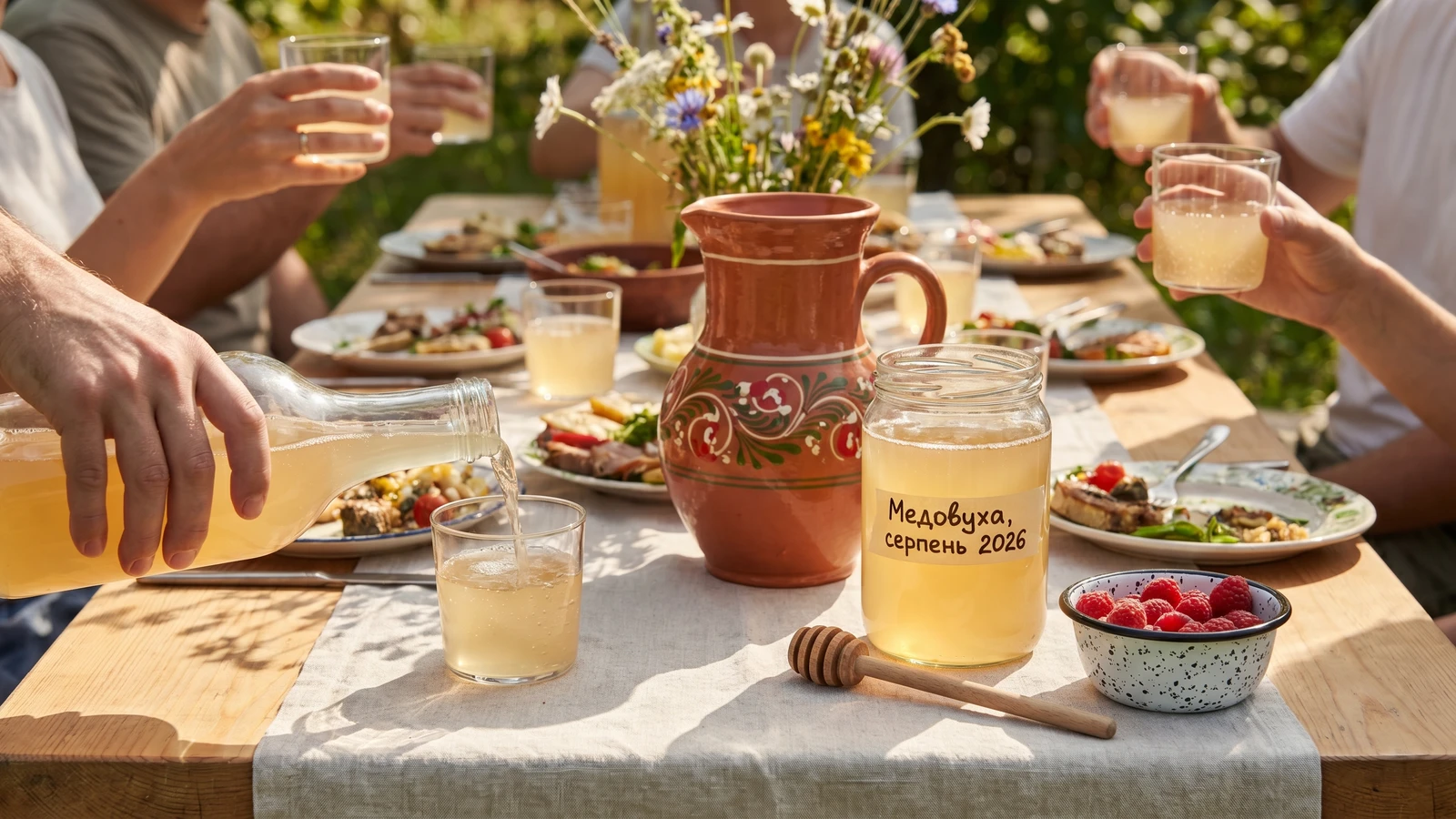
Honey thinned to syta turns pale gold first, then alive: raspberry skins rise and fall, the jar clicks quietly, and months later you pour a drink older than vodka.
Honey is patient until water wakes it. Stir it into syta, that old Ukrainian honey-water, and it stops being pantry sweetness and starts behaving like a living thing: pale gold, floral, a little cloudy, ready to catch yeast from the skins of summer raspberries.
This is celebration drink, not a quick cocktail. The old way asks you to wait while the berries lift and sink, while the sweetness softens, while a low sour edge arrives underneath the honey. Aunt Nadia wrote once, very helpfully, "when it smells cheerful." It took me two batches to understand her: not raw honey, not jam, but flowers, berries, and bread dough in the same breath.
The one thing that decides it is cleanliness, then patience. Sanitise the jar, keep fruit below the liquid, let the first wild ferment prove it is working before you bottle anything, and never trap a sleepy drink in glass with too much honey. A living drink can feed a table. It can also push out a cork if you get cocky.
Honey drinks belong to Kyivan Rus long before vodka became the famous spirit of the region; medieval sources describe mead-like fermented honey drinks served at feasts, princely tables, weddings, and funerary meals. Older Ukrainian honey drinks included stavlenyi med, a long-aged honey ferment, and syta, honey diluted with water, which could be drunk as it was or used as the base for fermentation. Modern medovukha is faster and lighter than those old banquet meads, but the logic is the same: honey, water, yeast, and time.
Quantity
900g
linden, buckwheat, or wildflower if you can get it
Quantity
2.7 litres
chlorine-free
Quantity
250g
unwashed
Quantity
1 small
zest pared in strips, juice reserved
Quantity
20g
Quantity
1 small sprig or 2 cones
Quantity
1/4 teaspoon
| Ingredient | Quantity |
|---|---|
| raw floral honeylinden, buckwheat, or wildflower if you can get it | 900g |
| waterchlorine-free | 2.7 litres |
| organic raspberriesunwashed | 250g |
| lemonzest pared in strips, juice reserved | 1 small |
| unsulphured raisins | 20g |
| fresh thyme or dried hop cones (optional) | 1 small sprig or 2 cones |
| wine yeast (optional) | 1/4 teaspoon |
Wash a 4-litre glass jar, spoon, funnel, strainer, and bottles, then sanitise them with boiling water or a no-rinse brewing sanitiser. Mead is generous, but it is not vague about cleanliness. You want honey yeast, not whatever was living in the cupboard.
Warm one litre of the water just enough that your finger can sit in it comfortably, then stir in the honey until it loosens completely. Add the remaining cool water. This is syta, honey thinned into drink, and it should smell like flowers after rain, not cooked sugar.
Tip the unwashed raspberries, raisins, lemon zest, and thyme or hops if using into the jar. Pour over the syta and stir with a clean spoon. Add a spoonful of lemon juice, taste, and stop when the sweetness has a small bright edge. The berries bring wild yeast on their skins, so don't rinse away the very thing you're asking to work.
Cover the jar with clean cloth and leave it somewhere warm but out of direct sun. Stir with a clean spoon once or twice a day for the first few days, pressing the floating berries back under the liquid. You are looking for little bubbles at the edge, a soft hiss when you stir, and the smell changing from honey jar to berry bread.
When the berries have gone pale and the liquid is actively fizzing, strain into a clean jar, pressing gently but not mashing the fruit into mud. Fit an airlock or cover loosely. Let it ferment until the bubbling slows and the mead tastes sweet first, then faintly sour at the back of the tongue.
Pour into clean swing-top bottles or still wine bottles, leaving sediment behind. For a still medovukha, bottle only when bubbling has nearly stopped. For a light sparkle, add no more than 1/2 teaspoon honey per 500ml bottle, close, and check daily until the bottle feels lively when opened.
Move the bottles to the fridge or a cold cupboard and let the sharp young edges soften. A month is good, three is better. Pour chilled into small glasses: pale gold, honeyed, lightly tart, with raspberry in the nose rather than jam on the tongue.
1 serving (about 375g)
Culinary guides, cultural storytelling, and the editorial depth that makes cooking meaningful.
Discover Culinary ExplorerChef Lesia
Birch sap looks like water until you taste it: cold, faintly sweet, mineral, and gone almost as soon as spring admits it has arrived.

Chef Lesia
Raw beets turn water into something dark, sour, and alive: a crimson drink for the glass, and the old quiet souring for borshch when vinegar has no business there.

Chef Lesia
Dried chebrets looks like a handful of dusty twigs until hot water wakes it, and suddenly the cup smells of bees, sun-baked grass, and rain on the steppe.

Chef Lesia
Dried pears turn water the color of late honey, then the jar begins to whisper. Serve it cold and tart, with fine bubbles, orchard smoke, and August still in the glass.