Culinary Explorer

A cooking platform built around craft, culture, and the stories behind what we eat.
Discover Culinary Explorer
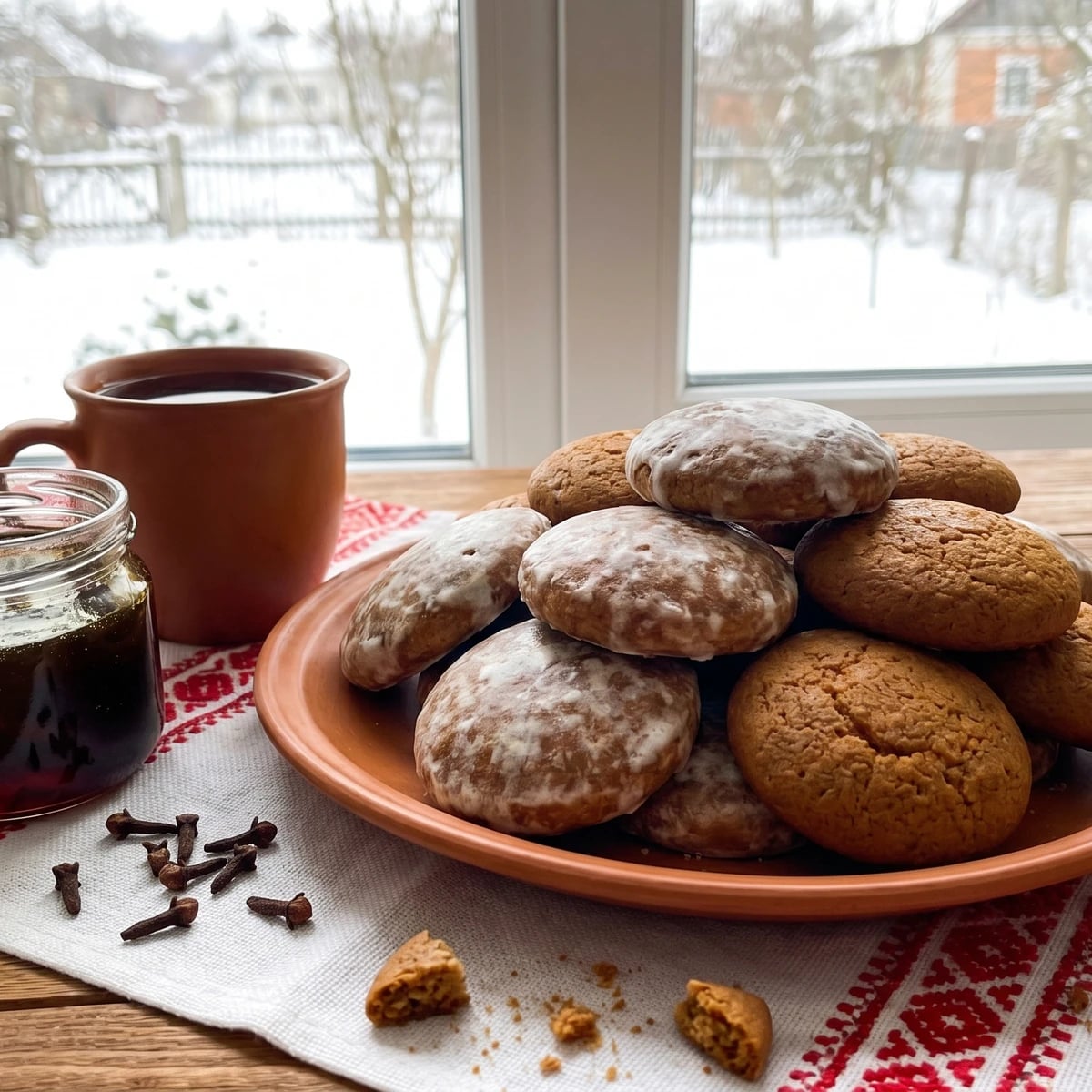
Medovi Pryanyky (медові пряники, honey-spice cookies)

Medovi Pryanyky (медові пряники, honey-spice cookies)

Created by

Honey goes dark in the pan before the flour arrives, turning from meadow-sweet to bitter-edged and warm. That change is the whole cookie.

Pastries & Cookies
Ukrainian
Holiday
Christmas
Make Ahead
35 min
Active Time
12 min cook1 hr 17 min total
Yield32 cookies

Honey tells you when it's ready. At first it smells pale and flowery, then the heat catches it and the kitchen shifts: darker, toastier, almost like buckwheat fields after rain. Wait for that. These are medovi pryanyky, honey-spice cookies, and their best trick is that they come out firm, sulk for a day or two, then soften into themselves in the tin.

The dough is lean, which suits Christmas fasting tables and long winter keeping. No butter needed. Warm honey, sugar, a little oil, spice, flour, and patience do the work. The one why that matters is this: if you bake them until they feel fully soft, they'll taste floury and fade quickly; if you bake until the edges set and the smell changes, they harden first, then the honey pulls moisture back through the crumb. Aunt Nadia wrote only, "let them sleep." Annoying woman. Correct woman.

Make them before the house is full. They keep beautifully, glaze dries into a thin white shell, and the spice grows rounder while you get on with the rest of the cooking. Put them out with tea, uzvar, or coffee after a long meal. Enough for eight guests or one hungry Ukrainian with no supervision.

Pryanyky belong to the old honey-bread family of Kyivan Rus, when honey was the main sweetener and imported spices reached wealthy and monastic kitchens through trade routes long before sugar became ordinary. The Ukrainian word comes from prianyi, meaning spiced or fragrant, and regional versions shifted with what a household could afford: buckwheat honey in one place, rye flour in another, a thin sugar glaze when sugar became common. By the nineteenth century they were fairground, Christmas, and Saint Nicholas sweets across Ukrainian towns, not delicate patisserie but durable festive baking made to travel, gift, and keep.

The technique, the tradition, and the story behind every dish.

Discover Culinary Explorer

Ingredients

honey, preferably buckwheat or dark wildflower

Quantity

170g

sugar

Quantity

100g

neutral oil or light sunflower oil

Quantity

60ml

strong black tea or water

Quantity

60ml

baking soda

Quantity

1 teaspoon

lemon juice

Quantity

1 tablespoon

ground cinnamon

Quantity

1 teaspoon

ground ginger

Quantity

1/2 teaspoon

ground cloves

Quantity

1/4 teaspoon

ground allspice

Quantity

1/4 teaspoon

fine sea salt

Quantity

1/2 teaspoon

plain flour

Quantity

380g

plus more for rolling

icing sugar

Quantity

120g

sifted, for glaze

lemon juice or water

Quantity

2 to 3 tablespoons

for glaze

Equipment Needed

  • A small heavy saucepan
  • A wooden spoon
  • A rolling pin
  • Cookie cutters or a sharp knife
  • Two lined baking trays

Instructions

  1. 1

    Warm the honey

    Put the honey, sugar, oil, and tea into a small pan over low heat. Stir until the sugar melts and the mixture turns glossy, then let it warm a little longer until the smell changes from floral to dark and rounded. Do not boil it hard; you want depth, not burnt bitterness.

    Buckwheat honey gives the deepest color and that faintly bitter back note. If your honey is pale, the cookies will still work, just softer in flavor.
  2. 2

    Wake the soda

    Take the pan off the heat. Stir the baking soda with the lemon juice in a cup; it will foam like a small science lesson. Beat it into the warm honey mixture, then stir in the cinnamon, ginger, cloves, allspice, and salt. The mixture should smell like winter cupboards and hot tea.

  3. 3

    Make the dough

    Tip the flour into a wide bowl and pour in the warm honey mixture. Stir with a wooden spoon until no dry flour remains, then knead briefly in the bowl until it comes together. It will be soft and a little tacky. Leave it alone for thirty minutes so the flour drinks properly before you judge it.

    Don't add too much flour too soon. Honey dough tightens as it rests, and a dry pryanyk is a punishment nobody asked for.
  4. 4

    Roll and cut

    Heat the oven to 180C. Lightly flour the table and roll the dough about 7mm thick, thick enough to keep a gentle chew. Cut into rounds, stars, hearts, or simple rectangles, then lift them onto lined baking trays with a little space between them. Gather scraps once and reroll; after that they get sulky.

  5. 5

    Bake until set

    Bake until the cookies have puffed slightly, the edges look dry, and the honey-spice smell has deepened across the room. The centers should give just a little when touched, not sink. They will firm as they cool, so pull them before they look completely dry.

  6. 6

    Glaze and sleep

    Mix the icing sugar with enough lemon juice or water to make a thin white glaze. Brush or dip the cooled cookies, then let them dry until the surface turns matte and smooth. Pack them into a tin and leave them at least overnight, better two days. They harden first, then soften. That's the honey doing its quiet work.

Chef Tips

  • Dark honey matters more than an expensive spice mix here. Buckwheat honey gives color, bitterness, and that old winter depth.
  • The dough forgives uneven shapes, but it doesn't forgive overflouring. Rest it before adding more flour, and roll with a light hand.
  • For a bit more modern version, add orange zest to the warm honey. Lovely with tea, and nobody at the table will object.
  • Store with a slice of apple or a piece of bread in the tin if the cookies stay too firm. Remove it after a day so nothing goes damp.

Advance Preparation

  • These cookies are best made 1 to 3 days before serving, so the honey can soften the crumb and the spices can settle.
  • The unglazed baked cookies keep for 2 weeks in a tin. Glaze them once cool, then store dry and covered.

Frequently Asked Questions

Nutrition Information

1 serving (about 27g)

Calories
105 calories
Total Fat
2 g
Saturated Fat
0 g
Trans Fat
0 g
Unsaturated Fat
2 g
Cholesterol
0 mg
Sodium
80 mg
Total Carbohydrates
21 g
Dietary Fiber
0 g
Sugars
11 g
Protein
1 g

Note: Chef personas and recipes are created with AI assistance. Cook with care: follow safe food-handling practices, check doneness with a thermometer when needed, and adapt for allergies and your kitchen.

Where cooking meets culture.

Culinary guides, cultural storytelling, and the editorial depth that makes cooking meaningful.

Discover Culinary Explorer

More from Makivnyk, Medivnyk & Verguny

Browse the full collection