
Chef Lesia
Makivnyk (маківник, poppy seed roll)
The black poppy filling is the point: dense, glossy, honeyed, almost mineral, rolled so tightly through soft dough that every slice looks like a winter night with a gold edge.
A cooking platform built around craft, culture, and the stories behind what we eat.
Created by
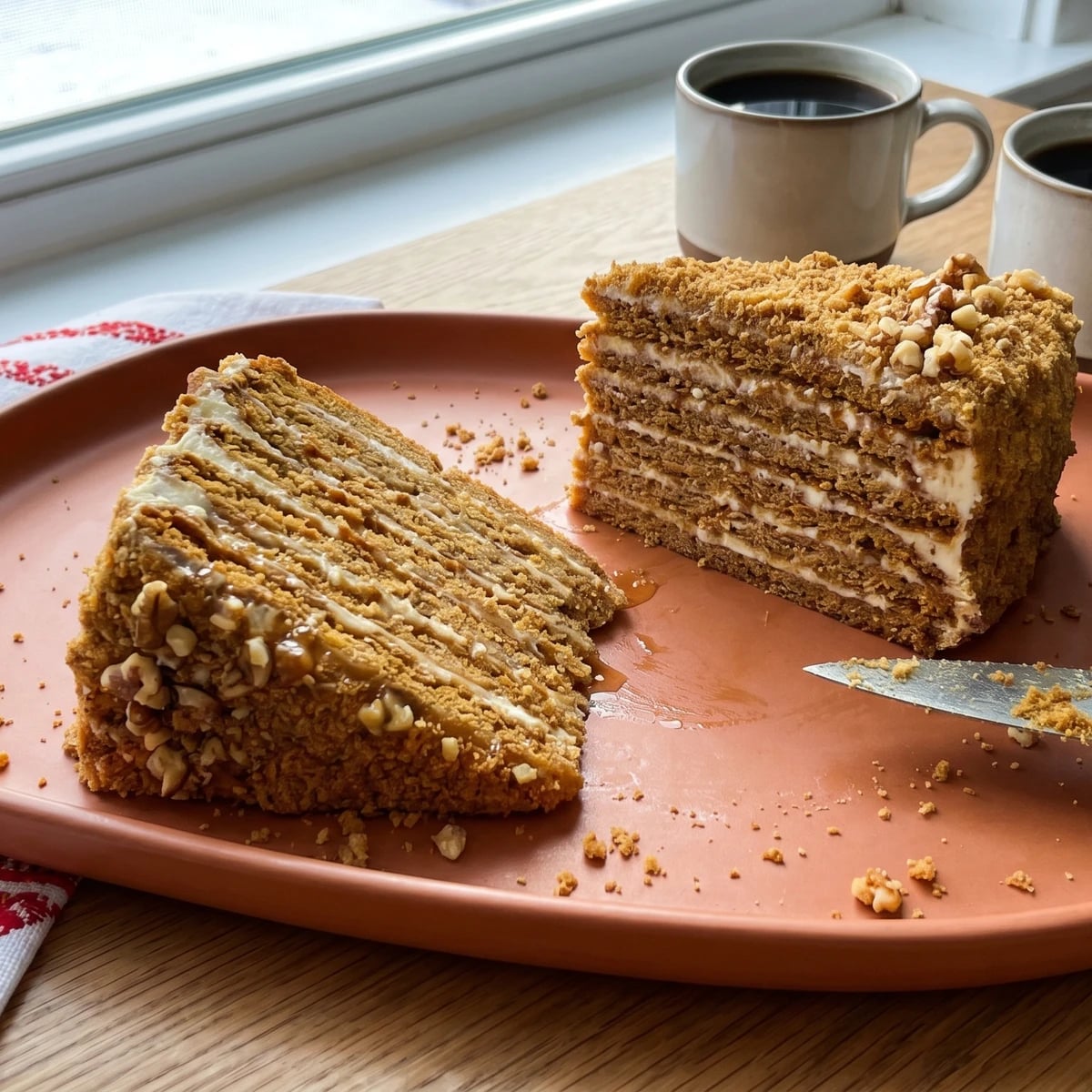
Thin honey layers go into the tin crisp and coppery, then spend a night drinking sour cream until the cake cuts clean and tender, almost custardy at the fork.
The most beautiful thing about this cake happens after you stop cooking. Thin copper sheets of honey dough, too firm and snappy on their own, are stacked with sharp smetana cream and left overnight until the crumb gives in. By morning the knife slides through without argument. The cake has learned softness.
This is a western Ukrainian table cake, the kind of medivnyk you meet in Lviv and across Halychyna beside coffee, walnuts, poppyseed rolls, and the good plates brought out because people are coming. The honey matters. Buckwheat honey gives that dark, almost bitter edge, and when it foams with the baking soda the smell changes from sweet to toasted, like the bottom of a biscuit tin and a spoonful of winter.
Aunt Nadia wrote only, "roll thin, don't be lazy," which is exactly the instruction and also a small insult, so there we are. The thinness is the dish. Thick layers stay cakey and separate; thin layers soften into one slice, honey, spice, sour cream, and patience doing the quiet work while you sleep.
Medivnyk belongs to Ukraine's old honey-cake family, but this thin-layered Lviv version sits inside the western Ukrainian plyatsok tradition, where celebration cakes are baked in sheets, stacked, pressed, and sliced neatly for holidays. Halychyna's pastry table absorbed influences from Austro-Hungarian cafe culture while keeping Ukrainian pantry anchors: honey, smetana, walnuts, poppyseed, and spice. The result is not a restaurant torte but a make-ahead home cake, built to feed a room and improve by waiting.
Quantity
120g
or another dark floral honey
Quantity
100g
Quantity
150g
Quantity
2 large
Quantity
1 teaspoon
Quantity
1 tablespoon
for the dough
Quantity
420g
plus more for rolling
Quantity
1 teaspoon
Quantity
1/2 teaspoon
Quantity
1/4 teaspoon
Quantity
1/2 teaspoon
Quantity
700g
20 percent fat if possible
Quantity
120g
Quantity
1 teaspoon
Quantity
1 teaspoon
finely grated
Quantity
80g
finely chopped
Quantity
2 tablespoons
for drizzling between layers
| Ingredient | Quantity |
|---|---|
| buckwheat honeyor another dark floral honey | 120g |
| unsalted butter | 100g |
| sugar | 150g |
| eggs | 2 large |
| baking soda | 1 teaspoon |
| sour cream or smetanafor the dough | 1 tablespoon |
| plain flourplus more for rolling | 420g |
| ground cinnamon | 1 teaspoon |
| ground ginger | 1/2 teaspoon |
| ground cloves | 1/4 teaspoon |
| fine sea salt | 1/2 teaspoon |
| thick sour cream or smetana20 percent fat if possible | 700g |
| icing sugar | 120g |
| vanilla sugar or vanilla extract | 1 teaspoon |
| lemon zestfinely grated | 1 teaspoon |
| toasted walnutsfinely chopped | 80g |
| honey (optional)for drizzling between layers | 2 tablespoons |
Put the honey, butter, and sugar in a heatproof bowl set over a pan of barely simmering water. Stir until the butter melts and the mixture turns glossy and loose. Add the baking soda and watch it foam up pale gold, then darker and nutty-smelling. This is where the cake begins; the soda wakes the honey, and the flavor moves from plain sweet to toasted.
Take the bowl off the heat and let it cool until warm, not hot against your finger. Beat in the eggs one at a time, then the tablespoon of sour cream. Mix the flour with the spices and salt, then stir it into the honey mixture until you have a soft dough. It should feel warm, pliable, and a little tacky, not dry like biscuit dough.
Wrap the dough and rest it at room temperature until it relaxes and rolls without springing back at you. Divide into eight equal pieces. Keep the pieces covered while you work, because honey dough dries at the edges and then sulks.
Heat the oven to 180C. Roll each piece directly on baking parchment into a thin rectangle, about 20 by 28 cm, trimming with a knife if you want clean sides. You should almost see the parchment through the dough. Aunt Nadia was right: roll thin, don't be lazy. Thick layers make eight small cakes stacked together; thin layers become one medivnyk.
Slide each sheet, parchment and all, onto a baking tray and bake until the surface is dry, lightly puffed, and copper at the edges. It happens quickly, so stay near. The layer should smell of toasted honey and spice, and when you lift a corner it should hold firm instead of sagging. Bake the trimmings too; they become crumbs for the top.
Whisk the thick sour cream with icing sugar, vanilla, and lemon zest until smooth. It should be pourable but not runny, sharp enough to answer the honey. Taste it. If your honey is very dark and bitter, add another spoon of sugar; if your sour cream is mild, add a little more zest.
Put the first honey layer on a board and spread it with a generous spoonful of sour cream. Add a thread of honey if you want a sweeter celebration cake, then another layer. Keep stacking, pressing gently with flat palms so the cream reaches the edges. Finish with cream on top and around the sides.
Crush the baked trimmings into fine crumbs and mix with the toasted walnuts. Pat the crumbs over the top and sides. Cover the cake loosely and refrigerate overnight, weighted with a light board if the layers look uneven. By the next day the crisp sheets will have softened into a tender slice. This waiting is not decoration. It is the method.
Bring the cake out of the fridge for half an hour before serving so the cream loosens and the honey wakes up. Cut with a long sharp knife, wiping between slices. Serve small pieces first, then watch everyone come back for the second one they claimed they didn't need.
1 serving (about 145g)
Culinary guides, cultural storytelling, and the editorial depth that makes cooking meaningful.
Discover Culinary Explorer
Chef Lesia
The black poppy filling is the point: dense, glossy, honeyed, almost mineral, rolled so tightly through soft dough that every slice looks like a winter night with a gold edge.

Chef Lesia
Poppy seeds are the sound of Makoviy: toasted, crushed, and whispering under your teeth in small honey cookies baked when the heads ripen in the August heat.

Chef Lesia
The cherries fight back: tart July fruit cuts through sweet, oily poppy seed filling, staining the soft yeast crumb violet at the seams.

Chef Lesia
These little open cups carry their name like a road: mandryky, wanderers, with crumbly golden edges and sweet curd cheese sitting soft in the middle.