
Chef Dean
Roasted Red Pepper Muhammara
A crimson Syrian dip of roasted peppers and toasted walnuts bound with pomegranate molasses, delivering layers of smoke, sweetness, and gentle heat that make hummus seem timid by comparison.
A cooking platform built around craft, culture, and the stories behind what we eat.
Created by
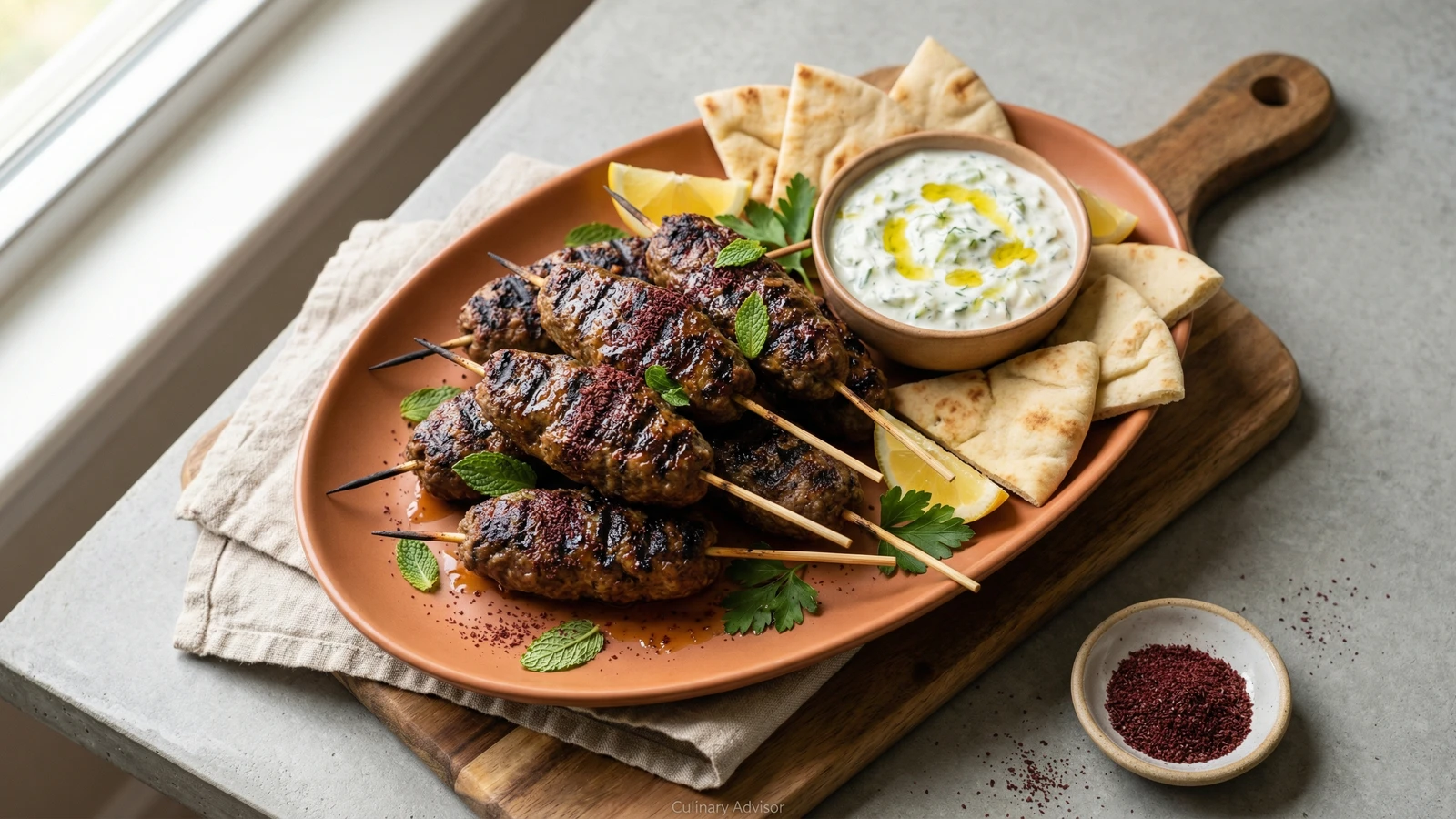
Hand-formed lamb skewers perfumed with cumin, coriander, and fresh mint, charred over a hot grill and served with cool, garlicky tzatziki. This is Eastern Mediterranean food made for American backyards.
Kofta belongs to that noble family of ground meat preparations found from Morocco to Afghanistan, each region adding its own accent. The Turkish call them köfte, the Persians koobideh, the Greeks keftedes. What unites them is the technique: spiced meat worked until it develops enough protein structure to cling to a skewer without sliding into the coals.
The spice blend here walks a line between warmth and heat. Cumin and coriander form the backbone, with cinnamon and allspice adding that distinctive Eastern Mediterranean sweetness that confuses first-time tasters. Is it savory? Is it sweet? The answer is both, and that's precisely the point.
I've taught this recipe to countless students who assumed kofta required specialty equipment or technique. It doesn't. What it requires is understanding why each step matters. You grate the onion and squeeze it dry so the meat stays firm. You knead the mixture until it turns tacky so it grips the skewer. You rest it cold so it holds its shape on a hot grill. Master these principles and you'll never serve dried-out, skewer-sliding disasters.
The tzatziki isn't garnish. It's the essential counterpoint to rich, charred lamb, a cooling contrast that makes the second skewer as appealing as the first. Make it hours ahead. The flavors need time to become acquainted.
Quantity
2 pounds
80/20 fat ratio preferred
Quantity
1 medium
grated on box grater
Quantity
4 cloves
minced to a paste
Quantity
1/4 cup
finely chopped
Quantity
2 tablespoons
finely chopped
Quantity
2 teaspoons
Quantity
2 teaspoons
Quantity
1 teaspoon
Quantity
1/2 teaspoon
Quantity
1/4 teaspoon
Quantity
1/4 teaspoon
Quantity
1 1/2 teaspoons
Quantity
1/2 teaspoon
freshly ground
Quantity
2 tablespoons, plus more for grilling
Quantity
16
Quantity
2 cups
Quantity
1
grated and squeezed dry
Quantity
3 cloves
minced to a paste
Quantity
2 tablespoons
Quantity
2 tablespoons
finely chopped
Quantity
1 tablespoon
Quantity
1/2 teaspoon
Quantity
for serving
warmed
Quantity
for serving
Quantity
for finishing
| Ingredient | Quantity |
|---|---|
| ground lamb80/20 fat ratio preferred | 2 pounds |
| yellow oniongrated on box grater | 1 medium |
| garlic (for kofta)minced to a paste | 4 cloves |
| fresh flat-leaf parsleyfinely chopped | 1/4 cup |
| fresh mintfinely chopped | 2 tablespoons |
| ground cumin | 2 teaspoons |
| ground coriander | 2 teaspoons |
| sweet paprika | 1 teaspoon |
| ground cinnamon | 1/2 teaspoon |
| ground allspice | 1/4 teaspoon |
| cayenne pepper | 1/4 teaspoon |
| kosher salt (for kofta) | 1 1/2 teaspoons |
| black pepperfreshly ground | 1/2 teaspoon |
| olive oil | 2 tablespoons, plus more for grilling |
| flat metal skewers or wooden skewers | 16 |
| whole milk Greek yogurt | 2 cups |
| English cucumbergrated and squeezed dry | 1 |
| garlic (for tzatziki)minced to a paste | 3 cloves |
| fresh lemon juice | 2 tablespoons |
| fresh dillfinely chopped | 2 tablespoons |
| extra-virgin olive oil | 1 tablespoon |
| kosher salt (for tzatziki) | 1/2 teaspoon |
| pita breadwarmed | for serving |
| lemon wedges | for serving |
| sumac (optional) | for finishing |
Grate the onion on the large holes of a box grater directly over a fine-mesh strainer set in a bowl. Let it drain for five minutes, then squeeze the pulp firmly in your hands to extract every drop of liquid. This step is not optional. Wet onion means wet meat, and wet meat slides off skewers and steams instead of chars. You want the flavor without the moisture.
Combine the cumin, coriander, paprika, cinnamon, allspice, and cayenne in a small bowl. Toast this blend in a dry skillet over medium heat for sixty to ninety seconds, stirring constantly, until fragrant and slightly darkened. The heat blooms the essential oils in these spices, transforming a flat, powdery mixture into something that smells like the markets of Marrakech. Let cool completely before proceeding.
Place the lamb in a large bowl. Add the squeezed onion, garlic paste, parsley, mint, toasted spice blend, salt, pepper, and olive oil. Now work the mixture with your hands for two to three minutes, kneading it like bread dough. This develops the proteins in the meat, creating a texture that binds to itself and clings to skewers. The mixture should become tacky and slightly sticky, almost paste-like. If it still looks loose like raw hamburger, keep mixing.
Cover the bowl tightly with plastic wrap and refrigerate for at least thirty minutes, or up to twenty-four hours. This rest allows the salt to dissolve fully and the flavors to marry. Cold meat is also far easier to shape onto skewers. The fat firms up and holds its form.
While the kofta chills, grate the cucumber on the large holes of a box grater. Wrap the gratings in a clean kitchen towel and squeeze hard over the sink until no more liquid emerges. In a medium bowl, combine the drained cucumber with yogurt, garlic paste, lemon juice, dill, olive oil, and salt. Stir well, taste, and adjust the salt and lemon. Tzatziki should have a pleasant tang that cuts through the richness of lamb. Refrigerate until serving.
Divide the meat mixture into sixteen equal portions, roughly two ounces each. Wet your hands with cold water. Take one portion and form it into a ball, then press it around a skewer, shaping it into an oblong cylinder about four inches long and one inch thick. The meat should grip the skewer tightly. If using flat metal skewers, the kofta will never spin. Round wooden skewers require more careful shaping to prevent rotation during grilling.
Heat a gas grill to high or build a hot charcoal fire and let it burn until coals glow orange with a light coating of white ash. You need aggressive heat to char the exterior before the interior overcooks. The grate must be clean and well-oiled. Use a wad of paper towels dipped in vegetable oil, held with long tongs, and wipe the grates thoroughly. This prevents sticking.
Brush the kofta lightly with olive oil. Place skewers on the grill perpendicular to the grates so the meat is suspended above the fire and the exposed ends of the skewers rest on cooler zones. Grill without moving for three to four minutes until the underside is deeply charred and releases naturally from the grate. Rotate a quarter turn and repeat on all four sides. Total cooking time is ten to twelve minutes for medium, with an internal temperature of 155°F.
Transfer skewers to a platter and let rest for two minutes. This brief rest allows juices to redistribute. Arrange the kofta on a large serving platter alongside a bowl of tzatziki. Scatter fresh mint and parsley over the skewers, dust with sumac if using, and surround with warm pita triangles and lemon wedges. Let guests build their own wraps or eat the kofta straight from the skewer. Both methods are correct.
1 serving (about 320g)
Culinary guides, cultural storytelling, and the editorial depth that makes cooking meaningful.
Discover Culinary ExplorerChef Dean
A crimson Syrian dip of roasted peppers and toasted walnuts bound with pomegranate molasses, delivering layers of smoke, sweetness, and gentle heat that make hummus seem timid by comparison.

Chef Juliette
Tiny éperlans, lightly floured and fried until their tails stand crisp, arrive in a generous heap on a napkin with fried parsley and grooved lemon, a weeknight lesson in heat and restraint.

Chef Juliette
Brandade de Morue turns salt cod, warm olive oil, and milk into a pale, silky emulsion: keep everything warm and add the oil slowly, then crown the generous dome with butter-fried bread.

Chef Juliette
Salt cod worked warm with cream, one patient spoonful at a time, until the rough flakes become a glossy Nîmes paste, domed generously and ringed with butter-fried croutons for the table.