
Chef Klaus
Allgäuer Krautkrapfen
The Allgäu pan dish that makes a meal from noodle dough, winter kraut, onion, and fat: brown the cut sides first, then cook gently so the rolls hold.
A cooking platform built around craft, culture, and the stories behind what we eat.
Created by
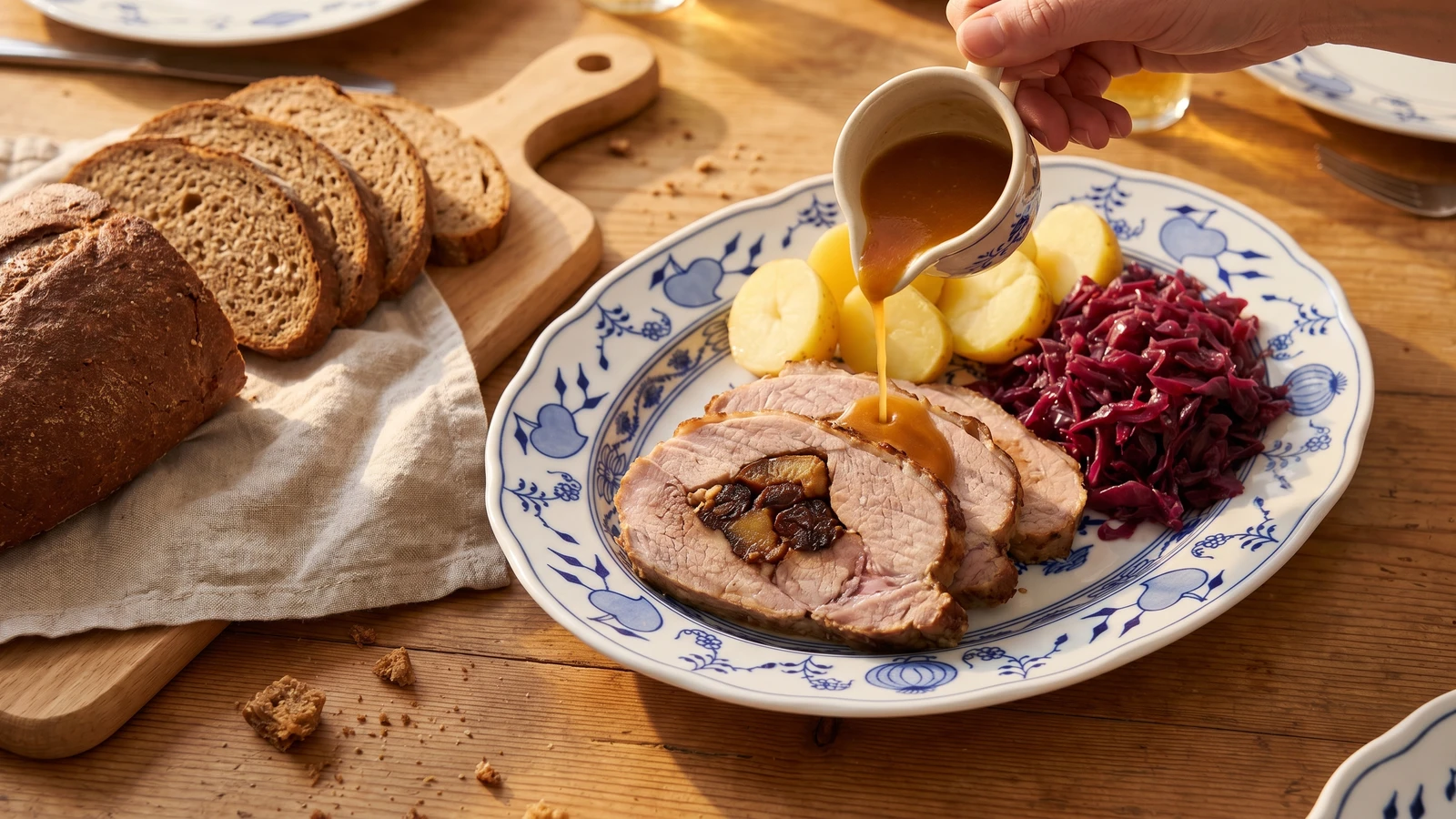
The Mecklenburg Sunday roast with apples and dried plums tucked into the pork, started cool so the fat renders slowly and the sweet-sour filling seasons the meat from inside.
Mecklenburger Rippenbraten is northern Sunday food, from the farms and estate kitchens between Schwerin, Rostock, and the Baltic. Pork, apple, dried plum, a little vinegar in the pan. That is the old Mecklenburg taste, söötsuur, sweet-sour, not sugar for its own sake but fruit and acid working against fat.
Im Norden anders, im Süden anders. In the south a pork roast argues about crackling, beer, caraway, and dumplings. In Mecklenburg the argument is the filling: apples and Backpflaumen, dried plums, sometimes raisins, sometimes not, and enough pan juices to make a proper sauce. Das ist kein Bierzelt. It's a rib roast with the larder folded into it.
The technique is simple and decides the dish: start the roast in a cool oven and let the heat climb slowly. Cold-to-hot rendering gives the fat time to melt into the meat and the pan before the outside tightens; blast it hard at the start and the pork seizes, the filling leaks, and the lean eye eats dry. Runter mit der Temperatur. Brown comes later.
Keep the bones and rind if the butcher gives them to you. They go under the roast and into the sauce, because Weggeworfen wird nichts. The apples soften, the dried plums swell, the vinegar keeps the sweetness honest, and the pork comes to the table sliced thick, regional and unfussy. Schön ist, was schmeckt.
Mecklenburg was still divided into the grand duchies of Mecklenburg-Schwerin and Mecklenburg-Strelitz after the Congress of Vienna in 1815, and its cooking kept a strong rural north German pattern: pork, stored apples, dried fruit, roots, and sharp-sweet sauces for feast days. The söötsuur, sweet-sour, taste belongs to the Low German north, where vinegar, fruit, and preserved larder goods were used to balance fatty meats through the cold months. Mecklenburger Rippenbraten shows that regional line clearly: the Baltic north stuffs pork with apple and dried plum, while southern pork roasts lean toward beer gravy, crackling, and caraway.
Quantity
1.8kg
deep pocket cut for stuffing
Quantity
200g
pitted
Quantity
2
peeled, cored, and diced
Quantity
1
finely diced
Quantity
40g
Quantity
1 tablespoon
Quantity
1 teaspoon
Quantity
1/2 teaspoon
Quantity
1 tablespoon
Quantity
1 teaspoon
Quantity
2 teaspoons, plus more to taste
Quantity
to taste
freshly ground
Quantity
1 tablespoon
Quantity
2
chopped
Quantity
1 small
cleaned and chopped
Quantity
250ml
Quantity
300ml
Quantity
1
Quantity
1 teaspoon
mixed with 1 tablespoon cold water
| Ingredient | Quantity |
|---|---|
| pork rib roast or bone-in pork loindeep pocket cut for stuffing | 1.8kg |
| dried plumspitted | 200g |
| tart applespeeled, cored, and diced | 2 |
| onionfinely diced | 1 |
| stale rye bread or breadcrumbs | 40g |
| butter | 1 tablespoon |
| dried marjoram | 1 teaspoon |
| ground allspice | 1/2 teaspoon |
| apple cider vinegar | 1 tablespoon |
| sugar | 1 teaspoon |
| fine salt | 2 teaspoons, plus more to taste |
| black pepperfreshly ground | to taste |
| lard or neutral oil | 1 tablespoon |
| carrotschopped | 2 |
| leekcleaned and chopped | 1 small |
| dry cider or apple juice | 250ml |
| pork stock or chicken stock | 300ml |
| bay leaf | 1 |
| potato starch (optional)mixed with 1 tablespoon cold water | 1 teaspoon |
Ask the butcher to cut a deep pocket along the pork loin beside the rib bones, or do it yourself with a long narrow knife, stopping before you break through the far side. The pocket must hold the fruit inside the meat, not spill it into the pan; if you cut through, the filling becomes sauce before the pork has taken its flavour.
Soak the dried plums in hot water for 10 minutes, then drain and chop them roughly. Cook the onion in butter until soft but not brown, because browned onion pushes the filling bitter. Mix onion, plums, apples, rye crumbs, marjoram, allspice, vinegar, sugar, 1/2 teaspoon salt, and black pepper. The crumbs are there to catch the apple juice, so the stuffing stays moist without running out.
Season the pork inside the pocket, then pack in the filling loosely and close the opening with kitchen twine or skewers. Don't ram it full. Apples swell and dried plums plump in the heat, and a tight filling splits the roast open. Rub the outside with the remaining salt, pepper, and lard.
Put the carrots, leek, bay leaf, and any pork bones or rind trimmings in a roasting pan, set the pork on top, and slide it into a cool oven. Set the oven to 160C and let the roast come up with the heat. This slow climb renders fat before the meat tightens, which is the difference between a juicy Rippenbraten and a dry one with sweet fruit beside it.
After 45 minutes, pour the cider or apple juice and stock into the pan, not over the top of the roast, so the seasoning stays on the meat. Roast for another 75 to 90 minutes, basting the sides now and then, until the centre reaches 63C and the juices run clear. If the surface is pale near the end, raise the oven to 220C for 10 minutes; brown comes at the end, after the fat has done its work.
Lift the pork to a board and rest it 15 to 20 minutes, because slicing straight away sends the juices across the board instead of keeping them in the meat. Strain the pan juices into a saucepan, pressing the vegetables hard; Weggeworfen wird nichts, their sweetness belongs in the sauce. Simmer until glossy, then thicken lightly with potato starch only if it needs help. Nicht aus dem Glas.
Cut thick slices across the roast so each piece shows pork, apple, and dried plum. Taste the sauce last for salt, vinegar, and pepper, because the fruit changes the balance as it cooks. Serve with Salzkartoffeln, boiled potatoes, or Kartoffelklöße, potato dumplings, and red cabbage if it's Sunday.
1 serving (about 360g)
Culinary guides, cultural storytelling, and the editorial depth that makes cooking meaningful.
Discover Culinary ExplorerChef Klaus
The Allgäu pan dish that makes a meal from noodle dough, winter kraut, onion, and fat: brown the cut sides first, then cook gently so the rolls hold.

Chef Klaus
Swabian egg pasta turned toward the apple cellar: fresh Spätzle tossed with browned butter, tart apples, cinnamon, and enough restraint to stay supper, not cake.

Chef Klaus
Hesse's pork goulash belongs to Apfelwein country: shoulder, onions, and tart cider cooked low until the cheap cut turns soft and the sauce lands sweet-sour, not sour-sweet.

Chef Klaus
The old sweet supper that saves yesterday's loaf: stale bread drinks eggy milk, the pan stays moderate, and butter browns the outside only after the centre has set.