
Chef Jeong-sun
Aehobak-bokkeum (Korean Stir-Fried Zucchini)
Tender Korean zucchini half-moons cooked quickly over real heat, seasoned with salted shrimp so the squash tastes deeper than oil and still clean enough for a weeknight table.
A cooking platform built around craft, culture, and the stories behind what we eat.
Created by
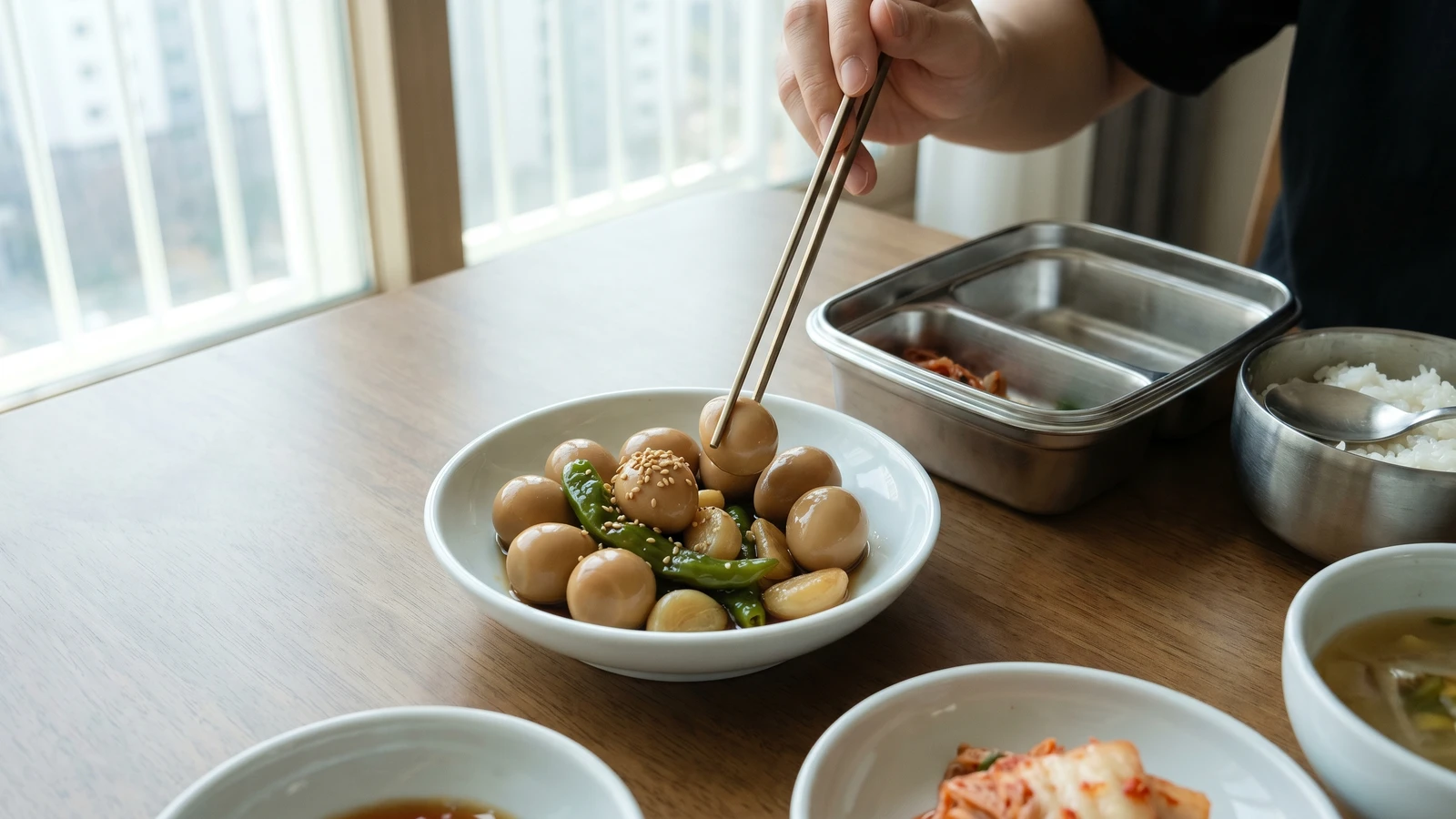
Small quail eggs simmered in a measured soy braise until brown and glossy, with wrinkled green peppers added late so the lunchbox banchan stays gentle, savory, and clear.
Mechurial-jangjorim lives in the refrigerator, not in the center of the table. That tells you what kind of dish it is. A mother packs two eggs beside rice, a child eats them first, and by the third day someone is standing at the open refrigerator with chopsticks. This is banchan for the real week, small, practical, and still worth measuring.
The mistake is making the soy too strong. Quail eggs are small, so they take salt faster than beef or big chicken eggs. Notebook 41 says 2 cups water to 1/2 cup soy sauce for 30 eggs, then sweetness in two forms: rice syrup for gloss, a little sugar for clean sweetness. 손맛 is real. I still measure it, so it can be handed on.
Use kkwari-gochu, the wrinkled Korean green pepper, when you can find it. Shishito stands close enough in a home kitchen. Add the peppers late, after the eggs have taken their color, because their bitterness should brighten the sauce, not turn tired in it. Tonight this dish asks for one careful thing: peel the eggs cleanly, then let the braise stay gentle.
Jangjorim is a soy-braised side dish from the Korean home pantry, traditionally made with beef because salting and braising helped stretch a small amount of meat across many meals. Quail egg jangjorim is a later household and lunchbox version, especially common after commercially raised quail eggs became easy to buy in Korean markets in the twentieth century. The kkwari-gochu variation reflects the everyday banchan habit of adding a seasonal vegetable to a soy braise so the sauce tastes less flat and the table has another color.
Quantity
30
Quantity
1 tablespoon
for boiling
Quantity
1 teaspoon
for boiling
Quantity
2 cups
Quantity
1/2 cup
Quantity
3 tablespoons
Quantity
1 tablespoon
Quantity
2 tablespoons
Quantity
6 cloves
lightly smashed
Quantity
1 piece, about 3 inches square
Quantity
120g
stems trimmed
Quantity
1 teaspoon
| Ingredient | Quantity |
|---|---|
| quail eggs | 30 |
| white vinegarfor boiling | 1 tablespoon |
| saltfor boiling | 1 teaspoon |
| water | 2 cups |
| soy sauce | 1/2 cup |
| rice syrup (ssal-jocheong) or corn syrup | 3 tablespoons |
| sugar | 1 tablespoon |
| mirin or rice wine | 2 tablespoons |
| garliclightly smashed | 6 cloves |
| dried kelp (dasima) | 1 piece, about 3 inches square |
| kkwari-gochu or shishito peppersstems trimmed | 120g |
| toasted sesame seeds (optional) | 1 teaspoon |
Put the quail eggs in a small pot and cover with cold water by 1 inch. Add the vinegar and salt. Bring to a boil over medium heat, then simmer 4 minutes. Vinegar helps tighten any tiny cracks, and salt makes the shells a little easier to peel. Drain and move the eggs into cold water.
Tap each egg all over, roll it gently under your palm, and start peeling from the wide end where the air pocket sits. Keep the eggs in water as you work so the membrane loosens. Do this patiently. Torn eggs still taste fine, but clean eggs braise evenly and look cared for.
In a shallow pot, combine 2 cups water, soy sauce, rice syrup, sugar, mirin, garlic, and kelp. Bring it just to a simmer, then pull out the kelp after 5 minutes. Kelp gives body, but left too long it makes the sauce heavy and a little bitter.
Add the peeled quail eggs and simmer uncovered over medium-low heat for 12 to 15 minutes, turning them now and then with a spoon. The liquid should reduce by about one-third and the eggs should turn evenly tan-brown. Do not boil hard. A hard boil makes the whites rubbery before the sauce has time to settle in.
Prick each kkwari-gochu or shishito once with the tip of a knife, then add them to the pot. Simmer 4 to 5 minutes, only until the peppers wrinkle and turn glossy green-brown. They go in late because their job is to scent the soy and give a clean bitter edge, not collapse into paste.
Turn off the heat and let the eggs cool in the braising liquid for at least 20 minutes. Taste the sauce now. It should be salty-sweet but not syrupy, gentle enough that a child can eat the egg with rice. Sprinkle sesame seeds only if you like them. Store the eggs and peppers in the liquid so the flavor deepens without drying out.
1 serving (about 120g)
Culinary guides, cultural storytelling, and the editorial depth that makes cooking meaningful.
Discover Culinary ExplorerChef Jeong-sun
Tender Korean zucchini half-moons cooked quickly over real heat, seasoned with salted shrimp so the squash tastes deeper than oil and still clean enough for a weeknight table.

Chef Jeong-sun
Tender Korean summer zucchini softened gently in the pan with saeujeot for salt and depth, finished with sesame so the vegetable stays sweet, green, and plainly itself.

Chef Jeong-sun
A bittersweet spring green from the southern shore, blanched just until pliant, then seasoned lightly so its clean coastal bitterness stays alive on the rice table.

Chef Jeong-sun
Torn king oyster or shiitake mushrooms, browned until their own water disappears, then finished with soy, garlic, sesame oil, and onion for a quiet banchan that earns its place.