Culinary Explorer
A cooking platform built around craft, culture, and the stories behind what we eat.
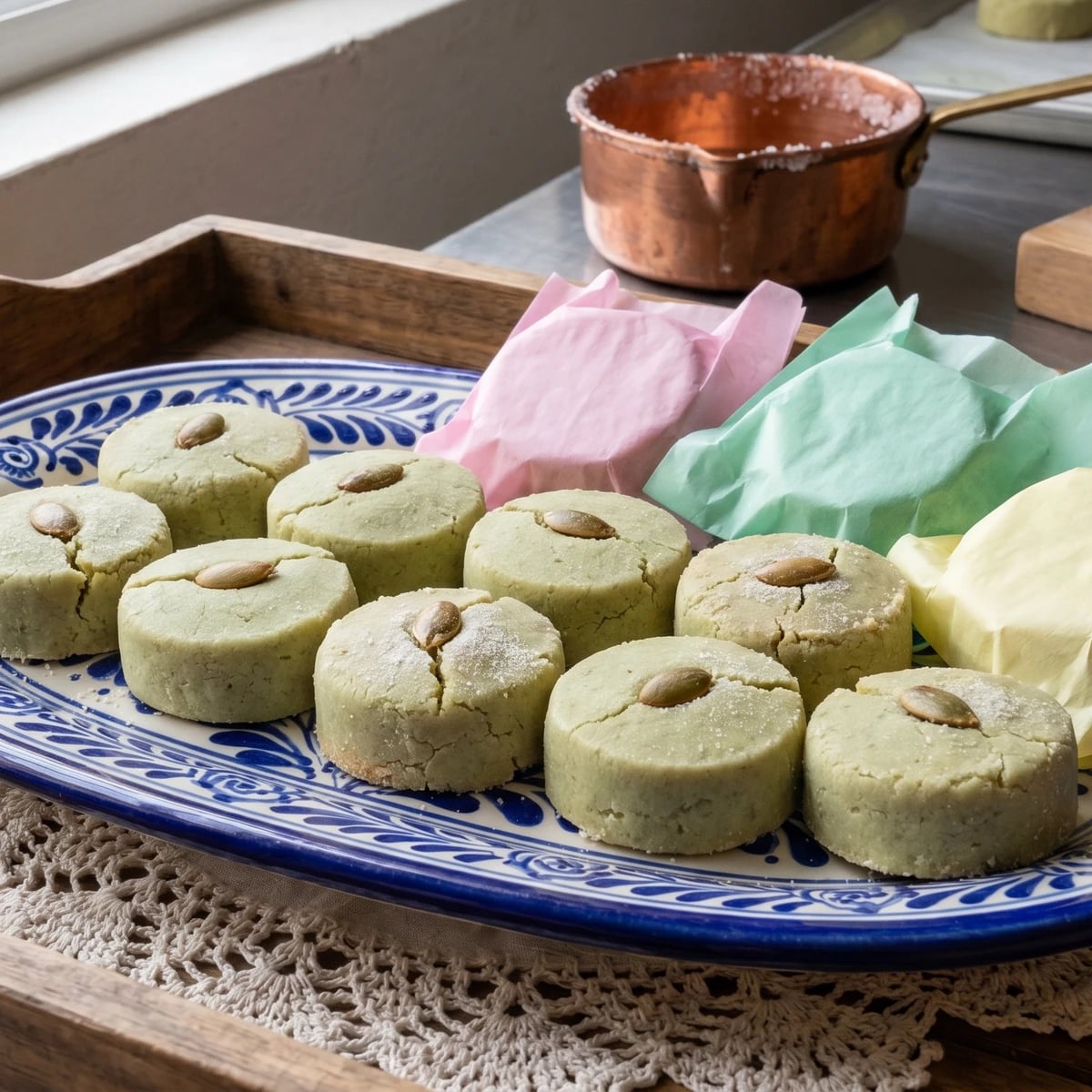
Mazapán de Pepita Poblano
Created by Chef Lupita
Puebla's convent sweet of toasted pepitas, ground fine with cane sugar almíbar and pressed into pale green rounds, the criollo answer to Spanish almond paste from Calle de los Dulces.
Puebla, in the Angelópolis region around Puebla de los Ángeles, is where this mazapán belongs. Walk Calle 6 Oriente, the Calle de los Dulces, and you see the city explaining itself: talavera on the walls, convent sweets in paper, sugar work that came from cloisters and stayed because poblano hands made it their own.
The defining ingredient is pepita de calabaza verde, the hulled pumpkin seed of the milpa. Spanish almond paste arrived with almonds, yes, but almonds were expensive and foreign to this soil. Pepitas were here, tied to squash, corn, beans, and the kitchen economy of women who knew not to waste what the field gave them. In Puebla, the seed became candy, pale green, pressed hard, perfumed with canela and a little agua de azahar.
The technique is quiet and exact. Toast the pepitas without browning them. Grind them fine without turning them into butter. Cook the almíbar to the point where it forms a soft ball and bind the paste while it is still obedient. I learned this from a dulcera in Puebla who tapped the mold on the table and told me that if it fell apart, I had been timid. She was right.
My mother did not make this in her Jalisco kitchen. In her notebook, on a Puebla page, she wrote only three words: no dorar pepita. Do not brown the seed. That is the recipe hiding inside the recipe. Saber cocinar es saber vivir.
Ingredients
raw hulled pepita de calabaza verde
Quantity
2 cups (about 10 ounces)
picked over for shell fragments
granulated cane sugar
Quantity
1 1/4 cups
divided
water
Quantity
1/3 cup
| Ingredient | Quantity |
|---|---|
| raw hulled pepita de calabaza verdepicked over for shell fragments | 2 cups (about 10 ounces) |
| granulated cane sugardivided | 1 1/4 cups |
| water | 1/3 cup |
Where cooking meets culture.
Culinary guides, cultural storytelling, and the editorial depth that makes cooking meaningful.
Discover Culinary Explorer