
Chef Takumi
Agar Jelly with Anko and Fruit (あんみつ, Anmitsu)
Anmitsu looks like a tray of small tasks, but the work is calm: dissolve the kanten fully, chill the pieces clean, then let fruit, anko, and kuromitsu do the speaking.
A cooking platform built around craft, culture, and the stories behind what we eat.
Created by
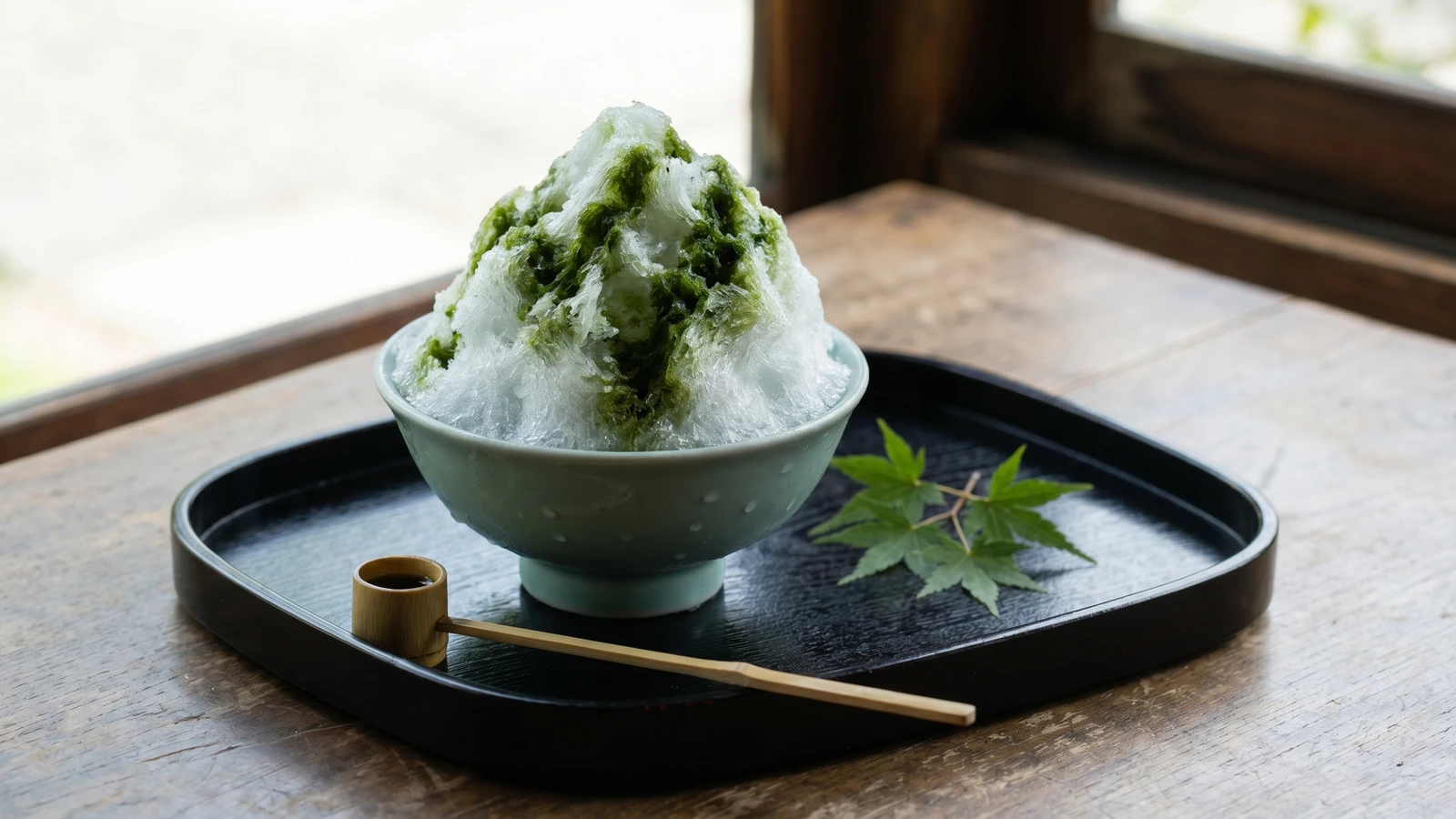
Just matcha syrup over snow-fine ice: bitter, green, clean. The whole dish depends on fresh powder and ice shaved lightly enough to catch the syrup.
Kakigori is summer made visible. A small mountain of shaved ice, a green pour of matcha, and then you eat before it forgets itself. People add anko, condensed milk, shiratama, fruit, and all sorts of busy things. Here we won't. The point is the matcha, so there is nothing to hide it behind.
The first secret is the powder. Fresh matcha smells green and sweet, almost grassy, and its color is lively, not tired olive. A stale tin announces itself at once in this dish, because cold dulls sweetness and leaves bitterness standing in the room like an overdressed guest. Buy a good fresh tin, sift it, and whisk it first into a smooth paste so the syrup pours cleanly instead of freckling the ice with dry clumps.
The second secret is the ice. Kakigori should be shaved, not crushed. A hand-cranked kakigōriki, the old ice shaver, makes flakes light enough to collapse under the spoon. An electric shaved-ice machine can do honest work too. A food processor gives you hard little pebbles, and pebbles do not know how to drink matcha.
Serve it at once, preferably outside, where this dish belongs to the hottest part of the year. Keep the bowl cold, build the ice high but loose, pour the syrup in three passes, and leave it alone. This is honmono at its plainest: good matcha, clean ice, and no decoration pretending to be flavor.
Kakigori appears in court writing from the Heian period, most famously in Sei Shōnagon's Makura no Sōshi, where shaved ice sweetened with vine syrup is described as a rare luxury. It became a common summer treat only much later, after manufactured ice and mechanical ice shavers spread in the Meiji period. Matcha versions belong to the broader Japanese habit of bringing tea flavor into sweets, especially in Kyoto and other tea-producing regions.
Quantity
2 teaspoons
sifted
Quantity
1/2 cup
Quantity
1/2 cup
Quantity
1 tablespoon
about 175°F or 80°C
Quantity
1 pinch
Quantity
enough for 2 bowls
| Ingredient | Quantity |
|---|---|
| fresh matcha powdersifted | 2 teaspoons |
| granulated sugar | 1/2 cup |
| water | 1/2 cup |
| hot waterabout 175°F or 80°C | 1 tablespoon |
| fine sea salt | 1 pinch |
| ice block or ice for shaving | enough for 2 bowls |
Open the matcha before you begin. It should smell fresh, green, and faintly sweet, with a clear green color. If it smells dusty or looks dull brown-green, save it for baking and don't use it here. Kakigori has no sauce thick enough to flatter a tired powder.
Combine the sugar, 1/2 cup water, and salt in a small pan. Warm just until the sugar dissolves, then take it off the heat. You are making a clean syrup, not caramel. Boiling it hard only thickens it and makes it sit heavily on the ice.
Sift the matcha into a small bowl. Add the tablespoon of hot water and whisk with a chasen, or a small whisk, until smooth and glossy. Use water around 175°F or 80°C, not boiling water. Too much heat roughens the taste and makes the green edge harsh.
Whisk the matcha paste into the warm sugar syrup until the color is even. Let it cool completely, then chill it. A cold syrup keeps the ice snowy longer, while a warm one starts melting the bowl before the spoon arrives.
Chill two serving bowls. Shave the ice directly into each bowl, letting the flakes fall loosely. Don't press them down. The spaces between the flakes are what catch the syrup, and packing the ice turns snow into a hard lump.
Pour the chilled matcha syrup over the ice in three light passes, turning the bowl as you go. Aim for green streaks through white ice rather than one soaked mass. Serve at once, while the top is still snowy and the lower ice is just beginning to drink.
1 serving (about 370g)
Culinary guides, cultural storytelling, and the editorial depth that makes cooking meaningful.
Discover Culinary ExplorerChef Takumi
Anmitsu looks like a tray of small tasks, but the work is calm: dissolve the kanten fully, chill the pieces clean, then let fruit, anko, and kuromitsu do the speaking.

Chef Takumi
A cool square of almond-scented milk, set softly and served with mikan in thin syrup, is dinner-party food without theater. The only stern demand is restraint with the fragrance.

Chef Takumi
Azuki bar asks for patience twice: once while the beans soften, and once while the frozen bar yields. That hardness is not a flaw. It is the character of the thing.
Chef Takumi
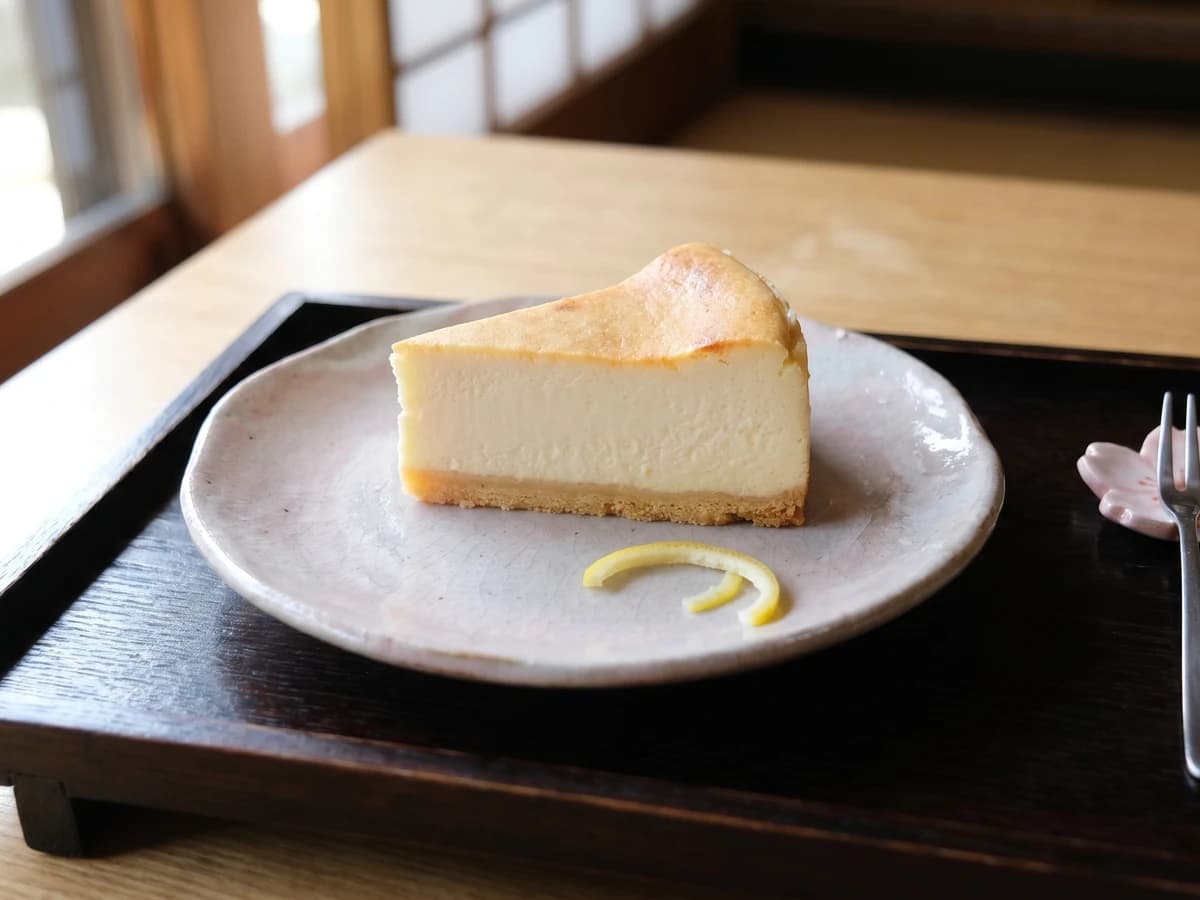
A Japanese baked cheesecake is not trying to float away. It is dense, smooth, and quietly tart, with a clean slice doing the work of decoration.