Culinary Explorer
A cooking platform built around craft, culture, and the stories behind what we eat.
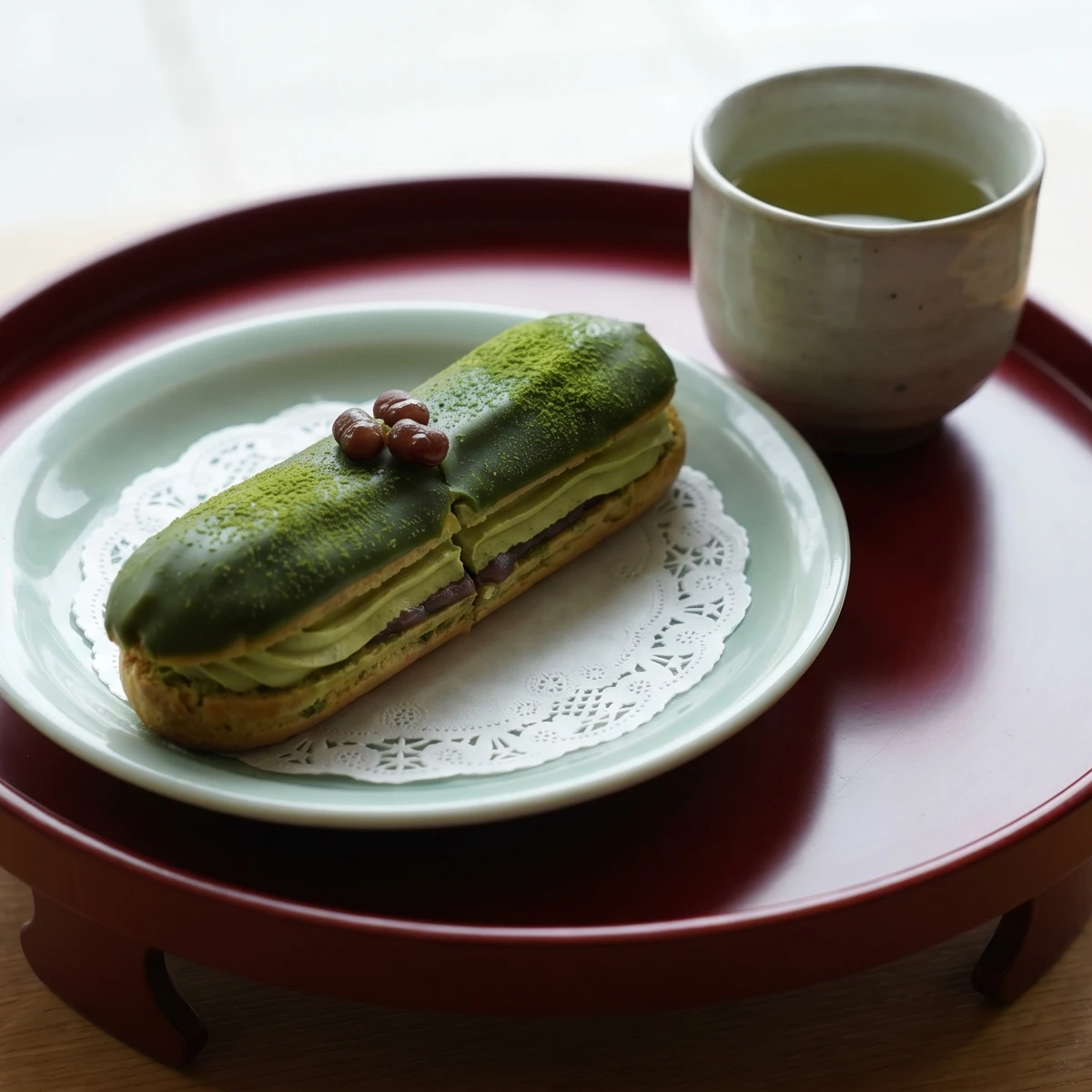
Matcha-Anko Eclair (抹茶と小豆のエクレア, Matcha to Azuki no Ekurea)
Created by Chef Takumi
Choux looks cleverer than it is. Dry the dough well, add eggs until it ribbons, and let steam hollow the shell for matcha cream and anko.
An eclair has a reputation for behaving like a small engineering project. It isn't quite so severe. The shell is only flour cooked in butter and water, then loosened with egg until it has enough strength to rise and enough moisture to make its own hollow center. A little French grammar, yes, but at a Japanese bakery table we use it plainly: matcha cream, dark anko, and nothing hidden.
The one detail that decides the shell is drying the dough over heat before the eggs go in. That minute or two at the stove cooks off extra water and gelatinizes the flour, so the paste can take the eggs without collapsing into batter. In the oven, the water still inside turns to pressure, the eggs set the walls, and the pastry opens like a little cave. That hollow space is not a trick. It's the whole reason choux exists.
Matcha must be good enough to taste clean, not dusty, because cream shows every flaw. Use a bright, fresh matcha and a restrained anko, preferably tsubuan if you want the beans to speak. The shell must be fully cool before you pipe the filling, or the cream slackens and the glaze dulls. Patience here is not ceremony. It's simply the shortest path to honmono.
Ingredients
water
Quantity
120ml
whole milk
Quantity
120ml
unsalted butter
Quantity
85g
cut into cubes
| Ingredient | Quantity |
|---|---|
| water | 120ml |
| whole milk | 120ml |
| unsalted buttercut into cubes | 85g |
Where cooking meets culture.
Culinary guides, cultural storytelling, and the editorial depth that makes cooking meaningful.
Discover Culinary Explorer