Culinary Explorer
A cooking platform built around craft, culture, and the stories behind what we eat.
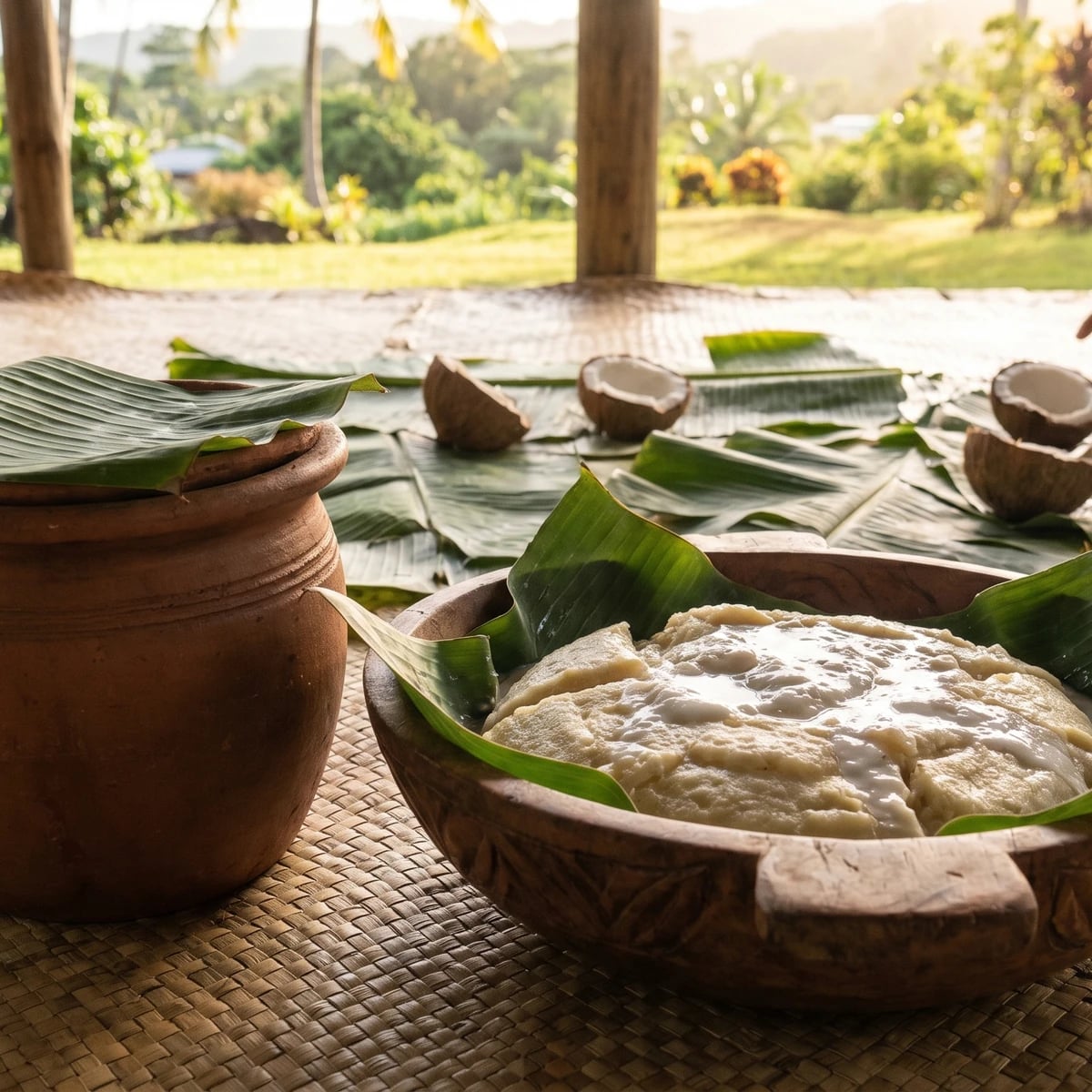
Masi (Sāmoan Fermented Breadfruit)
Created by Chef Makoa
Sāmoa's old keeping food: mature ʻulu packed down, soured slow, then warmed and mashed into a sharp, comforting starch for the whole aiga.
The canoe crops were never just food to get through the day. ʻUlu, breadfruit, rode with the ancestors because it could feed a people, shade a yard, and stand there like a quiet promise when the sea was rough and the store was empty. In Sāmoa, this keeping form is masi, fermented breadfruit packed down in leaf-lined pits until it turns sour and deep, food held for the aiga, the extended family, without one bit of cold box or plastic bag.
This is my Sāmoan cousins' food, not mine from home, so I cook it open-handed. Back in Hawaiʻi we know poi when it turns sour and alive. In the atolls they keep mā, fermented breadfruit for coral islands where soil is thin and scarcity teaches hard. In the Marquesas, popoi carries that same breadfruit memory. One ocean, one canoe, one root, but each island keeps its own hand.
Traditional masi belongs in a pit lined with leaves, weighted and sealed, opened when the family needs it. Most of us are not digging a proper Sāmoan pit behind the apartment, yeah? So this version brings the old idea into a clean crock or food-safe bucket, with banana leaf for the smell and memory, and salt to help the sour come steady. When it smells pleasantly sharp, like sour poi and green fruit, not rotten, you warm it, mash it, and eat it with coconut cream, fish, palusami, sapasui, or corned beef and rice if that's the table today. Eat what you have. We no throw out good food.
Ingredients
mature firm breadfruit (ʻulu)
Quantity
4 pounds
peeled, cored, and cut into large chunks
fine sea salt
Quantity
2 tablespoons
banana leaves
Quantity
as needed
rinsed and softened for lining
| Ingredient | Quantity |
|---|---|
| mature firm breadfruit (ʻulu)peeled, cored, and cut into large chunks | 4 pounds |
| fine sea salt | 2 tablespoons |
| banana leavesrinsed and softened for lining | as needed |
Where cooking meets culture.
Culinary guides, cultural storytelling, and the editorial depth that makes cooking meaningful.
Discover Culinary Explorer