
Chef Makoa
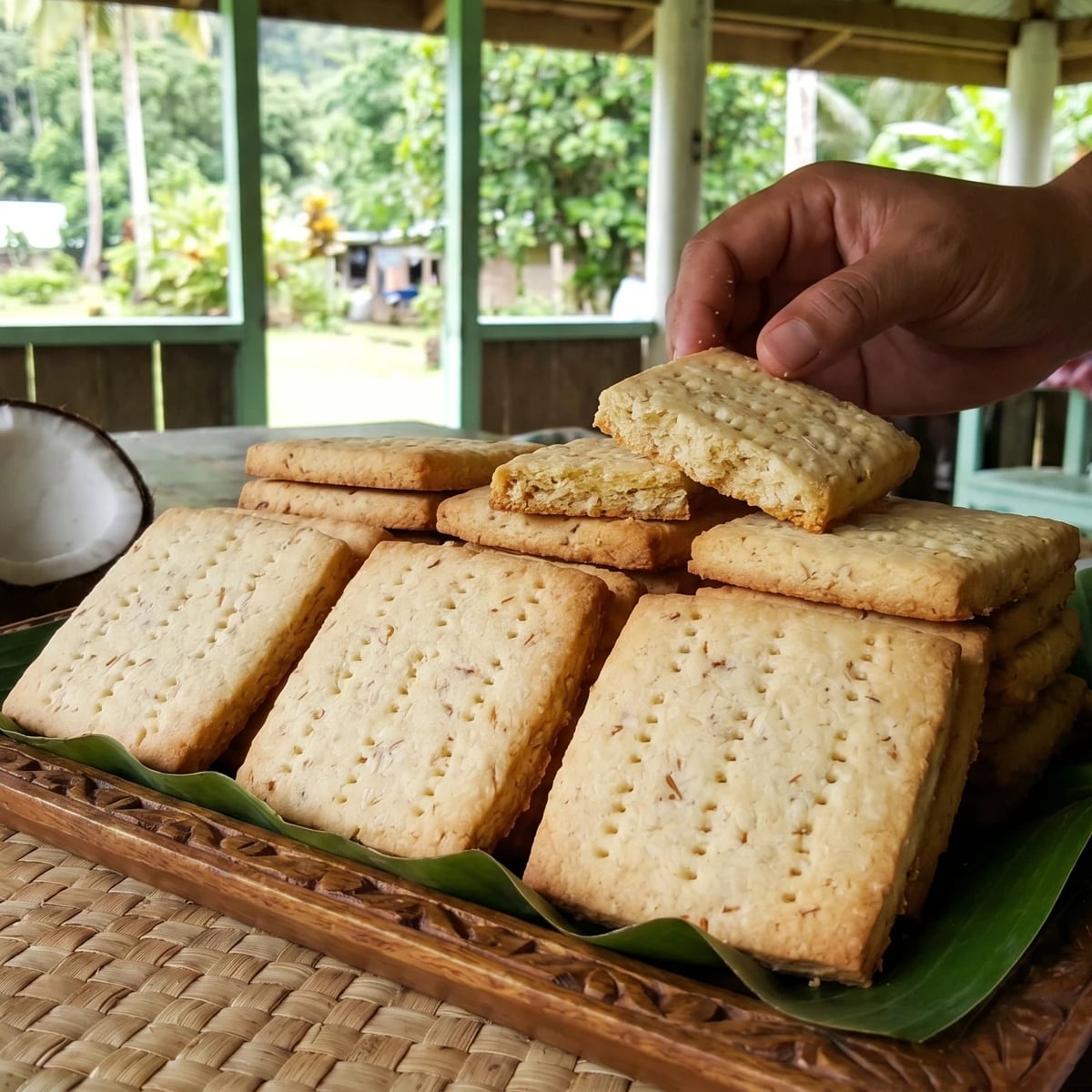
Faʻapapa (Sāmoan Baked Coconut Bread)
A Sāmoan slab bread, dense with grated popo and coconut cream, baked gold in a home oven and eaten with koko Samoa, budget food that still keeps the family close.
A cooking platform built around craft, culture, and the stories behind what we eat.
Created by
Sāmoa's masi are the biscuit-tin comfort of the aiga (family), tender with butter and coconut cream, baked pale gold and passed with koko Samoa or tea.
The hand that feeds you isn't always holding taro. Sometimes it's a Sāmoan auntie tying a plastic bag of masi (biscuit) and pushing it across the table beside koko Samoa, the thick Sāmoan cacao drink. This is Sāmoa's everyday sweet, not a temple piece: buttery, coconut-scented, barely sweet, the kind you buy by the bag or bake before the aiga starts arriving.
I come to it as a Hawaiian cousin, hands open. My own deep road is kalo (Hawaiian taro) and poi, Hāloa our elder brother. In Sāmoa the deep line is talo (Sāmoan taro), ʻulu (breadfruit), palusami (taro leaves folded with coconut cream), and the umu (Sāmoan earth oven), but masi sits on the everyday side of that same table, where ship flour met niu (coconut), butter, sugar, and a house full of people needing one more thing with tea. Across the Triangle, the cousin isn't one ancient named dish, it's the tin itself: Cook Islands home bakes, Māori and Hawaiian biscuits after church, Tongan sweets packed for a visit. Same welcome. Different hand.
The why is in the touch. Rub the butter in cold so it flakes, add coconut cream only until the dough holds when squeezed, cut it plain, prick it, and bake it pale. No need make it precious. If the edges brown too hard, the oven ran ahead of you. Eat what you have, cool the biscuits fully, and keep them in a tin. Tomorrow they taste even more like somebody was thinking ahead.
Masi belongs to Sāmoa's post-contact pantry, when flour, sugar, butter, and baking powder came by ship and sat beside older staples like talo, ʻulu, niu, and fish. Koko Samoa, the thick cacao drink often served with it, grew from cacao planted through the late 1800s and early 1900s under colonial and plantation economies, then kept at home by Sāmoan families on their own terms. That makes masi mission-and-trade food, not the deep canoe-crop line, but it is still Sāmoa's living table: everyday, bagged for sale, packed for church and potluck, and ready when the aiga comes through the door.
Quantity
3 cups
plus more for dusting
Quantity
1 cup
Quantity
1/2 cup
Quantity
2 teaspoons
Quantity
3/4 teaspoon
Quantity
1 cup
cut into small cubes
Quantity
3/4 cup
cold, plus 1 to 2 tablespoons more if needed
Quantity
1 teaspoon
| Ingredient | Quantity |
|---|---|
| all-purpose flourplus more for dusting | 3 cups |
| unsweetened fine desiccated coconut | 1 cup |
| granulated sugar | 1/2 cup |
| baking powder | 2 teaspoons |
| fine sea salt | 3/4 teaspoon |
| cold unsalted buttercut into small cubes | 1 cup |
| thick coconut cream (peʻepeʻe if fresh)cold, plus 1 to 2 tablespoons more if needed | 3/4 cup |
| vanilla extract (optional) | 1 teaspoon |
Heat the oven to 325F and line two half-sheet pans with parchment. Whisk the flour, desiccated coconut, sugar, baking powder, and salt until the coconut is evenly scattered through the flour. Break up any little coconut clumps with your fingers.
Add the cold butter cubes and rub them into the flour with your fingertips or a pastry blender until the bowl looks partly sandy, with some pea-size pieces still showing. Those little cold pieces are what give the masi its flaky bite. If the butter starts going soft and shiny, set the bowl in the fridge for 10 minutes.
Stir the vanilla into the cold coconut cream if you're using it, then drizzle the cream into the bowl. Fold with a fork or your hand just until the dough gathers into shaggy clumps and holds when squeezed. It should not be wet or smooth. Add the extra coconut cream one tablespoon at a time only if dry flour is still sitting loose at the bottom.
Gather the dough into a flat square, wrap it, and chill for 20 to 30 minutes. That rest lets the coconut drink in the cream and keeps the butter from running out in the oven. No rush this part. A biscuit tin teaches patience too.
Lightly flour the counter and pat or roll the dough into a rectangle about 1/2 inch thick. Cut into 2-inch squares or small rectangles and lift them onto the prepared pans, leaving a little room between each one. Prick each biscuit twice with a fork. Keep them plain, that is the beauty of it.
Bake for 26 to 32 minutes, rotating the pans once, until the tops look dry and matte, the bottoms are pale gold, and the edges are just beginning to tan. You want coconut and butter in the smell, not dark sugar. If your oven runs hot, stack one baking sheet under the pan to protect the bottoms.
Let the masi sit on the pan for 5 minutes, then move them to a rack and cool fully. They crisp as they cool, so don't judge them while they're still warm. Serve with koko Samoa or tea, and keep the rest in an airtight tin for the week.
1 serving (about 25g)
Culinary guides, cultural storytelling, and the editorial depth that makes cooking meaningful.
Discover Culinary Explorer
Chef Makoa
A Sāmoan slab bread, dense with grated popo and coconut cream, baked gold in a home oven and eaten with koko Samoa, budget food that still keeps the family close.

Chef Makoa
Sāmoa's faʻausi brings cubes of dense faʻapapa coconut bread under dark coconut caramel, the sweet ending of toʻonaʻi, and kin to Tonga's faikakai and the Cook Islands poke.

Chef Makoa
Sāmoa's keke faʻi is a soft home-oven banana cake, ripe fruit mashed deep into the crumb, coconut cream brushed over warm, made for birthdays, toʻonaʻi, and tea with the aiga.

Chef Makoa
Sāmoa's keke puaʻa wraps sweet white dough around savory pork, steamed soft and shared warm from a market cart, church kitchen, or aiga table.