
Chef Thomas
Baked Onions with Cream and Thyme
Whole onions surrendered to a low oven with cream and thyme until they collapse into something golden, sweet and yielding, the kind of side dish that quietly upstages everything else on the table.
A cooking platform built around craft, culture, and the stories behind what we eat.
Created by Chef Thomas
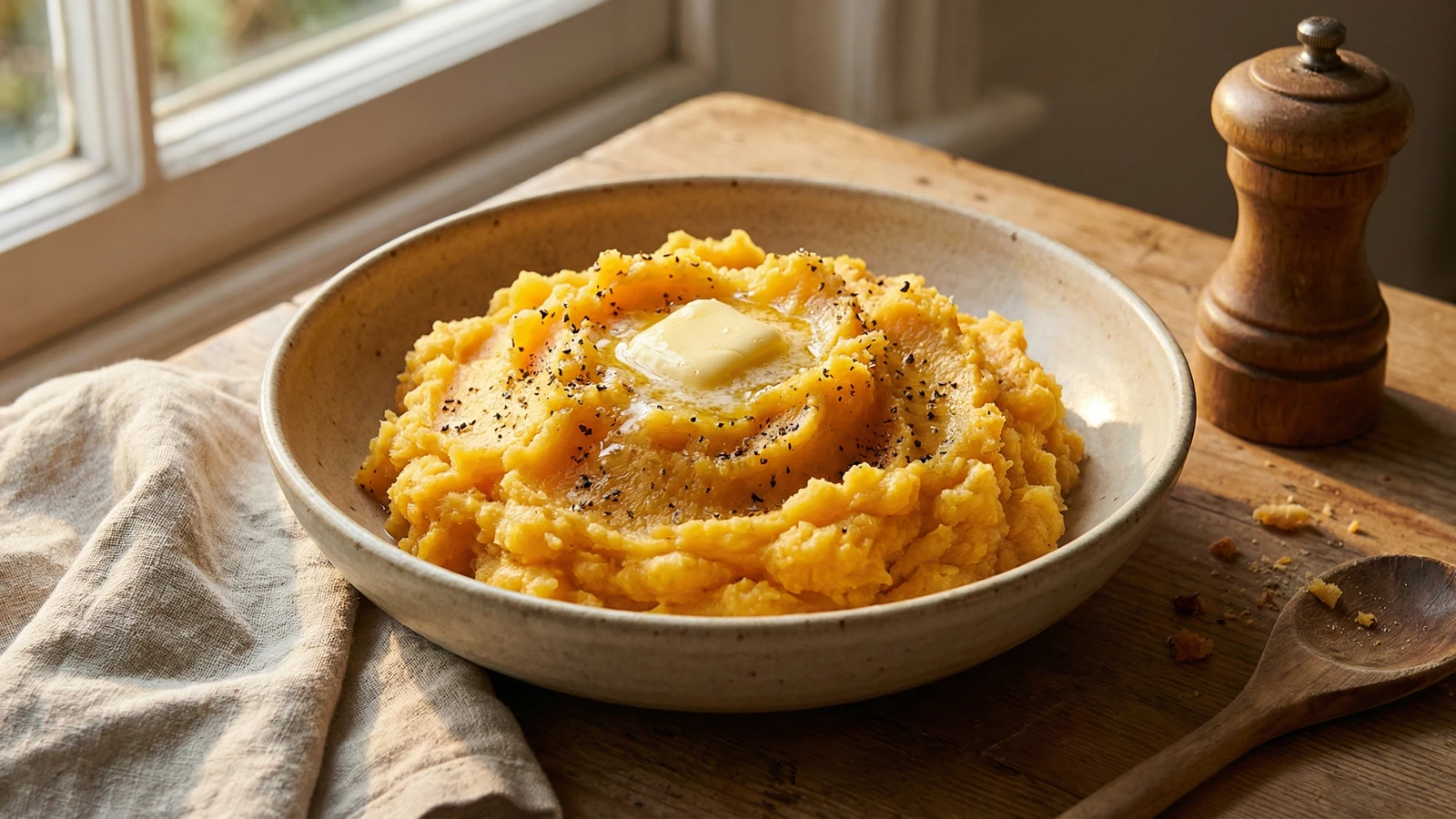
Swede mashed with butter until golden and sweet, finished with enough black pepper to make your nose prickle, the kind of side dish that quietly holds the whole plate together on a winter evening.
January. The garden is bare. The market stalls have shrunk to root vegetables, brassicas, and the quiet patience of things that grew slowly underground. This is when swede makes sense.
It's not a glamorous vegetable. It sits in the box looking like something geological, purple-skinned and dense, the sort of thing you'd walk past if you didn't know what it becomes with heat and butter and a bit of rough attention. But peel it, boil it, mash it with good butter and a generous hand with the pepper mill, and it turns into something sweet, earthy, and golden that belongs beside everything winter puts on the table. A roast. A braise. A plate of haggis on Burns Night. It doesn't compete with any of them. It completes them.
I wrote it down in the notebook years ago: swede, butter, pepper, Tuesday. That was the whole entry. It didn't need more. Some things are so simple that writing them down feels almost redundant, except that the simplest meals are the ones most worth remembering. A recipe is a conversation, not a contract, and this one barely requires a sentence. Boil it. Mash it. Season it properly. We're only making dinner.
Quantity
1 large (roughly 800g-1kg)
peeled and cut into chunks
Quantity
50g
plus extra for the table
Quantity
to taste
Quantity
generous
freshly ground
| Ingredient | Quantity |
|---|---|
| swedepeeled and cut into chunks | 1 large (roughly 800g-1kg) |
| unsalted butterplus extra for the table | 50g |
| fine sea salt | to taste |
| black pepperfreshly ground | generous |
Peel the swede with a sturdy knife rather than a peeler. The skin is thick and waxy and a peeler will fight you. Cut it in half, then into chunks roughly the size of a walnut. Smaller than you think. Swede is dense and stubborn, and large pieces take forever to cook through. If the knife resists, the pieces are too big.
Put the chunks in a large pan of well-salted water and bring to the boil. Reduce to a steady simmer and cook for twenty to twenty-five minutes. Test with a knife. It should slide through with no resistance at all, like pushing into soft butter. If there's any firmness in the centre, give it another five minutes. Undercooked swede won't mash. It'll just sit there in lumps, resenting you.
Drain the swede well in a colander, then return it to the hot pan and set it back over a low heat for a minute or two. Let the residual heat drive off the excess water. You'll see the surface of the chunks go from wet and glossy to slightly matte and dry. This matters. Watery swede makes watery mash, and no amount of butter can fix that.
Add the butter to the warm swede and mash firmly. A potato masher works, though a wooden spoon and some determination will get you there too. The texture you want is smooth but not entirely uniform, with just enough roughness to remind you this was a root vegetable ten minutes ago. The butter will melt into the mash and turn it golden. Season generously with salt and a good amount of freshly ground black pepper. More pepper than feels polite. Taste it. The sweetness of the swede should meet the heat of the pepper somewhere in the middle, with the butter holding them together.
Spoon into a warm bowl and put another knob of butter on top. Let it sit for a moment, softening and pooling into the surface. Bring it to the table like that. There are few better feelings than putting a warm bowl of something this simple in front of someone on a cold night.
1 serving (about 190g)
Culinary guides, cultural storytelling, and the editorial depth that makes cooking meaningful.
Discover Culinary ExplorerChef Thomas
Whole onions surrendered to a low oven with cream and thyme until they collapse into something golden, sweet and yielding, the kind of side dish that quietly upstages everything else on the table.

Chef Thomas
Celery braised long and slow in butter and good stock until it turns soft, silky, and almost sweet, the kind of quiet side dish that makes people ask what you did to it.

Chef Thomas
Leeks surrendered to butter and cream until they turn silky, sweet and yielding, the kind of side dish that quietly becomes the reason you sat down to dinner in the first place.

Chef Thomas
Peas braised in butter with wilted lettuce and spring onions, a dish that is entirely French in spirit and entirely at home on an English table in late May when the garden finally delivers.