
Chef Elsa
Bröselnudeln
Broad egg noodles tossed in golden butter-toasted breadcrumbs until every strand is coated and crackling. Four ingredients, fifteen minutes, and a dish that has kept Austrian families fed and happy for centuries.
A cooking platform built around craft, culture, and the stories behind what we eat.
Created by
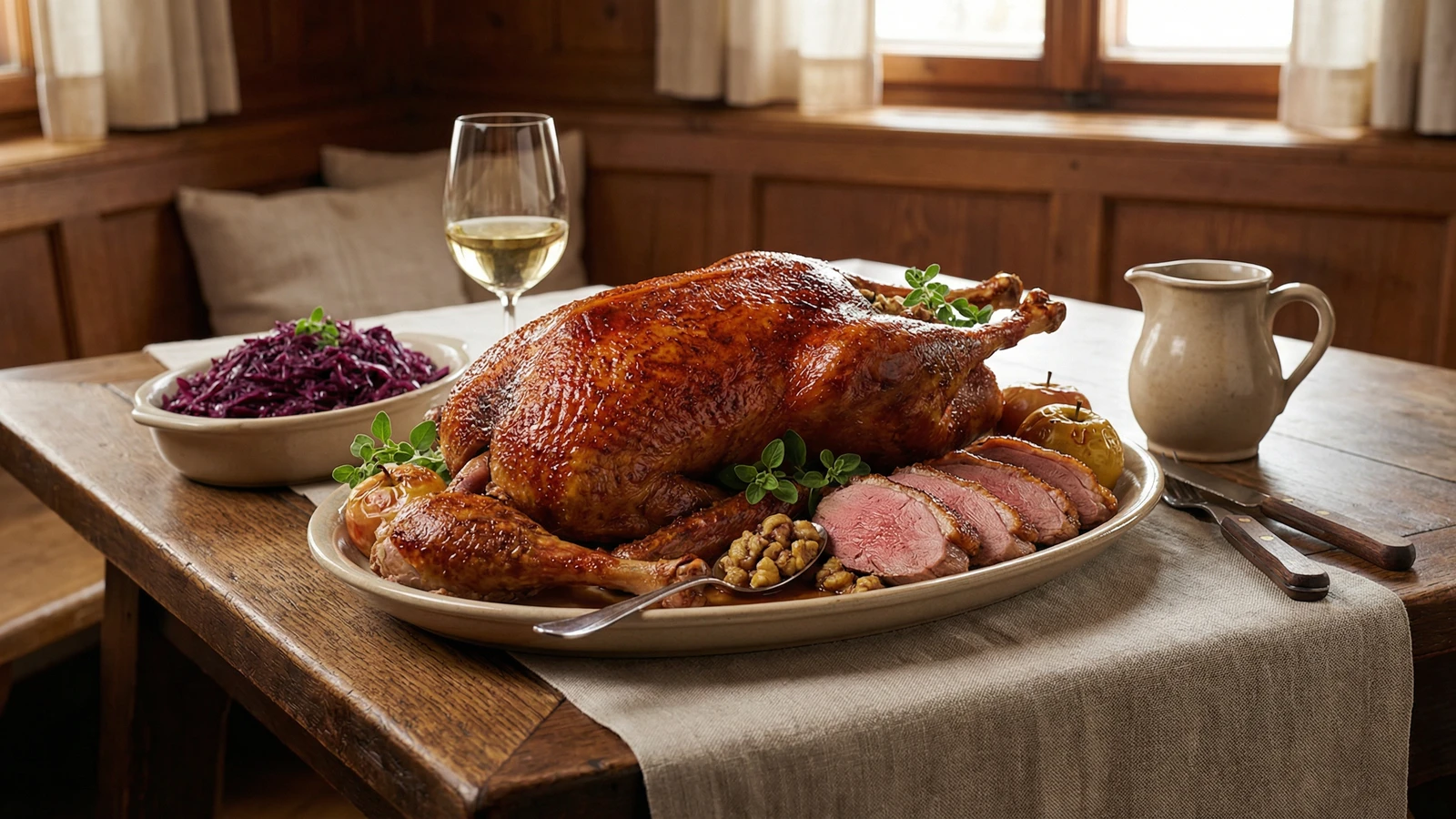
Whole roast goose for St. Martin's Day, rubbed with marjoram and caraway, slow-roasted until the skin crackles and the kitchen smells like November in Austria.
Every year in November, Austria belongs to the goose. The first Martinigansl appears on Gasthaus menus around November 11, St. Martin's Day, and from that point until Christmas the whole country smells like roasting poultry and warm red cabbage. It's the dish that tells you autumn is ending and winter is on its way, and Austrians treat it with the kind of reverence other people reserve for a holiday turkey.
Gretel always said the goose was the most generous bird in the kitchen. One goose feeds a table and gives you enough rendered fat to cook with for weeks afterwards. When I was a child, the annual Austria trips with Gretel and Eva always overlapped with Martinigans season at least once. I remember sitting in a Gasthaus outside Salzburg, seven or eight years old, watching a waitress carry a whole roasted goose on a platter through the dining room. The skin was the color of dark honey. The smell stopped every conversation at every table it passed. I knew before I tasted it that this was serious food.
Roasting a goose is not difficult, but it is slow. You need four hours, maybe closer to five, and you need to understand what's happening inside the oven. A goose carries a thick layer of fat under the skin, and the whole point of the long roast is to render that fat out while the skin tightens and crisps. You prick the skin, you baste, you pour off the fat, and you trust the process. The reward is meat that's rich and succulent under a shell of crackling, shattering skin. Serve it with braised Rotkraut, Kartoffelknödel, and a cold glass of Grüner Veltliner, and you have a meal that every Austrian recognizes as home.
This is not a Tuesday night dinner. It's an event. Clear your afternoon, invite people you love to your table, and give the goose the time it deserves.
The tradition of eating goose on St. Martin's Day dates to the medieval tithe system, when peasants paid their annual rent to landlords on Martinmas, November 11, often in the form of a fattened goose. The date also marked the end of the agricultural year and the beginning of the Advent fasting period, making it a last feast before weeks of abstinence. In Austria, the Martinigansl became so entrenched that Gasthäuser across the country still build their November menus around it, with some establishments serving nothing else for the entire month.
Quantity
1 (about 4-5 kg)
giblets reserved
Quantity
2 tablespoons
Quantity
1 tablespoon
Quantity
1 tablespoon
Quantity
2 teaspoons
lightly crushed
Quantity
4 cloves
minced
Quantity
2 medium
quartered
Quantity
2
quartered and cored
Quantity
4 sprigs
Quantity
500ml
for the roasting pan
Quantity
200g
cubed
Quantity
150g
roughly chopped
Quantity
1 medium
finely diced
Quantity
30g
Quantity
2 tablespoons
finely chopped
Quantity
1
lightly beaten
Quantity
100ml
warm
Quantity
to taste
Quantity
pinch
Quantity
1 small (about 800g)
finely shredded
Quantity
2 tablespoons
Quantity
1 medium
finely sliced
Quantity
2 tablespoons
Quantity
1 tablespoon
Quantity
200ml
Quantity
2
Quantity
1
Quantity
1
peeled and grated
Quantity
to taste
Quantity
1-2 tablespoons
to finish cabbage
| Ingredient | Quantity |
|---|---|
| whole goosegiblets reserved | 1 (about 4-5 kg) |
| fine sea salt | 2 tablespoons |
| freshly ground black pepper | 1 tablespoon |
| dried marjoram | 1 tablespoon |
| caraway seedslightly crushed | 2 teaspoons |
| garlicminced | 4 cloves |
| onions (for cavity)quartered | 2 medium |
| tart apples (such as Boskop)quartered and cored | 2 |
| fresh mugwort or thyme | 4 sprigs |
| hot waterfor the roasting pan | 500ml |
| stale white bread or Semmel rollscubed | 200g |
| cooked chestnutsroughly chopped | 150g |
| onion (for stuffing)finely diced | 1 medium |
| unsalted butter (for stuffing) | 30g |
| fresh parsleyfinely chopped | 2 tablespoons |
| egg (for stuffing)lightly beaten | 1 |
| whole milkwarm | 100ml |
| salt and pepper | to taste |
| freshly grated nutmeg | pinch |
| red cabbagefinely shredded | 1 small (about 800g) |
| goose fat or unsalted butter (for cabbage) | 2 tablespoons |
| onion (for cabbage)finely sliced | 1 medium |
| red wine vinegar | 2 tablespoons |
| granulated sugar | 1 tablespoon |
| dry red wine | 200ml |
| whole cloves | 2 |
| bay leaf | 1 |
| tart apple (for cabbage)peeled and grated | 1 |
| salt (for cabbage) | to taste |
| redcurrant jelly (Ribiselmarmelade)to finish cabbage | 1-2 tablespoons |
Pull the goose from the fridge a full hour before you plan to cook. Cold meat in a hot oven is how you end up with overcooked breast and raw legs. Remove the giblets and set them aside for gravy. Trim any excess fat from the cavity opening and the neck area. Save every scrap of that fat in a jar. You'll render it later and thank yourself for weeks. Pat the entire bird dry with paper towels, inside and out. Dry skin is the single most important factor in getting that shattering, crackling finish.
Mix the salt, pepper, marjoram, crushed caraway seeds, and minced garlic together into a rough paste. Rub this everywhere: inside the cavity, over the breast, into the leg joints, under the wings. Marjoram and caraway are the signature flavors of Austrian roast goose. Skip them and you've made a roast bird, but you haven't made Martinigansl. Now take a sharp skewer or the tip of a paring knife and prick the skin all over the breast and legs. You want dozens of tiny holes, not deep stabs. You're piercing only the skin and the fat layer beneath it, never the meat. These holes are escape routes for the fat during roasting. Without them, the fat stays trapped and the skin goes flabby.
Melt the butter in a pan over medium heat. Cook the diced onion until soft and translucent, about five minutes. Don't let it color. In a bowl, pour the warm milk over the cubed bread and let it soak for a few minutes until the bread softens but isn't drowning. Squeeze out any excess. Toss the soaked bread with the cooked onion, chopped chestnuts, parsley, beaten egg, nutmeg, and a good pinch of salt and pepper. Mix with your hands until it holds together loosely. You want it to be moist but not dense. The stuffing will absorb goose juices as it roasts, so it shouldn't start out wet.
Spoon the chestnut stuffing loosely into the cavity. Don't pack it tight or it won't cook through. Tuck the quartered apples and onions in around the stuffing and push the mugwort or thyme sprigs in between. The apples aren't just flavoring: their acidity helps cut through the richness of the goose fat. Tie the legs together with kitchen twine and tuck the wing tips underneath the bird. Place the goose breast-side up on a rack set inside a deep roasting pan. Pour the hot water into the bottom of the pan. The water creates moisture in the oven during the first stage of roasting and gives you a base for the pan juices.
Put the goose into a cold oven, then set the temperature to 160°C (320°F). Starting in a cold oven gives the fat time to begin rendering gradually before the heat gets aggressive. This is not conventional roasting wisdom, but it's how Austrian cooks have handled goose for generations, and it works. Roast for two hours at this temperature. After the first hour, open the oven and spoon off the accumulated fat from the pan with a ladle or bulb baster. You'll be amazed how much comes out. Spoon it into a heatproof jar. After the second hour, spoon off the fat again.
After two hours, increase the oven temperature to 200°C (400°F).This is where the skin transforms. Roast for another 60 to 90 minutes, basting the goose with its pan juices every twenty minutes. The skin will tighten, darken to a deep amber, and start to crackle audibly. You'll hear it in the oven. That's the sound of the remaining subcutaneous fat rendering out and the skin turning into something extraordinary. If any spots are browning too quickly, lay a small piece of foil over them. The goose is done when a thermometer inserted into the thickest part of the thigh reads 82°C (180°F) and the juices run clear, not pink.
Start the Rotkraut about two hours before the goose is done. Melt the goose fat or butter in a heavy pot over medium heat. Cook the sliced onion until soft, then add the sugar and let it caramelize lightly for a minute. Add the shredded red cabbage and stir to coat it in the fat. Pour in the red wine vinegar and red wine. Add the cloves, bay leaf, grated apple, and a generous pinch of salt. Stir everything together, cover the pot, and reduce the heat to low. Let it braise for 90 minutes, stirring occasionally. The cabbage should cook down to something soft, sweet-sharp, and deeply purple. Stir in a spoonful of Ribiselmarmelade (redcurrant jelly) at the end. Taste and adjust the vinegar and sugar until the balance between sweet and sour feels right to you.
When the goose is done, transfer it to a cutting board and tent it loosely with foil. Let it rest for at least twenty minutes. Resting isn't optional. The juices need to redistribute through the meat. If you carve immediately, all that liquid runs out onto the board instead of staying where it belongs. While the goose rests, pour the pan juices through a sieve into a small saucepan. Let the fat rise to the surface and skim it off. You should have a rich, dark jus underneath. Bring it to a simmer and season with salt and pepper. That's your gravy. It doesn't need flour. It doesn't need thickening. The goose did all the work.
Remove the twine. Scoop the stuffing out of the cavity into a warm bowl. Carve the goose at the table if you have the confidence, or in the kitchen if you prefer. Separate the legs first, then slice the breast meat against the grain. The skin should shatter under the knife. Arrange the carved goose on a warm platter with the chestnut stuffing alongside. Bring the Rotkraut in its pot and the jus in a warm jug. Let people serve themselves generously. Kartoffelknödel are the traditional accompaniment if you want to go the full distance, but good roast potatoes cooked in goose fat are just as welcome at the table. Mahlzeit!
1 serving (about 570g)
Culinary guides, cultural storytelling, and the editorial depth that makes cooking meaningful.
Discover Culinary ExplorerChef Elsa
Broad egg noodles tossed in golden butter-toasted breadcrumbs until every strand is coated and crackling. Four ingredients, fifteen minutes, and a dish that has kept Austrian families fed and happy for centuries.

Chef Elsa
Vienna's weeknight answer to everything: soft flour Nockerl fried golden in butter, scrambled through with eggs and buried under fresh chives. A sharp green salad on the side because the Viennese know that richness needs a counterpoint.

Chef Elsa
Soft Austrian potato dumplings in browned butter with warm, caraway-scented sauerkraut. A meatless Gasthaus meal that's been filling up Alpine kitchens for centuries.

Chef Elsa
Braised beef steaks in a velvety sauce of julienned root vegetables, capers, mustard, and sour cream, the kind of dish that made the Esterházy name famous in kitchens long after it faded from politics.