Chef Thomas
Anchovy Sauce
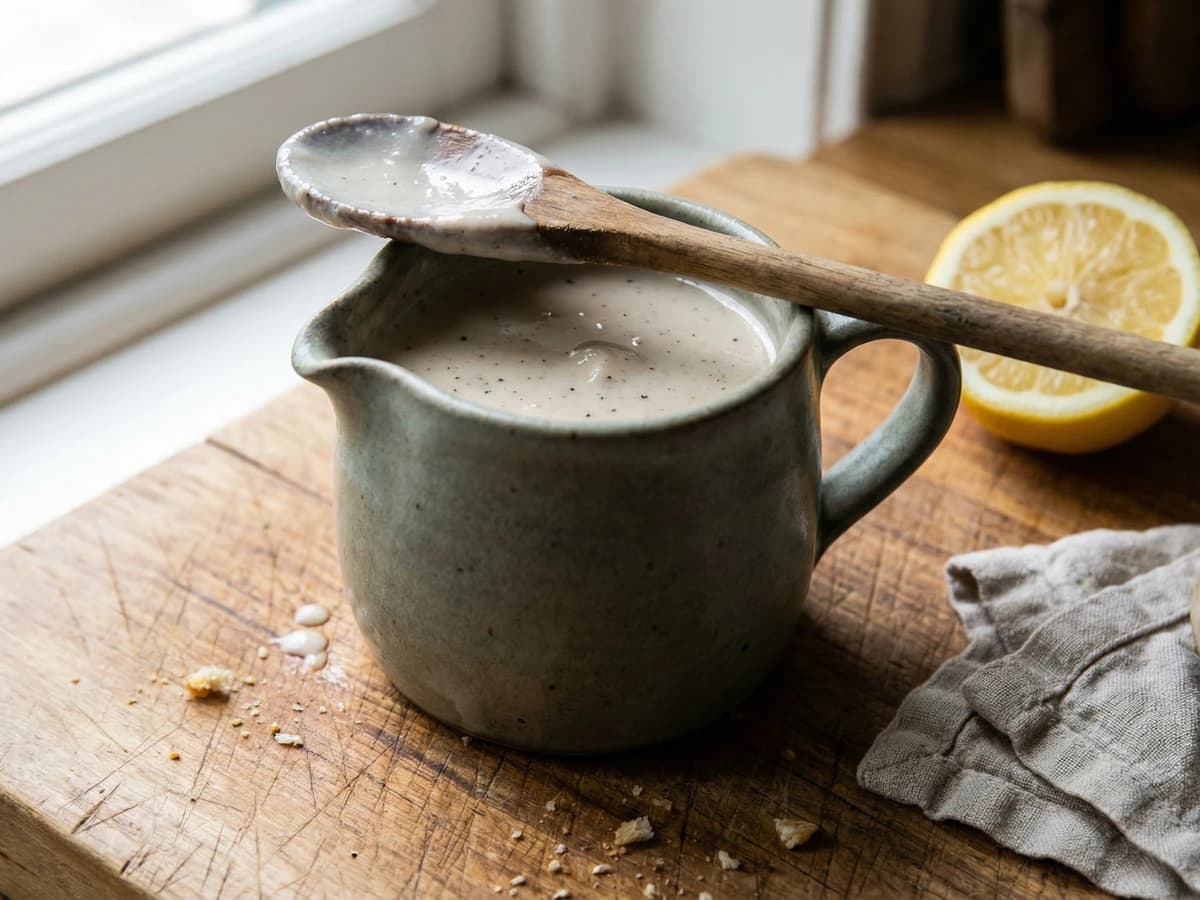
A proper white sauce sharpened with pounded anchovy, the old Georgian trick for waking up a piece of poached fish or a slice of roast lamb on a Sunday in spring.
A cooking platform built around craft, culture, and the stories behind what we eat.
Created by Chef Thomas
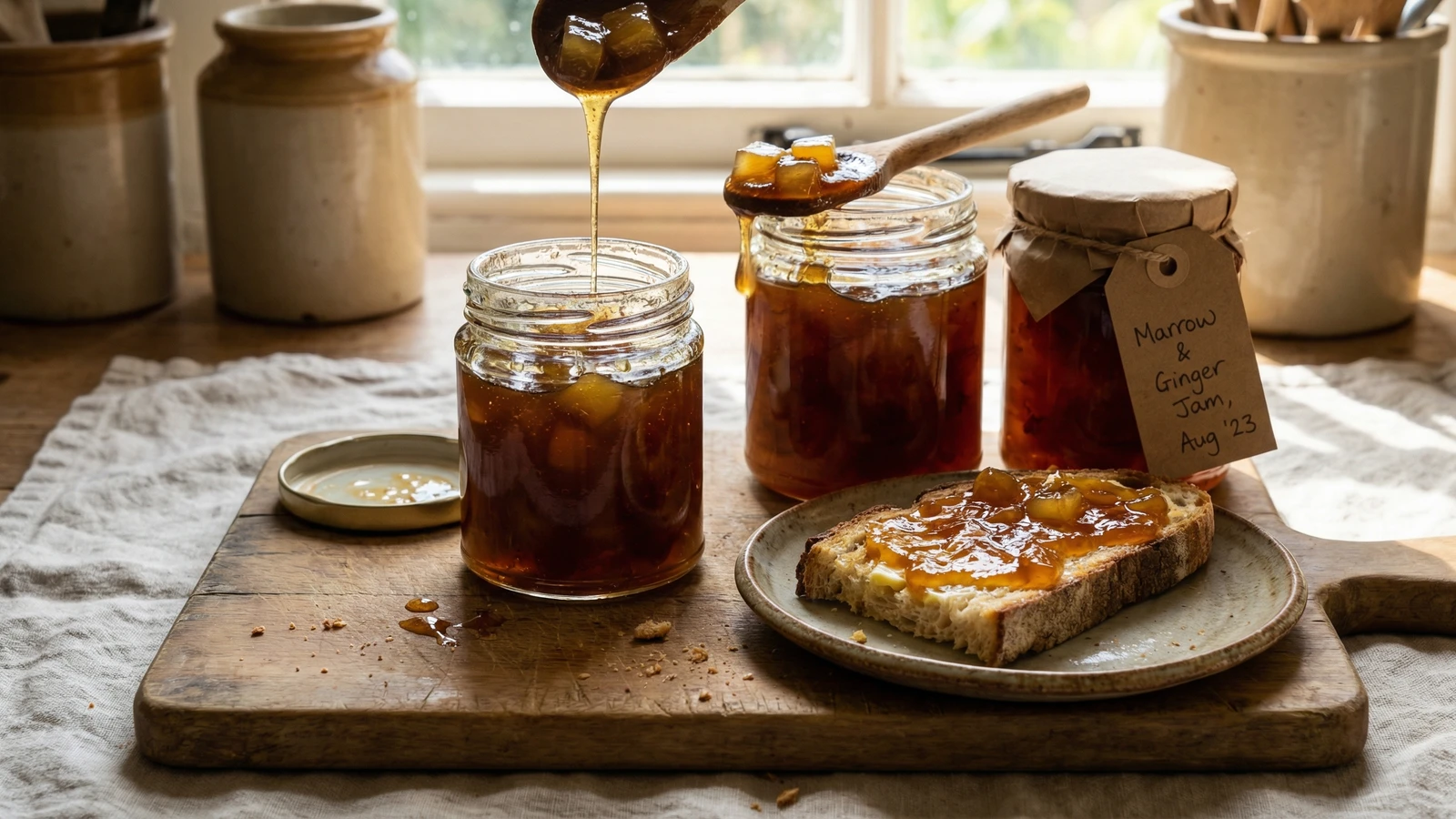
An old allotment preserve for the late summer glut, marrow turned slow and golden with crystallised ginger and lemon, the kind of jam that earns its place on a winter breakfast table.
Every August, somebody you know will leave a marrow on your doorstep. It will be enormous. They will not knock. This is how marrow season begins.
A marrow is a courgette that got away. Left on the plant a week too long, it swells into something pale and watery, more vegetable than vegetable should ever be. You can stuff it. You can soup it. Or you can do what allotment gardeners have done for generations and turn it into jam, which is, against all reasonable expectation, one of the more useful things in the larder.
The trick is the ginger. Marrow on its own tastes of almost nothing, which is exactly why it works here. It's a carrier. The crystallised ginger gives the jam its warmth and bite, the lemon gives it brightness, and the marrow itself, slow-cooked in sugar until the cubes turn glassy and amber, gives it a texture that no other jam quite has. Not quite preserve, not quite candied fruit. Somewhere in between, and better for it.
I wrote it down in the notebook the first year I made it: marrow, ginger, lemon, patience. The patience matters as much as the rest. You salt the marrow overnight, you bring the sugar up slowly, you let the pan boil hard until the kitchen smells like a Christmas market. Then you put it in jars and forget about it until the mornings turn cold and you need something gold to spread on toast.
Quantity
1.5kg
peeled, deseeded, and cut into 1cm cubes
Quantity
1.5kg
Quantity
3
zested and juiced
Quantity
100g
finely chopped
Quantity
50g
peeled and finely grated
Quantity
1 teaspoon
Quantity
small piece
| Ingredient | Quantity |
|---|---|
| marrowpeeled, deseeded, and cut into 1cm cubes | 1.5kg |
| granulated sugar | 1.5kg |
| unwaxed lemonszested and juiced | 3 |
| crystallised gingerfinely chopped | 100g |
| fresh root gingerpeeled and finely grated | 50g |
| ground ginger | 1 teaspoon |
| muslin and string (optional) | small piece |
Layer the cubed marrow in a large bowl, scattering each layer with the sugar as you go. Cover with a tea towel and leave on the side overnight, somewhere cool. By morning the marrow will have wept out an astonishing amount of liquid and the sugar will have half-dissolved into a thick, pale syrup. This step matters. It draws the water out before the cooking begins, which is the difference between jam and soup.
Scrape the marrow and all its syrupy liquid into a wide, heavy preserving pan or your largest, deepest saucepan. Add the lemon zest and juice, the chopped crystallised ginger, the grated fresh ginger, and the ground ginger. Tie the lemon pips and any membrane in a small square of muslin and drop it in too. The pips carry pectin, and marrow has none of its own.
Set the pan over a gentle heat and stir until any remaining sugar has melted into the liquid. You should see no grit on the wooden spoon when you draw it across the bottom. Only then turn the heat up and bring the whole thing to a steady, rolling boil. Rushing the sugar before it dissolves is how you crystallise a jam, and there is no coming back from that.
Let the jam boil hard for an hour, sometimes a little longer. Stir now and then with a long wooden spoon, especially towards the end, when the sugar starts to catch. The marrow will go from pale and opaque to a deep amber, almost honeyed, and the cubes will turn translucent and glassy. The kitchen will smell of hot sugar and ginger, sharp and warming, like the inside of a Christmas tin. Trust your nose. It knows before you do.
Put two or three saucers in the freezer before you start, so they are properly cold when you need them. To test, take the pan off the heat and drop a teaspoon of jam onto a cold saucer. Wait half a minute, then push it with your fingertip. If the surface wrinkles, it's ready. If it slides about like syrup, give it another five minutes and try again. Marrow jam will never be a stiff set. You're after something soft, spoonable, like loose honey. Don't chase a setting that isn't coming.
Fish out the muslin bag and squeeze any liquid back into the pan. Let the jam stand for ten minutes off the heat so the cubes settle through the syrup rather than floating to the top of the jars. Ladle into hot, sterilised jars, right up to the brim, and seal at once. Label them when they're cool. Write the date on. You'll thank yourself in February.
1 serving (about 20g)
Culinary guides, cultural storytelling, and the editorial depth that makes cooking meaningful.
Discover Culinary ExplorerChef Thomas
A proper white sauce sharpened with pounded anchovy, the old Georgian trick for waking up a piece of poached fish or a slice of roast lamb on a Sunday in spring.

Chef Thomas
A spiced autumn chutney made from a glut of apples and a quiet afternoon, simmered down until the kitchen smells of October and the jars line up on the counter like a small, useful insurance policy.
Chef Thomas
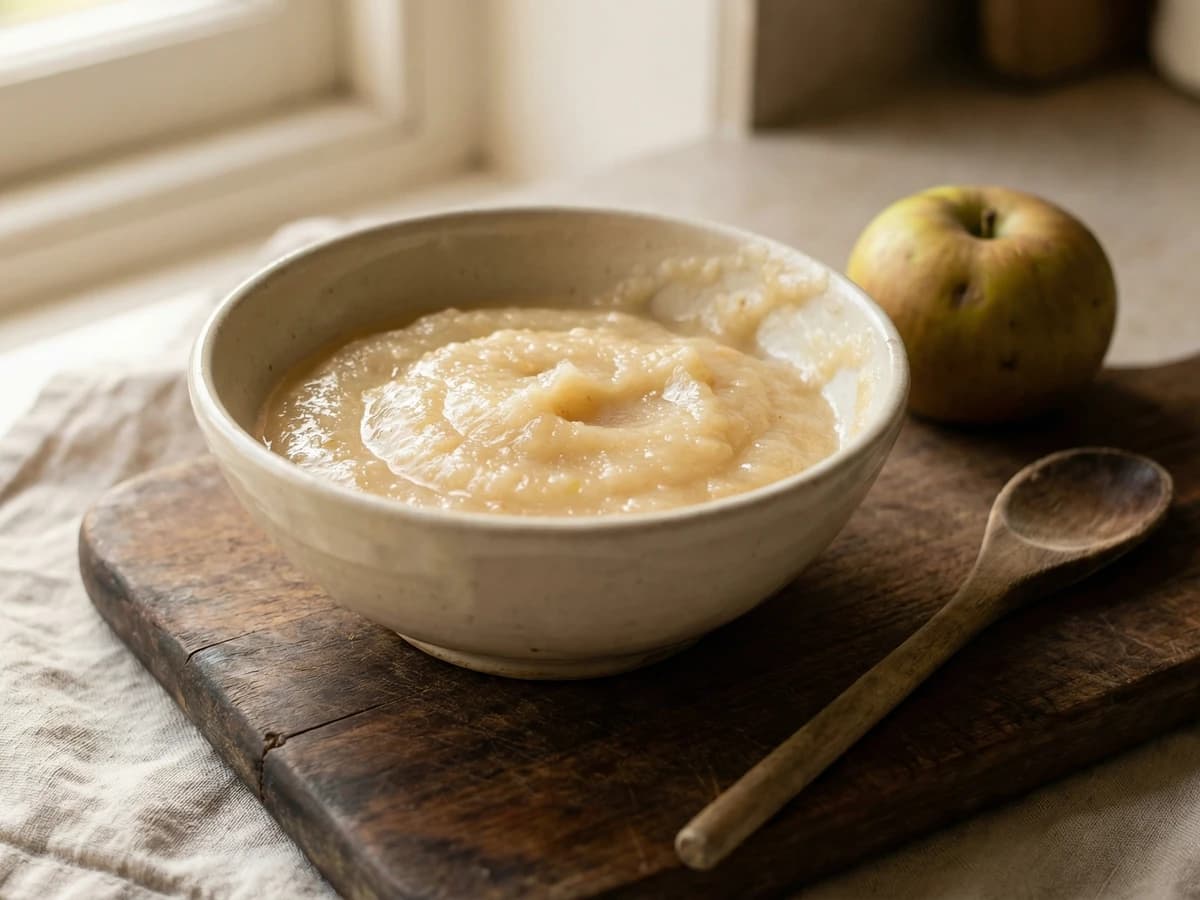
A bowl of sharp, fluffy Bramley apple sauce, made in the time it takes to carve the pork, the kind of small condiment that quietly makes the whole meal make sense.
Chef Thomas
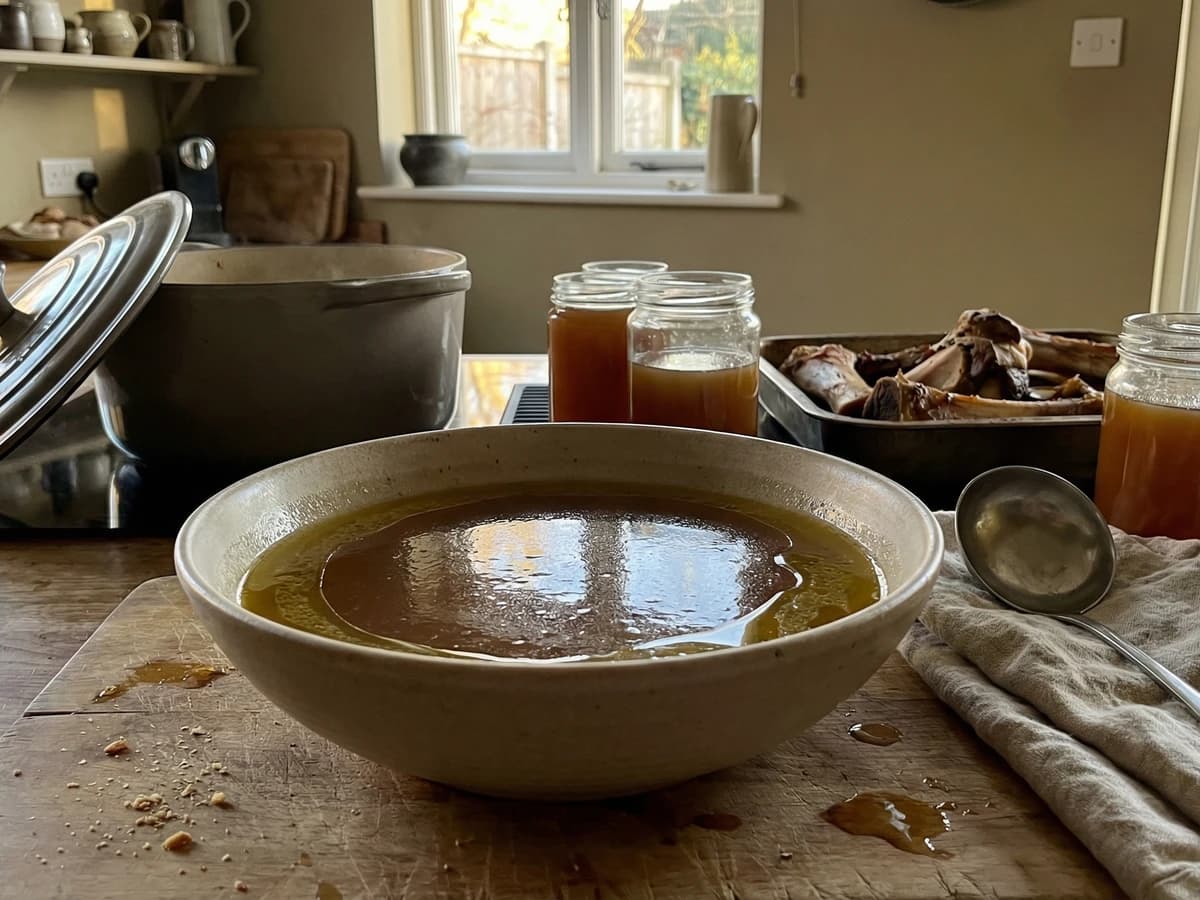
Beef bones roasted until dark, then coaxed for a long afternoon into a deep amber stock, the foundation of every good gravy, every braise, every bowl of winter soup worth the trouble.