
Chef Lupita
Acitrón de Cidra Conventual
Puebla's convent-style acitrón, made from cidra peel instead of endangered biznaga, built through repeated syrup soakings until the cubes turn firm, translucent, and ready for rosca or chiles en nogada.
A cooking platform built around craft, culture, and the stories behind what we eat.
Created by
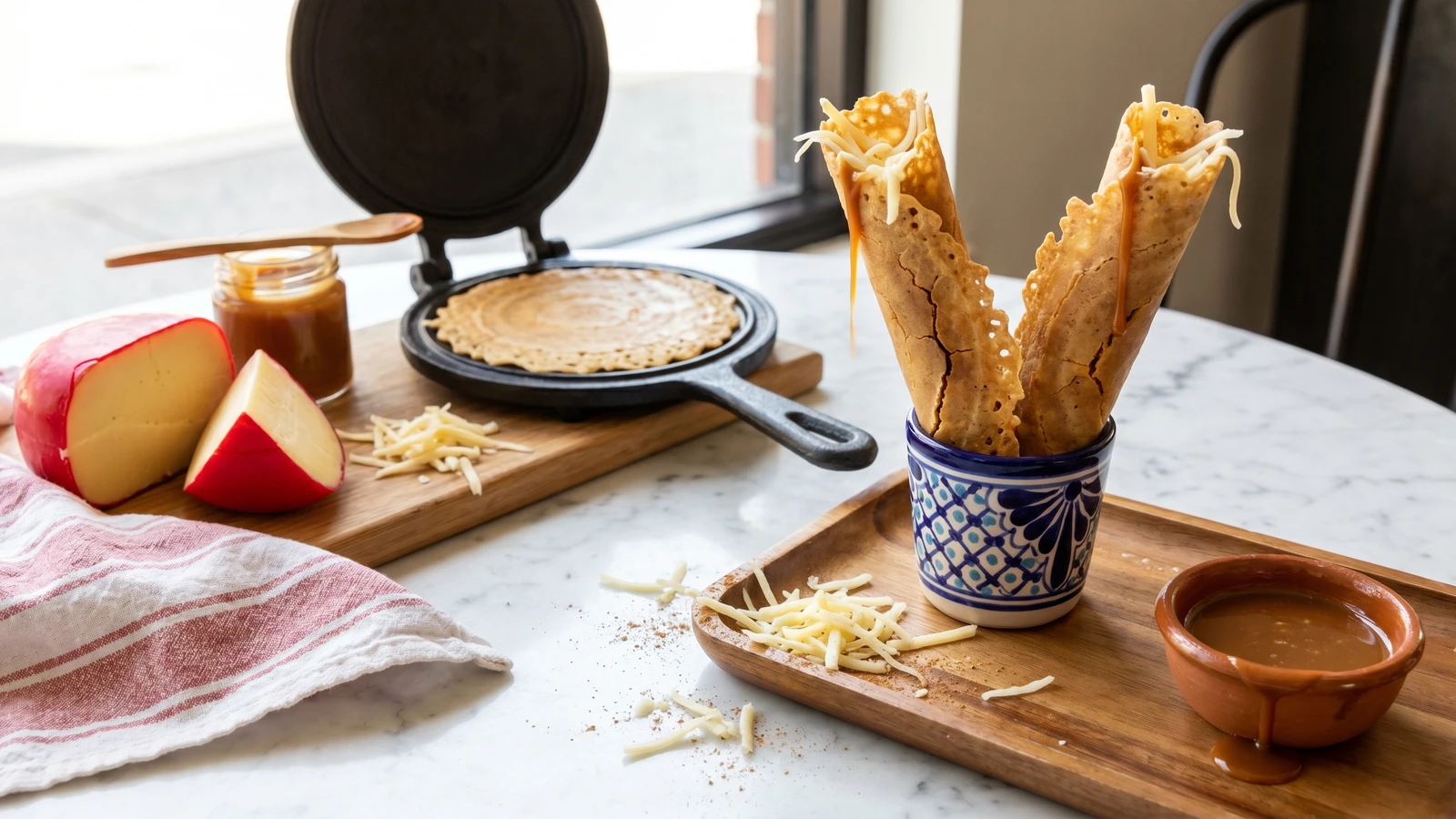
Mérida's signature plaza snack since the 1930s: a crisp rolled wafer pressed on a cast-iron marquesitera, filled hot with shredded queso de bola and a stream of cajeta, eaten standing up on the corner of the Plaza Grande.
The marquesita is from Yucatán. Specifically from Mérida, where the marquesiteros set up their carts around the Plaza Grande at sundown and press these wafers one at a time on cast-iron irons over portable gas burners. This is street food and it should be eaten standing up, the way the people of Mérida have eaten it since the 1930s.
The filling is what makes it Yucatecan. Queso de bola, the Dutch Edam wrapped in red wax that arrived in the peninsula through the port of Progreso during the henequen boom, when Yucatán traded sisal with Europe and the Caribbean and the cheese came back on the return boats. The Yucatecans kept it. Today no household in Mérida is without a ball of queso de bola in the refrigerator. The salty, slightly aged cheese against the sweet caramel of cajeta is the contrast the dish lives on. No me vengas con atajos, do not use cheddar, do not use mozzarella, do not use cream cheese. Queso de bola or nothing.
My notebook has a page from a marquesitero named Don Beto who works the corner near the Catedral de San Ildefonso. I bought three marquesitas from him over the course of one evening in 2014 and on the third one he told me his batter ratio. He said the trick is the resting time and the speed of the roll. The wafer must be hot when the cheese hits it. If you roll a cold wafer, you have made a cookie with cheese inside. That is not a marquesita. Cada estado, su propia cocina.
Marquesitas were invented in Mérida in 1936 by a paletero named Leopoldo Mena Espinosa, who needed a winter alternative to his summer popsicle business and adapted the Italian wafer-cone technique to a flat iron, naming the result for the marquesas, the noble ladies of his clientele who he said were the only ones refined enough to eat them. The queso de bola filling reflects Yucatán's deep economic ties to the Netherlands during the 19th and early 20th-century henequen trade, when Dutch Edam, Belgian chocolate, and Cuban tobacco moved through the port of Progreso into Yucatecan daily life and never left. Today Mérida's marquesiteros are recognized by the state government as cultural heritage workers, and the original queso de bola pairing remains the test of a serious vendor against the modern fillings of Nutella, condensed milk, and chocolate that tourists tend to order.
Quantity
2
at room temperature
Quantity
3/4 cup
Quantity
1/2 cup
Quantity
1/2 cup
Quantity
1 teaspoon
Quantity
1/4 teaspoon
Quantity
1 1/4 cups
Quantity
1/4 cup
Quantity
3 tablespoons, plus more for the iron
melted and slightly cooled
Quantity
8 ounces
rind removed, finely shredded
Quantity
1/2 cup
warmed until pourable
Quantity
for dusting
| Ingredient | Quantity |
|---|---|
| large eggsat room temperature | 2 |
| whole milk | 3/4 cup |
| water | 1/2 cup |
| granulated sugar | 1/2 cup |
| pure vanilla extract | 1 teaspoon |
| fine sea salt | 1/4 teaspoon |
| all-purpose flour | 1 1/4 cups |
| cornstarch | 1/4 cup |
| unsalted buttermelted and slightly cooled | 3 tablespoons, plus more for the iron |
| queso de bola (Dutch Edam)rind removed, finely shredded | 8 ounces |
| cajeta de Celayawarmed until pourable | 1/2 cup |
| ground canela (Mexican cinnamon) (optional) | for dusting |
In a wide bowl, whisk the eggs with the sugar until the sugar dissolves and the eggs go pale. Add the milk, water, vanilla, and salt. Whisk again. Sift the flour and cornstarch over the liquids and whisk until smooth. Stream in the melted butter while whisking. The batter should be the thickness of heavy cream, no lumps. Rest it on the counter for fifteen minutes. Resting relaxes the gluten and the wafer will turn out crisp instead of leathery.
Take the queso de bola out of the refrigerator twenty minutes ahead so it shreds clean. Peel off the red wax and trim away any dry rind. Shred it on the fine holes of a box grater. You want soft pillowy shreds, not chunks. The marquesita is hot and crisp, the cheese is cool and salty, that contrast is the dish. Set the cheese in a small bowl beside your work station.
Set a cast-iron marquesitera or a flat pizzelle iron over medium heat. If you have a stovetop pizzelle press, heat both plates evenly by flipping it every minute for about five minutes. The iron is ready when a drop of water dances and evaporates almost immediately. Brush both plates lightly with melted butter the first time only. After that, the wafer has enough fat to release on its own.
Ladle about three tablespoons of batter into the center of the hot iron. Close it firmly. Cook for 60 to 90 seconds per side over medium heat, until the wafer is deep golden and the edges look dry and lacy. Open the iron carefully. The wafer should lift away in one round piece, crisp at the edges and still pliable in the center. Work fast from here. You have about ten seconds before the wafer sets.
Slide the hot wafer onto a wooden board. Drizzle a generous spoonful of warm cajeta down the center. Top with a fistful of shredded queso de bola, all the way to the edges. Roll the wafer tightly into a cylinder, working from one side to the other. Press the seam closed with the heel of your hand. The cheese will start melting against the hot wafer the second it touches. That sound, the soft sizzle of cajeta hitting hot cheese, that is how the cooks at the Plaza Grande in Mérida know they did it right.
Stand the marquesita upright in a small clay cup or hand it directly to the person who is going to eat it. Dust with a pinch of ground canela if you like. Eat within two minutes. A marquesita that sits is a marquesita that goes soft, and a soft marquesita is no marquesita at all. Repeat with the rest of the batter, one at a time. Así se hace y punto.
1 serving (about 85g)
Culinary guides, cultural storytelling, and the editorial depth that makes cooking meaningful.
Discover Culinary ExplorerChef Lupita
Puebla's convent-style acitrón, made from cidra peel instead of endangered biznaga, built through repeated syrup soakings until the cubes turn firm, translucent, and ready for rosca or chiles en nogada.

Chef Lupita
Ciudad de México's Tulyehualco alegría is popped huautli folded into piloncillo honey, pressed with peanuts, pepitas, and raisins, then cut into the rectangular bars that built a pueblo's identity.

Chef Lupita
Oaxaca's pre-Columbian amaranth bar, popped on a hot comal and bound with piloncillo, honey, and the sacred Zapotec grain that the Spanish tried, and failed, to outlaw.

Chef Lupita
Querétaro's mercado candy of popped amaranto pressed with dark piloncillo syrup, pepitas, pecans, and cacahuate, a Bajío sweet that respects the seed before it decorates the table.