Culinary Explorer

A cooking platform built around craft, culture, and the stories behind what we eat.
Discover Culinary Explorer
Marocchino

Marocchino

Created by

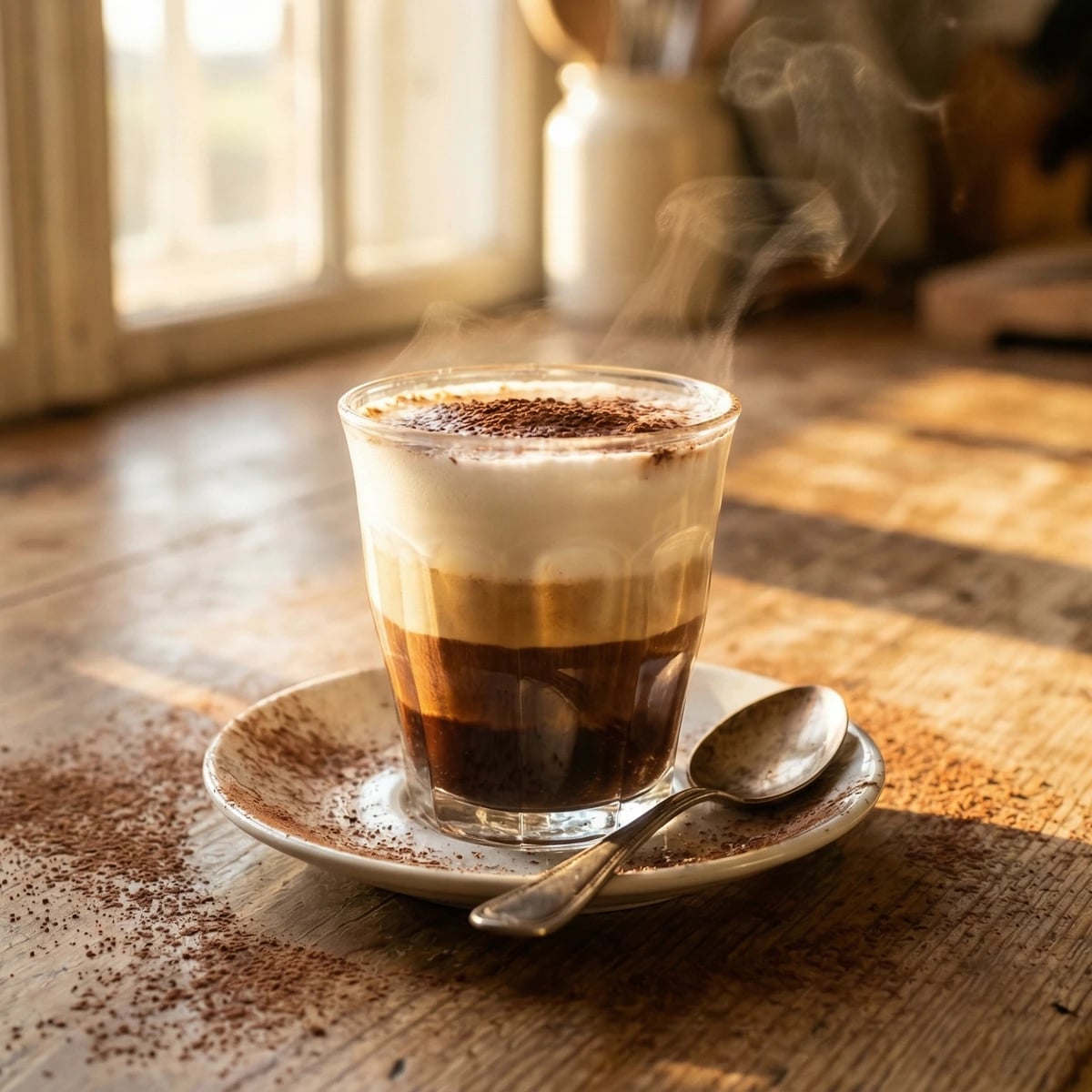
The little glass of layered espresso, cocoa, and foam that proves Piedmont understands coffee as well as it understands hazelnuts and chocolate. This is not a mocha. This is something far more refined.

Beverages
Italian, Piedmontese
Weeknight
Comfort Food
2 min
Active Time
3 min cook5 min total
Yield1 serving

Americans order mochas and think they understand the marriage of coffee and chocolate. They do not. A mocha drowns espresso in sweetened cocoa and whipped cream until the coffee becomes an afterthought. A Marocchino respects its ingredients.

This drink comes from Alba, the heart of Piedmont's hazelnut country, where Ferrero built an empire and where every bar understands that chocolate and coffee should converse, not compete. The cocoa powder dusts the glass first. The espresso falls through it. The frothed milk floats on top. You drink it in three or four sips, standing at the bar as God intended, and the layers merge on your tongue.

The glass matters. It must be small, about three ounces, and it must be glass so you can see the layers. This is not a drink you take to your laptop. This is a moment of pleasure that requires your full attention.

The Marocchino emerged in Alba or Alessandria in the mid-20th century, taking its name from the color of Moroccan leather. Piedmont's historic connection to chocolate, dating to the House of Savoy's 18th-century court, and its world-famous Tonda Gentile hazelnuts made this marriage inevitable. Some bars add a smear of gianduja to the glass, though purists consider this excessive.

The technique, the tradition, and the story behind every dish.

Discover Culinary Explorer

Ingredients

freshly pulled espresso

Quantity

1 shot (25-30ml)

unsweetened Dutch-process cocoa powder

Quantity

1 teaspoon

whole milk

Quantity

60ml

frothed

gianduja or Nutella (optional)

Quantity

1/2 teaspoon

Equipment Needed

  • Espresso machine or moka pot
  • Small glass (3-ounce capacity), clear
  • Milk frother or steam wand
  • Small fine-mesh sieve for dusting cocoa

Instructions

  1. 1

    Prepare the glass

    Use a small glass of about 3 ounces, the traditional vessel. Warm it briefly with hot water, then dry it completely. If using gianduja, spread a thin smear around the inside bottom of the glass with a small spoon. The chocolate should coat the glass, not pool in it.

    The glass must be clear so the layers remain visible. A ceramic cup defeats the purpose. The visual pleasure is part of the experience.
  2. 2

    Dust with cocoa

    Sift about half the cocoa powder into the bottom of the prepared glass, creating a thin even layer. Tap the glass gently to settle the cocoa. This foundation layer will mix with the espresso as it falls through.

  3. 3

    Pull the espresso

    Extract a single shot of espresso directly into the cocoa-dusted glass. The espresso must be fresh, with good crema. Watch as the dark coffee falls through the cocoa powder, picking up chocolate as it goes. The color will deepen. This takes 25 to 30 seconds if your machine is properly calibrated.

    If you do not have an espresso machine, use a moka pot and pour while still very hot. The result differs but remains acceptable. Instant coffee is not acceptable under any circumstances.
  4. 4

    Froth the milk

    Steam the milk until it reaches approximately 65 degrees Celsius, creating a microfoam with tiny, uniform bubbles. The milk should be silky, not stiff. Piedmontese bars use whole milk, and so should you. The fat carries flavor and creates proper texture.

  5. 5

    Layer the foam

    Spoon the frothed milk gently over the espresso, letting it float on top. Pour from low, close to the surface, to preserve the layer. The milk should sit distinctly above the coffee, creating three visible bands: cocoa-stained espresso below, a transition zone, and white foam above.

  6. 6

    Finish and serve immediately

    Dust the remaining cocoa powder over the milk foam through a small sieve. The cocoa should land lightly, speckling the white surface. Serve at once, standing at your kitchen counter if you wish to honor the tradition. A Marocchino waits for no one.

Chef Tips

  • The cocoa must be unsweetened and of good quality. Dutch-process cocoa has deeper flavor than natural cocoa. Do not use sweetened hot chocolate mix, which would make this cloying.
  • In Piedmont, some bars use a tiny amount of gianduja, the local hazelnut-chocolate spread, smeared in the glass before the cocoa. This is traditional in Alba. Nutella, being a Piedmontese invention, serves adequately if gianduja is unavailable.
  • Drink this in the morning or after lunch, never after dinner. Italians do not consume milk-based coffee drinks after eleven in the morning except in specific circumstances. The Marocchino exists in a liminal space, its small size making it acceptable slightly later than cappuccino.
  • The proper way to drink a Marocchino is to let the layers merge slightly with each sip, so you taste all three elements together. Do not stir it. The point is the progression.

Advance Preparation

  • This drink cannot be made in advance. The layers separate, the foam collapses, the espresso goes bitter. Make it, drink it, and be present for the experience.

Frequently Asked Questions

Nutrition Information

1 serving (about 95g)

Calories
60 calories
Total Fat
3 g
Saturated Fat
2 g
Trans Fat
0 g
Unsaturated Fat
1 g
Cholesterol
8 mg
Sodium
40 mg
Total Carbohydrates
6 g
Dietary Fiber
1 g
Sugars
4 g
Protein
2 g

Note: Chef personas and recipes are created with AI assistance. Cook with care: follow safe food-handling practices, check doneness with a thermometer when needed, and adapt for allergies and your kitchen.

Where cooking meets culture.

Culinary guides, cultural storytelling, and the editorial depth that makes cooking meaningful.

Discover Culinary Explorer

More from Chef Graziella's Italian Beverage Collection

Browse the full collection