
Chef Isabel
Aguaillo de la Sierra de Cadiz
Aguaillo is from the Sierra de Cadiz: cold water, stale bread, garlic, oil and vinegar, closer to a field drink than a bowl of soup, and sharp enough to wake you in the heat.
A cooking platform built around craft, culture, and the stories behind what we eat.
Created by
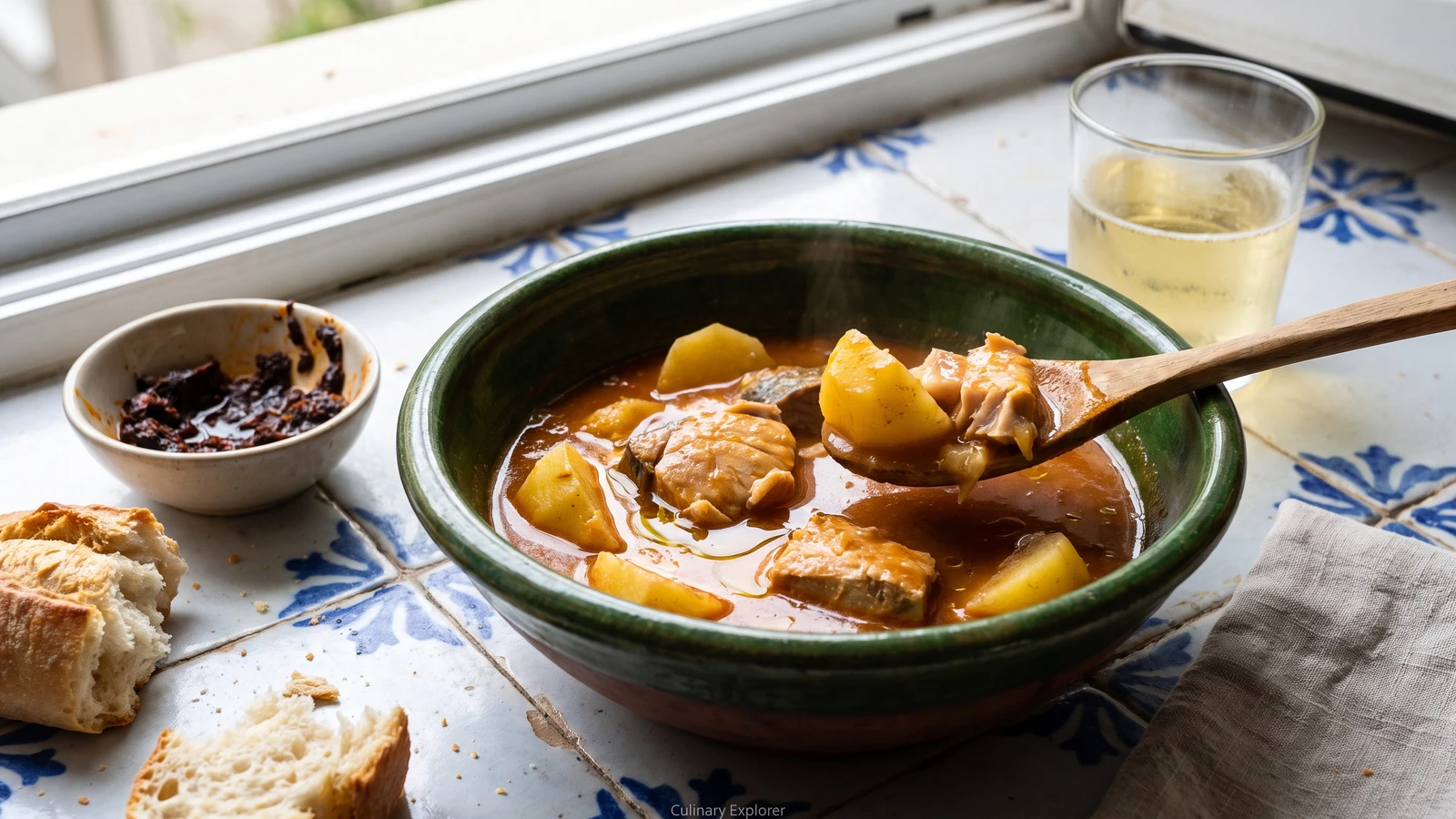
Marmitako is Basque fishermen's spoon food: bonito del norte, potatoes, pepper, tomato, and choricero pulp in a broth thickened by breaking the potatoes, not slicing them.
Marmitako is Basque, from the fishing towns that know bonito del norte best. It is a potato pot before it is a fish stew: onion, green pepper, tomato, choricero pepper, potatoes, and bonito added only at the end so it stays juicy. That is what makes it marmitako and not just tuna cooked in broth.
The method that decides it is the potato. You don't slice it cleanly. You cut partway in, then snap the piece off with the knife, cascar la patata, so the rough edge releases starch and thickens the broth while it simmers. A neat cube behaves too politely. A broken potato gives the pot its body.
Use bonito del norte in summer if you can get it. If you're far from the Basque coast, no hace falta haber pisado España: buy fresh albacore tuna steaks, or good yellowfin at a pinch, and cut them thick so they don't dry out. Choricero pepper paste is worth finding; if not, use soaked ñoras scraped from their skins. The flavour will be a little softer, but the dish still knows where it belongs.
Once the potatoes are tender, turn the heat low and let the bonito finish in the heat of the pot. Boil it hard and you've made it dry. Let it settle five minutes and the broth turns glossy and red-gold, with the potato edges just starting to melt. Siempre sale, si lo sigues.
Marmitako belongs to the Basque coast, where arrantzales, the fishermen, cooked it aboard their boats in a marmita, the sturdy pot that gives the dish its name. Bonito del norte is a summer catch in the Cantabrian Sea, and potatoes made the meal filling enough for work at sea without needing many ingredients. The choricero pepper, dried and scraped into the sofrito, is one of the Basque signatures of the dish, giving sweetness, colour, and depth without turning it into a heavy stew.
Quantity
650g
skinless, boneless, cut into 4cm chunks
Quantity
900g
peeled and cracked into rough chunks
Quantity
1 large
finely chopped
Quantity
1
finely chopped
Quantity
2 cloves
minced
Quantity
2
grated
Quantity
2 tablespoons
or flesh from 3 soaked dried choricero peppers
Quantity
80ml
Quantity
120ml
Quantity
900ml
Quantity
1
Quantity
1 teaspoon
Quantity
to taste
Quantity
to taste
| Ingredient | Quantity |
|---|---|
| bonito del norte or albacore tuna steaksskinless, boneless, cut into 4cm chunks | 650g |
| waxy potatoespeeled and cracked into rough chunks | 900g |
| onionfinely chopped | 1 large |
| green pepperfinely chopped | 1 |
| garlicminced | 2 cloves |
| ripe tomatoesgrated | 2 |
| choricero pepper pasteor flesh from 3 soaked dried choricero peppers | 2 tablespoons |
| extra virgin olive oil | 80ml |
| dry white wine or txakoli | 120ml |
| fish stock or water | 900ml |
| bay leaf | 1 |
| sweet pimentón | 1 teaspoon |
| salt | to taste |
| black pepper | to taste |
If using dried choricero peppers, soak them in hot water for 30 minutes, then split them open and scrape the soft flesh from the skins. Keep the paste and throw away the skins and seeds. If you have jarred choricero paste, measure it and move on; that shortcut costs the dish nothing.
Warm the olive oil in a wide heavy pot over medium-low heat. Add the onion, green pepper, and a good pinch of salt, and cook slowly for 15 minutes, stirring now and then, until the onion is soft, dark gold, and jammy. Add the garlic for one minute, then the grated tomato, and cook 8 to 10 minutes more until the water is gone and the oil begins to show at the edges.
Stir in the choricero pepper paste and the pimentón, keeping the heat gentle so the pimentón smells sweet and never scorches. Pour in the wine or txakoli and let it bubble for 2 minutes, scraping the bottom of the pot. This base is where the broth gets its colour and depth.
Hold each peeled potato over the pot, cut partway in with the knife, then snap the piece off so it breaks rough at the edge. Add all the cracked potatoes to the sofrito and turn them through the oil for 2 minutes. Pésalo, no lo adivines: the potato amount matters, because it is what thickens the broth.
Add the fish stock or water and the bay leaf. The liquid should just cover the potatoes; add a splash more if needed. Bring to a steady simmer, then cook uncovered for 25 to 30 minutes, shaking the pot now and then, until the potatoes are tender and their rough edges have begun to soften into the broth.
Season the bonito chunks with salt and pepper. When the potatoes are tender, lower the heat until the pot barely moves, lay the fish into the broth, and cook 3 to 4 minutes, just until the pieces turn opaque at the edges but stay moist in the centre. Do not boil the bonito. Dry tuna is not a test of character, it's just dry tuna.
Take the pot off the heat, cover it, and let it rest 5 minutes so the bonito finishes gently and the broth settles around the potatoes. Taste for salt. Serve in deep bowls with potato, fish, and red-gold broth in each one, and bread nearby because the bowl will ask for it.
1 serving (about 500g)
Culinary guides, cultural storytelling, and the editorial depth that makes cooking meaningful.
Discover Culinary ExplorerChef Isabel
Aguaillo is from the Sierra de Cadiz: cold water, stale bread, garlic, oil and vinegar, closer to a field drink than a bowl of soup, and sharp enough to wake you in the heat.

Chef Isabel
Ajilimojili is Jaen's tomato-free cold soup: potato, roasted red pepper, garlic, olive oil, and vinegar pounded into a cool, silky spoonful.

Chef Isabel
Ajo carretero is Soriano, from the pine country of Soria: lamb cooked in a plain garlicky broth, then served the old way, meat first and bread-soaked soup after.

Chef Isabel
Ajoblanco Extremeño is the poor-kitchen cold soup of Extremadura: bread, garlic, oil, egg yolk, vinegar, and icy water, with no almonds. Whisk it slowly and serve it bien fresquito.