Chef Lesia
Bessarabskyi Borshch (бессарабський борщ, fish borshch)
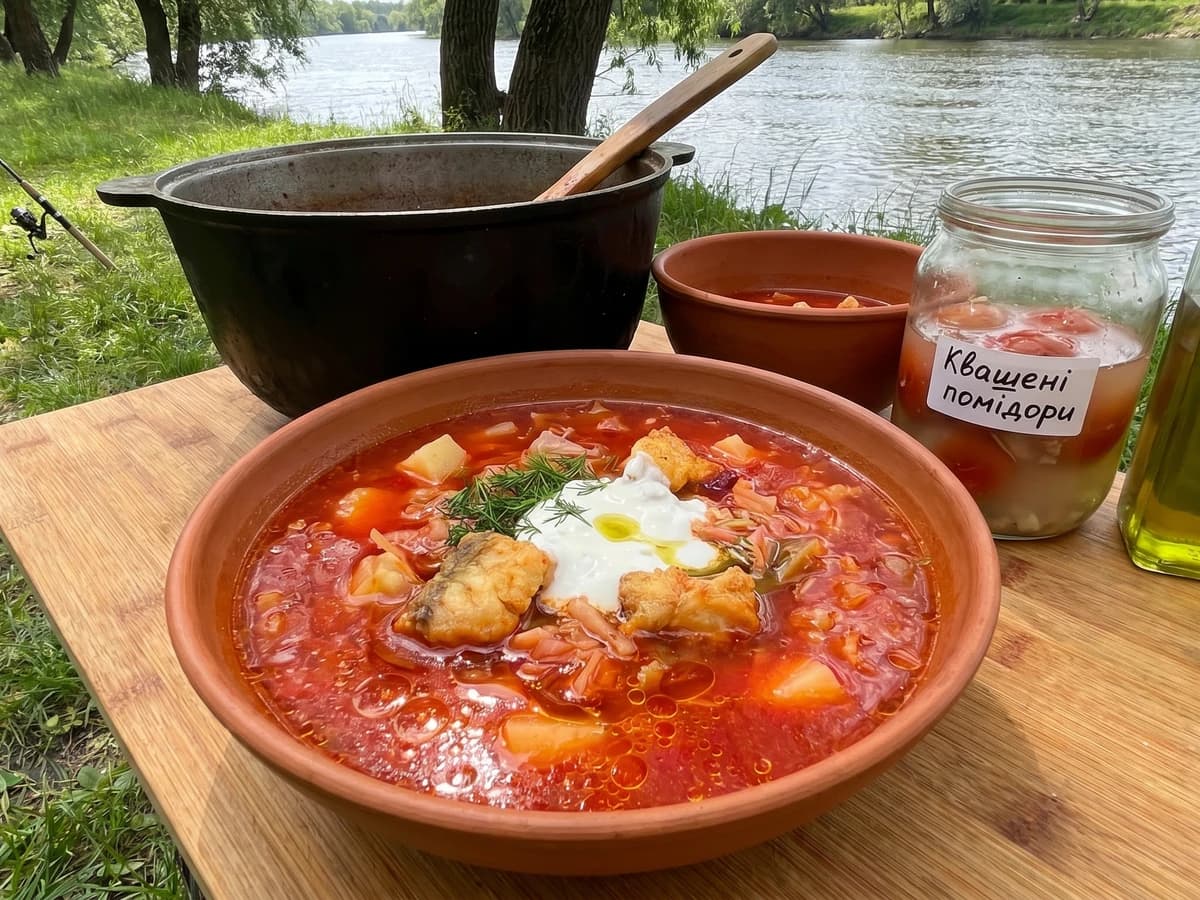
The catch goes into the pan before it ever meets the pot, so Danube fish stays whole in a tomato-red broth sour enough to wake the table.
A cooking platform built around craft, culture, and the stories behind what we eat.
Created by
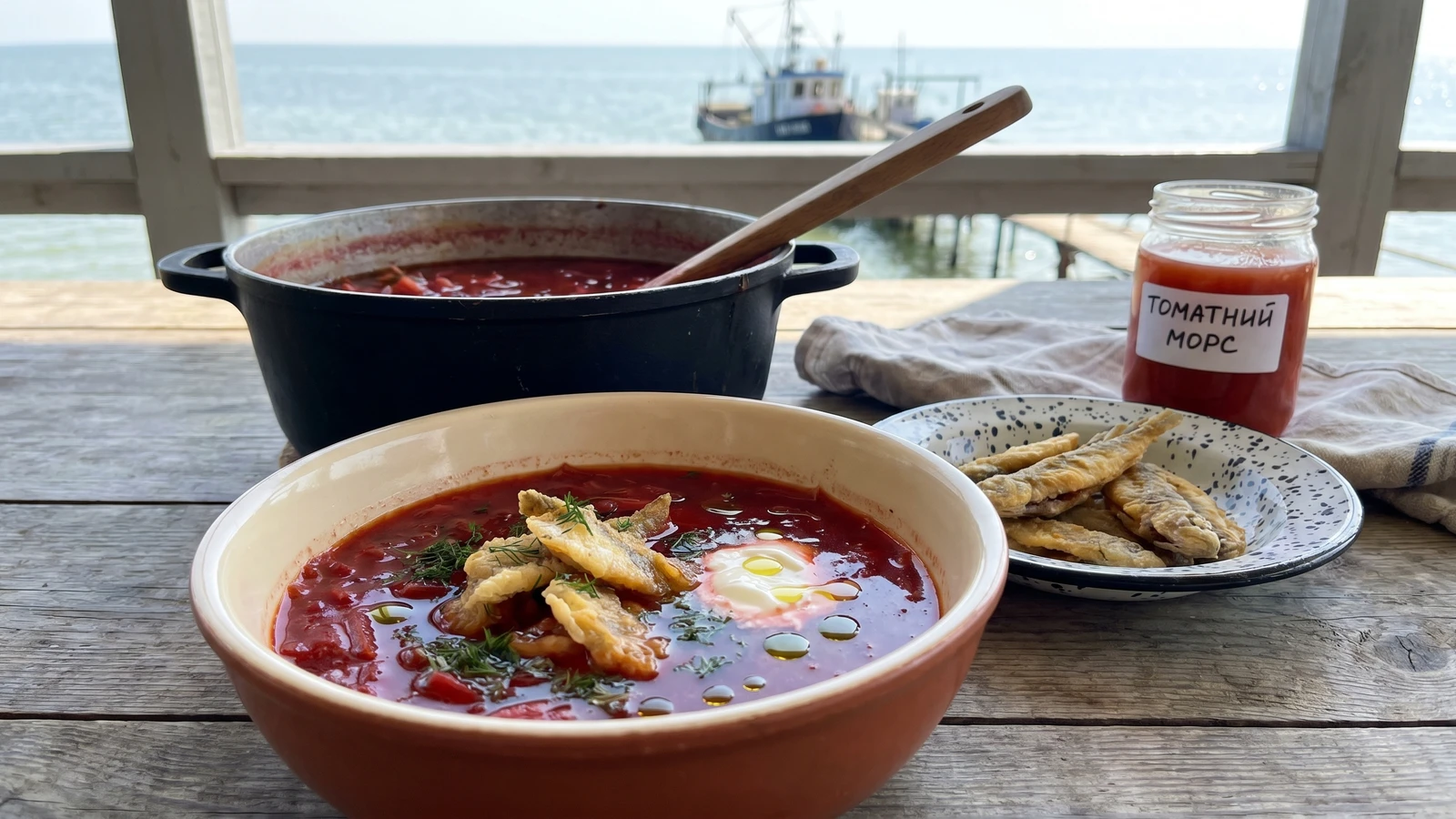
Small Azov gobies go into the pan first, crisp-edged and sweet, then slip into beet-crimson borshch so the sea seasons the whole pot quietly.
The fish is small enough to eat with your fingers, and still it changes the whole pot. Bychky, the gobies of the Azov coast, are fried first until their edges catch and their sweetness deepens, then folded into a beet broth with cabbage, potato, tomato souring, dill, and that green-gold sunflower oil that tastes like the south had a good summer.
This is Mariupol borshch, a shore dish, not a novelty. The gobies don't make it delicate. They make it local. Their bones and skin give the broth a clean seaside sweetness, the kind you only understand after you taste it against beet, tomato, and the slow zasmazhka, the onion and carrot flavour base that must go in near the end so its sweetness sits brightly on the soup instead of disappearing into it.
Aunt Nadia's letters never gave quantities for fish. Just "enough so people know where they are." Very helpful, yes, thank you. Use fresh small gobies if you can find them; use smelt, small perch, or cleaned sardines if you can't. A bit more modern, but still honest. Cook it anyway.
Make a big pot. There is no tradition of a small one, and by the second day the beet, tomato, and fish have stopped being separate things and started behaving like family.
Mariupol sits on the Sea of Azov, where small gobies, bychky, were once everyday fish: fried by the plateful, dried, sold at markets, and cooked into local soups by Greek, Ukrainian, and other coastal households. Mariupolskyi borshch belongs to the southern Ukrainian habit of letting place speak through the pot, with beets and cabbage from the garden meeting the small fish of the shore. Since Russia's destruction and occupation of Mariupol in 2022, the dish carries another kind of weight: a city's table remembered through the food people still cook.
Quantity
900g
cleaned, heads removed if large
Quantity
1 teaspoon, plus more to taste
Quantity
to taste
Quantity
3 tablespoons
for dusting the fish
Quantity
5 tablespoons
divided
Quantity
2.5 litres
Quantity
3 medium
scrubbed, tails left on
Quantity
3 medium
peeled and cut into bite-size pieces
Quantity
1/2 small
finely shredded
Quantity
1 large
finely diced
Quantity
1 large
coarsely grated
Quantity
2 tablespoons
Quantity
250ml
Quantity
2
Quantity
6
Quantity
3 cloves
smashed
Quantity
1 small bunch
chopped, plus more to serve
Quantity
to serve
Quantity
optional
only if your souring needs help
| Ingredient | Quantity |
|---|---|
| small fresh gobiescleaned, heads removed if large | 900g |
| sea salt | 1 teaspoon, plus more to taste |
| black pepper | to taste |
| plain flourfor dusting the fish | 3 tablespoons |
| unrefined sunflower oildivided | 5 tablespoons |
| cold water or light fish stock | 2.5 litres |
| beetsscrubbed, tails left on | 3 medium |
| potatoespeeled and cut into bite-size pieces | 3 medium |
| white cabbagefinely shredded | 1/2 small |
| onionfinely diced | 1 large |
| carrotcoarsely grated | 1 large |
| tomato paste | 2 tablespoons |
| fermented tomato mors, beet zakwas, or fermented tomato brine | 250ml |
| bay leaves | 2 |
| black peppercorns | 6 |
| garlicsmashed | 3 cloves |
| dillchopped, plus more to serve | 1 small bunch |
| smetana (optional) | to serve |
| lemon wedges (optional)only if your souring needs help | optional |
Pat the gobies dry, salt them lightly, and leave them while you prepare the vegetables. If the fish are very small, keep them whole after cleaning; if they are larger, cut them across into pieces. They should smell clean and seaside, not sharp. Dust them with flour just before frying, not earlier, or the coating turns gluey.
Put the whole beets, tails on, in a small pot, cover with water, and simmer until a knife slides in without a fight. Slip off the skins when cool enough to handle and grate them coarse. The tails keep the color inside the beet, where it belongs, and the smell should turn round and sweet, almost like warm bread.
Warm three tablespoons of sunflower oil in a wide pan and fry the floured gobies in batches until the edges are golden and the fish sounds dry and lively against the pan. Don't crowd them. You want color, not a sad boil in oil. Lift the fish onto a plate and keep every browned bit in the pan.
Bring the water or light fish stock to a gentle simmer with the bay leaves and peppercorns. Add the potatoes first, then the cabbage once the potatoes have begun to soften at the edges. Keep the surface moving quietly. A hard boil bullies fish and muddies the broth.
In the fish pan, add the remaining sunflower oil if the pan looks dry, then soften the onion over a low flame until translucent. Add the grated carrot and cook until the carrot collapses, the oil turns orange, and the smell changes from raw root to sweetness. Stir in the tomato paste and let it darken a shade.
Stir the grated beets into the soup, then add the fermented tomato mors, beet zakwas, or tomato brine. Taste before salting again because the ferment brings its own salt. The broth should be beet-sweet first, then tomato-sour, with room left for the fish.
Add the zasmazhka to the pot, then slide in the fried gobies and any juices from their plate. Simmer very gently until the fish has given itself to the broth but has not fallen to threads. You will hear it settle: the boil goes softer, the smell turns coastal, and the beet stops shouting.
Turn off the heat, add the smashed garlic and most of the dill, then cover the pot and let it rest. Taste again after the rest, not before, because fish, beet, and souring need a little quiet together. Serve with smetana, more dill, and lemon only if your ferment was shy. The spoon should stand up straight.
1 serving (about 540g)
Culinary guides, cultural storytelling, and the editorial depth that makes cooking meaningful.
Discover Culinary ExplorerChef Lesia
The catch goes into the pan before it ever meets the pot, so Danube fish stays whole in a tomato-red broth sour enough to wake the table.

Chef Lesia
The fish leaves the pot before the soup reaches the table: broth in the bowl, river fish on a platter, garlic salamur waiting to wake both.

Chef Lesia
Brick-red paprika blooms in bacon fat, beef darkens at the edges, and potatoes thicken the cauldron until it stands between soup and stew. This is comfort with a fire under it.
Chef Lesia
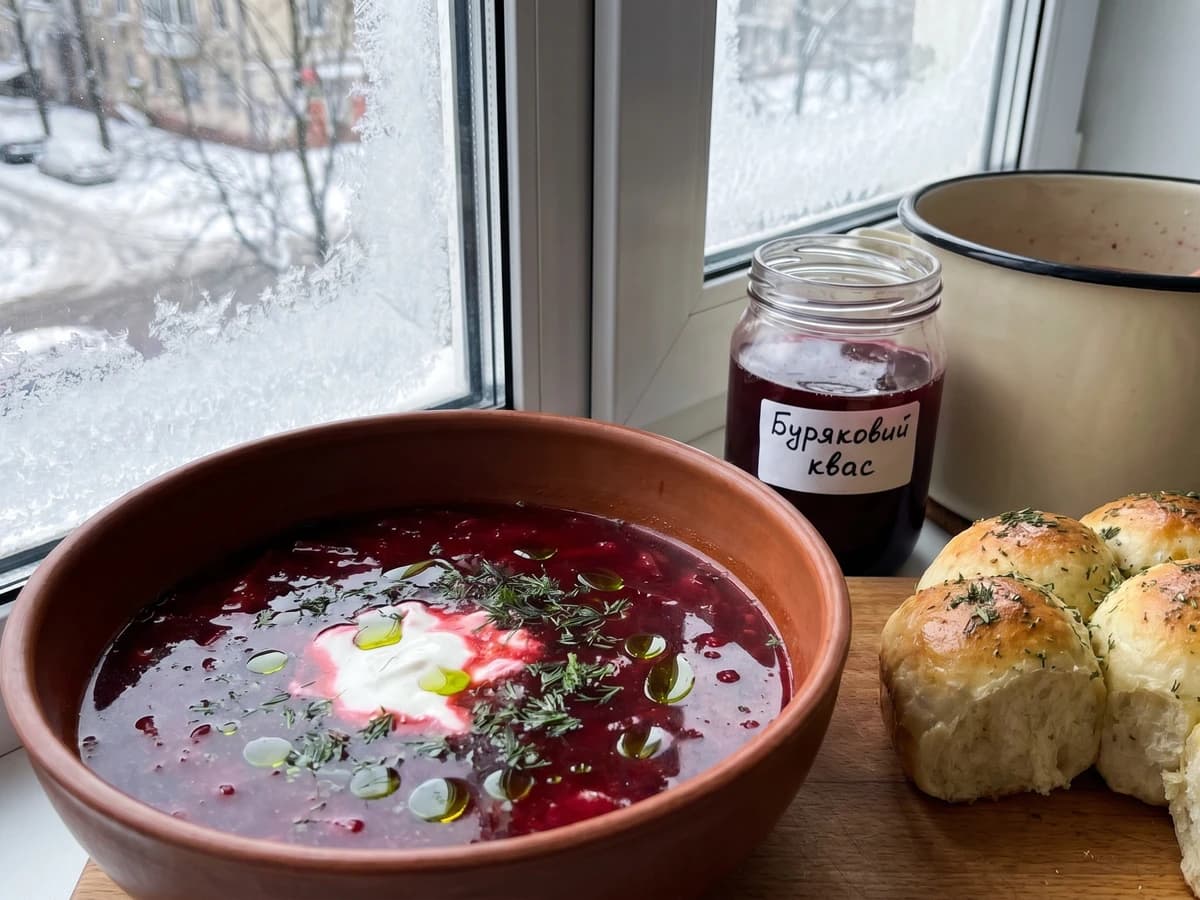
Beets hit slow-sweated zasmazhka and the broth goes dark ruby, sour from beet zakwas, sweet from bone and garden, thick enough for the spoon to stand up straight.