
Chef Freja
Danablu Mad med Rå Æggeblomme
Danish blue cheese layered on dark rye with a raw egg yolk nestled on top, red onion rings, and chives. The last piece at a Danish lunch, and the one that stays with you longest.
A cooking platform built around craft, culture, and the stories behind what we eat.
Created by Chef Freja
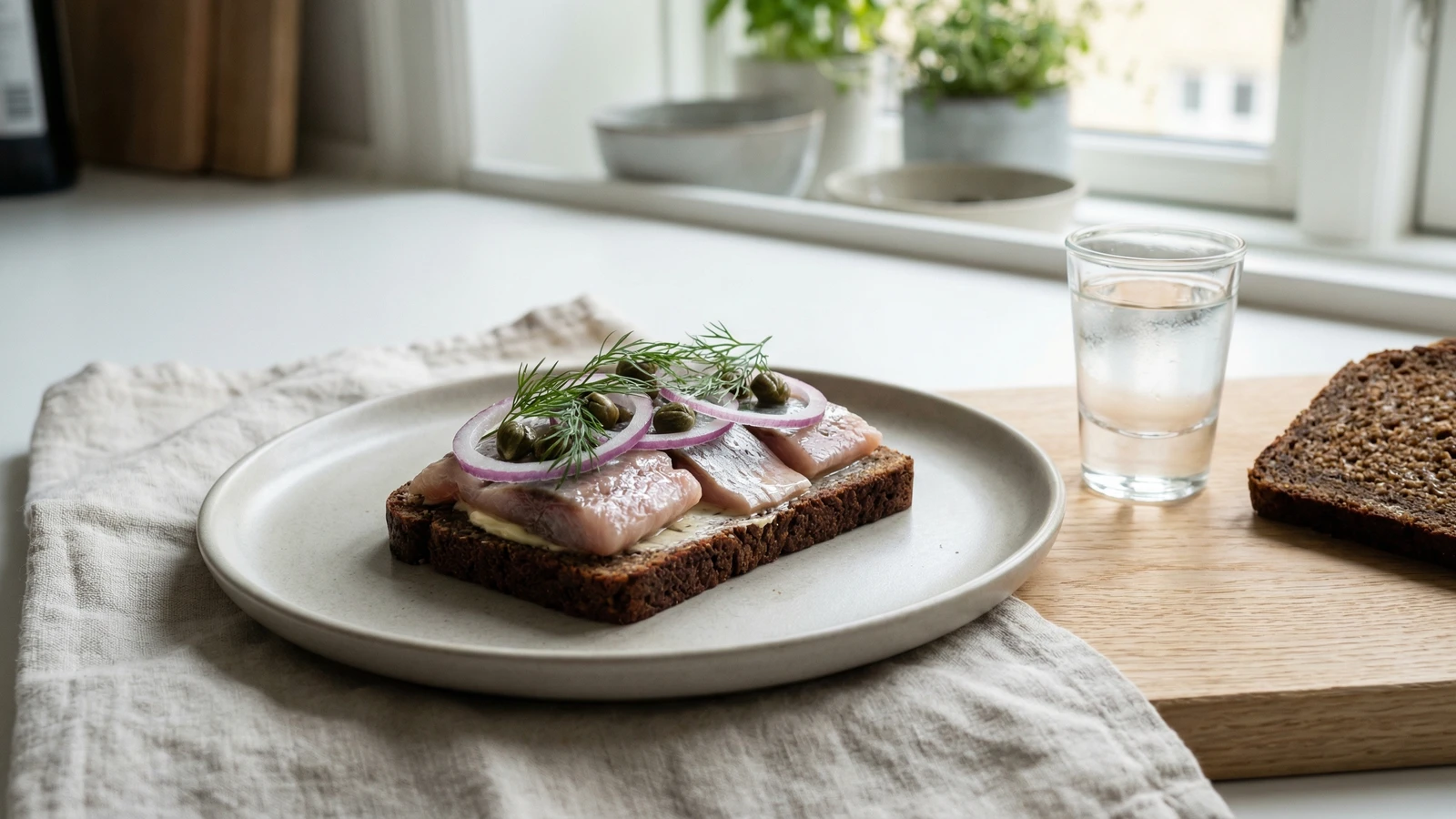
Sweet-sour pickled herring on buttered rugbrod with raw onion rings, capers, and feathery dill. The first piece at every proper Danish lunch, and the one nothing else can come before.
December in Denmark is the month of the long lunch. Offices close early, families gather around tables that stretch into the afternoon, and somewhere between noon and three o'clock the plates start appearing. The first one, always the first one, is herring. Not because anyone decided it should be. Because it has always been. The grammar of the Danish lunch starts with sild, and everything else arranges itself around that opening note.
Marinerede sild is sweet-sour pickled herring, the kind that cures in a brine of vinegar, sugar, onion, bay, and allspice for a day or two until the flavor settles into something whole. You lay it on dark rugbrod thickly spread with good salted butter, top it with fresh raw onion rings, a scatter of brined capers, and fronds of dill. That's the whole dish. No heat, no cooking, nothing rushed. Just patience and good ingredients and a bit of trust in what time does.
What matters most here is the brine balance and the waiting. Too much vinegar and the herring tastes hot and one-noted. Too much sugar and you've made dessert. The right balance, which I'll walk you through, gives you a fish that's bright and mellow at the same time. And then you have to leave it alone. This is the joy of waiting. On day one the flavor isn't there yet. On day two it arrives. The season decides most things in the Danish kitchen, but with sild the clock decides, and the clock is generous if you let it do its work.
Herring built medieval Denmark. The vast shoals that passed through the Oresund strait each autumn were so valuable they were called the silver of the sea, and the salt-cured herring trade funded the rise of Copenhagen and drew the Hanseatic League into Danish waters from the 1200s onward. The sweet-sour marinade that defines modern marinerede sild is a later development, emerging in the 1800s as refined sugar became affordable enough for everyday preserving, and it gave the old salt-cured fish a lighter, brighter second life on the Danish lunch table. The order of service at a proper frokost, sild first and always first, was codified in the Copenhagen lunch restaurants of the late nineteenth century by the smorrebrodsjomfruer, the formally trained women of the cold kitchen whose rules still govern the meal today.
Quantity
6
Quantity
for soaking
Quantity
300ml
5% acidity
Quantity
200ml
Quantity
150g
Quantity
2
Quantity
1 teaspoon
Quantity
1 teaspoon
Quantity
1 teaspoon
Quantity
1 small
sliced into thin rings
Quantity
4 thick slices
Quantity
softened, for the bread
Quantity
1 small
sliced into paper-thin rings
Quantity
2 tablespoons
drained
Quantity
small bunch
fronds picked
| Ingredient | Quantity |
|---|---|
| salt-cured herring fillets | 6 |
| cold water | for soaking |
| white wine vinegar5% acidity | 300ml |
| water | 200ml |
| caster sugar | 150g |
| bay leaves | 2 |
| whole allspice berries | 1 teaspoon |
| whole black peppercorns | 1 teaspoon |
| yellow mustard seeds | 1 teaspoon |
| red onion (for the brine)sliced into thin rings | 1 small |
| dark rugbrod | 4 thick slices |
| good salted butter | softened, for the bread |
| red onion (for serving)sliced into paper-thin rings | 1 small |
| capersdrained | 2 tablespoons |
| fresh dillfronds picked | small bunch |
Place the salt-cured herring fillets in a bowl and cover them with cold water. Leave them in the fridge for at least six hours, or overnight if you can, changing the water once halfway through. Salt-cured herring is packed hard with salt for preservation, and the soak is what pulls that saltiness back down to something you want to eat. If you skip the soak, the finished sild will be punishingly salty and the brine won't save it.
Combine the vinegar, water, sugar, bay leaves, allspice, peppercorns, and mustard seeds in a small saucepan. Bring it gently to a simmer, stirring until the sugar has completely dissolved. Take it off the heat the moment the sugar is gone. You're not cooking anything here. You're just making a liquid the flavors can travel through. Let the brine cool completely to room temperature. This matters. Warm brine cooks the edges of the herring and turns the flesh cloudy and soft.
Lift the soaked herring fillets out of the water and pat them completely dry with kitchen paper. Lay them on a board and cut each fillet on a slight diagonal into pieces about three centimetres wide. The diagonal cut gives you more surface area for the brine to work on, and the pieces sit more handsomely on the rugbrod later.
Take a clean glass jar, around 750ml, and layer the herring pieces with the sliced onion rings from the brine ingredients. Start with a layer of fish, then a scatter of onion, then more fish, and so on until the jar is full. Pour the cooled brine over the top, making sure everything is completely submerged. Any piece of herring poking out of the liquid will discolor and go soft. Seal the jar.
Put the jar in the fridge and leave it alone for at least twenty-four hours, though forty-eight is better. This is the joy of waiting. The herring absorbs the brine slowly, the onions soften and turn pink at the edges, and the spices bloom into the liquid. On day one the flavor is sharp and not yet settled. On day two it's become something whole. You'll know when it's right because the fish will smell sweet and clean, not vinegar-hot, when you open the jar.
When you're ready to build the smorrebrod, take the butter out and let it soften. Spread a generous layer across each slice of rugbrod, all the way to the edges. The butter is not a garnish here. It's a barrier. It keeps the brine from soaking into the rye and turning it soggy, and it's the foundation every other flavor lands on. Thin butter means soggy bread. Cooked with love means enough butter.
Lift three or four pieces of marinated herring out of the jar, letting the excess brine drip back into the liquid, and arrange them across the buttered rugbrod so the bread is almost covered but still visible at the edges. Top with a small heap of fresh, paper-thin raw onion rings. The fresh onion is the important contrast to the soft pickled onion in the jar. One is bright and sharp, the other is mellow and sweet, and both belong. Scatter the capers and finish with several fronds of fresh dill.
Serve the smorrebrod immediately, with cold aquavit in small glasses if the moment calls for it, and a beer alongside. This is how we greet each other at a Danish lunch. Herring is the opening note, and everything else comes after. Eat it with a knife and fork, never your hands. Tak for mad.
1 serving (about 130g)
Culinary guides, cultural storytelling, and the editorial depth that makes cooking meaningful.
Discover Culinary ExplorerChef Freja
Danish blue cheese layered on dark rye with a raw egg yolk nestled on top, red onion rings, and chives. The last piece at a Danish lunch, and the one that stays with you longest.

Chef Freja
Thick-sliced Danbo on properly buttered rugbrod with sweet pepper rings and a crown of garden cress. The cheese smorrebrod that lives in every Danish lunchbox, from the first day of school to the last day at the office.

Chef Freja
Copenhagen's most storied smorrebrod: leverpostej, cold salt beef, trembling aspic, onion rings, and fresh cress on dark rugbrod. Invented at Oskar Davidsen's in the 1880s for a hungry veterinarian and still one of the great pieces of the Danish lunch table.

Chef Freja
Pungent Esrom from North Zealand on dark rye with paper-thin radish and fresh chives. The cheese course that closes a proper Danish smorrebrod spread, one of the quietest, most satisfying bites in the whole tradition.