
Chef Lupita
Aceite de Chiltepin Bajacaliforniano
Baja California's wild chiltepin steeped in olive oil with garlic, orejon, and lime peel, until the oil turns ruby-amber and carries the slow, sneaky burn of the desert coast.
A cooking platform built around craft, culture, and the stories behind what we eat.
Created by
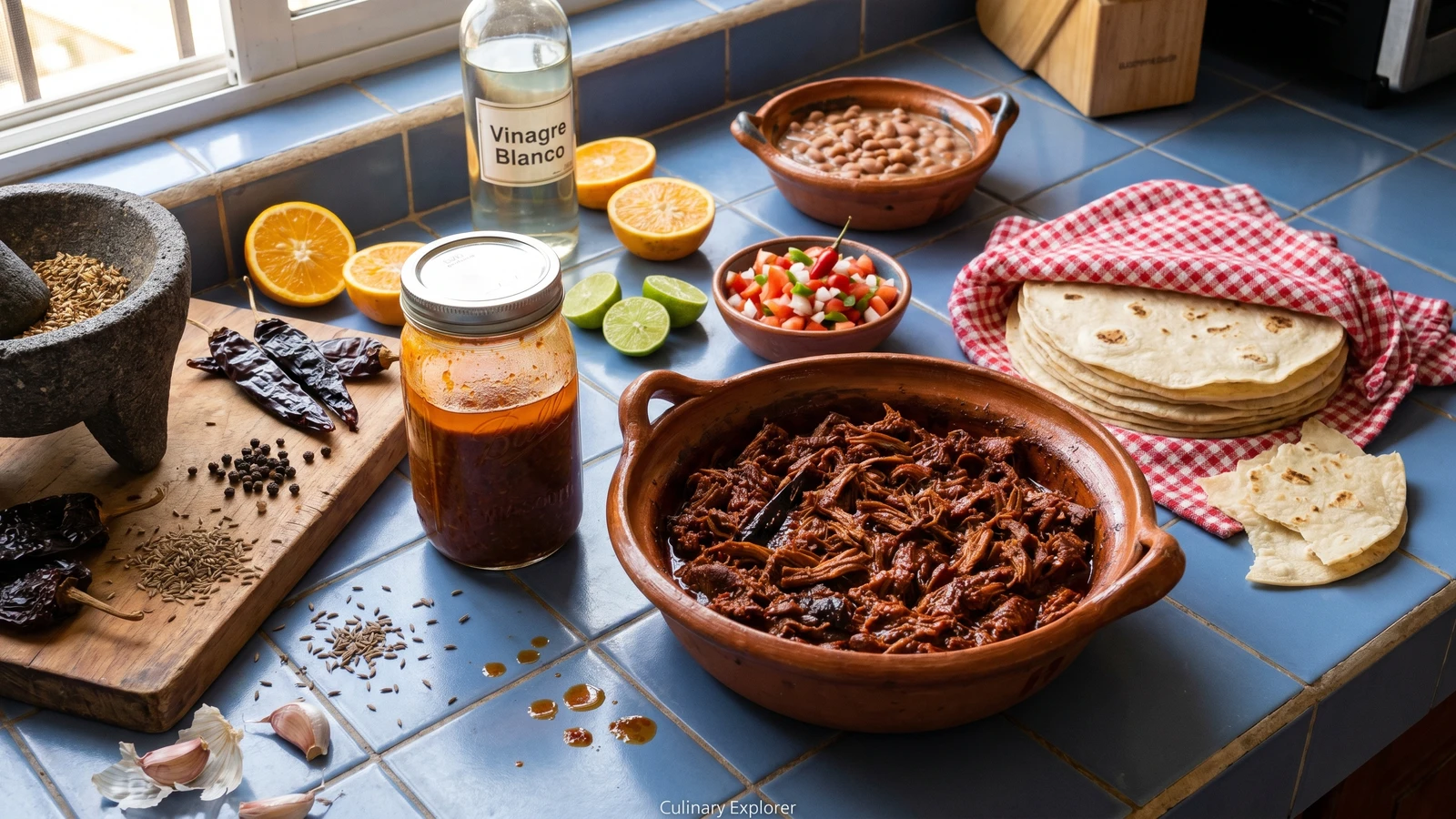
Sinaloa's chilorio marinade, pork shoulder steeped in toasted chile pasilla, ajo, comino, and vinagre, then rendered low and slow in its own lard until the meat shreds and the fat carries the chile.
Chilorio is from Sinaloa. Specifically from the inland ranches of the Mocorito and Sinaloa de Leyva region, where this dish was invented as a way to keep cooked pork edible for weeks without refrigeration. The marinade is the engine. The vinegar acidifies, the lard seals, the chile pasilla and the comino flavor every strand of meat. A jar of chilorio under its own fat has crossed many summers in the kitchens of the noroeste without spoiling. This is not a recipe. This is a preservation system that happens to taste extraordinary.
The defining chile is chile pasilla. Not chile guajillo, not chile ancho on its own, not the chile negro from Oaxaca. Pasilla, the dried chilaca, long and wrinkled and nearly black, gives chilorio its tobacco-dark color and a flavor that sits somewhere between dried fruit and smoke. The anchos in this version are a small concession, two of them, to round out the body. Some sinaloense cooks use only pasilla. Both ways are correct. Cada estado, su propia cocina, and the cooks of Sinaloa have argued about the ratio for generations.
Cumin is the other northern signature. Chilorio carries comino the way a Yucatecan recado carries achiote, with full conviction. You toast it whole, you blend it whole, you taste it in every bite. If you grew up south of the bajio you may find it assertive. That is the point. This dish belongs to the cattle country, to the cooks who feed ranch hands and pack tortillas into morrales for the road. Saber cocinar es saber vivir.
My mother did not make chilorio. She was from Jalisco and her pork was always carnitas. I learned this recipe from a woman named Senora Reyna in a small kitchen outside Culiacan in 2011, watching her shred pork with two forks while her daughter rolled flour tortillas the size of dinner plates. She told me the marinade is the only part that matters. The pork is just the carrier. After fifteen years of testing her formula against versions from Mocorito, Guamuchil, and El Fuerte, I believe her.
Chilorio originated in the colonial-era ranches of northern Sinaloa, most often credited to the town of Mocorito, as a preservation method that allowed pork to be stored for weeks under a seal of its own rendered lard, a technique that paralleled European confit traditions but used the chiles and spices of the Mexican noroeste. The dish is part of the broader culinary identity of the noroeste that emphasizes cumin, dried chiles other than the central-Mexican guajillo-ancho axis, and wheat flour tortillas rather than corn, a result of the region's cattle-ranching economy and the Spanish settlement patterns of the 17th and 18th centuries. Mocorito was officially designated a Pueblo Magico by Mexico's tourism ministry in 2015, and the town has since claimed chilorio as its signature dish, hosting an annual festival that draws cooks from across Sinaloa to defend their family ratios of pasilla to ancho and the exact moment to add the vinegar.
Quantity
3 pounds
cut into 1-inch cubes
Quantity
12
stemmed and seeded
Quantity
2
stemmed and seeded
Quantity
8
peeled
Quantity
1 tablespoon
Quantity
1 tablespoon
oregano sinaloense if you can find it
Quantity
1 teaspoon
Quantity
2
Quantity
1/3 cup
Quantity
1/4 cup
Quantity
2 teaspoons
Quantity
1 cup
Quantity
1/2 cup
Quantity
1
| Ingredient | Quantity |
|---|---|
| boneless pork shouldercut into 1-inch cubes | 3 pounds |
| dried chile pasillastemmed and seeded | 12 |
| dried chile anchostemmed and seeded | 2 |
| garlic clovespeeled | 8 |
| whole cumin seeds (comino entero) | 1 tablespoon |
| dried Mexican oreganooregano sinaloense if you can find it | 1 tablespoon |
| whole black peppercorns | 1 teaspoon |
| whole cloves | 2 |
| white vinegar (vinagre blanco) | 1/3 cup |
| fresh orange juice | 1/4 cup |
| kosher salt | 2 teaspoons |
| chile soaking liquid (water) | 1 cup |
| pork lard (manteca de cerdo) | 1/2 cup |
| bay leaf | 1 |
Heat a dry comal or heavy skillet over medium. Open each pasilla flat and press it against the hot surface for about 10 seconds per side. The skin should release its oils and turn fragrant, never blacken. Pasilla is thin and turns bitter the second you look away. Do the anchos the same way, a few seconds longer per side because the skin is thicker. The kitchen should smell like raisins and tobacco. That smell is the recipe starting.
Place the toasted chiles in a heatproof bowl. Cover with hot tap water, not boiling. Boiling water cooks the skin and turns the marinade bitter. Let them soften for 20 minutes, pressing down with a plate to keep them submerged. Reserve one cup of the soaking liquid before you drain them.
Wipe the comal clean and lower the heat. Add the cumin seeds, peppercorns, and cloves. Toast them dry for about 60 seconds, swirling the pan, until the cumin smells like the north of Mexico. Cumin is not a casual spice in this recipe. Sinaloa, Chihuahua, Sonora, this is comino country, and the chilorio carries it the way a Yucatecan recado carries achiote. Tip the spices straight into the blender.
Drain the softened chiles. Add them to the blender with the toasted spices, garlic, oregano, vinegar, orange juice, salt, and the cup of reserved chile soaking liquid. Blend on high until completely smooth, two to three full minutes. The marinade should look like dark mahogany paint and coat the back of a spoon. If your blender struggles, add another splash of soaking liquid. Strain it through a medium-mesh sieve into a bowl, pressing on the solids. Discard the skins. La cocina no es decoracion, es trabajo.
Place the cubed pork shoulder in a glass or ceramic bowl. Pour the marinade over it and turn the pieces until every cube is coated in the dark red paste. Cover and refrigerate for at least 4 hours, ideally overnight. The vinegar and the chile work their way into the meat slowly. Twelve hours is better than four. No me vengas con atajos. This is the step that makes the chilorio taste like chilorio and not like seasoned pork.
Scrape the pork and all of the marinade into a heavy 5-quart Dutch oven or wide cazuela. Add the lard and the bay leaf. Bring to a low simmer over medium heat, then lower until you see lazy bubbles around the edges. Cover partially and cook for 2 to 2.5 hours, stirring every 20 minutes so the chile paste does not stick to the bottom. The pork will release its own liquid, then absorb it back. When the meat falls apart under a wooden spoon, raise the heat to medium and let the remaining liquid cook off. The chilorio is finished when the lard separates and the meat is sizzling in its own fat, dark and shredded, with the marinade clinging to every strand.
Chilorio is meant to be made ahead. Cool it completely and pack it into glass jars with the lard rising over the meat. Refrigerated under its own fat, it keeps for two weeks. To serve, scoop out a portion, warm it on a comal, and pile it into hand-pressed flour tortillas from the north, with refried beans and a fresh salsa of tomate, cebolla, and chiltepin. This is how the ranches and the cattle towns of Sinaloa have eaten it for a hundred years. Recetas probadas y garantizadas.
1 serving (about 145g)
Culinary guides, cultural storytelling, and the editorial depth that makes cooking meaningful.
Discover Culinary ExplorerChef Lupita
Baja California's wild chiltepin steeped in olive oil with garlic, orejon, and lime peel, until the oil turns ruby-amber and carries the slow, sneaky burn of the desert coast.

Chef Lupita
Puebla's Lenten convent adobo, a brick-red vinegar chile paste of ancho, guajillo, garlic, oregano, and comino made to dress fish for the meatless calendar.
Chef Lupita
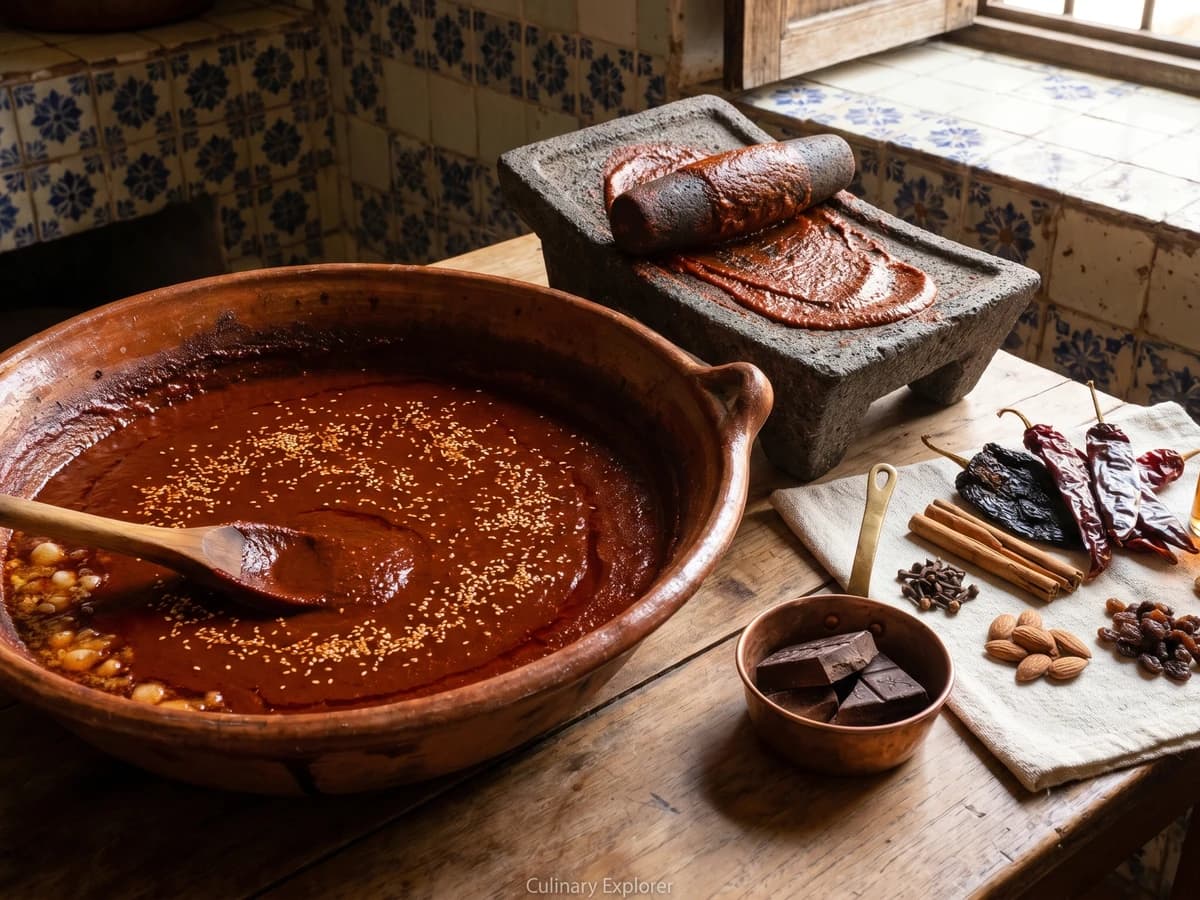
Zacatecas' wedding-table adobo, built from toasted guajillo and ancho, piloncillo, sour orange, chocolate, canela, clavo, almonds, sesame, and lard.

Chef Lupita
Puebla's convent kitchens built this adobo with ancho, guajillo, jerez, almonds, raisins, clove, and lard, a baroque marinade that stains pork loin and finishes as the sauce.