
Chef Lupita
Aceite de Chiltepin Bajacaliforniano
Baja California's wild chiltepin steeped in olive oil with garlic, orejon, and lime peel, until the oil turns ruby-amber and carries the slow, sneaky burn of the desert coast.
A cooking platform built around craft, culture, and the stories behind what we eat.
Created by
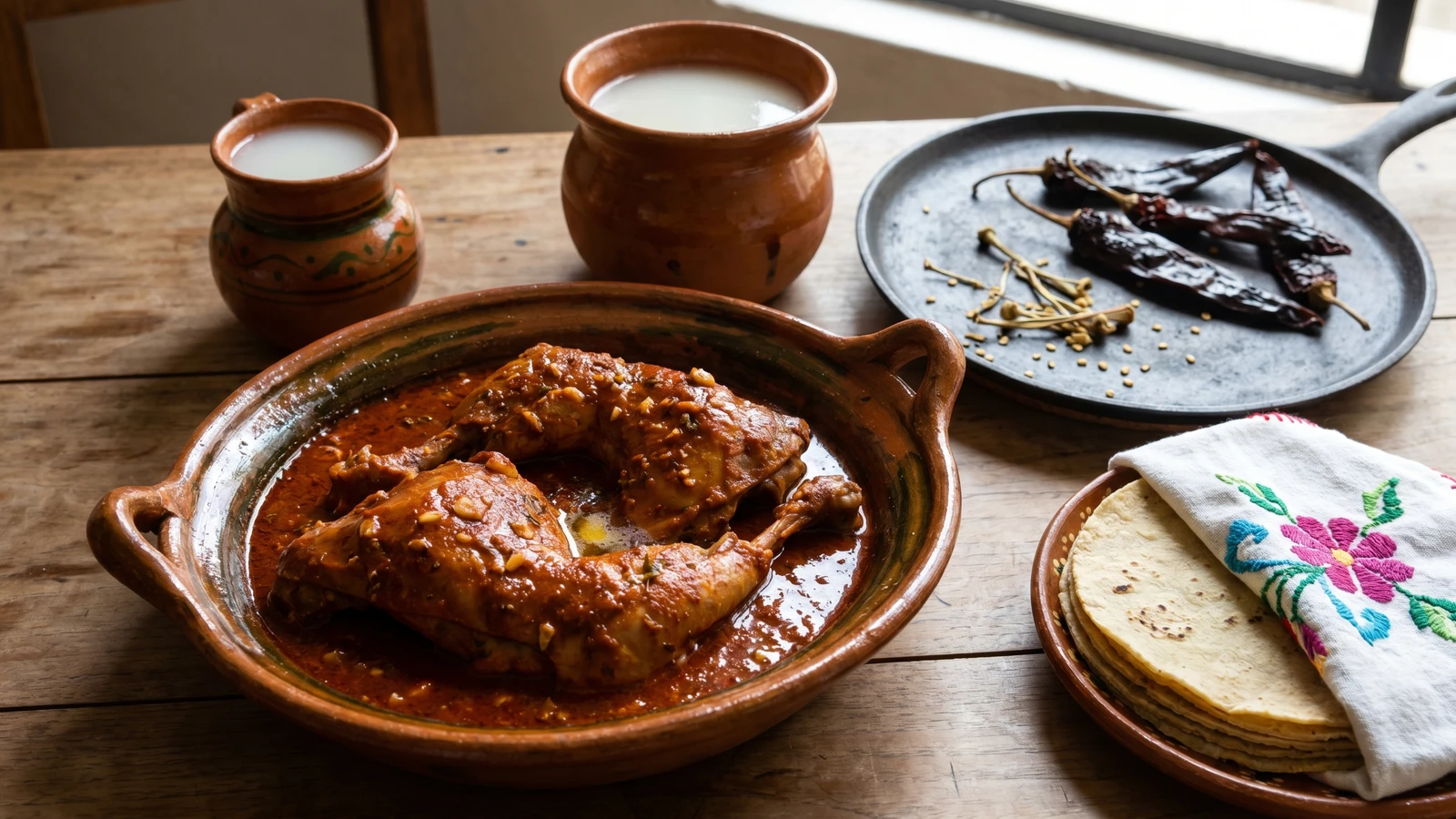
Querétaro's hacienda-country marinade of fresh pulque, chile pasilla, ajo, tomillo, and oregano, made to rest with lean rabbit overnight before the meat meets manteca and a clay cazuela.
Querétaro, from the Bajío around San Juan del Río and Tequisquiapan toward the semidesert near Ezequiel Montes, is where this pulque marinade makes sense. The land gives you maguey, lean rabbit, dry herbs, and kitchens that know how to build flavor without turning every dish into a chile contest. This is not a fiery adobo. The chile pasilla gives raisin-dark depth, not a dare.
Pulque blanco is the ingredient that defines the marinade. Fresh, unflavored, still alive. Not curado with fruit, not beer, not vinegar. The agave fermentation softens rabbit in a slower, rounder way than vinegar can. Vinegar attacks. Pulque persuades. That is why the meat rests twelve hours, not thirty minutes.
I learned versions of this from señoras between Amealco and Tequisquiapan, women who knew how to use what the market and the milpa gave them. They toasted the pasilla on a comal, roasted the ajo until the skin spotted, and tucked tomillo into the clay dish before covering the rabbit for the night. The blender is acceptable. Skipping the rest is not.
After the marinade does its work, the rabbit meets manteca de cerdo in a cazuela. La manteca es el sabor, especially with meat this lean. Serve it from barro vidriado, with corn tortillas and the sauce clinging to the bone. Saber cocinar es saber vivir.
Pulque is made by fermenting aguamiel from mature maguey, and its use in central Mexico predates the Spanish conquest; early colonial sources such as Bernardino de Sahagún described regulated pulque drinking among Nahua communities. Querétaro sits between the Bajío, the central plateau, and the Sierra Gorda, regions where maguey, rabbit, and dry-land herbs fit the semiarid landscape. The thyme, bay, clove, and black pepper in many rabbit marinades entered household cooking through colonial gardens and spice trade, while the pulque and chile pasilla kept the dish rooted in central Mexico.
Quantity
1, 2 1/2 to 3 pounds
cut into 8 pieces and patted dry
Quantity
2 cups
unflavored and not curado
Quantity
4
stemmed and seeded
Quantity
1
stemmed and seeded
Quantity
6
peeled
Quantity
1/2 medium
roughly chopped
Quantity
1 tablespoon leaves, or 6 small sprigs
Quantity
1 teaspoon
crumbled
Quantity
2
Quantity
1 teaspoon
Quantity
2
Quantity
2 teaspoons
Quantity
2 tablespoons
for browning the marinated rabbit
Quantity
1/2 cup
only if the cazuela looks dry
Quantity
for serving
| Ingredient | Quantity |
|---|---|
| whole rabbitcut into 8 pieces and patted dry | 1, 2 1/2 to 3 pounds |
| fresh pulque blancounflavored and not curado | 2 cups |
| dried chile pasilla mexicanostemmed and seeded | 4 |
| dried chile anchostemmed and seeded | 1 |
| garlic clovespeeled | 6 |
| white onionroughly chopped | 1/2 medium |
| fresh thyme leaves or tomillo sprigs | 1 tablespoon leaves, or 6 small sprigs |
| dried Mexican oreganocrumbled | 1 teaspoon |
| bay leaves | 2 |
| black peppercorns | 1 teaspoon |
| whole cloves (clavo de olor) | 2 |
| fine sea salt | 2 teaspoons |
| manteca de cerdofor browning the marinated rabbit | 2 tablespoons |
| water or light chicken stock (optional)only if the cazuela looks dry | 1/2 cup |
| warm hand-pressed corn tortillas (optional) | for serving |
Heat a dry comal over medium. Toast the chiles pasilla one at a time, about 20 seconds per side, just until the skin darkens slightly and smells raisiny. Toast the chile ancho the same way. Do not blacken them. Pasilla gives this marinade its dark spine, but burned pasilla turns bitter and takes the whole rabbit with it.
Put the toasted chiles in a bowl and cover them with hot water, not boiling water. Let them soften for 15 minutes, then drain and discard the soaking water. While they soak, set the garlic cloves and onion on the comal until they are spotted brown and smell sweet, 6 to 8 minutes. Toast the peppercorns and whole cloves for 30 seconds, just until fragrant.
In a blender, combine the drained chiles, roasted garlic, roasted onion, toasted peppercorns, toasted cloves, pulque blanco, thyme, oregano, and salt. Blend until completely smooth. The marinade should be brick-red, loose enough to pour, and sour in the clean fermented way pulque is sour. Vinegar shouts. Pulque works slowly.
Place the rabbit pieces in a glazed clay cazuela, glass dish, or stainless bowl. Pour the pulque marinade over them and turn every piece with your hands so the chile reaches the joints and the thin belly flaps. Tuck in the bay leaves. Cover tightly and refrigerate for 12 hours.
Turn the rabbit once halfway through the marinating time. Twelve hours is the point. Eight hours will work if your pulque is sharp and the rabbit is small. Do not leave it for two days. Rabbit is lean and delicate, and too much acid makes the surface cottony. No me vengas con atajos, but do not punish the meat either.
Take the rabbit out of the refrigerator 30 minutes before cooking. Lift the pieces from the marinade and let the excess drip back into the dish. Pat the rabbit mostly dry, but do not scrub off the chile. Save every drop of marinade. It touched raw rabbit, so it must boil before it becomes sauce. That is not negotiable.
Melt the manteca de cerdo in a wide cazuela or heavy Dutch oven over medium heat. Brown the rabbit in batches until the edges take color, 3 to 4 minutes per side. Rabbit has little fat of its own. La manteca es el sabor. If you skip this browning, the finished dish tastes boiled, and nobody at the table will thank you.
Return all the browned rabbit to the cazuela. Pour in the reserved marinade and bring it to a hard boil for 3 full minutes, stirring so it does not catch on the bottom. Lower the heat, cover, and cook gently for 35 to 45 minutes, until the rabbit is tender but still holds to the bone. Add the water or light stock only if the sauce thickens before the meat is done.
Let the rabbit rest off the heat for 10 minutes. The sauce should cling to the meat, not sit like soup. Taste for salt at the end. Serve the rabbit in the same cazuela with warm corn tortillas. This dish does not need lettuce, sour cream, or a pile of cheese. It needs good pulque, good chiles, and patience. Así se hace y punto.
1 serving (about 330g)
Culinary guides, cultural storytelling, and the editorial depth that makes cooking meaningful.
Discover Culinary ExplorerChef Lupita
Baja California's wild chiltepin steeped in olive oil with garlic, orejon, and lime peel, until the oil turns ruby-amber and carries the slow, sneaky burn of the desert coast.

Chef Lupita
Puebla's Lenten convent adobo, a brick-red vinegar chile paste of ancho, guajillo, garlic, oregano, and comino made to dress fish for the meatless calendar.
Chef Lupita
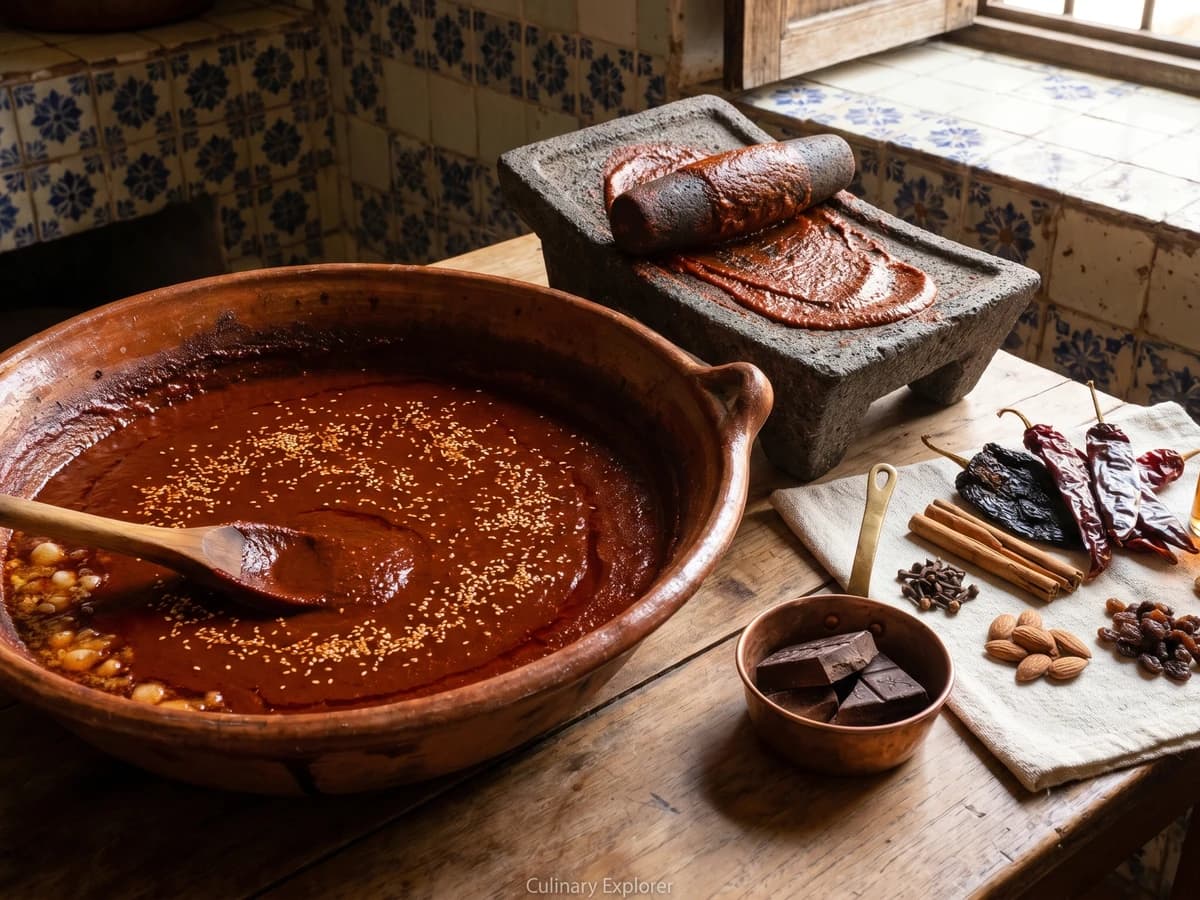
Zacatecas' wedding-table adobo, built from toasted guajillo and ancho, piloncillo, sour orange, chocolate, canela, clavo, almonds, sesame, and lard.

Chef Lupita
Puebla's convent kitchens built this adobo with ancho, guajillo, jerez, almonds, raisins, clove, and lard, a baroque marinade that stains pork loin and finishes as the sauce.