
Chef Elsa
Apfelkren
Freshly grated horseradish folded with tart apple and lemon, the cold, sharp sauce that belongs beside every plate of Tafelspitz in Vienna and has done for as long as anyone can remember.
A cooking platform built around craft, culture, and the stories behind what we eat.
Created by
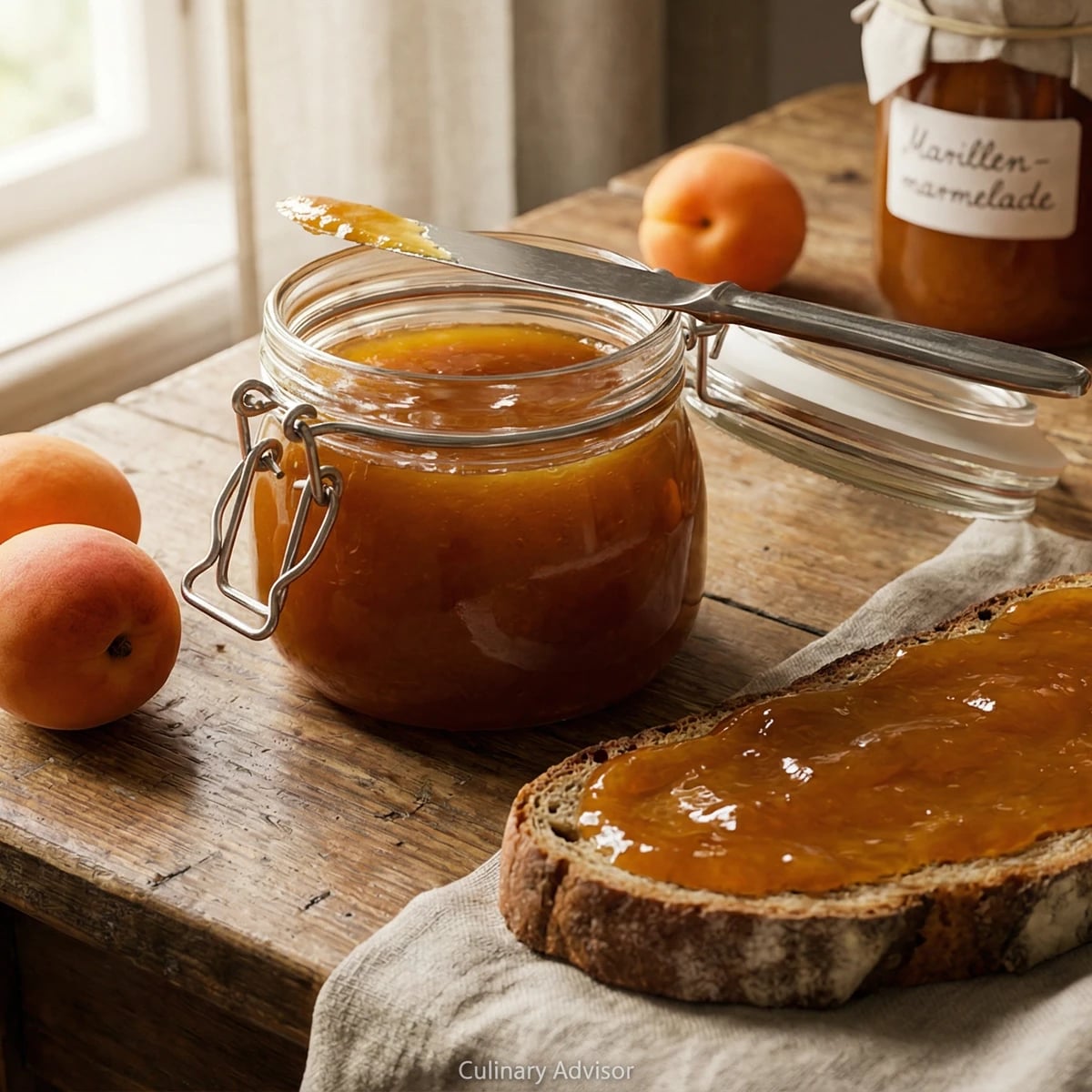
Wachau apricots cooked slowly with vanilla and lemon into a fragrant, jewel-colored preserve that belongs in every Austrian kitchen and on every Sachertorte worth its name.
Every July, the Wachau valley turns orange. The apricot trees along the Danube come into season all at once, and for about three weeks the farmers' markets and roadside stands are heaped with Marillen so ripe and fragrant you can smell them from across the street. That's when you make this jam. Not before, not after. You wait for the season and then you work fast.
In my grandmother Eva's kitchen in Kent, Gretel kept a shelf of preserves she'd made from whatever good fruit she could find in England. The Marillenmarmelade was always the most prized jar. She'd use it to fill Krapfen at Fasching, spread it on fresh Semmel for breakfast, and warm a few spoonfuls to brush over Sachertorte before pouring the chocolate glaze. It was never just jam. It was an ingredient, a filling, a glaze, and a gift all in one. When Gretel handed you a jar of her Marillenmarmelade, you understood you'd been given something she considered precious.
The recipe is plain. Apricots, sugar, lemon, vanilla. That's all. The skill is knowing when the fruit is right and knowing when to stop cooking. You want a jam that tastes like apricots at their peak, not like cooked sugar with a memory of fruit somewhere behind it. The color should glow amber, not muddy brown. The texture should be soft enough to spread and firm enough to hold its shape inside a Krapfen without running out the sides. Get those things right and you'll have something no shop jar comes close to matching.
Marillen have been cultivated in the Wachau valley of Lower Austria since at least the 17th century, though the tradition likely goes back further. The region's unique microclimate, with warm days and cool Danube nights, produces apricots with an intensity of flavor that other growing regions can't replicate. Wachauer Marille received protected geographical indication status from the EU in 2003, recognizing what Austrian cooks had known for centuries: these apricots are not interchangeable with any other. The annual Marillenkirtag (apricot festival) in Krems and Spitz draws thousands each July, and the local economy of jams, schnapps, and Knodel depends almost entirely on those few weeks of harvest.
Quantity
2 kg
halved and stoned
Quantity
1 kg
Quantity
2
juiced
Quantity
1
split lengthwise
Quantity
2 tablespoons
| Ingredient | Quantity |
|---|---|
| ripe Wachau apricots (Marillen)halved and stoned | 2 kg |
| granulated sugar | 1 kg |
| lemonsjuiced | 2 |
| vanilla podsplit lengthwise | 1 |
| Marillenschnaps (apricot schnapps) (optional) | 2 tablespoons |
Halve the apricots along the seam and twist them apart. Remove the stones. Don't peel them. The skins hold pectin and color, and they'll break down completely during cooking. Cut any larger apricots into quarters so everything cooks evenly. If you find a few that are bruised or overripe, use them. They have more sugar and more fragrance than the perfect-looking ones. Just cut away anything actually spoiled.
Place the apricot halves in your widest, heaviest pot. Pour the sugar over them and squeeze the lemon juice on top. Tuck the split vanilla pod into the fruit. Stir gently, cover the pot, and leave it on the counter for at least two hours, or overnight in the fridge. The sugar draws juice from the fruit, creating a pool of fragrant syrup at the bottom. This matters. If you skip the maceration and cook the fruit dry, you'll scorch the bottom before the sugar dissolves.
While the fruit macerates, wash your jars and lids in hot soapy water and rinse well. Place them upside down on a baking tray and put them into a cold oven. Heat the oven to 120°C and leave the jars in for twenty minutes. Keep them warm until you're ready to fill. Cold glass and hot jam don't get along.
Set the pot over medium heat and stir until the sugar dissolves completely. Then bring it to a rolling boil. This is where you need to pay attention. A rolling boil means the surface is churning and won't calm down when you stir. Skim the pale foam that rises to the top with a spoon. The foam won't hurt you, but it clouds the finished jam and you want that clear, jewel-like color. Boil for twenty to thirty minutes, stirring often so the bottom doesn't catch. The jam will darken from pale orange to a deep amber as the sugars caramelize. It thickens faster in the last five minutes, so stay close.
Put a small plate in the freezer before you start cooking. When you think the jam is ready, drop a teaspoon onto the cold plate, wait ten seconds, then push it with your finger. If the surface wrinkles and the jam holds its shape instead of running, it's set. If it runs, boil for three more minutes and test again. This wrinkle test has never let me down. Don't rely on timers alone because every batch of fruit has different water content and different pectin.
Remove the vanilla pod and the apricot kernels if you used them. Stir in the Marillenschnaps if using. It adds a warm, boozy note that rounds out the sweetness beautifully. If you want a smooth jam, use an immersion blender to puree it now. If you want rustic texture with soft pieces of fruit, leave it as it is. I like it somewhere in between: a few quick pulses so it's mostly smooth with some chunks remaining. Ladle the hot jam into the warm jars, filling to within half a centimeter of the rim. Seal immediately and turn the jars upside down for five minutes. This creates a vacuum seal as the jam cools.
Turn the jars right side up and let them cool completely on the counter. You'll hear the lids pop as they seal, one by one. That sound is deeply satisfying. Once cool, label them with the date. Sealed jars keep in a cool, dark place for up to a year. Once opened, refrigerate and use within three weeks. But if you're using this for Sachertorte or Krapfen, a jar won't last the week.
1 serving (about 20g)
Culinary guides, cultural storytelling, and the editorial depth that makes cooking meaningful.
Discover Culinary Explorer
Chef Elsa
Freshly grated horseradish folded with tart apple and lemon, the cold, sharp sauce that belongs beside every plate of Tafelspitz in Vienna and has done for as long as anyone can remember.

Chef Elsa
The clear, caraway-scented pan jus you pour over Schweinsbraten and Knödel, built from nothing but good pork drippings, honest stock, and the patience to let a roasting pan tell you everything it knows.

Chef Elsa
A silky butter roux sauce finished with beef broth, cream, and handfuls of fresh dill, the way every Viennese grandmother serves it alongside Tafelspitz on Sunday.

Chef Elsa
Crisp cauliflower, sweet carrots, and bright peppers in a spiced sweet-sour brine with mustard seeds, the jar you open first when the Brettljause comes out and the last one you put away.