
Chef Takumi
Agar Jelly with Anko and Fruit (あんみつ, Anmitsu)
Anmitsu looks like a tray of small tasks, but the work is calm: dissolve the kanten fully, chill the pieces clean, then let fruit, anko, and kuromitsu do the speaking.
A cooking platform built around craft, culture, and the stories behind what we eat.
Created by
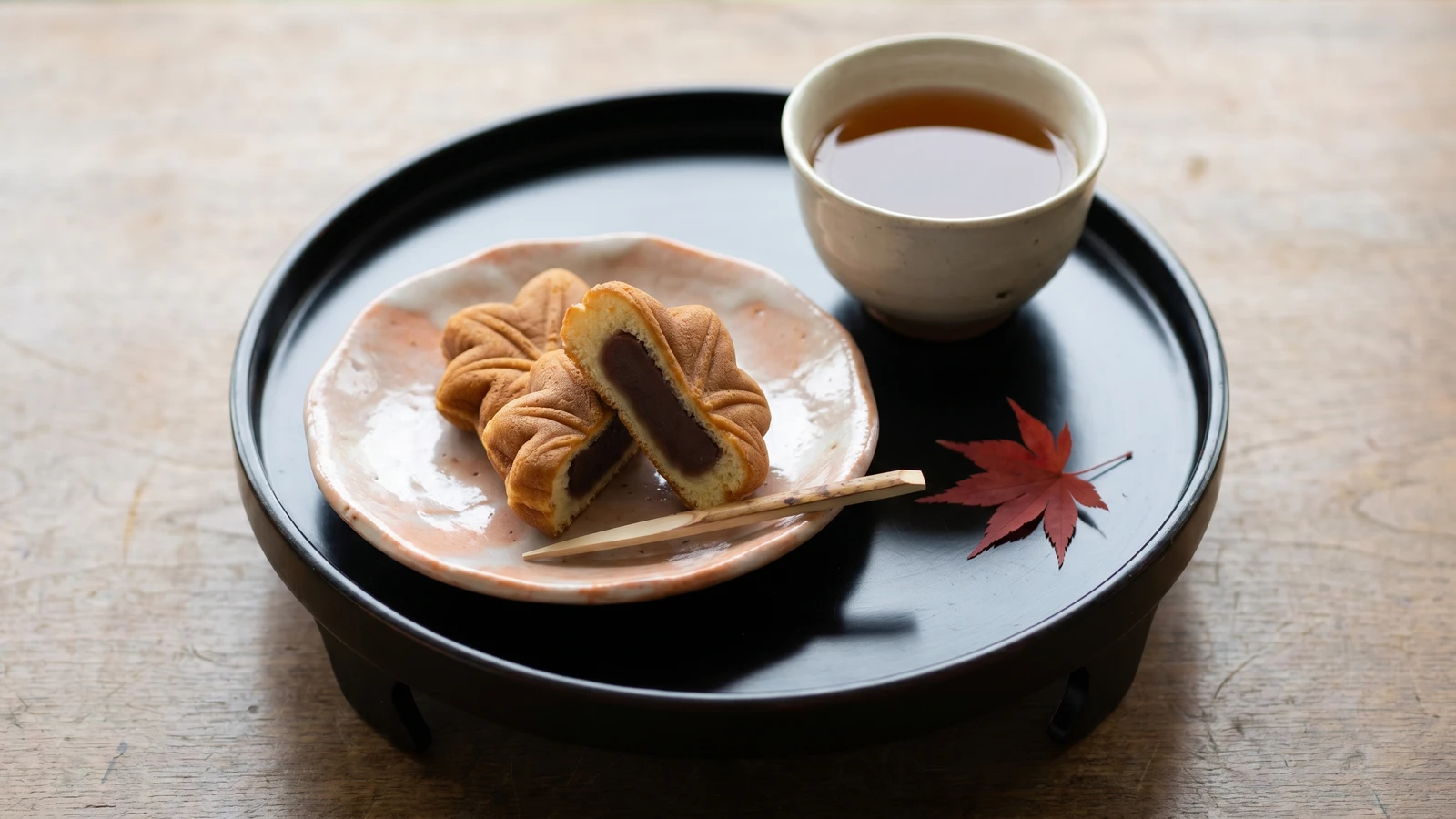
A thin castella batter, smooth red bean paste, and a warm maple mold: this Hiroshima sweet looks clever, but the whole character rests on filling lightly and closing the mold gently.
The maple leaf does the first teaching. Momiji manjū belongs to Miyajima, where autumn color makes even sensible people stop in the path and point upward. The sweet carries that season in its shape: soft castella batter, smooth koshi-an, and a clean browning from a metal mold. It looks like a clever shop trick. It isn't.
The way we keep the shape clean is restraint. Fill the mold too generously and the batter creeps from every edge, which is a dramatic way to learn you were impatient. Spoon in just enough batter to coat the leaf, set a small ball of anko in the center, cover it thinly, and close the mold without pressing. The batter puffs around the filling because the egg, honey, and a little baking powder have room to rise. Give them that room and the leaf stays neat.
Use koshi-an, smooth red bean paste, for the older Hiroshima character. Tsubu-an, the chunky kind, is good in other sweets, but here it interrupts the tender cake. Rest the batter before baking so the flour drinks the liquid and the bubbles settle; the crumb comes out even instead of pocked. Served with tea, these are small confections, not a piled dessert. Three on a tray, a third of the plate empty, and no one feels cheated. Leave it room.
Momiji manjū is a Miyajima confection of the late Meiji period, rooted in the maple trees of Momijidani near Itsukushima Shrine. Takatsudō dates the first version to 1906, when Takatsu Tsunesuke made a maple-leaf baked manjū as a souvenir for visitors to the island. The first filling was smooth koshi-an; later Hiroshima makers added custard, chocolate, cheese, and deep-fried versions, but the red bean cake remains the older form.
Quantity
200g
divided into 10 portions
Quantity
2
room temperature
Quantity
70g
Quantity
20g
Quantity
10g
or use mild honey
Quantity
2 tablespoons, plus more as needed
Quantity
100g
Quantity
1 teaspoon
Quantity
1 pinch
Quantity
as needed
for a very thin film on the mold
| Ingredient | Quantity |
|---|---|
| firm koshi-an (smooth sweet red bean paste)divided into 10 portions | 200g |
| large eggsroom temperature | 2 |
| granulated sugar | 70g |
| mild honey | 20g |
| mizuame (Japanese starch syrup)or use mild honey | 10g |
| water | 2 tablespoons, plus more as needed |
| cake flour | 100g |
| baking powder | 1 teaspoon |
| fine sea salt | 1 pinch |
| neutral oilfor a very thin film on the mold | as needed |
Divide the koshi-an into 10 portions of about 20g each. Roll each one into a small ball, then flatten it slightly so it sits in the center of the leaf without forcing the batter outward. Chill the portions while you make the batter. Firm anko stays where you put it, and that keeps the points of the maple leaf clean.
Whisk the eggs and sugar until the sugar dissolves and the mixture falls from the whisk in a pale ribbon. Stir in the honey, mizuame, and water. You're making a tender cake, not a high sponge, so don't beat in a mountain of bubbles. Too much air leaves holes on the face of the leaf.
Sift the cake flour, baking powder, and salt together, then fold them into the egg mixture until no dry flour remains. Let the batter rest for 20 to 30 minutes. Resting lets the flour drink the liquid and lets the larger bubbles settle, so the finished crumb is even instead of pocked. After resting, the batter should fall from a spoon in a slow ribbon and settle back into itself in a few seconds. If it sits in a heavy lump, thin it with water, 1 teaspoon at a time.
Warm a momiji manjū yaki-gata, the maple-leaf metal mold, over low heat. Brush the cavities with oil, then wipe almost all of it away with paper towel. Oil is for release, not frying, and too much gives the cake a freckled skin. A dab of batter should turn pale gold in about 40 to 50 seconds. If it darkens at once, lower the heat.
Spoon a thin layer of batter into each lower cavity, just enough to cover the leaf and reach the points. Nudge it into the corners with the spoon tip. Set one chilled anko portion in the center, then cover with just enough batter to hide the filling. The mold should not be flooded. Overfilling blurs the leaf veins and pushes batter out at the edge.
Close the mold gently without squeezing the handles. Cook over low to medium-low heat for 1 1/2 to 2 minutes, turn the mold, and cook the other side for another 1 1/2 to 2 minutes. For an electric mold, close it and cook until the same signs appear: even honey-gold color, defined veins, and edges that feel set when touched with a skewer. The cake needs enough time for the batter to rise around the anko before the outside browns too far.
Lift the cakes out with a bamboo skewer or thin wooden pick and set them on a rack. Wipe stray batter from the mold before the next batch, because burned scraps mark the fresh cakes. Let the manjū cool completely, then wrap them or place them in a covered container for at least an hour if you can. The crumb settles around the filling, and the sweetness becomes quieter.
1 serving (about 50g)
Culinary guides, cultural storytelling, and the editorial depth that makes cooking meaningful.
Discover Culinary ExplorerChef Takumi
Anmitsu looks like a tray of small tasks, but the work is calm: dissolve the kanten fully, chill the pieces clean, then let fruit, anko, and kuromitsu do the speaking.

Chef Takumi
A cool square of almond-scented milk, set softly and served with mikan in thin syrup, is dinner-party food without theater. The only stern demand is restraint with the fragrance.

Chef Takumi
Azuki bar asks for patience twice: once while the beans soften, and once while the frozen bar yields. That hardness is not a flaw. It is the character of the thing.
Chef Takumi
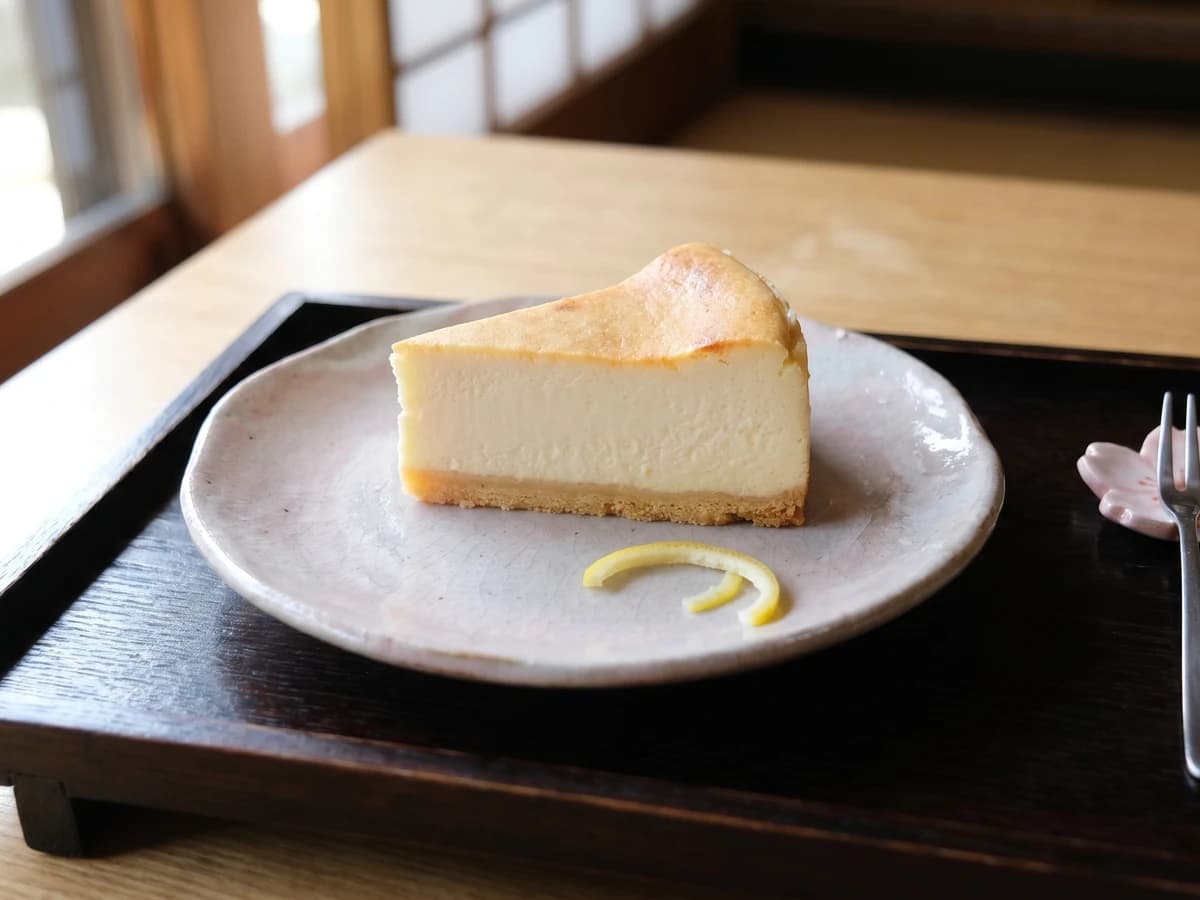
A Japanese baked cheesecake is not trying to float away. It is dense, smooth, and quietly tart, with a clean slice doing the work of decoration.