
Chef Juliana
Amalá de Xangô
You don't need mystery for this pot. You need okra, dendê, onion, dried shrimp, and the patience to stir until the quiabo gives up its own caldo.
A cooking platform built around craft, culture, and the stories behind what we eat.
Created by
You think "isso não é pra mim" because seven days sounds like a secret. It isn't. Safe maniva, a real refogado, and patience turn the Círio pot into something you can learn.
You hear "seven days" and the little voice starts: "isso não é pra mim." I know. A gente sees a pot from Pará, dark and serious and served at the Almoço do Círio, and someone decides it must belong only to people born knowing. Nonsense. Cozinhar não é dom, é um aprendizado. The part that matters most here is not talent. It's respect for the leaf.
Maniva, the leaf of mandioca brava, is poisonous raw. Anota aí, because this is the one place where I won't be cute about shortcuts. The seven-day boil is not ritual and not an avó being dramatic. It's chemistry: heat drives off the cyanide compounds and turns a dangerous leaf into comida de verdade. For a home cook outside Pará, the honest shortcut is to buy maniva already boiled for seven days from someone who can say that clearly. The false shortcut is guessing. No.
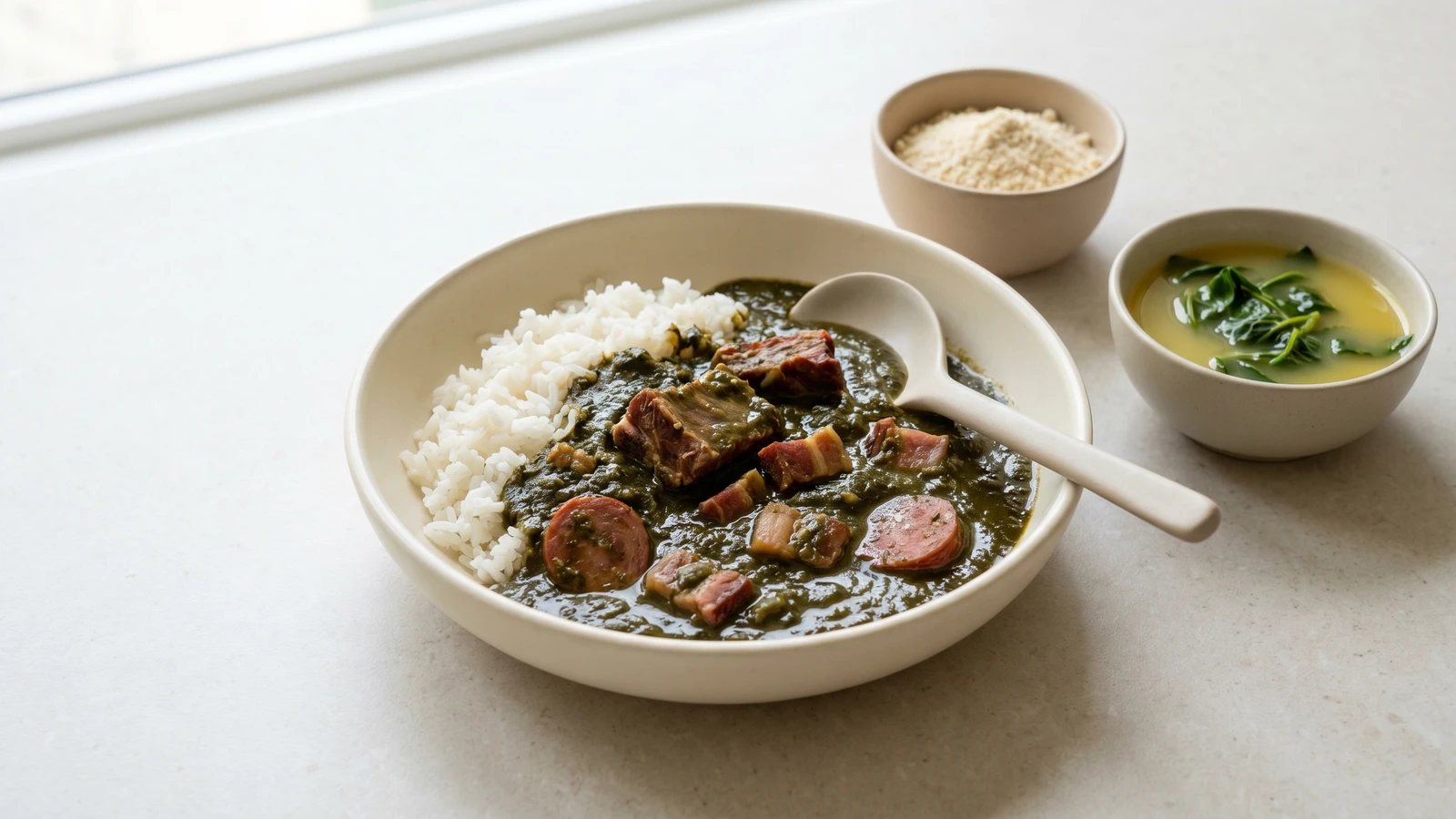
I don't own Belém, and I won't pretend to. Paraense and Amazonas cooks carry this table. What I can teach is the slow technique: desalt the meats so the pot doesn't scream salt, dourar the pork so it leaves brown flavor in the pan, refogar onion, garlic, and pimenta-de-cheiro until the smell changes, then let everything simmer until the maniva goes thick, dark, and glossy.
Serve it over arroz branco with farinha d'água and you see how the festive plate is cousin to the everyday pê-efe: rice to carry the pot, meat tucked into the leaf, something green doing real work. It won't be a Tuesday feijão. It's the Pará Christmas pot. Make it ahead, feed the table, and keep leftovers for day three, when the stew gets even more serious.
Maniçoba is tied strongly to the Almoço do Círio, the Sunday lunch after Belém's Círio de Nazaré procession, a devotion recorded since 1793 and treated in many Paraense homes with the weight of Christmas lunch. Its base comes from Indigenous manioc knowledge: the leaves of mandioca brava, called maniva, are cyanogenic raw and must be boiled for days before the pork, sausages, and salted meats enter the pot. On that same Pará table, paraense vatapá often thickens with wheat flour cooked in dried-shrimp broth, a different Afro-Indigenous-Portuguese layering from Bahian versions built with bread, peanuts, and dendê.
Quantity
1 kg / about 6 cups
manioc leaves already boiled for seven days, thawed if frozen
Quantity
300 g / about 2 cups
cut into chunks and soaked overnight, or use unsalted pork shoulder for same-day cooking
Quantity
300 g
cut between the bones
Quantity
200 g / about 1 1/2 cups
cut into 1 cm cubes
Quantity
200 g
sliced into thick half-moons
Quantity
200 g
sliced into thick half-moons
Quantity
2 tablespoons
Quantity
1 large / about 1 1/2 cups
finely chopped
Quantity
6 cloves / about 2 tablespoons
minced
Quantity
2 peppers / about 2 tablespoons
finely chopped, seeds removed if you want it calmer
Quantity
2
Quantity
4 to 6 cups
as needed to barely cover
Quantity
to taste
only after tasting
Quantity
6 to 8 cups
for serving
Quantity
1 cup
for serving
Quantity
1 cup
for an optional Círio side
Quantity
1 cup loosely packed
for the optional tucupi side, added at the end
| Ingredient | Quantity |
|---|---|
| prepared manivamanioc leaves already boiled for seven days, thawed if frozen | 1 kg / about 6 cups |
| carne seca or salted beefcut into chunks and soaked overnight, or use unsalted pork shoulder for same-day cooking | 300 g / about 2 cups |
| smoked pork ribscut between the bones | 300 g |
| pork belly or thick-cut baconcut into 1 cm cubes | 200 g / about 1 1/2 cups |
| linguiça calabresasliced into thick half-moons | 200 g |
| paio sausage (optional)sliced into thick half-moons | 200 g |
| neutral oil, lard, or rendered pork fat | 2 tablespoons |
| yellow onionfinely chopped | 1 large / about 1 1/2 cups |
| garlicminced | 6 cloves / about 2 tablespoons |
| pimenta-de-cheirofinely chopped, seeds removed if you want it calmer | 2 peppers / about 2 tablespoons |
| bay leaves | 2 |
| water or unsalted pork cooking brothas needed to barely cover | 4 to 6 cups |
| saltonly after tasting | to taste |
| cooked white ricefor serving | 6 to 8 cups |
| farinha d'água or farinha de mandiocafor serving | 1 cup |
| safely boiled tucupi (optional)for an optional Círio side | 1 cup |
| jambu leaves (optional)for the optional tucupi side, added at the end | 1 cup loosely packed |
Start with the maniva, not the meat. Read the package or ask the seller for the plain answer: boiled for seven days. It should be deep dark green, soft, and already cooked through, with a vegetal smell, not a sharp raw cassava smell. If nobody can tell you how long it boiled, stop. A half-cooked maniva is not a rustic choice, it's a hospital visit.
The night before, cover the carne seca with cold water and refrigerate it, changing the water 2 or 3 times. On cooking day, put the drained carne seca and smoked ribs in a pot, cover with fresh water, and simmer for 20 minutes; drain. Taste one tiny cooked edge. It should still taste seasoned, not like the sea. The soak pulls excess salt out so you can season the stew instead of being bullied by it.
Set a heavy 6-liter pot over medium heat and add the oil or fat. Add the pork belly or bacon and cook, stirring now and then, until the fat renders and the edges go browned and crisp, about 8 minutes. Add the calabresa and paio and dourar for another 3 to 4 minutes, until they stain the fat and smell smoky. Lift the meats out to a bowl. Those brown bits left in the pot are not dirt. They are dinner starting properly.
Keep 2 tablespoons of fat in the pot. Add the onion and pimenta-de-cheiro and refogar over medium heat until the onion goes soft and see-through, about 5 minutes. Add the garlic for 1 minute, just until you smell it. Pimenta-de-cheiro is perfume, not a dare, and burnt garlic is bitter enough to follow you through the whole pot.
Add the prepared maniva to the refogado and stir well, scraping the bottom of the pot. Cook for 5 to 8 minutes, until the maniva looks glossy and the fat has disappeared into the leaves. This step wakes up the cooked leaf and lets the refogado cling to it, instead of floating around later like it missed the bus.
Return all the browned and desalted meats to the pot. Add the bay leaves and 4 cups of water or unsalted broth, just enough to loosen the maniva and nearly cover the meats. Bring it to a boil, then lower to a gentle simmer with the lid slightly open. Cook for 2 1/2 to 3 hours, stirring from the bottom every 20 to 30 minutes. You want a slow blip, not an angry boil. This simmer makes the meats tender and the pot rich; it does not make unsafe maniva safe. That had to happen before this recipe began.
Pull out the bay leaves. Press a piece of meat with a spoon; it should give without fighting. The maniva should be thick, dark, and glossy, with a spoon leaving a path for a second before the stew closes back in. If it's dry, add water 1/2 cup at a time. If it's loose, simmer uncovered for 20 to 30 minutes. Taste only now for salt, because salted meats love to lie at the beginning and confess at the end.
Turn off the heat and let the maniçoba rest for at least 30 minutes before serving, or cool it and refrigerate it overnight. The fat settles, the leaf softens into the meats, and the flavor stops tasting like separate errands. Day three leftovers are famous for a reason.
Make arroz branco soltinho and put farinha d'água on the table. If you're serving the optional tucupi side, use only tucupi sold as safely boiled and ready to heat. Warm it in a small pan until it bubbles at the edge, then add the jambu for 1 to 2 minutes, just until the leaves murchar and stay green. Add jambu at the end so the paralisia, that little mouth-tingle, stays alive.
Ladle the maniçoba over rice or beside it, and spoon farinha as you eat, not all at once. The rice carries the pot, the farinha gives grip, and the dark maniva brings the meat and the green together. This isn't the weekday feijão pot, and it doesn't pretend to be. It's the festive cousin of the pê-efe, built for a crowded table.
1 serving (about 590g)
Culinary guides, cultural storytelling, and the editorial depth that makes cooking meaningful.
Discover Culinary ExplorerChef Juliana
You don't need mystery for this pot. You need okra, dendê, onion, dried shrimp, and the patience to stir until the quiabo gives up its own caldo.

Chef Juliana
You think a Polish hunter's stew is not for your kitchen. Wrong. Brown meat properly, build a real refogado, simmer cabbage low, and tomorrow's lunch is already better.
Chef Juliana
Whole fish in a pot looks like a test. It isn't. Build the refogado, layer the filhote, let tucupi do its work, and the Círio table starts making sense.
Chef Juliana
You don't need river wisdom in your bones to cook tambaqui well. You need real tucupi, a calm simmer, and the sense to let the fish stay whole until it gives.